

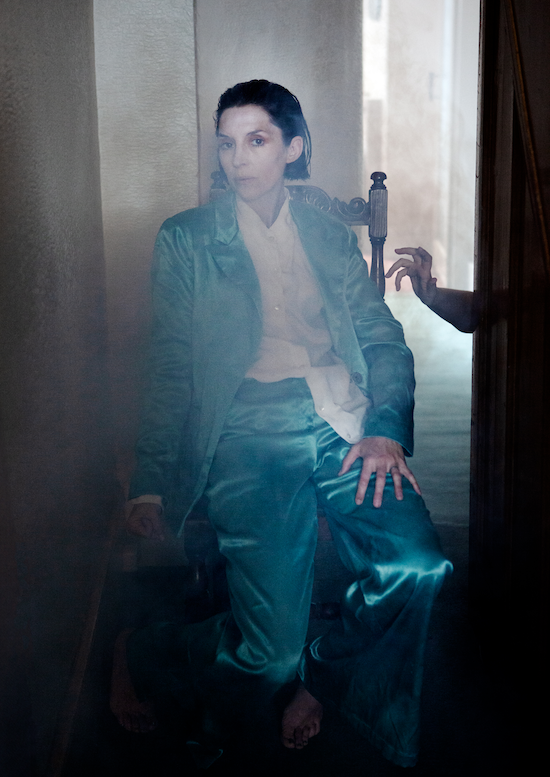
Last summer I found myself at a hotel bar in Downtown Tucson, Arizona, talking to a man who looked like Justin Theroux in Mulholland Drive drawn from memory about the time he met one of the resident ghosts. Built in 1913, Hotel Congress is famously haunted by four spectres of varying temperaments: the “locksmith’s apprentice” who fucks with the door of Room 212, a gentleman in a seersucker suit known to take after-dinner strolls around the halls, a handyman called Vince who lived on-site for 36 years and fixed things with a butterknife, and a troubled young woman who shot herself in the closet of Room 242 during a police stand-off (you can still see the bullet hole in the wall). The man claimed the latter had “visited” him on a business trip and showed him a terrifying vision of hell. He also mentioned he’d taken a load of drugs, but it’s doubtful the same can be said for all the other guests over the years who have reported a “tangible heaviness” in the room, sightings of a woman in a long white dress sitting on the edge of the bed, or felt someone lying beside them at night.
When it comes to ghost stories, most people take one of two approaches. The rational will seek to explain the phenomenon with science, psychology or environmental factors (several hits of ecstasy, for instance). Others approach things more empirically, taking the experiences at face value. The Canterbury-born composer, producer and musician Elizabeth Bernholz, better known by her stage name Gazelle Twin, cuts somewhere down the middle – a position from which her fourth studio album, Black Dog, unfolds.
Growing up with a father who was “fully immersed” in the paranormal and a family that talked about their household ghosts like they would bumping into so-and-so in Sainsbury’s, Bernholz inherited a given interest in the supernatural. One of her hallmarks as an artist, meanwhile, is taking a psychological approach to external themes, from the pubescent body anxieties unpacked on 2014’s Unflesh to English neo-nationalism on 2018’s Pastoral. Combining both sensibilities, Black Dog turns that forensic approach inward to the feeling of being haunted – by childhood memories and aspects of herself, but also by actual ghosts.
At the end of 2019, Bernholz concluded a tour of Pastoral at an old cinema in Walthamstow. Built in the late 1800s, the Granada is a Grade II listed building famous for screening films as early as 1896 and being frequented by Alfred Hitchcock. The second Bernholz set foot inside, she was gripped by a strange feeling. “I immediately knew there was something happening in the room. There was something there that shouldn’t be,” she remembers now, speaking over Zoom from her home studio in Leicestershire. Besides her face, framed by a halo of sleek dark hair, the only thing in shot is a holographic print by the artist Scott King that says ‘ERASE BAD MEMORIES’. At the time, Bernholz was struggling. After the birth of her first child in 2016, she was gripped by severe postnatal depression that took her to a bad place. Her dreams darkened in turn, and she began having a recurring nightmare of a malign force waiting for her in a house full of empty rooms. Inevitably the force would overtake her, violently levitating her body and, in later dreams, her child’s. The experience in the old cinema pushed her past the break of intensity and into a place of interrogation.
“I felt like I was being harassed. Not only by these physical experiences – strange pressure changes in buildings or places, or even with people – but also over the years. My whole life, I’ve had these dreams…” Here, and I know this will sound far-fetched, but we’re interrupted by a sudden clacking noise, like a pen being dropped onto a hard floor. “Something’s just flown off my shelf over there, which is a bit eerie,” she observes. “There’s no one else here…"
“Dreams about being haunted and discovering specifically male ghosts, or knowing that something’s waiting for me in a dark house alone,” she continues. “I really wanted to know what this dream was about, what it was telling me, and why I’m so afraid of ghosts. So I just thought, I’m going to learn everything I can about ghosts to get a better sense of what this is; to try to give it some identity and to make some connections between that and how I’ve been dealing with parenthood – which, at the time, wasn’t very well.”
The decision to face her fears took Bernholz back to her own childhood, and the farmhouse in Kent where she grew up. It was derelict when her parents bought it . They restored it fully, breathing new life into the remote Victorian building standing in a field on a long country road. “It was one of their happiest times,” Bernholz remembers. When she was six the family suddenly upped sticks and left for North Yorkshire for financial reasons. Pet cats jumped out of the car and were left behind. The memories of the house stuck with her, though – but not all of them were nice.
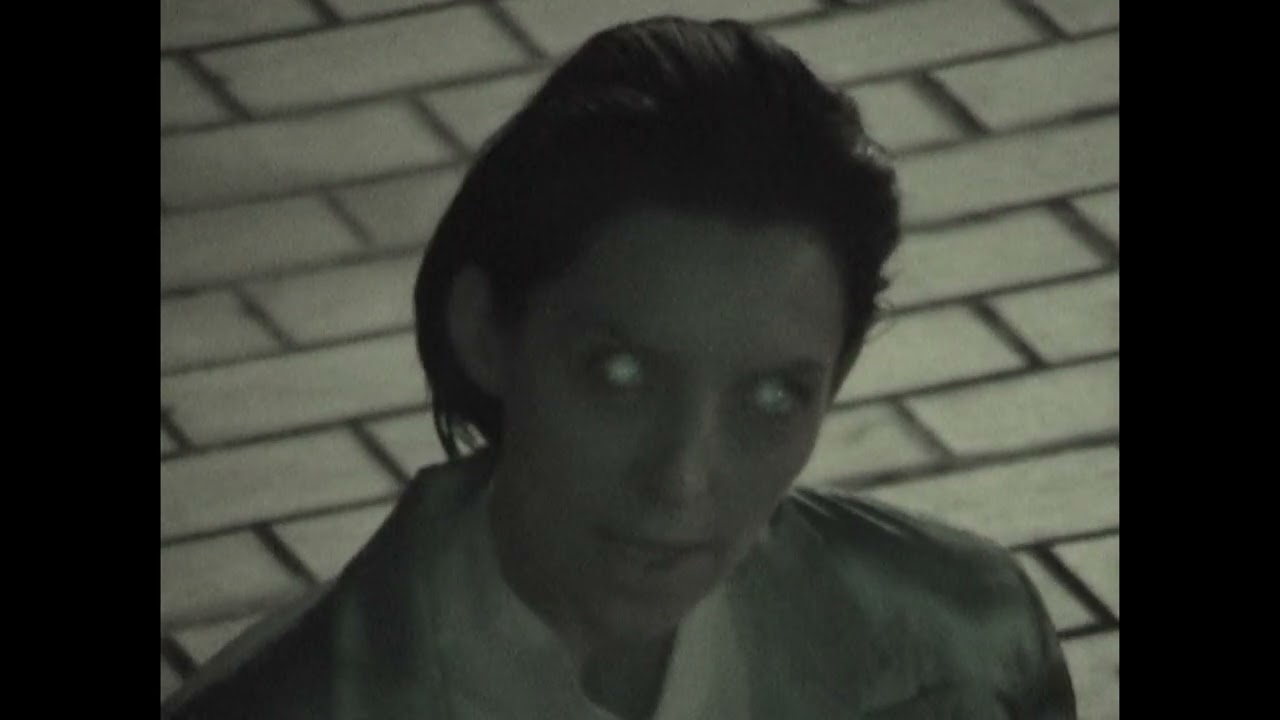
Somewhere between the ages of three and five, Bernholz experienced something strange. An anxious child generally, every night she would run into her parents’ room, get into bed on her mother’s side and lie there. That’s when she would see it. A small shadow, blacker than midnight. A scratching, jittering presence looming either beside her or on top of the wardrobe at the foot of the bed, watching her. “It didn’t scare me at the time,” Bernholz says, recounting the “restlessly moving” thing that, over the years, took the form of a black dog. “I remember seeing a cone shape, so it looked like a snout or something. How much of this is swamped by misremembered things or other things I’ve heard, I don’t know, but it’s a fairly clear memory that I didn’t really acknowledge until I was much older.”
A conversation with her brother revealed that he’d seen it too. With four years on her, he had “a much more crystallised experience, where he saw the details and smelled it and heard it under his bed.” It frightened him. To Bernholz, it wasn’t scary, “just a phenomenon that I was interested in and distracted by.” Mainly it was the house itself that felt threatening, and that fear has persisted into adulthood, intensifying when she became a parent herself. In an effort to discover why, Black Dog uses the titular spectre as the face of a project that enters the darkest recesses of memory and childhood.
“I disappear / in the night / Swallow begins its flight / I disappear in the night / Chose to give up the fight,” Bernholz howls over a groaning cello on opener ‘I Disappear’. It’s a statement of intent – here be monsters – and on ‘Sweet Dream’ we meet who’s confronting them. A gentle track evoking the image of dust particles dancing in a beam of light, it’s a cinematic rendering of a photograph taken of Bernholz in the house when she was three – around the same age her youngest son is now. She’s fresh out of a bath, blonde hair hanging in wet curls over a nightie that reads ‘sweet dreams’, smiling into the camera. Bernholz envisions it as “the opening credits to a horror film” – a glimpse of innocence dissolved by ‘Black Dog’, where the story begins with a jarring mixture of ancient, subterranean banging and lyrics cribbed from children’s books like Funnybones and A Dark, Dark Tale.
“I was trying to create that sort of midnight fear you have as a child, of your house completely still – corridors, doorways, stairwells,” she says of the song. “It was always the stairs that freaked me out. Me and my siblings would always have the same dream, at the same time, of flying down the stairs. My sister used to hear someone stamping up them in the night.”
Nodding to classic horror scores like Goblin’s Suspiria and Krzysztof Komeda’s Rosemary’s Baby and the work of Ennio Morricone, Black Dog is murky, weighed down – all droning notes, shape-shifting vocals and glitching beats that make settling into the album impossible. You’re constantly on edge, trying to sprint through dry sand. The twinkling keys and gossamer feel of songs like ‘Sweet Dream’ and ‘This House’ nod to the “dislodged sweetness” of Jerry Goldsmith’s Poltergeist score, while access to the Moog Lab facilitated the liberal use of modular synths (particularly the VCS3, favoured by John Carpenter) to evoke Bernholz’s 80s childhood. These electronic elements are underpinned by an organic texture – “something that feels wooden, that feels of a place, of an object, of a space” – that recalls Fiona Apple’s Fetch The Bolt Cutters, for which the American musician literally played her house; banging its walls and stomping on its floorboards.
On ‘The Long Room’, Bernholz plays her past. Sampling a tape recording her father made of her sisters tinkering around on a piano before she was born, she was effectively able to revisit the old house and play that same piano with the acoustics of a room she remembers fondly. Layered in the mix are the muffled voices of her late grandparents – again, courtesy of her father’s recordings – giving the brief but poignant interlude an uncanny feel.
In his final book The Weird And The Eerie, Mark Fisher writes that both concepts are preoccupied with the strange. “The strange – not the horrific,” he stresses. “The allure that the weird and the eerie possess is not captured by the idea that we ‘enjoy what scares us’. It has, rather, to do with a fascination for the outside, for that which lies beyond standard perception, cognition and experience. This fascination usually involves a certain apprehension, perhaps even dread – but it would be wrong to say that the weird and the eerie are necessarily terrifying.”
The same is true of Black Dog, in which Bernholz navigates forces that take on different emotional dimensions depending on how you look at them. It’s an album that immerses you in a world of fear like a horrible ice bath, but every now and then there are moments of comfort and calm, representing attitudes towards the paranormal more generally. While researching the album she rifled through old photos and canvassed friends and family about their own experiences. She obsessively consumed ghost stories; watched documentaries on hauntings, possessions, and poltergeists; and binged hours of podcasts after dropping her kids off at school. A lot of the accounts were frightening, but the ones that gripped Bernholz the most were the matter-of-fact ones. “They’re not about a demonic presence trying to ruin a family or break a person. It’s more, ‘this person showed up and I talked to them for five minutes about a wardrobe that their husband made and that was it.’ Then later on they discover that person has been dead for seven years or something,” she says. “I think it’s so cool that such a thing can happen – that it’s possible to have quite an ordinary encounter with a ghost.”
Poltergeists are often said to appear when there’s a teenager in the house going through a significant transition, or there’s negative dysfunction in the family. One friend told Bernholz about someone who had a poltergeist right after she’d given birth and her relationship was falling apart. “The mother interpreted it as her projected self trying to tell her to just get out [of the relationship] and just go, you know? Wake up and listen.” Applying the same logic, Bernholz thought back to her first child’s early years, when she was very unwell and struggling to cope with the demands of parenting. “In those moments that I’d regret, where I was really badly behaving, almost regressing into being a child myself, I kind of felt like I was being possessed by somebody else. It was this shock of like, ‘Who is this and why are they using me to say this stuff?’ The sense of being overtaken was that distinct.” Connecting it to her recurring nightmare of being overtaken by an unstoppable force, she began to think it was her. “Ultimately I got through various songs and thought okay, I’m facing myself here. I’m looking into the abyss and questioning not only what the hell is going on with the idea of ghosts in general, but also what the hell’s going on with me. What am I telling myself? Why are my memories so strong of this childhood house haunting me?”
Bernholz’s sense of being tormented by her childhood was amplified by having children of her own. Addressing the overlap between her paranormal obsession and what she describes as her “parental calamity”, Black Dog trades in recognisable themes of domestic horror, confronting the darker aspects of motherhood that are incredibly common but still deeply taboo. “It’s more normal than not to be a bit fucked up by the whole process, because it’s a wild natural event that exists in a world that desperately tries not to be wild and natural. It’s a huge conflict.”
It also tugs at the threads between folklore and psychology. Acting as connective tissue between her “first ghost memory and what it was really reflecting, which was my state of mind” and a depression that hangs around like a persistent companion that sits at the bottom of your bed, the black dog represents two things at once on the album, much as it does in folklore. Some stories, like the Black Dog of Bouley Bay or Suffolk’s Black Shuck, they’re considered to be a malevolent presence or a bad omen. In others, like the legend of Gelert, they’re depicted as faithful guardians or guiding lights. That could be one reason why, though her brother was scared by it, Bernholz’s own experience of the black dog felt harmless – protective, perhaps.
Black Dog is an album of dualities, with the narrator constantly in two places and numerous instances of parallel lyrics as Bernholz reckons with the past, present and future at once. For every above there’s a below, for every nice memory a bad dream, for every person sitting in the present there’s another who’s able to traverse the arc of time. “The nature of ghosts is often that they’re looping. They’re carrying out the same actions. They’re walking the same corridors. They’re going through the same doors into the same rooms over and over and over again,” she explains, likening it to the loops we go through in states of depression and anxiety. “When you spend a lot of time in a domestic setting, as you do when you’re a parent and as we all have in the last few years because we’ve been forced to, it’s kind of maddening. You feel trapped.”
Though Unflesh and Pastoral are hung on the conceptual hooks of puberty and politics respectively, their psychological connections run deep. “Initially I was trying to make an album about lifestyle, almost a politics-on-my-sleeve album,” she says of Pastoral. “But a lot of it actually came from moving somewhere, becoming a parent, and seeing life in a completely different way.” That aspect of her work jumps to the fore on Black Dog, which sees her channel the voices inside herself rather than mapping them onto other ideas. Those voices rise thundering and assertive in some places, apologetic and humble in others. “It’s a confrontation of the worst part of ourselves in order to be the best version of ourselves,” Bernholz summarises. “That’s what I’m trying to do. I’m just trying to be a better person through the medium of song and ghost stories.”
This recognition is part of the reason why Black Dog sees Bernholz unmasked for the first time. Ever since she created the Gazelle Twin persona in 2009, it has transformed according to the needs of the project. For Unflesh she donned a version of her school P.E. kit, performing hunched over a mic in a blue hoodie with her hair falling forward. Pastoral saw her morph into a sentient St. George’s Cross – a monstrous Morris dancer-cum-football-hooligan riding a hobby horse in Adidas Gazelles. In both instances the persona came first. This time the theme arrived first, followed by the mood, then visuals, the music and, finally, deciding how to present it. In the end, “there was just no place for a weird, masked costume,” she explains. “If anything I’m more like a spiritual medium sitting down and letting stuff pass through me, allowing myself to be possessed in some way. And I just thought, well, it’s me, isn’t it? [The persona] is me. There’s no need to dress up.”
Black Dog is a visceral album that turns universal fears that are hard to ascribe to anything into something tangible. The sensation of eyes on your back, the sudden urge to run when you reach the top of the stairs. It physically grips you. At the same time, it is a distinct reflection of a home that only Bernholz knows – the one in Kent she grew up in, and the one she is raising her children in now. Playing with a domestic yet familiar ghostly motif, ‘A Door Opens’ ends the album with a ray of light. “I wanted that to be something positive. For a door to open and a sense of hope to be there,” she says of the minimal piano track, recorded in one emotional take using a homemade sample of Schumann’s ‘Ghost Variations’ while echoing and distorting phrases from the start of the album. “That one is for my long-suffering partner. This album is a big apology, really, to him and my children for not coping so well. So I needed there to be something light at the end to [represent] that things are going to get better.”
As far as belief in the paranormal goes, Bernholz views it as a delightfully “unanswerable question” – but one that opens more doors if you dare to go with it. “In some ways I hope it’s true,” she says. “There’s such a thing as evil as a pure force of its own, which is a dark, ugly, disgusting element. But there’s also the other side, which is the protection that you get from experiencing and giving love.” That, she says, is what got her through the reservoir of stories that left her feeling bleak and scared. For every bone-chilling tale, there were a few that moved her to tears.
“The message that it’s constantly hammering on the walls is that people are bad but there are good things, and goodness can win out,” she says of the album, which eschews a rigid narrative of ‘confrontation and release’ in favour of a floating sensation that drifts beyond the parameters of the songs as she continues to work through their meaning. “If we look at the whole thing as a story, there is a beginning, middle and end,” she suggests. “It just so happens that the story is still occurring.”
Black Dog is out via Invada on 27 October. Gazelle Twin tours the UK this November