
“My cat’s outside, meowing,” says Vince Clarke, “He’s dying to get in on this interview.” The synth pop genius is speaking from his home studio in San Diego, which – along with many, many synths – he shares with a cat called Smudge who has a marked preference for jungle and house. “My cat is quite funny. He’ll come in the studio if I’m doing a remix that he quite likes, but the moment I pick up an acoustic guitar, he leaves.”
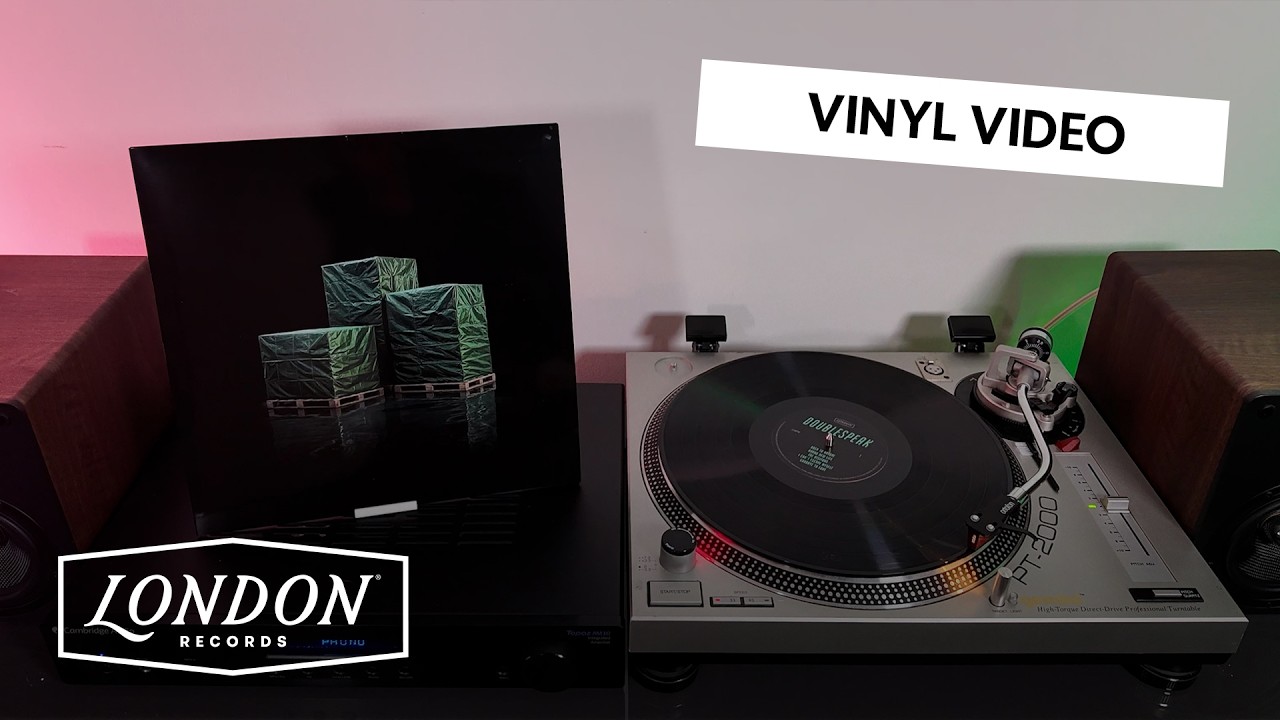
Smudge must’ve been a constant companion while Clarke was working on Doublespeak, the collaborative album with Blancmange’s Neil Arthur and producer and synth-connoisseur Benge. The record’s warm, analogue oscillations suggests Clarke’s acoustic instruments were left untouched during its creation. Although a covers album, it manages to avoid all the pitfalls of the form through a combination of thoughtful song choices and resourceful reinvention. Doublespeak then is something of an anomaly: a collection of reinterpretations that won’t send you screaming back to the originals.
The project started around 2017 which means – with the album only now seeing the light of day – Clarke, Arthur and Benge have spent the best part of a decade working on something that began as little more than a friendly suggestion in an email.
“Vince and I had been exchanging messages as friends – ‘how are you doing, what you up to, what’re you recording,’ and a bit of synth talk – and I floated the idea of a collaboration,” says Arthur. “And I thought to get us going, it might be an idea to do a cover of something.”
Files were exchanged, with a few of early attempts not quite making the cut, but a process had begun. “Eventually I thought, why don’t we do [David Essex’s] ‘Rock On’, and see what we can do with that,” Arthur says. “We both agreed that irrespective of what we did with it, it’s a sensational piece of music.”
Essex’s 1973 single proved to be the way into Doublespeak, and now we have an album of eleven cover versions drawn from four decades, split between obscure post punk and chart-friendly pop. The track list runs from Fad Gadget’s ‘Back To Nature’ – the second-ever release on Mute Records – through Young Marble Giants, ABBA, The Sound, The Carpenters, the aforementioned Essex, The Magnetic Fields, Thomas Leer and Robert Rental, Glen Campbell, Ed Dowie and Laptop. It is, in other words, precisely the kind of record that should not work: a covers album made remotely over a long period of time by three people who were never in the same room. That it does work – and works with some coherence and personality – is largely down to the fact that Clarke, Arthur and Benge approached the songs not as tributes to be faithfully rendered but as raw material to be disassembled and rebuilt.
“Benge and Vince treated the songs as if they hadn’t heard them before,” says Arthur. “I’d started several of them in Logic Pro, working out the basics, and I’d send them initially to Vince, or he would send things to me. But because we weren’t trying to copy the songs, we’d end up creating new parts that weren’t on the original. Obviously, the lyrics and top line melody are, by and large, the same, but once we deconstructed the songs and put them back together, they’d morphed into this Doublespeak world.”
Clarke’s method for entering that world is characteristically systematic. “I just strip everything away, put some simple piano chords down, and then start building the track around that,” he says. “I’ll hear a groove here or a bass line there, and once I’ve got the basic arrangement, I’ll start adding in the embellishments.” Benge, who has spent years observing Clarke’s processes from the mixing desk – albeit a mixing desk located in a different country, connected only by file transfers and Zoom – offers a more granular description: “Vince has a very specific way of working. He’ll make up parts from different synths and different sequencers, and they all interlock together like a jigsaw puzzle. It gives it a unique sound. There’s a lot going on, a lot of different synths, but they’re all doing quite simple little parts, and they only work when you hear them all put together.”
Clarke and Arthur first met in 1980, when Blancmange supported Depeche Mode on a short UK tour. Back then, Blancmange were Arthur and keyboardist Stephen Luscombe, and their aesthetic was resolutely lo-fi: cheap organ, guitar, echo machines, phase and flanger pedals, a cassette machine loaded with percussion and synth bass, and various kitchen appliances. Clarke – chief songwriter for Depeche Mode at the time – was equally DIY, with his band commuting to gigs from their Basildon base carrying their keyboards on the train. Arthur recalls a gig at London’s Hope and Anchor in January 1981 where Depeche Mode were billed as headliners, but Blancmange ended up going on last for the simple reason that they had to catch the last train home. “We always went back to Basildon on the train from Fenchurch Street,” says Clarke. “The only person at Mute that had a car was Daniel Miller, and he was based in London. It was the same when we used to do Top of the Pops – we’d go up there on the train, and everybody had a synth under their arm.”
Clarke was struck by Arthur from the start. “I thought he had an amazing stage presence, even then,” he says. “Larger than life really, with a big voice.” The admiration led to several attempts at working together in the ‘80s, none of which quite stuck. During the Yazoo period, Clarke invited Arthur to attempt a cover of Marvin Gaye and Kim Weston’s ‘It Takes Two’ with Alison Moyet. “We ended up laughing so much we couldn’t finish it,” says Arthur. “The difference between our voices was… well, Alison’s a singer and I’m more from the post punk tradition, shall we say.”
Arthur also recorded an unreleased version of ‘Who Needs Love Like That’ for The Assembly, Clarke’s post-Depeche Mode project that aimed to use a variety of vocalists. “But I decided I really needed to find someone permanent, as opposed to using different people,” Clarke explains, “so I started working with Andy Bell and the song became the very first Erasure single.”
Benge – Ben Edwards – came to the Doublespeak project around the halfway mark, brought in by Arthur as “a third pair of ears to bring the album together as a whole.” His role was to mix, to add synths and sequenced parts and drum machines, and to impose a coherence on material that had been accumulating for years across multiple hard drives on two continents. Although Benge has worked with Arthur on Blancmange albums and their Fader project for almost a decade, he was, by his own account, still a bit intimidated. “They were a massive influence on me, and it’s something I can’t really believe I’m involved with, to be honest,” he says. “I feel imposter syndrome massively. All the synth pop stuff that came out when I was a teenager was so exciting to me.”
Growing up in Loughton, Essex – just one train stop from Clarke’s Basildon – Benge’s parents ran a school for autistic children that happened to have an early modular synthesiser in the music room. From age eleven, he spent his time with the synth, tape machines, a four-track and an electric organ. “I came up through a bit more of an art school background,” he explains. “I was into prog rock in the late 70s and early 80s, and then when the synth pop thing happened, it was like, Yes, this is proper stuff.” In the 90s, after graduating, he began collecting vintage equipment that other people were discarding. “I found stuff in skips, outside people’s flats, in corridors. I had this policy: never sell or throw anything away. I just collected and put my little studio together in my front room.” That front-room collection eventually grew into a formidable arsenal of analogue hardware – hundreds of vintage synths – and a production career that has encompassed work with John Foxx, Gazelle Twin, Stephen Mallinder of Cabaret Voltaire, and John Grant, whose 2018 album Love Is Magic Benge produced. He has also co-produced the last six Blancmange albums and three records with Fader. Clarke had encountered Benge’s work when putting together his Synthesizer Show radio show when he lived in New York. “I knew we were on the same wavelength,” Clarke says. “He did an amazing first version of ‘Rock On.’”
Clarke and Benge have, it should be noted, never met in person. The entire collaboration – years of it – has taken place via file transfers and Zoom. “I did plan to come over to the UK when the first mixing dates were arranged,” Clarke says, “but it didn’t pan out.” It is a quietly remarkable detail: a record built on decades of shared musical DNA, assembled by three people who have collectively spent hundreds of hours working on it, two of whom have never even been in the same room.

The track list’s post punk contingent – Fad Gadget, Young Marble Giants, The Sound, Thomas Leer and Robert Rental – reveals much about the cultural soil from which Blancmange originally grew. “Punk was one thing, but what came after was far more exciting for me,” says Arthur. “Punk gave me idea that – as a self-styled art college student – I could also make some music with like-minded lunatics. And I did.”
Galvanised in part by Stevo’s Some Bizzare Album, which brought together acts including Soft Cell, Depeche Mode, B-Movie, The The, Illustration and the Fast Set, Blancmange found themselves operating in an incredibly fertile period for music.
“There were all these kindred spirits around and we’d go and see all these other bands,” says Arthur. “Bands like The Young Marble Giants, who had a massive influence on early Blancmange, particularly our first album. I saw The Sound play live many times and thought their album Jeopardy, and their side project Second Layer, was just sensational. So, choosing to cover their songs is a nod to them, and thankfully Benge and Vince agreed.” For Arthur there’s also a familial connection to Young Marble Giants’ ‘Brand-New-Life’
and The Sounds’ ‘I Can’t Escape Myself.’ “My daughter was home for a bit, and I heard her playing both of those songs,” he says. “So, her generation are listening, which is interesting and made it worthwhile covering them.”
For Clarke, the post punk material arrived largely unfamiliar, which became a defining feature of the project for him: whereas the 2003 Erasure covers album Other People’s Songs drew on tracks he and Bell already loved, Arthur’s selections were frequently unknown to him. “It was almost like listening to demos, or listening to a track someone wanted to be remixed,” says Clarke. “It was new material to me, so I didn’t approach it thinking we’ve got to make it better than the original, it was a whole different thought process.” Benge had similar gaps in his knowledge – he hadn’t heard ‘Back To Nature’ despite having played on a bill with Frank Tovey (AKA Fad Gadget) years before and came to several tracks cold. “I treated them like I was working on new songs,” he says.
This approach is audible across Doublespeak: these are not reverent reproductions but genuine reinterpretations, filtered through Clarke’s interlocking-jigsaw sequencer method, Benge’s vast analogue palette, and Arthur’s voice – warm, slightly bruised, unmistakably Northern – which proves to be the unifying element.
Then there is ABBA, because with Clarke and Arthur, there is always ABBA. When the two men holidayed together in Tenerife in the early 80s – with their respective partners and Luscombe – they played ABBA’s greatest hits on cassette incessantly by the pool. This lead to Blancmange covering ‘The Day Before You Came’ in 1984 – a huge hit across Europe – while Erasure released the Abba-esque covers EP in 1992. “Andy had this idea of recording an entire album of ABBA songs,” says Clarke, “which we started, but by the time we got to the fourth track we thought, that’s enough.”
Maybe surprisingly then the suggestion to cover ‘The Visitors’ came from Clarke. “It’s unusual and quite synthy – kind of futuristic, science fiction-y,” he says. “I love the sounds on their production, and obviously the amazing melodies.”
Benge, who had never heard ‘The Visitors’ before working on the album, became a convert. “It’s got a weird structure and weird sound – it’s not very ABBA, really,” he says. “It’s got a darkness to the lyric as well. It was on their last album, and they’d been through an awful lot by then, and it comes through in the music. It’s got a Cold War feel to it, and it fit really well with the Doublespeak idea and the overall feel of the album. A perfect choice from Vince.” Another of Clarke’s choices wasn’t quite so well received though: “I also suggested Van McCoy and the Soul City Symphony’s ‘The Hustle,’ but the other guys didn’t go for it,” he says. Any reason why? “Benge was worried about me making him learn the dance.” Arthur, Clarke claims, had already started learning it. “That’s what probably scared Benge the most.”
Referenced artists
Abba
Addicted To Plastic? Eco-Vinyl And The Impact Of Our Listening Habits
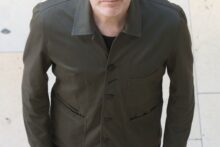
Blancmange
The Strange World Of… Blancmange
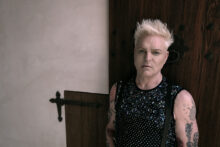
Erasure
The Strange World of Andy Bell: Erasure & Beyond
Depeche Mode
A Question Of Lust: Depeche Mode’s Black Celebration Revisited
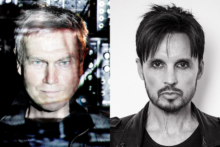
John Foxx
Evolutionary Spirit: An Interview With John Foxx And Ade Fenton

It wasn’t until six months in when Clarke recognised that Doublespeak had become an actual album rather than an open-ended project between friends. “We were doing it, and then we were not doing it – it was on and off,” he says. “When Neil and Benge’s manager Steve took it to London Records and they said they were interested in releasing it, that was when it became a real thing.” Unusually in this era of streaming, the label asked for B-sides, which prompted the trio to write two original compositions – ‘Strange Weather’ and ‘Sunset’ – available on a CD single with the special edition.
“Once you’ve been doing covers, it was quite nice to go, right, we’ve got a blank canvas, let’s see where we go,” says Arthur. The singer obviously enjoyed writing the new songs and hints at more to come, although Clarke is characteristically direct about when asked about the possibilities of a Doublespeak album of original songs: “The short answer is yes,” he says unequivocally, “I would like for us to be working together on original material.”
We might have to wait a while though. Clarke is at work on a long-gestating project, a follow up to 2023’s Songs Of Silence. “It’s instrumental but not as grim [as Songs Of Silence], but it is quite sad – it’s just some pieces I’m working on. Whether it ever gets released or not, I don’t know. My cat doesn’t like it.” Benge has gigs with Cabaret Voltaire, a new Fader album underway, and the considerable task of setting up a recently relocated studio. Arthur has South African festivals with the Human League, a UK tour with Tom Bailey of Thompson Twins, the above Fader album to finish, and several Blancmange albums in progress.
For now, there’s Doublespeak to savour and enjoy. Probably the best compliment to pay the record is that it simply does not sound like a covers album. Much of that has to do with the lingua franca of the synthesiser – oscillators, filters, sequencers, effects processors — completely decoupling the songs from their original version. But also, the process: old friends using their shared vocabulary – and several hundred vintage synths – to slowly create a body of work that eventually finds its personality and becomes a standalone album. That the project has also produced – almost as an afterthought – the first original Clarke-Arthur-Benge compositions, is pure serendipity. In the meantime, there is a techno cat in San Diego to appease. Whatever future Doublespeak has, one suspects Smudge will approve.