
The narrative of a legendary band abhors a vacuum. The arc rejects the fizzle out. The plot clamours for the bang and kisses its teeth at the whimper. This is one of the reasons why they always reform. There is always something left to prove – always business that is unfinished. No one wants to exit stage left after an album that barely troubled the charts or a tour of half-full venues. There will always be a desire to end with an exclamation mark and not an ellipsis…
When New Order powered back up recently they were, of course, merely interrupting a hiatus, not reforming and it would be a barefaced lie to say that no-one cared any more, it’s just that at some point during their recent six year break, it started to feel like they might never bother booking studio time ever again. And that simply wouldn’t have done. It’s not like their last full-length studio effort Waiting For The Sirens Call (2005) was a bad album but it hadn’t added much to the band’s legacy either. And since then… what exactly? The acrimonious departure of Peter Hook in 2007; the aforementioned worrying half-decade silence; an out-takes compilation album (Lost Sirens) in 2013 and the return of Gillian Gilbert.
None of this was exactly what you’d call unremarkable but at the same time it also felt uneasily like the trials and tribulations of a band whose clock was winding down. Some deckchairs being rearranged maybe. There was little to remind you of just how powerful, how elemental, how fucking necessary New Order had been during their decade long imperial period. The band formed directly from Joy Division at the start of the 1980s and defined what dance music was post disco with ‘Blue Monday’, the biggest selling 12” of all time. They ended that decade releasing Technique and headlining Reading Festival. ”It was as if the future had arrived” as Ian Wade said in our recent New Order Beyond The Hits feature. The band that ruled the 1980s gave birth to the 1990s; where they led, The Chemical Brothers, Orbital, Underworld and many others would eventually follow. So by comparison, the events of the last decade couldn’t help but feel underwhelming.
And then they signed to Mute records and released Music Complete. It was a brilliant move that produced a brilliant album.
I mean, this album is not just good for a veteran band. It’s just fucking great full stop. Normally, at this point there would be a bun fight to control the narrative but a clear consensus developed rapidly among both fans and critics. It seems fairly universally held that Music Complete is their best album since Technique. And while this isn’t an assessment that I’m going to disagree with – it doesn’t quite paint the full picture either.
The people now crying, “No Peter Hook – no New Order!” were curiously silent when Gillian Gilbert left the group in 2002, just after the release of Get Ready, and yet all the evidence now seems to suggest that she is more important to the group than many gave her credit for. The quality of Music Complete certainly promotes the idea that New Order are significantly better with her as a member than they are without her. However you choose to read it, her return signalled a step away from the indie-orientated stadium rock of the band’s post-Republic output and a reconnection with their vital electronic, dance influenced past. For sure, it’s impossible to mention the new album without referencing Technique – it’s the immediate touchstone that comes to mind when you first listen to it. This is reinforced by the presence of Tom Rowlands from The Chemical Brothers, who co-wrote and produced stand out tracks ‘Singularity’ and ‘Unlearn This Hatred’. His very presence represents the completion of a particular circle in terms of influence and inspiration but more importantly, in real terms, he has brought his A-game for the band, adding a satisfying muscularity to proceedings. Music Complete is not just their best album since Technique but a hyper-condensed alternative history of the band between 1990 and 2015. A wormhole flit across the multiverse to visit Substance Volume Two; an audio journey to experience what could have been or the music that actually exists somewhere else inaccessible by us. Until now.
Before the band announced their deal with Mute, I could barely allow myself to hope for new material. Then I was wary of getting my hopes up too much. Now it doesn’t even feel like a worthy end to an epic story but the opening of a new chapter with unlimited potential. On another standout track, ‘Plastic’, Bernard Sumner sings: “One of these days… right when you want me baby, I will be gone.” But for the time being at least, I simply don’t believe him.
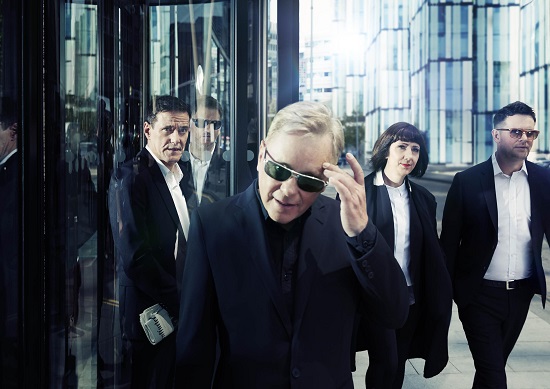
I spent a pleasant morning earlier this Summer in a studio tucked away on a back street near Manchester’s Oxford Road talking to Gillian Gilbert, Stephen Morris, Bernard Sumner, Phil Cunningham and Tom Chapman about their very welcome return.
Between Peter Hook leaving New Order in 2007 and the first benefit gigs in 2011, did you think it was all over and done with?
Stephen Morris: Did you ever think it was over Gillian?
Gillian Gilbert: Well it was different for me.
SM: Well yeah it was different for Gillian because she was away. When did you go into retirement?
GG: I think it was 2002. Just during Get Ready.
SM: So just after Get Ready, you went to the first reserve team – the ladies team. And then we got Philip in to play guitar. Then we did some gigs; we did Waiting For The Siren’s Call and then we did the Control film. So we moved away from New Order into Joy Division – you can always retreat into Joy Division stuff can’t you? But I always thought that there would be something else, that there would be another [New Order] record.
GG: We never really have a final, final ending, do we?
SM: No, I think the great thing about us is that we’ve never mapped out our career on a piece of paper and planned what we’d be doing in 12 months time. I think we just about know what we’re doing up to Christmas, more or less. That’s probably about as far ahead as we go really, which does get infuriating for people who try and book gigs; the people who say, “Do you want to do a gig in China, next year?” But we don’t really know because it’s a long way off.
Bernard Sumner: I think we’ve always been like this and we just think about the job in hand. There’s a Buddhist saying that says, “Only think three days ahead.” (I’m not a Buddhist by the way.) After Peter Hook left the band I wanted a bit of distance from New Order because the situation had left a bad taste in my mouth. I wanted a bit of distance from him. Steve was busy with very important personal stuff. So Bad Lieutenant gave me that distance really. But when that was over the question was, “What do we do next?” And the answer was New Order. We did one or two benefit gigs and things being what they are today because of the internet, word spread and we got offers to play all around the world straight away. So then we went to South America and then London, the Future Music festival in Australia, the Ultra Music festival in Miami. And then it just snowballed.
Phil Cunningham: It turned into a world tour really. And then wherever we went in the world, the question was, “Are you going to release more music?” The funny thing is, when you’re recording in the studio all people ask you is, “When are you doing more gigs, when are you touring?”
When did you start writing again and who first broached the subject of writing new material?
GG: Well originally, because we were only doing a certain amount of gigs, we had this set list of all our favourite songs and all the hits. But after it snowballed we were like, “We can’t really go around playing this for much longer. If we’re going to carry on, we need something new.”
SM: So we said we’d write something. We decided to write with a producer, and Tom from The Chemical Brothers wanted to get in on production, so then he was involved. It was a bit different with this album because we’ve got a studio in our barn, which we share with the mice, and Bernard’s got a studio in his house. And we did most of the writing and recording between those two studios. Usually we start off with a demo and then take it to a studio that costs a million pounds a minute to hire. Then you spend so much money you end up thinking, “This must be good, because it’s costing so much money.” But strangely, most of those studios are no longer in existence… I don’t know what happened to them. [LAUGHS] So yeah, we did it all at home, and then just mixed it.
GG: At first we did it all very low key. We didn’t want to make a big thing about it being “the new New Order” because we didn’t know how it was going to be.
SM: But then I think we wanted to get back to the old idea where you take a song that was only part written and road test it. Tom’s song was in the best shape so that’s how ‘Singularity’ ended up being played live first. It was really good playing a song that people hadn’t heard before, that you couldn’t buy anywhere. This was originally Bernard’s idea; we would make a record that we would just play live and the only other place you’d be able to hear it would be YouTube. It did have certain financial implications but it was a good idea. You have to go and see the band to hear the album.
What was it like for you two, Phil and Tom, when it came to writing new material?
Tom Chapman: At first you’ve got to establish what people’s strengths as regards the writing but this happened very naturally and very soon lots of ideas were being generated by all of the members. It just seemed to flow very naturally. There wasn’t any point where we had blank moments, where we thought, “This isn’t happening.” It was very productive.
BS: Would it be fair to say that we split off into three different writing groups?
TC: There were different writing groups, yes. So me and Phil wrote together, Bernard writes on his own, and Stephen and Gillian are another team of writers, and then we’d bring all the ideas together.
Tom, obviously this was the first New Order album without Peter Hook. Was this a problem for you? Or did you feel like you had to approach things in a different way?
TC: I don’t think so, I think I played what I felt was right for the music. I came up with melodic ideas on the bass, and if they were good riffs we kept them. I didn’t feel like I had to play them in a certain way: the whole process was really natural. For me there are two ways of looking at this, you can ask, was the bass played in the style of [Peter Hook] or was it bass played to fit into a New Order song? I think as far as I’m concerned, it was bass played to fit into New Order songs.
Gillian, how did you come to rejoin as a full member of the band?
GG: I re-joined because our friend, Michael Shamberg who produced New Order videos, got this really serious brain disease. He lived in New York and couldn’t afford his medical expenses. At that time, Hooky had already decided that he wanted to leave and we were all involved in the Control film so there wasn’t much of a band going on. I got asked to do a few benefit gigs in Paris, Brussels, and London, at the beginning of summer in 2011. In the time I’d been away I’d done a lot of music in the studio, and Stephen and I did some soundtrack stuff together for Channel 4. So I was always doing music but I had this idea about singing as well. As I got back into New Order, I thought I’d like to do a bit of singing, so I did a track, which still hasn’t come out. But essentially they asked me to come back, and I was like, “Oh, okay.”
SM: It’s not like we sent you an invitation by post… Michael is no longer with us sadly. It was terrible the situation that happened to him.
GG: He used to stay at our house when he came over from America, and he did a lot of work for Factory. We didn’t want to say no because he’d helped us get where we are.
SM: So it was a case of, “What harm could come from doing these gigs? What could possibly go wrong?” We all said, “Two gigs, that’s enough.” And that was it. There was a bit of, “What will people think of us without Hooky?” And we didn’t really know whether we’d enjoy it, or whether people would enjoy watching us.
Peter Hook’s bass was very prominent on albums before. Now Gillian is back, the album feels once again more synth heavy. Do you feel you bring more of an electronic feel to New Order?
GG: Well I tend to work on computers and keyboards more but I also enjoy playing the guitar. But all of us made a decision to move in a more electronic direction right from the start.
SM: For me the electronic, synth direction was down to going to see bands like Factory Floor – new electronic bands using sequencers and synths in the way we used to when we started off in New Order in the early eighties. And I thought, “We used to do that. Let’s have another go at doing that.” So it became, “Let’s just make something that’s a bit synthy and dancey.” And then the first song we wrote was a guitar song – which is just the way it goes! No matter what you say, you’ll do the complete opposite at some point.
Does your relationship with Tom Rowland go back as far as when the Chemical Brothers lived in Manchester over two decades ago?
BS: Yeah, I first met the Chemical Brothers in that period apparently, even though I didn’t know it at the time. After a night out at the Hacienda we would always go on to a party afterwards. Word would get around a few small groups of us and then we would then turn up at someone’s house. So one night I turned up at this house in Didsbury, with a few of my rough-looking mates, and rang this doorbell. This head peered around the door with long hair and glasses on, and then I saw another head behind his. And they went like [shocked face]. I said, “Is this where the party is?” I could hear music going on. But he said, “There’s no party here.” So I told him, “Eff off you effing worzel, I know there’s a party in here and you just won’t let us in.” And they were still stood there like this [shocked face]. But it turns out it was The Chemical Brothers. [LAUGHS] They were at university in Manchester, and it was Tom that answered the door; the guy stood behind him was Ed, but I didn’t know because they didn’t tell me. Later, when I worked with them on ‘Out Of Control’, they didn’t tell me then either. I just heard them talking about it on the radio one day. I thought they were shocked because there was a bunch of odd-looking scallies but the look of surprise was actually because the guy from New Order had just turned up at their house at 3am.
Can you tell us a little bit about Tom’s input into the album?
TC: It’s great working with Tom Rowland, I love what he does with The Chemical Brothers, I love the sounds he uses. With regards to working on the record, it was like we had an extra member while we were making those two tracks. There’s no one else that can make or do what he can, really he’s just great.
BS: What do you think about his attitude towards guitars, Phil?
PC: For some reason he doesn’t like guitars – guitars kept disappearing out of the mix.
BS: As I said, I worked on a track with The Chemical Brothers called ‘Out of Control’. And when I first got it from them, it was just a one bar loop going round and round. I tried writing a vocal and couldn’t get anywhere with it, so I put some guitar on the track. I ended up putting all of these chords down and then I got the vocal done. Then I played this strange sort of spaghetti western type guitar on top of that and added two more chords right at the start. I thought it sounded great. So I sent it off to Tom, and then went down to London to record the vocal with him. When he played it back to me he said, “The guitars at the start are great but we’ve got rid of all the others.” So essentially, he’d just got rid of all the chords that I’d put on. And even the weird guitar I’d put on, he just chopped up, so it didn’t even sound like a guitar. He doesn’t like guitars does he?
The lyrics to ‘Restless’ are very specific. They seem to talk about all these desires for fame, sex, respect and consumer durables and then there is the spectre of civil unrest and blood running through the streets. How much has the current climate in the UK inspired this or is it about something else entirely?
BS: The song is just asking a the question is, “What can you buy that makes you really happy?” It’s an observation on how society has become consumerism driven. How we are sold things through television, how we are sold things directly into our homes, how we are sold directly into our half-asleep brains, how it’s rammed down our throats. Also, it’s about how the idea of the news update has spawned 24 hour news channels with a much greater hunger for stories, and how this has evolved into rolling news. And it’s asking is it a good thing to be totally aware of everything wrong that’s going on in the entire world? Is it a good thing, does that make us happy? It’s a knowledge that’s there, but it wasn’t in past societies, and it’s just questioning really, whether we have gone in the right direction? Would a simpler life make us happy? Maybe we’re heading in the wrong direction, says the man that just bought himself an Apple watch, at the weekend. There you go, I didn’t know I was buying it, I was just sold on it when I saw it.
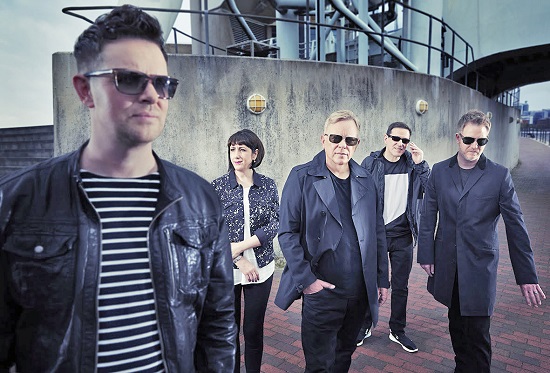
Portrait by Nick Wilson
The lyrics for the Iggy Pop track were something of a first for you, weren’t they?
BS: They were yeah. I was watching a TV documentary about the closure of Japanese brothels. I got this one line from watching the subtitles. It just resonated with me somehow. So the first line came as I was sat there with a glass of wine watching this program. Then when it moved on to a boring bit, a new line came to me, not from the subtitles but from the first line itself. I just have to get one line, and that line gives birth to another line, and that line gives birth to the next line, and so on. Then it starts taking form. When you’ve got four lines, you think, “Where could it go from here?” So I thought that rather than putting a traditional vocal on, with a melody and chorus, verse, chorus, I thought it would work as poem really well instead and I thought Iggy Pop would be a great vocalist for it. In March 2014, we got a letter from Phillip Glass the composer, to ask us if we’d go over to New York City and play a concert at Carnegie Hall for a charity called Tibet House, dedicated to the preservation of Tibetan culture. Patti Smith was doing it, The National were doing it, Iggy Pop was doing it. And we were told we could work with any of them. So I said great I’ve got a track called ‘California Grass’ from Lost Sirens, that would really suit Iggy. He heard the track and really liked it, and said, “Yeah I’ll definitely sing on that, no problem, it’s in a really sweet key for me.” So that’s how we got to meet Iggy and the whole thing was a really good experience. So I put a rough vocal on the ‘Stray Dog’ demo with me doing an Iggy impersonation, which I think caused a few belly laughs in the studio, but when he heard it he just emailed me back and said, “Yeah I can do this.”
The lyrics allude to alcoholism and drug addiction. With Iggy’s past in mind, did he ever talk to you about the lyrics?
BS: We’re all alcoholics and drug addicts in our own way, aren’t we? So I think it applies to everyone.
It seems safe to say that this is a dance album steeped in dance culture. Some of the tracks are clearly influenced by some of the club sounds [Italo, EBM, electro, disco] you were listening to when you wrote ‘Blue Monday’.
BS: It is a dance-orientated album. When I write I’m influenced by the kind of dance music I grew up with, and you can’t help but be influenced by that. But many different things affect your songwriting. One of them is your record collection, and another are the records you’ve heard in clubs or while travelling abroad. Another big influence is what kind of life experiences you’ve had. They’re a big factor in whether you make dark music or light music. Also, the surroundings you grew up in can have a bearing on your music. Like Joy Division, for example, were definitely products of what Manchester was like in the late seventies, which was quite brutal in visual terms. It was a visually brutal city. All these dark satanic mills with smashed windows… but they weren’t even mills anymore, they were just these derelict spaces. That all had an effect on the music of Joy Division. But then it’s also about where you are, as a person at that moment in time. We’ve also spent three and a half years touring and playing live a lot. The best gigs are 50% from the band and 50% from the audience. There’s an interaction between the band and the audience at the best gigs. I think we’ve had some feedback from the audience on what sort of album we should be making. That educated us shall we say.
There’s a dynamic age range difference in the band. Whose role is it these days to interact with dance music in clubs?
BS: I’ve served my time. It’s not my job anymore.
PC: I think the last time I was in a club with you Bernard, a coffee table got in the way, didn’t it? In Berlin, do you remember? You didn’t see that one did you?
BS: Yeah I was a bit drunk. We were in this club in Berlin, and they were playing cool house. And then they put ‘Blue Monday’ on and everyone got up. And I mean everyone, including me. I thought it would be funny for me to dance to one of our own records. I was a little bit inebriated at the time. But for some reason someone had put a coffee table right in the middle of the dance floor. It’s a German thing. So I went flying over the coffee table, and I thought I’d broken my leg. It was really sharp and I woke up with a big duck egg on my shin. We still had quite a few dates to go in the tour so that was my lesson learned. And that’s the last time I went to a club.
PC: We were playing with the Chemical Brothers on that tour. I’ve got an excellent photograph of Bernard in a wheelchair at an airport with Tom Rowland pushing him away from the plane.
How was it working with Daniel Miller at Mute? Was he a hard task master?
PC: It was great getting Daniel Miller on board. He’d come into the studio every two or three weeks and check up on how we were doing, make a few suggestions. He helped out a lot, especially at the end when we were doing the mixes and literally could not see the wood for the trees. You do need that outside help really to finish it.
BS: No, Daniel’s great. He wasn’t holding a hatchet over us. He’s not like that. It was our desire to release the LP this year and that gave us a deadline that could not be broken. We signed to Mute because there had been a change in the band personnel, so it felt synchronous for us to change record labels as well. (Although Warners still have the back catalogue, and we’ve got a very good relationship with them.) We also found the idea of going back to an indie label, and with a figurehead a bit like Tony Wilson very appealing. Someone that would come to the studio and be part of the creative process, so I think we made a good choice.
Can you describe the artwork for the album and how it came about?
SM: Well, Peter [Saville] is very funny. You go and have a meeting with him and say, “We’re thinking of doing a record, do you want to do a sleeve?” And Peter says, “I don’t do record sleeves anymore.” So we say, “Okay, well do you know anybody else that could do record sleeves?” And he says, “I’ll think of some people and I’ll let you know.” And then the next thing you know he’s on the phone, “I’ve been thinking about the record sleeve, I’ve got an idea that might work.” So he came up with this idea: techno-Tudor. It’s fantastic, based on the Tudor-design of black and white, only he’s techno-ed it up with all fluorescent colours. He did this fabulous presentation for us and he had all these different versions of the same design, some in silver and all of these amazing florescent ones. There was this other one, which was mostly white and still had all the lines and everything, but with a touch of pastel, and he said, “I like this one. Do you know why? It’s me not really trying.” And we were like, “Ah, is that a good thing?” So that one was Peter Saville being Peter Saville, but not trying to be Peter Saville, if you see what I mean. There’s quite a lot of other design he’s come up with which uses the same sort of conceptual idea, but looks a bit different. This stuff is a bit more like Anne Boleyn on ecstasy.
With Music Complete are you really going for it? Do you want this album to be a massive hit?
SM: Well, with every record you make, you just do the best you can. Somewhere in your head there’s always this thing – and it’s pointless denying it – that you really want it to be massive. But, at the end of the day, there are so many other forces involved in making it a success or making it tank.
GG: You’ve never really said that about any of our other albums.
SM: No, but you always think it. You put all that work in. You always think it’s going to be great. You hope it’s going to be great. But really you just can’t tell how it will do.
Is it a hallmark of bands from the North West of England to have both euphoria and melancholy running in parallel through them? Are these two of the defining emotions of New Order?
GG: I think so, because they’re the sort of records I like. I like complete misery, or euphoria; I don’t like any middle ground.
SM: This reminds me of when someone described ‘Temptation’ as a “happy sad song”. It’s happy, but somehow doomed at the same time. It’s that kind of mix of things, which I think, is very New Order. It’s a juxtaposition and it’s a mix of those two things that stops the overall effect from being benign.
BS: I think this idea comes from journalists wanting to paint bands with a broad brush. I think The Smiths wrote one song that had the word “miserable” in the title: ‘Heaven Knows I’m Miserable Now’. So therefore they were labelled a miserable band, but they weren’t. If you take ‘William, It Was Really Nothing’, it’s really upbeat and happy. ‘The Boy With The Thorn In His Side’ is a really emotive and uplifting song… Joy Division though… maybe you’ve got a point there. I think it’s just a reflection of the times that we lived in and the kind of upbringing we had. I think Joy Division’s songs were deep. I suppose Ian’s lyrics were very heavy lyrics for a young man to write, and there’s no getting around that, but we always thought his lyrics were concerning a persona and not autobiographical. We heard them and thought, “Bloody hell that’s a bit heavy” but we presumed he was just helping create the mood for the music. We didn’t think he was writing about himself but a persona. But, you know, it turns out that this wasn’t the case and the songs were about him. After he died I listened to them in a different way. But I don’t know, would Joy Division have been heavy with a different vocalist? The music was quite heavy I suppose but then, we’d all had quite heavy lives, so our life was reflected in our music. It depends on your life I suppose.
Tell us something about New Order we don’t know.
PC: I found a button in my ear at the end of the making this record and it had been in there for god knows how long. I had an earache, so I went to the doctor and he looked down inside it and said, “You’ve got a button in your ear.” And I was like, “What?” It was a tiny one off a shirt, and it had been in there for a while apparently.
BS: We’ve got some dulcimer on this album. We’ve got a bit of a dulcimer odyssey on one of the songs. I’ll tell you a little secret. On every New Order album so far, as far back as I can remember, there’s always a song with the working title of ‘The Dulcimer Song’. And it’s always Steve that gives the track this title. But the interesting thing about ‘The Dulcimer Song’ on this album is that we didn’t use a dulcimer on it; even though we did use a dulcimer on one of the other tracks. What is this fascination with dulcimers Steve? There was a kid’s program…
SM: It was an adult show actually that I watched when I was young. It featuring the Yorkshire born folk musician John Pearse and it showed you how to build your own dulcimer. I was ill-equipped to follow his instruction when I was young though and I didn’t have the right chisels. My mum wouldn’t let me get them.
BS: This program has left a profound impression on you. Did something else happen while you were watching it? I remember the program as well actually, he was a kind of Open University type of guy, and I remember thinking, why a dulcimer?
SM: I bought the book. I like the Appalachian dulcimer because it has three strings, I can see the logic in having three strings, so I did buy a dulcimer off eBay for Christmas, yeah.
How do you think the sound of early New Order stands up today?
BS: I think it varies. Obviously some tracks are better than others… time sort of shows that really. It’s true for every band really. I think it’s very hard for us as we’re seeing it from the inside looking out. It’s like living in a house that you’ve only ever been inside and you’ve never seen the outside of but people are always asking you what the outside looks like. It’s interesting when people cover us. I remember hearing a couple of tracks on the television once and thinking, “This sounds really good”, but then going, “Oh it’s New Order.”
SM: That happened to me. I was waiting for a plane, and a song came on at the airport. I was like, “It would be great to do a song like this.” And then you realise, “Oh my God, it’s us, we’ve already done it.”
Music Complete is out now on Mute