
All photos by El Hardwick
Upstairs at The Lexington in London there is an atmosphere the likes of which I have not felt since before the pandemic. Naima Bock’s debut album is still months from release, but all 200 tickets to her show sold out with time to spare and the room is heaving. Bock is onstage with her five backing musicians, who play songs with both urgency and delicacy. After every song the applause and cheering is immense, so immense in fact that it seems to be coming from a different place than the usual formalities of a live show, a link between performer and artist forged somewhere deeper and more personal. It is as if all of us are ebbing and flowing as one along with each chord. A similar experience can be had listening to Bock’s new record Giant Palm, which is immersive to the fullest extent. When, on the gorgeously melodic ‘Every Morning’, Bock and her band sing back and forth to one another – “Are you crying?” the backing vocals ask. “Every morning,” Bock replies – before their respective melodies suddenly dovetail in crescendo, it’s like the voices that back her number in the millions.
All of this, however, points to a paradox: this most communal of music was in fact born from Bock’s decision to no longer play with other people. Having co-founded the indie band Goat Girl, Bock left amicably after their 2018 debut album. “I was feeling dissatisfied,” she describes it to me a few days before The Lexington show. She found touring particularly hard, to the extent that “I didn’t want to pursue music as a career any more. I knew I’d continue making it, but I wouldn’t try to release it.” Although she kept playing solo at occasional live shows, the transition wasn’t easy. “Going from bands to being completely on my own did feel lonely,” she says. She started focussing elsewhere, starting a degree in archaeology and beginning work as a gardener.
Unbeknownst to Bock at the time, another musician named Joel Burton was going through a remarkably similar experience. He too had grown disaffected with his band, Viewfinder, who were being pigeon-holed into the so-called ‘South London scene’ of indie rock acts. “I was playing these guitar songs without feeling like it was what I wanted to do,” he says, joining Bock and I for drinks outside a South London pub. “I felt like an imposter, I felt like, ‘I’m not really an indie guitar boy! I’m into jazz!’ I needed to spread out a bit.” He, too, entered academia after leaving, studying classical piano. “I fell in love with the minimalist canon, and I got deeper into orchestral music and classical music and experimental improv. All the stuff I wanted to learn about that wasn’t really contained in the indie guitar scene.”
Bock had in fact supported Viewfinder during Burton’s final gig with them, which is where he first spotted her abilities as a musician. “I was very taken with her as a songwriter, having all these thoughts about what we could do with the music.” When, after leaving, he was “in a period where I was thinking ‘the more stuff I’m involved in and the more people I play with, the more I’ll learn,” he reached out to a mutual friend Josh Cohen, who runs the DIY label Memorials Of Distinction. It was one of many exploratory projects he undertook at that time, most of which were short-term experiments. With Bock, however, “before I knew it I was creatively invested.”

Joel Burton and Naima Bock
“When we started working together it gave me a reason to do music again,” says Bock with certitude. They soon found that their respective abilities complemented each other perfectly; Bock’s strengths lie in songwriting, she has an innate ability for writing vocal melodies, and a spellbinding voice with which she can deliver them. Burton’s studies were in music of the complete opposite kind – classical, ambient and abstract instrumentals that are divorced from traditional notions of ‘songs’, but he was calling out for a framework. “I was doing a lot of stuff that was very diffuse, and Naima had all these songs that were fixed and could act as a really good anchor,” says Burton. Adds Bock, “I never really listened to classical or minimalist music that much, so it was intriguing to have these different aspects coming in that I wouldn’t have thought of myself.” She says that they even considered giving the project a joint name – “it doesn’t feel like just my album.”
The first coronavirus lockdown began a few months after they started working with one another. It brought considerable turmoil for each of their personal lives, but also the time and space in which they could consider what they wanted from their collaboration. “I was really struggling at the beginning of lockdown, but spending most of it together making music, there could be this really dreamy situation that was very separate,” says Burton. “For all the horribleness and difficulty, one good thing for me was the stop button on any other projects,” adds Bock. Without lockdown, she continues, “we wouldn’t have had such an intense amount of time to work on it, which made the difference.”
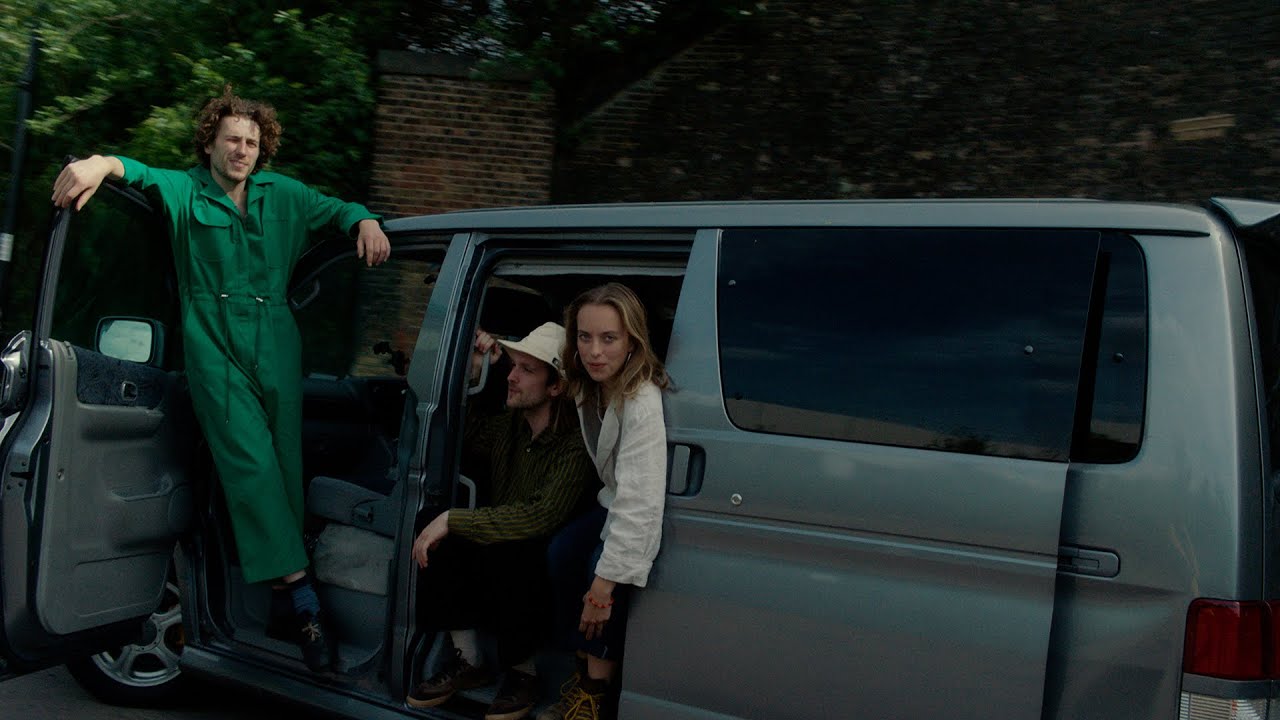
It also meant that all their friends were free, allowing the two to assemble a group of musicians able to provide the instrumentation that their arrangements were demanding; one of Giant Palm’s greatest strengths is its lushness, “Nobody was working, all of our friends were around, so I thought ‘why not be as ambitious as possible?’” says Burton. Adds Bock: “Everyone was happy to do it as well, there was a willingness that also helped with the sound of the record.” You can still feel that sense of willingness in the songs, there is intention behind every piece of playing, however incidental or decorative.
It is the source of that communal feeling that made that Lexington gig so special, yet it also presented a significant challenge for Bock. During nine days worth of recording sessions in the summer, she admits she found it hard to fathom why so many talented friends and musicians were giving so much of themselves to songs that at that time she herself was struggling to see the value in. “My confidence level with my songs was very low – it always has been quite low,” she says. “It was a great summer, but on the other hand what I was going through personally during that time made it like cutting myself open and spilling my guts out onto the floor in front of loads of people I don’t know. There was a real vulnerability that I felt, particularly during the nine days of recording. It was a difficult emotional trial, because these were songs that I’d had to myself for so many years, I was able to keep them in my world, then our world for a little bit,” by which she means herself and Burton, “but then I had to put them in front of a bunch of people.”
It was beneficial in the end. “It’s helped me to understand the songs a little better, and to have that vulnerability as a strength without destroying it,” she says. The way she and Burton complement each other musically is significant, but perhaps more important than that is the way his enthusiasm for her music helped with mental barriers. “If I hadn’t been working with Joel, I wouldn’t have been able to expose any of that,” Bock adds. From Burton’s perspective, “she was just someone with really great songs who I was excited to work with. This emotional thing is something we’ve spoken about a bit recently, but when we were in the studio, I was spun around with so much to do. I just thought the songs were great and it seemed very obvious to me that we should see them through.”
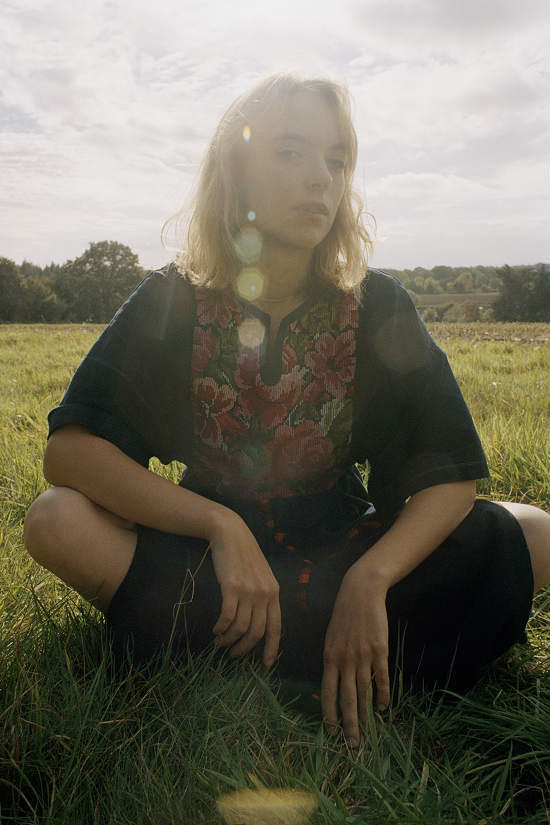
See them through they did. “We could have done it with two guitars, a bass and drums,” Burton says, “but I was very interested in pushing the sounds as far out as they’ll go whilst maintaining the limits of the songs.” They worked on them to the extent that each track on Giant Palm feels like a self-contained project in itself. “I see each song as having its own sonic universe, one track having its own implication and the next something completely different,” says Burton. There is indeed a vast contrast between, say, ‘Campervan’’s untethered waltz, ‘Toll’’s expansive prog, and the ambience of ‘Dim Dum’.
The album closes on ‘O Morro’, a cover of the bossa nova standard, and given that Bock is of Brazilian (as well as Greek) heritage, and spent her early childhood there before her family moved to South London, it’s tempting to read an element of ‘tribute’ to her roots into Giant Palm’s sound, yet this is something both musicians reject. “Ultimately, I grew up in England, I don’t want to milk it too much,” Bock says. Equally, to read too much into Bock’s membership of the trad collective Broadside Hacks would also be a mistake. Vocalists like Shirley Collins are an influence, she explains, “but I see this album as distinct from my love and passion for folk music.” Folk and Brazilian music are still a part of the considerable mix of influences that informed the record, but “they’re relevant in the way that a lot of other things are relevant,” says Burton. To pluck any single ingredient and put it on a pedestal would do a disservice to the levels to which the musicians set about building their sonic universes. Perhaps more relevant in terms of linking them to Bock’s personal life would be her interests in gardening and archaeology, the two pursuits she dived into after leaving Goat Girl. “It’s easy to get quite high with music,” she says, “but other things help you get down, literally and spiritually. Digs helped stimulate my intellect because I hadn’t been in school for so long, and it was something I could travel with while also very much being in one place.”
It is, in the end, the same combination of stillness and exploration that one might find on a dig that defines Giant Palm. Even if every song inhabits its own world, listening to the record you’re invited to sit and stay a while in each one. That her music should be so inviting is testament not only to the abilities of Bock, Burton and the many other musicians who play on the album, but the way in which the album’s creation, for all the emotional tumult it brought, has seen the vulnerability at the song’s cores amplified into magnificence.
Naima Bock’s debut album Giant Palm is released on July 1 via SubPop