All photos: Karen Willey/encyclopaediaelectronica.com
From The Port To The Bridge is an intimate and engaging exhibition exploring the post-punk electronic pioneers Thomas Leer and the late Robert Rental. Originally staged at Greenock’s Beacon Arts Centre in 2018, the show made its London debut at the Horse Hospital this January. The exhibition chronicles Leer and Rental’s lives in music, pivoting around the recording and release of their seminal 1979 album The Bridge.
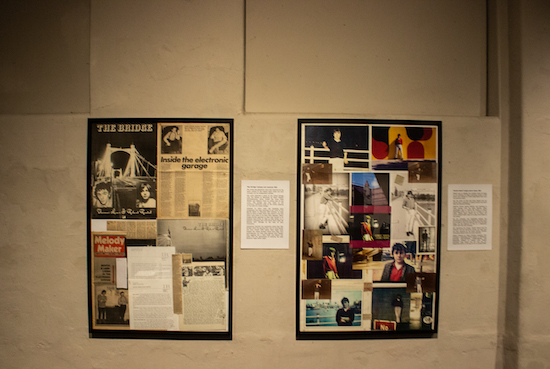
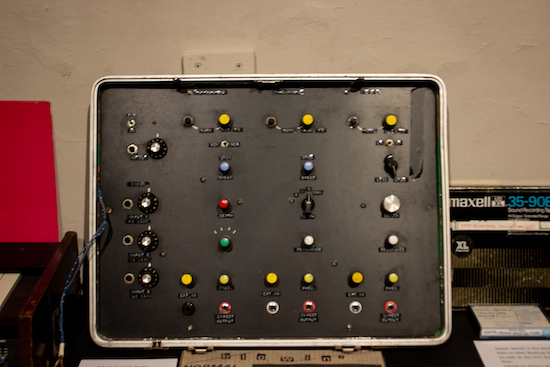
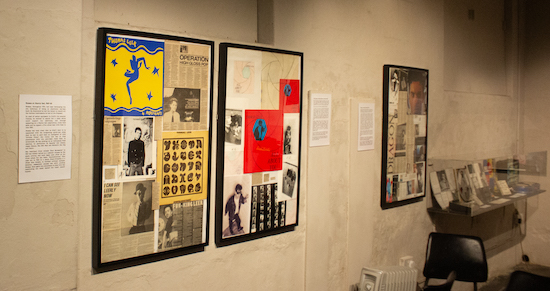
The show is curated chronologically with the narrative following a clockwise direction around the venue’s basement. The story is told primarily through large frames holding collages of press clippings and photographs. Generously detailed explanatory notes are mounted on the walls, but a zine, authored by curator Simon Dell and published by Encyclopaedia Electronica, is available to purchase for anyone who wants to dive deeper. There are cassette demos, backing tapes and original vinyl pressings displayed in the glass cabinets, but the biggest draw for many will be the instruments. For example, Daniel Miller of Mute Records loaned his noticeably weathered (but still functional) Korg 700S synthesizer, on which he wrote ‘Warm Leatherette’ and ‘T.V.O.D’. Many of the items, however, come courtesy of Thomas Leer himself or Hilary Farrow, Robert Rental’s widow. Also on display is the acid-coloured EDP Wasp, a synth which tended to spontaneously play itself when the temperature in a club rose too high, but one that also gave The Bridge its signature sound.
Leer and Rental, born Thomas Wishart and Robert Donnachie respectively, hailed from Port Glasgow, a shipbuilding town on the southern bank of the lower River Clyde. Both men showed interest in music from a young age with Thomas playing in a string of local rock bands. It was expected that they would follow their families into heavy industries, which were abundant on the Clyde at the time. Instead, they became gardeners and met while working at Parklea Nursery, bonding over their mutual love of Jimi Hendrix, Pink Floyd, and Cream.
After a period of hitchhiking across England in the early 1970s to attend the Glastonbury and Windsor Free festivals, the pair experimented with communal living. This eventually led to them forming a punk band, in 1976, along with Thomas’s partner Liz Farrow on bass and Andy Aitken on drums. Calling themselves Pressure, the group attempted to make their mark in London’s punk scene by playing gigs at the Man In The Moon pub on the King’s Road in Chelsea. However, after seeing Siouxsie and the Banshees and The Slits playing in Croydon in late 1977, Leer broke up the band. “They were doing what I wanted to do,” wrote Leer in the Overground fanzine some years later. “I split the band and decided that the proper thing to do was to bring the electronics back in again”. Punk, he felt, had run its course and it was time to go in a different direction.
Before moving to London, Leer came across Tonto’s Expanding Head Band, one of the first groups to use synthesizers in their music. Not being able to afford a synth, Thomas persuaded a friend who worked in a school science lab to make him a series of ring modulators and other modules. They were encased in little boxes with nails poking out of them so that they could be played by hand. It was this DIY ethic, along with punk’s primal energy, that gave Leer and Rental the impetus to push their work further.
Daniel Miller, who reissued The Bridge on vinyl and CD this year, gives credit to The Desperate Bicycles for educating many in the punk scene on how to make their own records. Miller used this knowledge to record and release the ‘Warm Leatherette’ single as The Normal in 1978. Leer and Rental also released singles around this time, ‘Private Plane’ and ‘Paralysis’ respectively, using only the rudimentary equipment set up in their homes. ‘Private Plane’ made single of the week in the NME that October. These tracks, along with Cabaret Voltaire’s Extended Play, The Human League’s ‘Being Boiled’ and Throbbing Gristle’s ‘United’ paved the way for the synth-pop era of the early 80s.
Miller and Rental first met at a Throbbing Gristle show at the London Film-Makers’ Co-op. Rental had produced soundtracks for Nick Emery’s films Burning Land and Facelift (both on show at the exhibition) and Miller was working in the film industry at the time. Finding that they had many ideas in common, they went on tour together as Robert Rental and The Normal, supporting Essential Logic and Stiff Little Fingers on the latter’s Inflammable Material tour throughout February and March 1979. Miller remembers the shows teetering from “very bad to absolutely awful” with punk audiences reacting to the duo’s electronic sounds by throwing lit cigarettes, glass, and chains onto the stage. William Bennett of Essential Logic, who befriended the duo while on tour (and subsequently formed the power electronics project Whitehouse) was inspired enough to create “a sound that could bludgeon an audience into submission”.
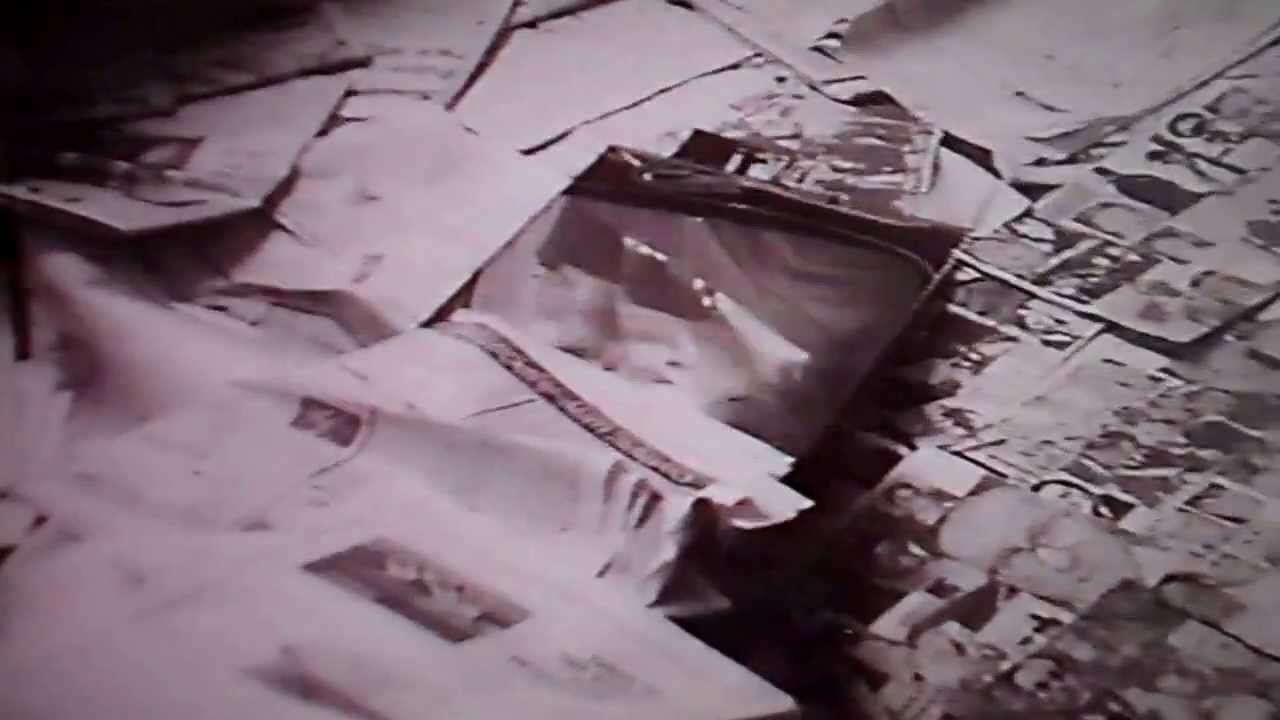
Facelift (8 min 30 sec), directed by Nick Emery, Sound by Emery and Robert Donnachie (Rental), 1977-78
Meanwhile, Leer was making music on his own using a recently purchased Wasp synth. He continued to make demos with Rental upon the latter’s return from tour. These recordings found their way to TG, who signed the duo to Industrial Records. Through Peter Christopherson’s connections with Hipgnosis, TG hired an eight-track recorder, mixing console and other recording equipment from Pink Floyd’s Britannia Row studio. Chris Carter set up the equipment in Rental’s Battersea flat, but gave them only a basic explanation of how the equipment worked. TG tasked the duo with writing and producing an album’s worth of material in two weeks.
These sessions materialised in The Bridge. The record has two distinct halves with the A side channelling punk’s energy via the duo’s motorik influences and the B side exploring ambient textures inspired by the tape delay operational diagram printed on the rear sleeve of Brian Eno’s Discreet Music.
Despite the record’s relative success (it sold over 7,500 copies in the first nine months after its initial release and reached #9 on the UK Independent Chart in 1980), Thomas and Robert eschewed playing live or even working together as a duo again, which jeopardised a licensing deal from EG Records. Rental released only one more single, Double Heart (Mute, 1980), before becoming disillusioned with the music industry and retreating into family life. Leer carried on making music and a significant part of the exhibition is devoted to his post-Bridge career with labels Cherry Red, Arista, and ZTT (as one half of the pop duo ACT, along with Propaganda’s Claudia Brücken).
Music archivist and exhibition curator Simon Dell does a good job of weaving together an engaging story of two quiet but obstinate Scots whose uncompromising vision and brief collaboration led to the making of a really unique record. Additional context is provided by filmed interviews, conducted by Dell and Danny Stoker, with The The’s Matt Johnson, Daniel Miller, as well as TG’s Cosey Fanni Tutti and Chris Carter. Andy Wishart’s fifteen-minute interview with his brother Thomas Leer is also shown. It’s a pity that only one pair of headphones is made available, which makes group viewing impossible, but luckily some of the interviews can be found online.
For a collaboration that lasted a handful of years and produced only one full-length LP, the legacy of Leer and Rental’s The Bridge has rippled through electronic music. Artists such as JD Twitch and Ekoplekz continue to champion their work with the latter even naming one of his tracks ‘Robert Rental’ in honour of the late musician. Outside of niche electronic circles, however, the duo’s work remains largely unknown. This exhibition, along with Mute’s reissue of the album, will surely help to rectify this.
From The Port To The Bridge is on at the Horse Hospital, London until 10 February 2022. The re-issue of The Bridge will be released on 8 April via Mute.