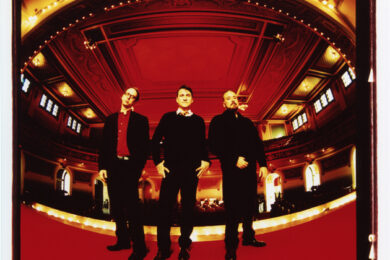

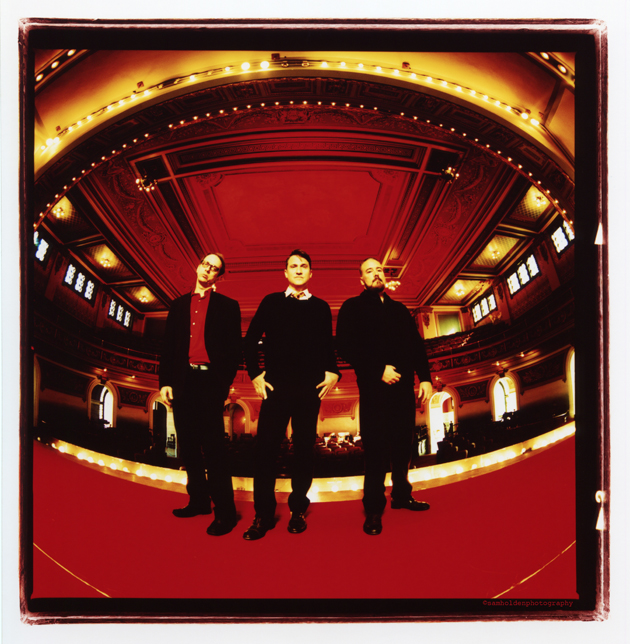
Panther stealth and Roman Candle intensity, The Afghan Whigs at their peak were the only American band you needed to listen to.
Their reunion, like Pulp on this side of the Atlantic, feels like the Big One of 90s comebacks: scores to settle, wrongs to right, unfinished business.
A planet apart from their Sub Pop peers, The Afghan Whigs made records which reverberated with the class and elegance of Sixties soul, tore the lid off the male libido and exposed its ugly secrets with brutal candour, and crackled with sheer sexual energy. Their 1993 masterpiece, Gentlemen, stands as one of the decade’s very finest, but their other five albums snap tenaciously at its heels. As I wrote at the time, they were the band who put the ‘sin‘ and the other ‘sin‘ into Cincinnati. And the ‘natty’.
It’s Lundi Gras in New Orleans and singer Greg Dulli, the man whose persona – part suave motherfucker, part louche ladies’ man, part mafia don – was the Whigs‘ driving force, escapes from the carnival chaos to the refuge of The R Bar, the French Quarter juke joint he now owns, and tells me why they‘re bringing badass back.
How do you feel, revisiting those songs two decades on? Are you still the guy who wrote them? Do you even recognise that guy?
Greg Dulli: I recognise aspects of that guy. Some aspects of that guy, I wanna give him a hug. There are parts that I remember, and there are parts that are foreign, and there are parts that are amusing, and there are parts that are sad. A life in review.
You say you wanna give that guy a hug… but do you ever wanna give him a slap?
GD: Sure! Any time you can look back on your life, there’s probably moments that deserve a slap, yes.
The Afghan Whigs were the only band of your generation to give a truthful expression of masculinity in rock. Everything else was either the cartoon sexism of hair metal, or the equally unrealistic romanticism of indie rock.
GD: Um… wow. Well, I dunno how I managed to skirt between those two, but maybe it’s like water flowing through rocks. It always finds the cracks.
Lines like "This ain’t about regret/My conscience can’t be found" or “I’ve got a dick for a brain/And my brain is gonna sell my ass to you” always caused mixed feelings for the male listener: on the one hand, “Yes! This is what we’re thinking!” On the other hand, “Nooo, don’t tell the girls!”
GD: Hahaha! Well, I was raised by three women, so it’s pretty hard to get anything over on ‘em, you know? They’re pretty smart folks…
Your horns are always showing. It’s why telepathy would be a disaster for male-female relations.
GD: Absolutely. You know, things are as they are for a reason. I do believe that.
It’s not that you didn’t admit to weakness. “You think I’m scared of girls? Well maybe, but I’m not afraid of you…” There’s an acknowledgement of vulnerability there.
GD: Yeah, but quickly followed up by reassurance that I have that particular aspect covered!
In a way, the Whigs were actually making a progressive, pro-feminist point. With a line like “Hear me now and don’t forget/I’m not the man my actions would suggest”, you were admitting that men were every bit as deceitful and manipulative as women, in song, are usually portrayed…
GD: With the human animal, the blueprint is remarkably the same on both sides, I’ve found.
It’s interesting that you recently recorded a cover of Leonard Cohen’s ‘Paper Thin Hotel’, filmed for Rolling Stone’s website, because Cohen’s an example of someone from a previous generation unflinchingly telling it like it is.
GD: There are no Whigs in that. I did that on my own. But yeah, Leonard Cohen is a poet. He’s one of the great poets of our time or any time, in my opinion. He’s really a legend.
Has your unflinching honesty ever caused problems in your real, personal life? I mean, you’d meet a woman and she’d say “Wait a minute, I’ve heard your songs, I know what you’re like…”
GD: Um… that has happened! It’s why I’m single.
How do you deal with that conversation? How does that go?
GD: I tend to try to avoid it. It’s why I have a raft of pseudonyms, haha.
I suppose You could always give the actor’s defence: “Oh, that’s just a character I’m playing…”
GD: That’s never gonna fly, on a girl. They know.
The humour in your songs is often overlooked. The couplet “I knew a girl extraordinary/Suggested something unsanitary” is laugh-out-loud funny, and “Now we got Hell to pay/Don’t worry, baby, that’s OK/I know the boss” is comical in how badass it is.
GD: It’s like a great line in a movie, or a line in a book that pops off the page and makes the entire chapter worth your time. It’s a pay-off, you know? I’ve always been a big fan of the pay-off. As the writer of the song, I’m paying myself off. Anybody else who gets pleasure from the pay-off is more than welcome to jump on board…
Do you think you have, or had, a pessimistic view of human nature? There’s that line in ‘Blame Etc’ that goes “Beware of who you trust in this world…”
GD: Yeah, I definitely have had to evolve. You know, the person who wrote that song is a long time ago. I can tell you with great certainty that I believed that with all my heart the day I wrote that song.

The sound of The Afghan Whigs’ records was a wonderful thing. For some reason I always associate it with colour: it feels like dirty bronze, or burnt honey, or something on that spectrum.
GD: "Burnt honey"? That’s a great name. I might steal that from ya! Burnt honey is fantastic. What a beautiful image that comes up with. I’d like some burnt honey right now, haha.
There was something really distinct about it, even among the Sub Pop bands. You really stood out from the pack.
GD: We were literally from 2,000 miles away from what was happening there. When I went to Seattle for the first time, which was in ‘89, there was something happening there, an energy that I never felt anywhere else. It was pretty remarkable to watch. I was a fan of a lot of those groups: there was a great power there. We were never in any competition with the Sub Pop bands because we were trying to do something different. But the first time I saw The Fluid, blew my mind. First time I saw Mudhoney, amazing live band. Tad, amazing live band. Nirvana, amazing live band. So it was an exciting time to be part of that… but in no way, shape or form were we trying to be that. We were definitely cruising toward our own thing.
It feels like a band like The Afghan Whigs couldn’t happen now. Audience attention span has shrunk. People wouldn’t put the time in. Noisy guitars equals adolescent rage, and no-one would look past the surface.
GD: Ah, I dunno. There’s a lot of great music now that takes some time to figure out. There’s always an audience for something really good, and I think we would have found an audience today.
You’re playing a gig with Soundgarden soon, another old Sub Pop band, and their kind of thing is easier for listeners to process – that straightforward, chest-beating male aggression…
GD: Um, yeah… you know, I don’t know Soundgarden’s music that well, but I watched them a couple of times and they put on a great show too. The pageantry of rock & roll, it’s timeless. And if you can write a good song and play it in a convincing and charismatic fashion, someone’s gonna watch ya.
The way you presented yourselves visually was very distinct from the rest of the pack, too. The sharp suits instead of the plaid shirts…
GD: I never looked good in plaid! That was never gonna work for me. I’m a monochromatic guy. Hahaha!
Which women found incredibly sexy, of course.
GD: I liked having girls at the shows! A very key component of the concert is ladies.
I love how aware you were of the power you had over them. Dropping the cigarette from your mouth at the start of ‘Gentlemen’, stubbing it out with your toe and saying “NOW…” I saw women just melt when you did that.
GD: Wow. Well, I don’t smoke any more so I’m gonna have to come up with something else.
Of course, it’s banned now anyway.
GD: Sure! Maybe candy cigarettes or something…
I always felt like the scenarios in your songs took place in a grown-up world – in real, adult bars, not rock clubs. Places where you don’t walk in and everyone knows it’s Greg Dulli from the Afghan Whigs.
GD: Well, I was never interested in going into those kind of bars anyway. I always like the anonymous, dark bars of the other side of town. I went into bars to drink and get drunk, not to make friends.
The Afghan Whigs were known for their soul/R&B covers, which were often very modern at the time (like TLC’s ‘Creep’). Have you kept up to date with that? Or will it just be the ones you played in the 90s on this reunion?
GD: I’m not interested in doing that, the same ones. There may be a couple that we play. I’m sure we’ll play (The Supremes‘) ‘Come See About Me’ at some point, but any covers we do will be updated. Even if they’re not from now, they’ll be new to us. We played a couple of new covers at a rehearsal so I’d imagine we’ll play a couple of things people haven’t heard before. I’m not interested in coming out and doing a whole bunch of new stuff. To keep it interesting, and timely for me. I’m there to entertain myself, as well.
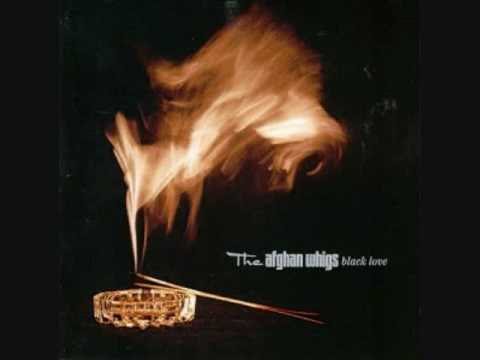
The Twilight Singers felt like a smooth and seamless continuation from The Afghan Whigs, even though the personnel was different. But when I saw the Twilights in Brighton recently there were maybe 100 people there, whereas The Afghan Whigs can fill Alexandra Palace for two nights. Why do you think that is?
GD: Brighton? The Afghan Whigs couldn’t fill Brighton, ever, so I don’t even know why The Twilight Singers were in Brighton! We played to 1,000 people in London. So, I think that that Brighton was never a good place for us, haha.
The name The Afghan Whigs still carries a lot of power, and a lot of people are incredibly excited by the news of the reunion. Were you aware of that?
GD: I don’t know. I’m always kind of the last to know about stuff. I’m hoping people were excited, but I’m the last to hear about it. I sort of don’t pay attention to any of that stuff. I think when the gig starts to roll around, that’s when I start to get involved in what’s gonna happen. But it’s all kind of unknown to me, and the ‘unknown’ factor is what’s kept me intrigued about my performance. Brighton notwithstanding!
When old bands get back together, cynics always say “They’re doing it for the money”. But you’re a successful entrepreneur outside of music – you’ve got the Royal Street Inn & The R Bar in New Orleans, you have homes in three different cities – so you can’t be doing this for the money. What’s your motivation?
GD: My motivation is to sing these songs with my old friends. I went to see Buffalo Springfield last spring, and the joy on their faces… I toured with Neil Young, a long time ago, with the Whigs, and I watched a guy who’s playing with his old friends and just having the best time. They really enjoyed being onstage together. There’ve been little moments, in the last couple of years, that have tipped me back towards doing this, and that was one of those little moments of just like: “Aw, look how happy everyone is! The audience is happy, the performers are happy, there’s just happiness everywhere!” And it was for no other reason except that everyone wanted to have that communal experience again. And that went a long way, for me, in deciding to do this again.
How did the proposal for the reunion come about? Was it directly from you, or did someone else come to you with the idea?
GD: People have been coming to me for many years. Like, ten. But there was kind of a perfect storm. The acoustic tour I did a year and a half ago, John Curley (Afghan Whigs bassist) came out with me for five or six of the shows, and then I saw Rick McCollum (guitar) last spring when I was on tour with Twilight Singers, he came to the show and we had lunch. We’ve always stayed friends. We never broke up the band for any reason other than we’d taken the band as far as we wanted to take it. We aren’t getting back together to make a new album. We’re doing this one time: see it now, or never see it again. That’s what’s going to happen here.
Which line-up are people getting now?
GD: Well, you’re getting the three of us [Dulli, Curley, McCollum], and you’ll have to wait and see who the other few people are. Three guys started The Afghan Whigs, and three guys made all six albums. Those are the three guys you’re gonna see. We’re the only three guys who made all the records and did all the shows. And we are The Afghan Whigs. That who you’re gonna see: you’re going to see The Afghan Whigs.
Who phoned who? And what was the reaction?
GD: Well, I suggested it to John when he was visiting me last summer, and we just talked about it for a few days, whether we would do it or not. And we kind of let it lay until Barry Hogan [All Tomorrow’s Parties founder] contacted me and was in a little bit of a bind after Guided By Voices were unable to fulfil their commitments. So in a lot of ways, we were kinda stepping in to help someone out. Then it turned into “Ah, we’ll play a few”. We’ll see. I’m imagining we’ll play more than four gigs. We’ll probably play 25-30 gigs, would be my guess. We’ve got five gigs now, and we’ll play at least another 20 gigs, I would imagine.
There was a brief reunion in 2006 – what happened with that?
GD: That was not even a reunion. We got together for a Rhino Records retrospective, and they asked us to cut a couple of new tracks, and we just got together in the studio. Again, we’ve always been friends so it’s not any kind of great thing of having to swallow your pride to get back in the room. These are my buddies, so we were never at odds in a friends relationship. We just wanted to do different things, so we split up, and when we’re done with this, we’ll split off again.
As well as the fun of getting back with your friends and playing those songs again, is there an extent to which you want to remind people how great The Afghan Whigs were, and to secure your place in history?
GD: Our place in history is secure. All we have to do is… I’ll put it to you this way, man. Every time I walk onstage, I play for my rep. You know what I mean? I come out swinging. And I will come out swinging in whatever group I’m in. And it will be no different with these guys. We’ve got great songs, we are a great live band. And in our time, I would put us against any band in the fucking world, you know what I mean?
Absolutely. I remember.
GD: Trust me. When the lights go up, we will be there to kill. And there will be no in-between. We will be in full assassin mode.
Lastly, my inner fanboy is getting the better of me and I have a nerdy question. What’s the significance of Fountain And Fairfax? [Gentlemen album track six] A friend of mine actually went there, and told me it was just a boring Los Angeles street intersection.
GD: Right… there’s a church on the south-east corner of Fountain And Fairfax, it’s Crescent Heights Methodist Church, and that is where they do Narcotics Anonymous meetings and Alcoholics Anonymous meetings. It’s a very popular place for that. I actually went with a friend, who was being sober, whenever that was – 19 years ago, I guess – and I had never been to a meeting like that before. And I imagined the internal dialogue later on as I wrote the song. The impetus and inspiration for writing that song came from attending that meeting at Fountain and Fairfax.
Afghan Whigs curate the Sunday of this year’s I’ll Be Your Mirror festival held at Alexandra Palace May 25 – 27. For more details click here