
Sorry this has taken so long. The makers of the greatest album of the 90s, unlike many of the other bands I’ve been speaking to, are still at it y’see. And so have I been. Going to gigs & stuff I haven’t done for years. Realising there’s only one thing that stops you being back in the fray and that’s yourself. Only YOU can stop yourself, deny your destiny, only YOU can get back in the swing, start windmilling against your own decline. A few months ago, perhaps in a pique of frustration, perhaps in a paroxysm of paralysis and existential despair, I toyed with the idea of never writing about music ever again. But things keep dragging me back. Namely the shit being spouted out there.
”I know this kind of grandiosity is pretty endemic to the UK music press, but I stopped reading the NME a while ago, you know, and the rhetoric here is getting thick. Both that magazine and these articles have the same kind of Wisdom From On High, Dictating History kind of feel to me. I am getting pretty sick of Kulkarni’s reactionary use of the word ‘pop’ (which in his scheme is merely co-equal with stuff he likes, anyway) as a shitty stick to beat on not just the work but the intentions of whatever bands he doesn’t like.“ – Facebook Commenter last week.
Ok, nailed. Except he’s wrong because he has the damn fool notion that Pop is a type of music. Pop is not a type of music at all. It’s a way of listening. It means the highest of standards. An intolerance of joyless indulgence. A thirst for form, beauty, discipline, meaning in a life where none of that seems apparent. The only standard, the only rigour sometimes, in an otherwise squalid, shabby life. Pop is a type of music only if music is the main thing you’re into, a big part of your life. If pop is your only life, the only thing sustaining you, is also a way of dressing, talking, thinking, a consciousness that’s dominated you since birth, a way of knowing what you like and liking what you don’t know, then it could never merely be a type of music, just like a song can never merely be sounds and words.
Pop is, I reiterate, a way of listening, the only way of listening I ever learned or cared for. It means giving everything a chance, but letting nothing off the hook. The only way of listening I ever wanted to express.
The year is 1993. Dole. Living in the cinema, in at 11 in the morning, then hiding under seats & ducking between screens all day hiding, hiding from work, hiding from reality. Out drinking at 7, home by 3, up at 12 to be born again, to hop on the bus to the cinema again. The life I loved, utter penury, £70 quid a week on nothing but junk & survival & records from the library. Reading music press, getting increasingly fucked off with its treatment of the music I love, its constant foregrounding of boys with guitars and it’s ephemeralisation of music whenever it seeks a different template, or those boys who dare to have long hair and fucking shred. Hip-hop and metal laughed at when I think they’re the only story that matters. When are white people gonna come at black music without laughing at it, tickling themselves? When are middle-class indie fans gonna stop smirking at those moments in metal where their half-arsed pootling with rock is exposed for what it is? When are they gonna shut the fuck up and listen and realise hip-hop is light years ahead of rock & roll? I put such haphazard thoughts as I can into a fevered angry missive to Melody Maker, sign it Clifford C. Clavin
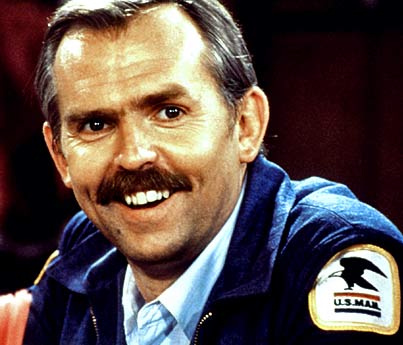
I stick it in the post. Carry on tripping myself up & out as best I can and try and think no more of it, perhaps dimly realising I’ve shot my bolt, trying not to worry about whether it’s now or never.
Next week, unbeknownst to me, the man I owe everything, Taylor Parkes, spots my letter in the pile at Melody Maker. Spots something in it – god knows what – pushes it towards Cathi Unsworth who’s editing the letters page that week. She makes it letter of the week. She writes at the end: “Do you think you can do any better Mr. Clavin?”. Being an arrogant little fuck, yes, I do think I can do better. I phone them, tell them so, Reviews Editor Jim Arundel asks for some sample reviews. I put the phone down with my heart somewhere above my head, gulp deep, walking on air with the absurdity of this & in a week send him some stuff.
Genuinely never tried writing about music before. One is a 10,000 word review of Miles Davis Kind Of Blue that I thankfully can’t recall a word of. What the fuck was I thinking? I also send him a quickly dashed-off thing about something I saw that week that had absolutely blown my mind. A show that made me realise that contrary to my grouches and grumbles, white absorption of black influence didn’t have to be condescending, could in fact be metabolic, instinctive, beautiful, and didn’t need to falsely throw on a surface set of iconography and stereotypical behaviour, didn’t need a punchline. Something that showed a possible way in which white pop could take on jazz, hip-hop, d&b and its own sense of fragile dislocation with indie-pop’s present and turn it into something uniquely honest and new and wonderful.
It was Pram who in a little bar in Cov underneath the old cinema on a Wednesday night late ’93 cracked me like a fucking egg. I had no idea who they were beforehand, I just remember reading something Taylor wrote about them and thinking, ‘Hmmm, they might be interesting.’ And I went to see them and everything started right there. Everything. Cos without them giving me something to write about that wasn’t just rancour, I doubt I would have been taken on. They gave me hope. They made me smile.
And they went on to make, I think, the finest music of their generation, certainly the greatest album of the nineties in their début LP The Stars Are So Big, The Earth Is So Small… Stay As You Are that crept out on Too Pure in late 93, songs from which made up the bulk of what they played that night. I stomped, almost angry with myself for not listening to them before, down to Spinadisc in Cov to buy it the next morning. But that night, in that room, none of us knew what would happen. We only had a vague handle on what was happening right in front of us, how we were in about 50 feet of space but an avalanche, a volcano, a deluge of heaven was erupting in front of us. It felt new, and sure when you’re young, everything does but even through the two decades of fog since, my memories of that gig are a diamond-shot dum-dum to the dome. Live, Pram were like nothing else I’d ever seen and everything I’d ever-never heard.
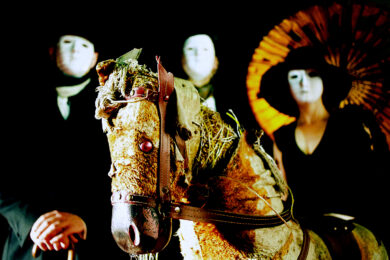
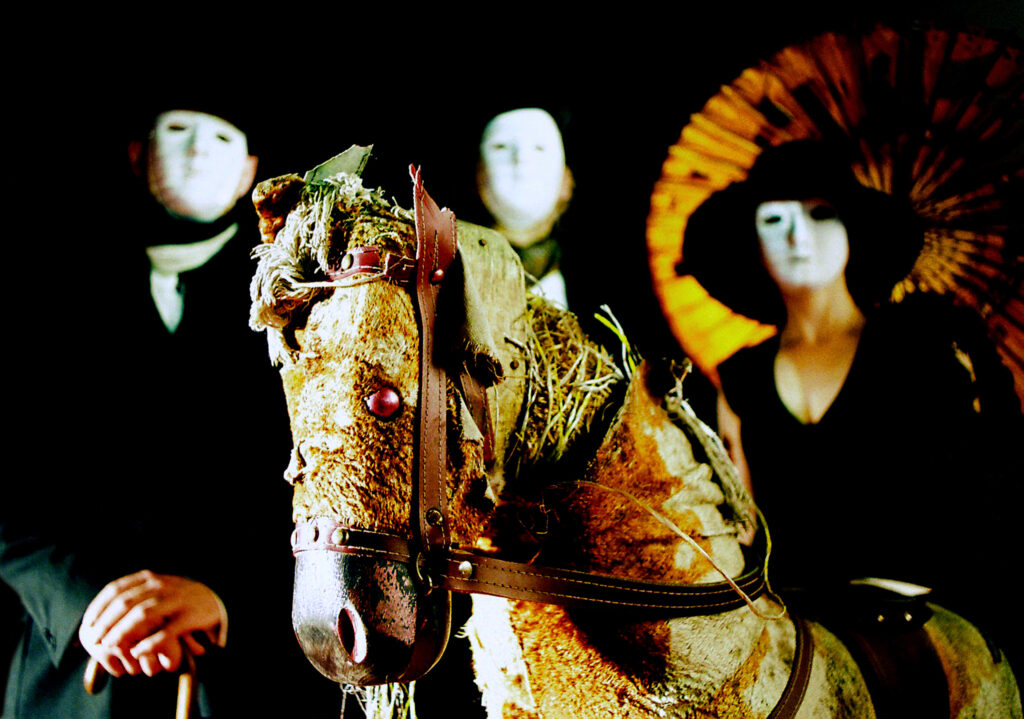
For starters they looked like normal people. As skint as you. Keyboards on ironing boards, straight up kitchen-sink drama. I doubt anyone who ever saw Pram live ever actually expected them to sound as mighty as they did once they started playing. Your jaw wouldn’t just drop beyond the floor, it’d scrape through the mantle. You’d have to reconfigure your assumptions and expectations about what was do-able in pop. You’d have to realise that anyone can make magic if they’re together, if they’re united in curiosity and wonder.
The back story I was piecing together like a detective, as you had to back then – they were from all over the country, mainly the Midlands & Yorkshire, they lived in Brum, they’d come out with a couple of EPs on their own Howl imprint and also on Too Pure. One called Gash that was produced by Justin Broadrick and was apparently noisy and punky and thanks to the words, unsettling in a wonderful way. I hadn’t heard it, but I believed the writers who said so. Next I heard ‘Watertoy’ from a Lime Lizard tape cos I couldn’t find the next EP Iron Lung in my city either. ‘Watertoy’ towered over everything else on that tape, made me realise that Pram were moving into a space where they were hella funky, visionary and uniquely British.
Live, I got the realisation that they were together as a gang on a deep weird level way more than any rock band I’d ever seen before. I started focusing on the details. The gorgeous ‘weak’ yet indomitable voices of Rosie & Sam, the verite Delia Derbyshire keyboard drones and the Verdigris trumpet. The clamlap bass, the roots-rocksteady rhythms the drummer brought. These were eye-wideningly loose and collar-poppingly tight, the best drummer I’d ever heard live this side of Narcizo, the best beats this side of Premo or Pete Rock. I made the hip-hop comparison (as I did in print for the best part of the next decade, either in trying to sum up Pram, or trying to sum up a hip-hop track I thought sounds like Pram) not out of disingenuity but because IT SOUNDED THE SAME: listening, watching, you’d be mental if mentally you didn’t see links between THIS:
AND THIS:
They have the same sense of something pre-pop and ancient, some heat from the dawn of time that afforded a jump-off to any point in the history & future of the cosmos, that same use of something seemingly prehistoric to create something pulverisingly modern in the best, warmest sense.
That night, Pram played a 20 minute long song called ‘In Dreams You Too Can Fly’ that did things I thought could never happen again in music. It was genuinely transcendent in a real out-of-body-but-in-my-body sense. It returned me to feeling like an animal, with all the supreme self-awareness and un-self-consciousness and beauty that implies. Yeah, heavy, eaten by some squirrels, but I fucking felt it man. And what always startled me about Pram, from their founding masterpiece I want to talk about here, through their incredible ‘Helium’ & ‘Wide Sargasso Sea’ & ‘Telemetric Melodies’ albums that have flowed in their 20 year history since, is how INSTANT the appeal always is, how heartbreaking it was that music so marginalised sounded like the only pop music that mattered, like a new thrill where all around was such necrophilia and impotence. If a 20 minute track never slips into the background, makes you feel glad to be alive, makes your youth a less lonely place to be, tells a truth clearly and concisely and not a second too long or too short, it is pop.
20 years after those 20 minutes blew my mind, Sam & Matt from Pram spoke to me in their still-cluttered Brum home, the home that’s still the base for all Pram activity because Pram, uniquely among the bands I’ve spoken to in this series aren’t just back together, they’ve NEVER been apart. I ask them, did they let themselves become part of this thing called Pram (initially Hole, a name they dropped when they realised some band or other from America had already called themselves that) with their eyes open? With definite ideas about what was going to happen? Watching them back then, they seemed as amazed by what happened when they all plugged in and played as the audience was.
Sam Owen: “I had no idea what I was getting myself into. I liked a lot of the current bands the others were listening to – Sonic Youth, The Pixies, My Bloody Valentine, The Fall, Big Black – but The Residents, The Raincoats and Krautrock were new to me. I was making it up as we went along but it somehow seemed to fit together. My first gig with Hole was a week after I joined.”
Matt Eaton: “There was never any discussion at that time what the group would sound like, we appropriated some of the working methods of Can and Faust after reading about them and of course listening to some of the great records – particularly Tago Mago + Faust IV), at the same time we’d develop songs with more conventional structures – we’d think nothing of 20 minute improvisations or playing for an hour – the aim was generally a song though, even if it came about in an unconventional manner.”
But was there a deeper impetus behind things? Seems odd to say but it’s rare now for a band to come together actually intending to make ‘new’ music.
ME: “Well yeah, the whole ethic of the band, though it was unwritten and rarely spoken, was to create new music, so if a piece had a similarity/reminded someone of another work it was generally rejected. The emphasis was on new. We were inspired a lot by groups like the Slits, and especially the Raincoats. They invented their own ways of playing music – that’s a surefire way towards artistic fulfilment. We were never that cerebral about it though, and it would be wrong to claim there was a master plan – it was all about new sounds and new ways of writing a song.”
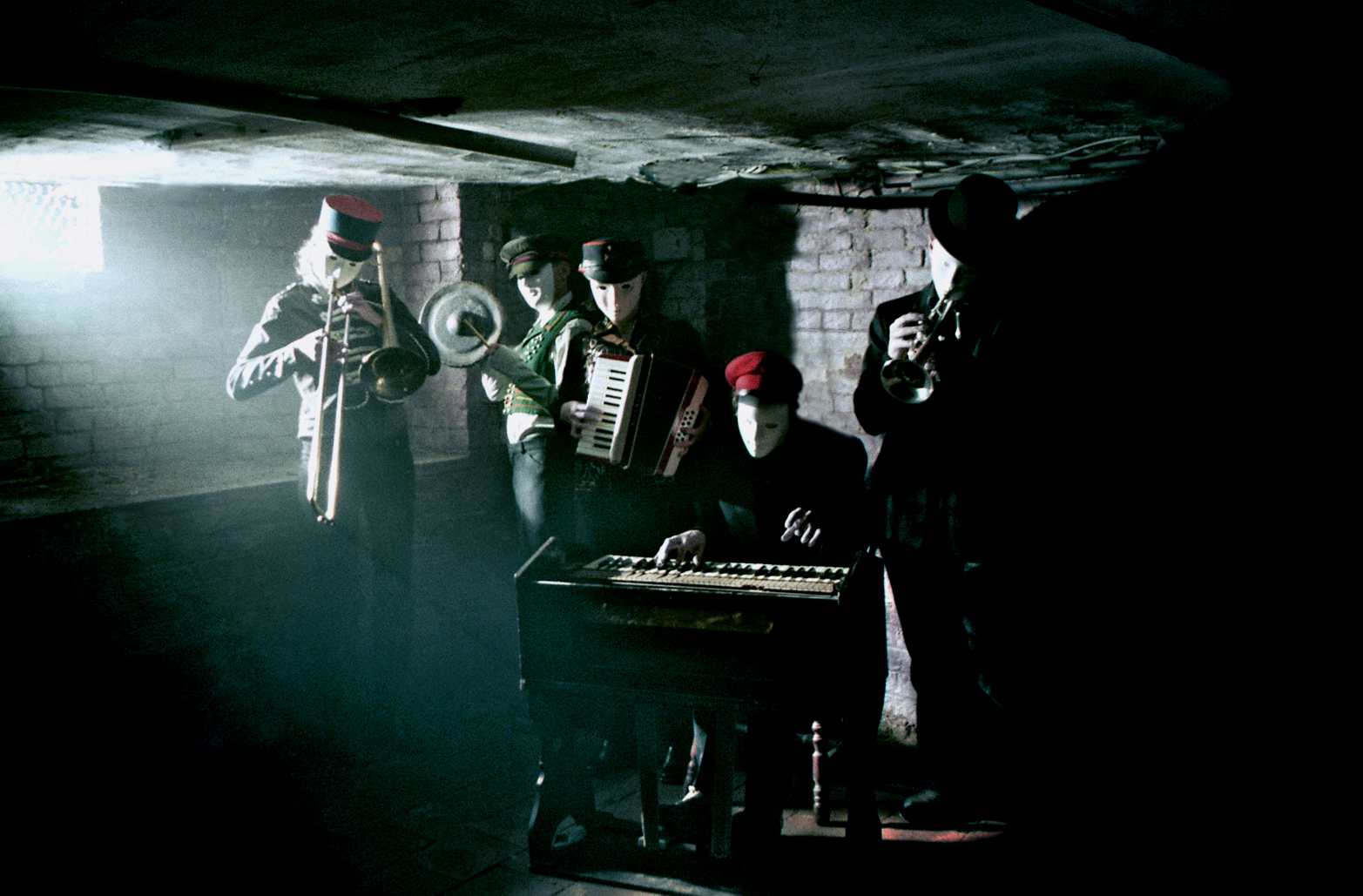
Pram were first heard on their self-released debut EP Gash, produced by fellow Brum psychonaut Justin Broadrick, that crept out in 1990. By the time they’d been picked up by Too Pure and were bringing out 1993’s Iron Lung EP their sound had already developed beyond the avant-punk darkness of their début into a rich new ocean of suggestiveness. There was an awful lot of Mumbai, Kingston, Düsseldorf & New Orleans knocking about in their Brum-borne music (although Matt & Rosie who formed the band in the first place were actually from Harrogate, and Sam from Shropshire). Rosie Cuckston’s lyrics about pregnancy, childhood trauma, alleviating boredom through making up alien-abduction stories and other day-to-day derangements suited the homespun/cosmic stealth & pulse of the music. Although things like 60s jazz & Krautrock were by then a growing influence on the hipper Stereolab end of British pop, Pram seemed unique in their fearlessness when it came to exploring their influences. It takes a special blend of vision & honesty for a little pop band from Brum to take on Pharaoh Sanders, Sun Ra & Coltrane, let alone all the odd bits of 70s telly & vintage sci-fi that were incorporated into their sound long before hauntology had even gained a hip foothold in music… I remember Sam giving me a tape of Alice Coltrane after a gig and saying, ‘LISTEN TO THIS.’
Cheers for that Sam, I’ve still got it.
SO: “Journey In Satchidananda is still to me the most perfect piece of music. Thanks are not too late – tape it for someone else. There was a lot of discovering music by swapping tapes at that time – I think that one came to me from the direction of Godflesh via a friend of a friend. You’re right – in some ways film, animation, children’s TV, Play For Today and public information broadcasts all lodged their spirit into our songs as much as the music we listened to.”
ME: “I think it comes back to that idea of making something new. We felt at the time isolated in exploring the kind of music we were. Even now, making a new sound is still our first impulse, and that includes not repeating previous Pram recordings – and it honestly still isn’t a cerebral thing. To repeat ourselves or someone else would be boring and not really worth the effort. I’ve noticed that recently Pram have developed a typical song structure, used in a certain kind of Pram song (similar to your pop song but with sections to break it up) – so the song is more than one story. I always imagine Pram tunes as scenes from a film, the collected LPs telling the larger story. My working life is ten times harder than it needs to be because I hate repeating what’s gone before.“
Were comparisons with Raincoats/Slits/Delia Derbyshire simply lazy gosh-there-are=ladies-style journalism or was there an attempt in Pram to reclaim/rediscover/redefine what gender could mean in music? You were never Riot Grrl but I still felt that political force to what you did.
SO: “At a time when Britpop was full of laddish posturing, Pram was decidedly unmacho. From the start we recorded on home studios which we learned to use together. Fitting all the layers of sounds onto an eight track and (later) a 16 track, we had to do mixes for the albums live to use all the bits of tape we needed, so we’d have four or five of us with hands hovering to punch sections in and out. Rosie’s lyrics were often about the strangeness, the uncanny in the everyday, the weirdness lurking in the domestic setting.”
That normality, that contrast between Pram’s deep-space music and kitchen-sink grittiness of presentation was what made them such a bewitching live presence. I remember the ironing boards (doubling as keyboard stands) being folded out – was that sheer expediency/ poverty or a stylistic detail you wanted to be on stage. The contrast between the lo-fi, almost homely atmosphere and the other-worldly music? Was it just to make you feel comfortable – to make gigs as close as they could be to the ease & comfort of rehearsal?
SO: “Ironing boards from car boots were, and still are, much cheaper than keyboard stands and little Casio keyboards don’t fit on big keyboard stands. We always add sparkly drapes for a touch of glamour…”
ME: “The ironing boards are still in use – we’ve just got a thing about certain bits of useful junk! Traditional rock staple kit like keyboard stands, guitar stands, pedal boards – we never use them. It was just the cost at first, the keyboards were £20 so you don’t want a £100 symbol of professionalism to put them on.”
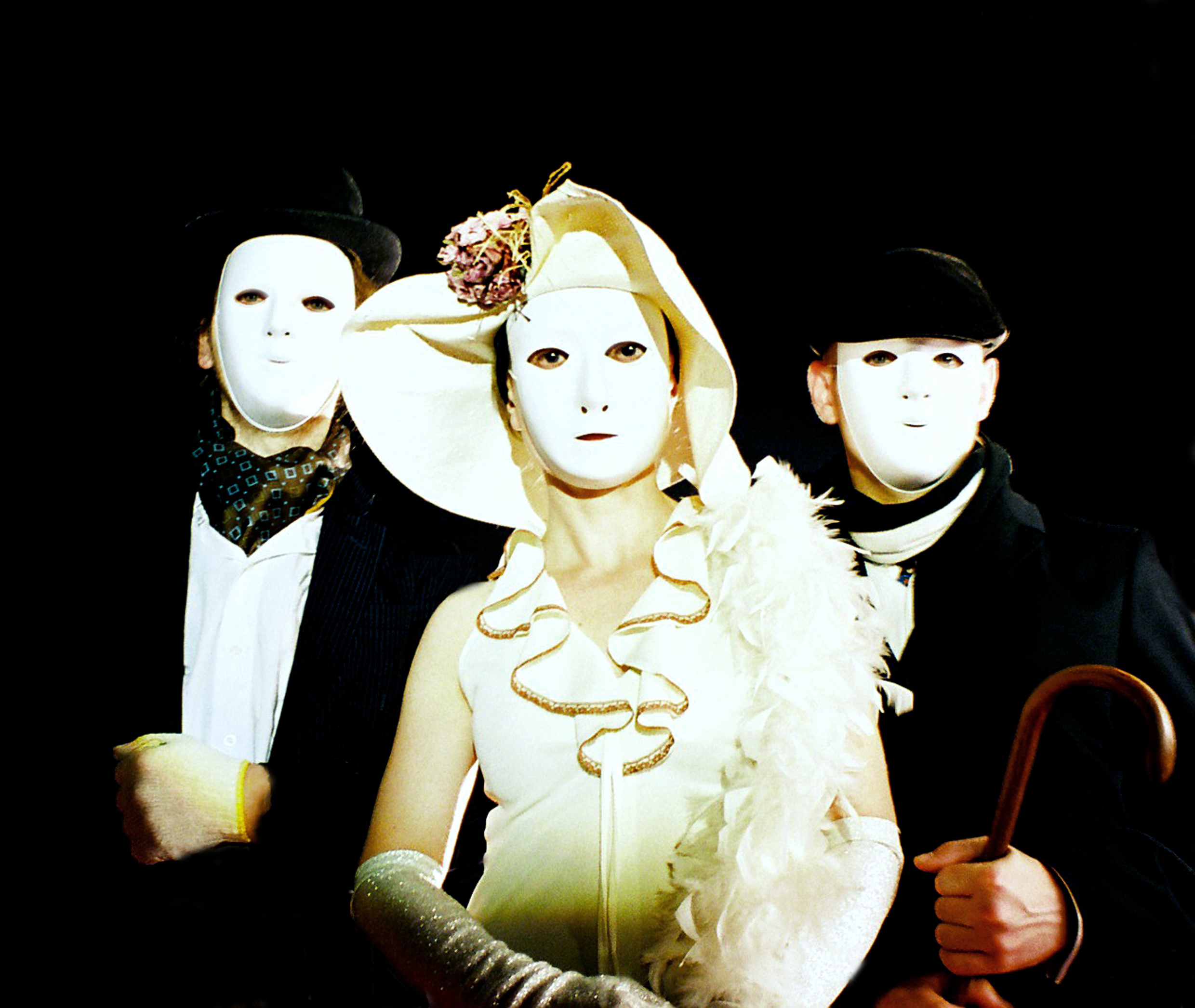
Pram preferred the kind of keyboards you could buy from an ad in a newsagent’s window and seemed to be hoarders of any kind of musical junk. A very hip-hop mentality. I remember Rosie saying once that at one point Pram had three eight-track cartridge players in the house – one of them in the bathroom and another in the kitchen. They had eight-track discos.
Their house became a kind of retreat, a base of operations within which their ideas about music and what mattered applied. So they made music which was out-of-step with what was going on at the time because they developed in a closed-circuit yet open-wide environment. Pram were also pioneers in bringing instruments to their music that in themselves seemed to sum up the band’s sound and feel. I recall Rosie describing the amazing Omnichord they started using from ’96 onwards: “An electronic angel made by Suzuki who obviously got bored making motorbikes. It’s an electronic harp with a touch-sensitive strip that you gently stroke. There’s no keys on it but it does have its own rhythm box with three rhythms, Latin, waltz and go-go…”
With all sorts of odd kit on stage, the presentation also added to the thought that Pram were, in an almost old-fashioned sense, a real band that lived together, jammed together, were engrossed in each other. Like the Monkees.
SO: “We are still like The Monkees! But no, we have never been and probably never will be a fully-rehearsed thing.”
ME: “A typical day in the Gash/Stars-era might involve rehearsing, jamming, taping it onto a four-track, breakfast of coffee, taping tapes & records, clubbing, phoning promoters, endlessly hassling for gigs, sending out tapes. I did a lot of listening to music, lots of reading, occasional visits to the job centre. But you’re asking about this as if Pram was only happening back then but it’s STILL going on, in exactly the same fashion. The whole thing is in constant development, cos it’s the only way not to get bored of it.”
Not to get bored.
It’s about love.
You see pop is not a type of music, it is a form of friendship with music. It’s entirely analogous to love because it relies on confidence, not taste. It relies on ideas of friendship, trust, fondness and generosity of spirit, not challenge, hostility or selfishness. When you’re young and dumb and loveless, for all your vaunted hatred of love’s lie, the scowls and spittle you aim at couples, your rejection of relationships in favour of a more ravaged playing-tough, nightly debauchery – those grisly drip-fed notions of compatibility still stick to you and cleave deep in your search for someone.
You think, because you’re 90% the things you own, with deranged sureness, that love will come your way if only you can find someone with the same tastes as you. Before you hit the town, you arrange your records, make sure that the panty-peeling hippest stuff is at the front of your racks, a dazzlingly cool and eclectic panoply of vinyl painstakingly arranged in careless array around your deck to demonstrate just what a mixed-up crazy dagger-eyed aceface you are. You hit the town, do the usual hiding in black most of the night, grabbing a smooch or a smack in the mouth come chuck-out time and get home only able to love yourself, your perfectly aligned products mocking you, moodily ignored as you dig out your Charlie Drake again and wonder if growing up will always be like this.
Of course, eventually you fall into someone. Or they fall into you. You realise loneliness doesn’t have to be a permanent condition, admit it was something you were never gonna get used to. A night, the right drinks, the right mess, the right mutual whirlpool. And of course it’s not about taste. It’s about confidence, and crucially it’s about finding someone who comes closest to your own levels of hope and hopelessness, someone you don’t have to catch up to or wait for, someone whose cynicism and idealism is closest to your own perilous existence. After you fall in and out and in and out of love a few times you realise that pop, as a way of life, includes a way of listening that factors in way more than pure sonics. It’s whether you LIKE these people. Whether you’d like to be their friend, whether they act friendly, whether, no matter how outré or sick or shocking or avowedly anti-establishment they are, you want them in your home, their sound in your space.
The reason I rejected so much Britpop is cos I didn’t want it coming round, couldn’t swallow it’s anti-American rhetoric, couldn’t stomach its clear Smiths-derived desire to magic England back to a time before the likes of me started turning up. The bands I loved from that era didn’t avowedly stand up against Britpop’s parochialism, but simply by dint of their music they showed up Britpop’s myopia and fear for what it was. Talk Talk, A.R Kane, World Domination Enterprises, Disco Inferno, Insides, Pram, Bark Psychosis, the whole Bristol stable of noiseniks & folkies (Flying Saucer Attack, Crescent, Movietone, Amp and Third Eye Foundation). All these bands had a natural ease, naivete & innocence with their relationship with black music and esp. black music’s use of technology. This in a weird way for me made them closer to the Stones/Beatles/Kinks than any Britpop band supposedly stitching that ‘classic’ axis together. (Anyone who bitches about the cannon of classic UK pop clearly hasn’t listened to it properly – the Stones & Beatles utterly reject and destroy their endless curatorship in a second flat.)
The bands I’ve been talking about in this series need to say ‘there’s always been a dance element to our music’ cos they understood that rock or pop that’s undanceable is worthless. In contrast Britpop’s desperate urge for simpler times & simpler steps seemed like cowardice, seemed to display at worse a fearful nostalgia, at best a dimwitted fondness for old punk/new-wave strictures & confines you’d have hoped the 80s would’ve blown away like so many cobwebs, the tang of snuff and the dust of empire. Timing was crucial here – I’m talking in this series about a whole generation of kids who had their minds & lives changed not by a single movement but the sudden realisation that no movement was possible or necessary, that you could be your own maker & mythologist of history.
Pram, like many of us, felt like they’d been born too late to be part of anything, and started to create their own unique sense of place from the placeless and untraceable. They created fantasies of cultures & futures from the shaky perspective of the terminally disconnected. In a world of bands that seemed to be knocking out Carry-On-Pop, a jokey vision/version of Britishness, Pram were more like the Powell/Pressburgers of their day – committed to fantasy, to futures that never happened and the poetry of non-existent realities. And in the clutter of their sound, the clutter they bought on stage, the cluttered-up cloistered genius of their personalities, they reflected a particular mindset that speaks to my 90s memories perhaps clearer and more joyfully than anything else. A music that, as a British yoot, I could be proud of.
As Simon Reynolds said in his review of Stars in 93: “Forget the retro-parochialism of Blur et al: this is truly English music, so English that it’s barely rock.” Pram reflected that sense we all had that there was TOO MUCH to explore, not enough time, that joy was to be grabbed without interruption, consideration or denial, and that another classic-rock band from Camden or Manchester was simply NOT want we needed to hear again.
SO: “Pram could definitely not have existed in London.“
ME: “London would have pushed us about a bit , and the time to experiment wouldn’t have been there. We’d have received a lot more attention I think and it would have pushed the band in a diff direction, maybe the push would be towards other peoples expectations of what we should be. “
What do you mean?
ME: “Well, one such example is the production on our records, there are some lo-fi decisions. Another is the circumstances of the recordings, whether that’s at home or in borrowed locations, on budget gear with little experience. Those factors made it so much more a true record of the time and the process. If you didn’t understand this, you’d pick on the production. Someone once tried to get us to change this and work in ‘proper’ studios. No one from Domino and not Paul Cox from Too Pure though, I should say. Being in London would have altered it for sure. Exactly how, who knows? The process shapes the end result so much – that idea was common, I guess, in art and experimental music at the time, but less so when we started because of the cost involved in setting up your own studio at home. Being signed to Too Pure made it all possible for us to do everything at home to a decent quality. Mind you, we’d have continued making music on a four-track if we hadn’t. I love how music software has enabled people with pretty much no cash to get their ideas down and publish them.”

Was the racial mix of Moseley important to Pram’s sound?
ME: “Undoubtedly. We were exposed to a lot of music in Birmingham and got into DJing and running club nights. Club Katusi [easy listening, lounge music and exotica] and Silver Dollar [Reggae] being two club nights we ran at venues all over south Birmingham. I think though that if you live in a town with a library, and I’m not taking it for granted that everyone has access to them, you can make a start exploring music from round the world. I must have bootlegged every decent tape in Harrogate library (where I grew up) and was working my way through Birmingham Library before we got broadband – we were very late adopters. Birmingham introduced us to Bollywood film soundtracks and Bhangra music – which have had a peculiar influence on Pram’s sound in recent years.“
Hallelujah. Pre-internet, Cov Central Library was my portal to the infinite and nights like Club Katusi weren’t just places to hear what you already knew, they were nights that threw open doors you were never aware of before. Nights that were astonishing and ahead of their time. Sam did the décor and cocktails. Matt and his cronies did the music. With most club nights being either cheesy or hostile or both, Katusi’s mix of Moog music, easy listening, soundtracks & reggae were revelatory: whether a theme-night (James Bond nights were particular barnstormers) or a not, Katusi would always end with the dance floor packed and people going crazy to music they’d never heard before. Bouncers dancing to John Barry. Pretty soon you’d see Katusi’s unique trajectory being mirrored elsewhere. There was nothing like it in London until a year later, the capital as ever a year out-of-step with the provinces it so condescendingly looked down on at that time.
Pram always got the oddest support slots (Cop Shoot Cop, Corrosion Of Conformity & an unforgettable two-week stint with Pulp but perhaps this wasn’t so odd – I recall Rosie telling me Pulp were ‘absolutely on the same wavelength as us’). So when Pram exerted control the matchings were beautiful: early gigs with a fledgling Broadcast (who borrowed extensively from Pram’s innovations), astonishing double-headers with Add N To X. You sensed a lot of bands were being formed simply from people coming to Katusi, having their musical minds blown and then going off and forming bands to play the music they’d heard there. Moseley was clearly where Pram felt most free: Sam once told me she actually lived just up the road from Moseley in a very whites-only, racist neighbourhood, and that coming to Moseley meant relaxation, an ability to be as mixed up as the environment.
Alongside the creation of their own musical meta world, Pram also were in an almost constant process of tweaking their recordings.
ME: “We used to remix our own tunes, on occasions releasing very similar sounding tracks. Again, reggae & bhangra had an affect on us not being so precious about our recordings, being able to open them up to the version, to the post-productive fucking about. To be fair, we were never that perfectionist about it, we wouldn’t go back over old stuff to make it better, there’d just be several versions from one session that we couldn’t decide on so they’d all end up getting a release. Re-tweaking just isn’t on the agenda now. There’s an archive of Pram master tapes that we could remix in software, but it’d be a bit sad to go back and tell those stories with a different voice – if you ever can’t write music any more I suppose that’s what you do. Admitting defeat I’d call it!”
What was the typical genesis (or was there a typical genesis) of a Pram song from idea to elaboration to completion? What would be the initial trigger – a hook, a beat, a concept? I didn’t find your music challenging, only immediate and catchy and danceable – what was more important to you, ‘confronting’ the audience or making them dance?
SO: “The dancing, always. That is what music is for. We had very basic notions about what we are. We were, and are, entertainers, a travelling troupe of entertainers. Whenever we tried to discuss things deeper than that we’d just end up down the pub chatting nonsense.”
ME: “There were two ways back then, one was recording a jam, where we’d pick bits we liked and stitch them together or we’d form a song of sorts – this way usually came from Rosie. The writing though, was a collaborative thing, I’d say rather than a hook, beat or concept. It was a sound (that evoked a concept I suppose). And yeah, it was always to dance to if possible. We liked dancing, we loved dancing. We were always looking for that moment where your body just couldn’t stop moving.”
The Stars Are So Big… doesn’t sound like it comes from what you’d call a relaxed place though. There’s a darkness and tension to it, helped by Rosie’s lyrics, that tightened a hold on you as it goes on.
SO: “The recording was very focussed and very messy. Typical Pram clutter. We need it to function! Leads everywhere, running from cellar to attic, all of us huddled around, punching stuff in, playing. We’d come out of our bedrooms with our ideas and then go down to the cellar to put them all together. ”
ME: “It was pretty much written and recorded in a month, we had a record deal, I think this was our first release of that particular deal, and so we couldn’t wait to get it out and a month seemed like an age. We bought an eight-track tape machine and a desk for a fair part of our advance. They were £2000. A few mics, stands etc. We had to mix it all overnight in one go because we’d borrowed a DAT machine and had to return it the next day. The concept of the LP certainly wasn’t present in my mind, it was more just exitement that we were committing stuff to tape.
"Rosie’s brilliant lyrics helped thread everything together. It was definitely a pressure cooker scenario. Some things came about by accident like the first guitar you hear on the LP. I’d plugged into the wrong channel and overdriven everything in reach. I still have that same mixer just for that purpose but have never been able to recreate the sound. We started with the idea that we’d record ourselves. Rosie and I had made records in a previous band, both recorded in commercial studios and the process didn’t lend itself to diversity and experimentation. We recorded Gash on a four-track tape, later taking it to a pro studio to overdub and mix. This process is still one we might use today, recording onto the same old tape machines we had back then and then mixing in software. Tapes are making a comeback. Abbey Road were back using two-track tape for mastering last time we were there. I recently bought a Revox ¼” machine for home mastering purposes. This isn’t Luddite for the sake of it. It’s what’s best for Pram.”
SO: “I remember ‘In Dreams’. 16 minutes long, one take. We didn’t have time to go for a second. It came out wrong, wonky, but that was us. That was Pram.”
ME: “It was two takes! I think we recorded over the first one to save tape. It was agony to play on the guitar I recall. Happy days…“
Pram’s output after Stars was just as fantastic, if not ever capturing the true new-surprise and startling beamed-in-from-Venus feel of that début LP. Seek out Telemetric Melodies & Helium in particular and keep ‘em peeled for the next transmission.
Not many bands stay together for 20 odd years without having at least one period of massive success to look back on. What’s so heart-warming about Pram, what makes them such heroes, is that they’ve stayed together, stayed in love. Whereas with most of their contemporaries it’s been a case of avoiding each other for over a decade and only now realising there’s moolah in the reunion market…
ME: “Yeah but genuinely Pram never gave a toss about any of that. We enjoy it too much to have ever stopped. Really the reward is in the process of writing the music, designing the show. There’s never been any cash reward and if I’m honest, for me the golden moment of a piece of music’s life for me is when you hear it in a rehearsal and it evokes some kind of feeling of completeness in itself or tells its story. It’s all pretty much downhill from there… It constantly surprises me that we’re known still, though sheer longevity will have helped. Arguably we’re doing more high profile stuff like Edinburgh Film Festival, Flatpack Festival and The Photophonic Experiment than we were back then. It’s not just confined to the music industry and not necessarily in the UK. I think we received a lot of plaudits at the time, we certainly provoked a reaction from a lot of people.“
What are you doing now?
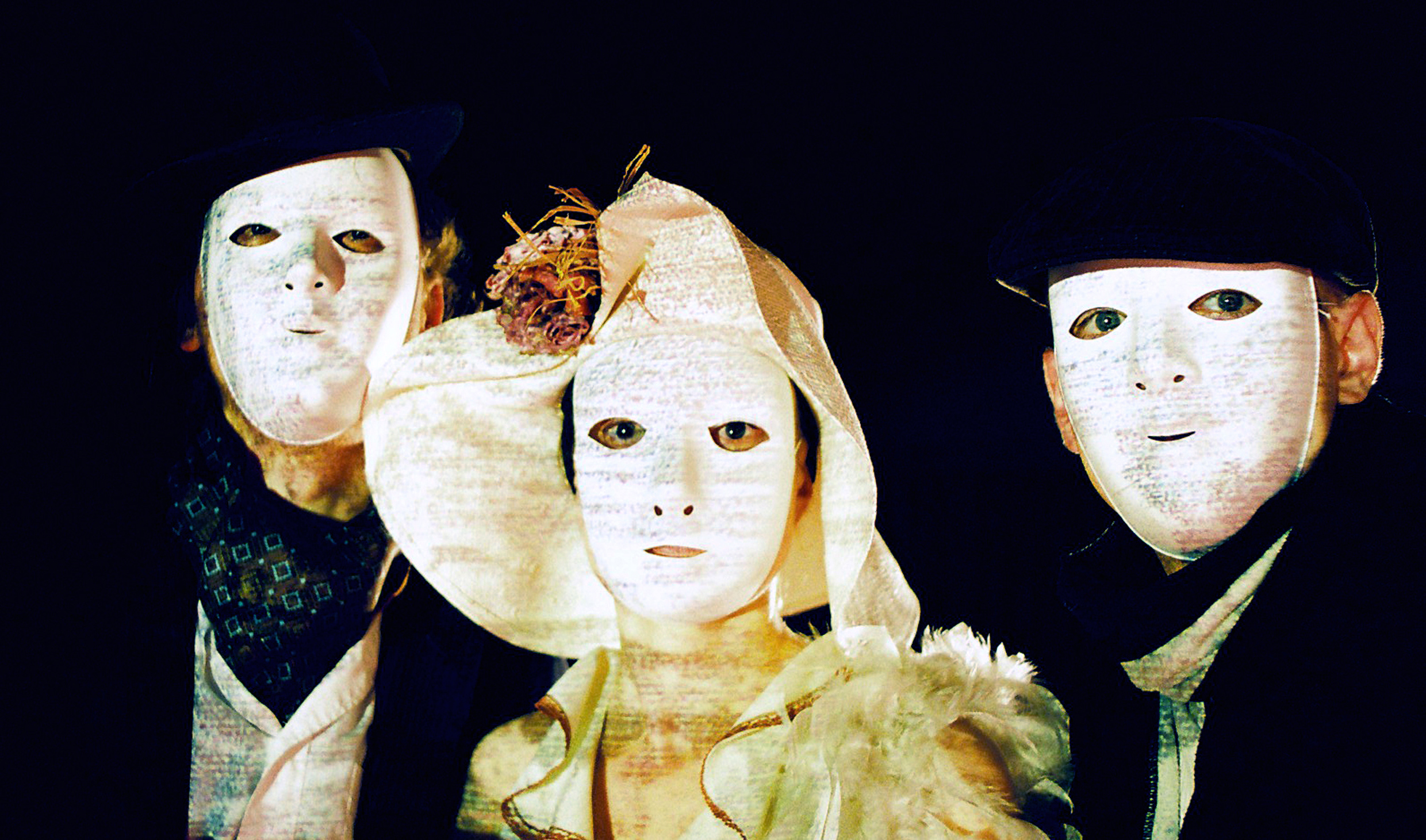
ME: “In the summer we spent a week in the Faust studio in Germany with the time and space to just write and record, which was like going back to the time of Gash and Stars. Just wonderful. An album is coming out on the Klangbad label which should be out next autumn co-produced by Joachim Irmler. We have spent the last few years developing ‘Shadow Shows’ created with Scott Johnston of Filmficciones. This is an impressionistic mixture of film and shadow play with the band performing live behind the screen and only seen as shadowy figures flitting in and out of the narrative. It has been performed at Edinburgh Film Festival and we’d like to tour it. We’ve got new, Bollywood-inspired songs. ‘Why continue?’ is a good question but the beauty in a song for me is the point at which you create the its world fully – so it evokes a story and tells you a bit more than you already knew. That feeling’s quite addictive, seriously addictive, it’s the addiction that’s kept us going until now and will keep us going forever. There are new recordings on the way – the songs are there…”
I started off this series worried the tone might be maudlin, convinced it’d be the last thing I’d ever write, anxious that it’d become a bunch of old bastards like me whining about how things ain’t like they used to be. Instead it’s been hopeful (Main), rancorous (DI), deliciously open to possibilities (Insides) and gratifyingly unswerving (Pram). Politically we’re in a similar space to the early 90s right now – where mainstream pop, and more worryingly ‘alternative’ culture, seems blithely unaware of just how sectarian and conservative it’s becoming. More needs to be said about this than ever but the urge seems to be to say as little, musically & lyrically & politically, as possible. I say ‘seems’ because just as visions of the 90s that go no further than Nirvana or Primal Scream ignore and exclude so much greatness from that era, so most current overviews of what’s happening in 2011 seems to be missing out/deliberately excluding so much stuff that is absolutely taking on the times we live in, and forging bold new musical realities that genuinely reflect this unreal, too-real age.
Next week I want to talk about those bands and musicians I feel are keeping the fearless spirit of this 90s music alive in 2011, mostly made by artists who weren’t even born when Pram or DI were first stirring, mostly made by artists who couldn’t give a fuck about the 90s. It will be the last thing I write in 2011 but not the last thing I ever write by a long chalk. It’s been a busy year: next time I want to tell you why 2012’s gonna be even busier. Time to bring some fucking verve & spirit back, time for me to recall that Cliff Clavin’s critique still remains unanswered, time to realise that the doom sayers’ dreary projections for pop are just as deluded as the glassy-eyed futurologists confident that the conventional music industry’s replacement by benevolent interactive-media overlords is some cause for celebration. There’s another escape route see, one that Pram have been on for 20 years. The mp3 has liberated us back to the 40s, where making a single song at a time is what matters.
Beyond that pushing ever back to the future, the removal of bar codes and commerce from music affords us the opportunity to magic sound back to a pre-industrial state, throw our caps down and hope for the best. Scary, but at least it’s ours and no-one else’s, this possible reconfiguration of what it means to be a musician and what it means to make music. A chance, again, to do it your fucking self but crucially, in that process, DISCOVER who the fuck you really are.
SO: “We remain unheralded I think. But we have always had strange and wonderful uberfans. People say – you’re still going… it’s possible WE JUST CAN’T STOP.”
Next week: The Epilogue: Trails, Blind Alleys, Launchpads – My Best Of 2011