
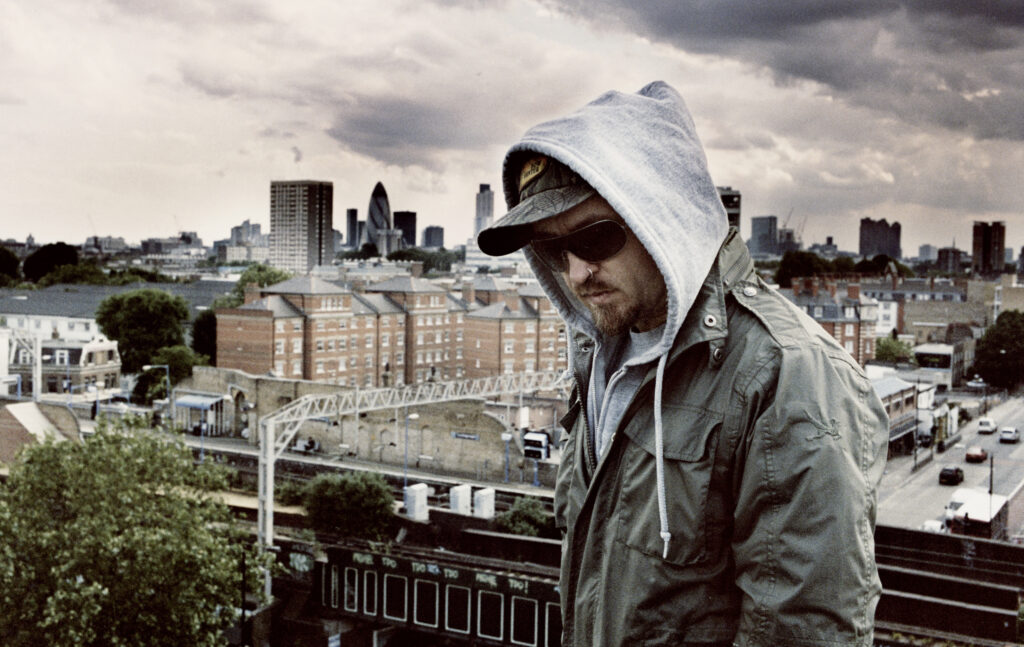
Kevin Martin is one of those singular artists who deftly reveals through his work that, musically, it’s all still out there and all still worth fighting for. He should be considered alongside such figures as PJ Harvey, Mark E Smith, James Murphy and Aphex Twin as someone who has carved out completely individual space in the cluttered field of contemporary music that can immediately be identified as his own. But he is also a true musical innovator, applying clear sightedness, curiosity and fearlessness to various mutant forms of dub, techno, dancehall, industrial, R&B, ambient and noise. His restless dedication to pushing the envelope is something he shares with other production outliers of the last 40-years such as Adian Sherwood, Hank Shocklee, Martin Hannett and Lee Perry.
Someone he certainly stands to be compared to is his old musical partner Justin Broadrick. Both are involved in musical projects that are seemingly only enjoyed by the one percenters while operational. Both have an M.O. of producing a body of work that will often only make its real presence felt after the creators have moved on to pastures new. Over the last 20 years the pair have collaborated on projects such as Ice, Techno Animal, God and Curse Of The Golden Vampire, so when it was announced that Martin’s King Midas Sound would be opening for Broadrick’s Godflesh at Supersonic festival in 2009, it seemed like the perfect billing.
And it was.
When Martin, along with Roger Robinson (vocalist Hitomi would complete the line-up later), released Waiting For You during November of 2009, it immediately confounded expectations with its lightness of touch. Lyrically it was lovelorn, fragile and, although ecologically apocalyptic and eschatological, contained something that was pretty odd for Martin: what felt like a light dusting of hope, the potential for redemption. (This is something that has also been noticeable in Broadrick’s recent output as Jesu.)
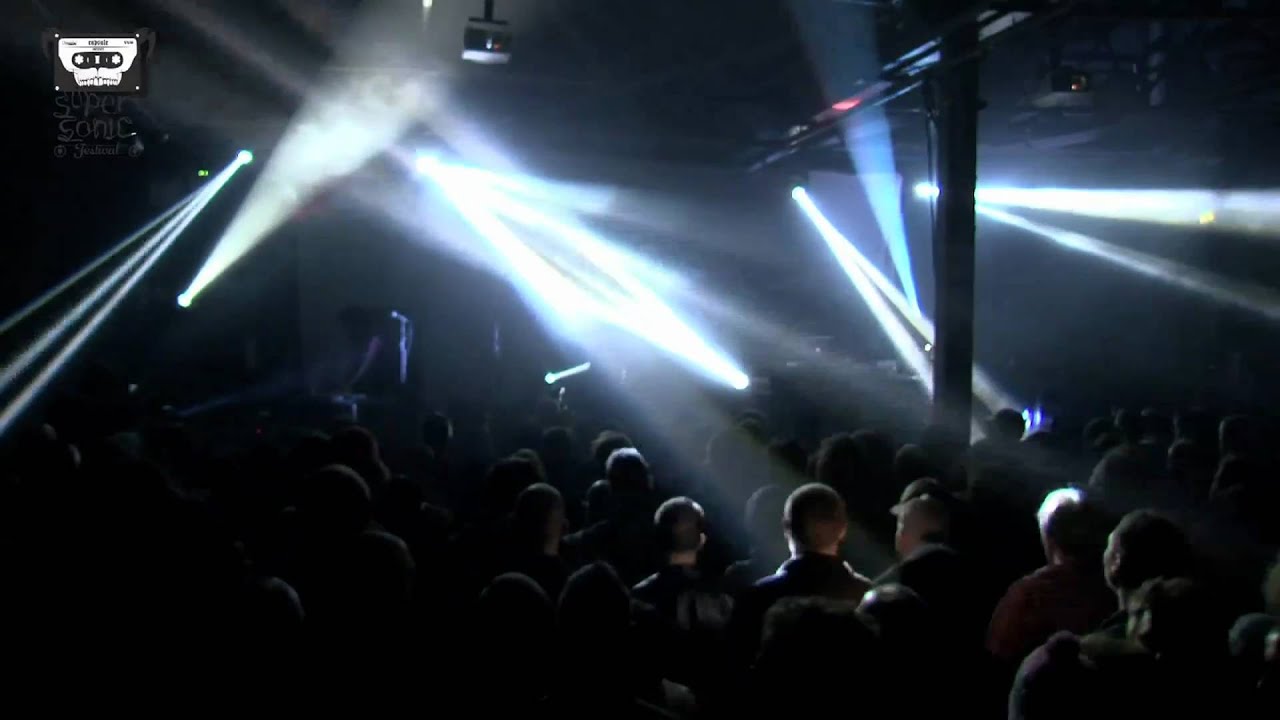
Of course nine short months later at Supersonic Festival, playing in an industrial sized hangar in Digbeth, Birmingham, King Midas Sound had become a different beast altogether. Right from the outset the audience were immersed in a chest-high wash of bass and little by little the songs built to overpowering walls of electronic noise. Robinson and Hitomi had turned their intensity from inwards to outwards and the effect was devastating. Godflesh struggled at first to match this power but eventually they did. A bunch of dyed-in-the-wool metalhead friends were blown away by the performance (bear in mind that it came between Alan Dubin’s Gnaw and one of the most influential industrial metal bands ever). One of them said that their sound was what they’d gone to Massive Attack for previously but had always come away slightly disappointed.
We’re talking to Martin because we’re supposed to be doing a quick news story on the Bloc Weekend at Butlins Minehead, March 11-13, where King Midas Sound are playing. However, this develops into an hour-long chat (he’s a self-confessed motor mouth and endlessly enthusiastic about a huge amount of music) covering his motivations, the near future of The Bug and King Midas Sound and the tantalizing notions of acid dancehall and dystopian sci-fi ragga.
After watching your overwhelming set at Supersonic I thought it might be prudent to say that if people are expecting a faithful rendition of Waiting For You at Bloc, then they may be slightly shocked.
Kevin Martin: [laughs] Yeah… we wilfully decided to go in a different trajectory to the album and we’ve ended up with what the live show is now. And yeah, people are going to get a very different approach and impact from the live show…
As a fan of your work over the years and that of your old musical partner Justin Broadrick, it was interesting to see both King Midas Sound and Godflesh playing on the same stage at Supersonic. I think perhaps a few years ago a lot of people would have been surprised at a band dealing in an extreme form of R&B as being equal in intensity to one of the most militantly nihilistic industrial metal acts of the last 30-years. Perhaps most people still would be.
KM: Yeah to be honest it was extraordinary at Supersonic. I can remember when we were setting up there was a band called Gnaw playing, who featured Alan Dubin from Khanate. And they were ferociously heavy. And I can remember Kiki [Hitomi] just looking at me terrified and Roger just looking at me like I was mad and they were both simultaneously probably thinking something like, ‘What have we gotten into playing Supersonic?’ I’d sent Lisa [Meyer, Supersonic Co-Founder] links to King Midas live tracks some months before and at that point only Napalm Death and Swans had been confirmed. I sent her an email saying would we be of interest to because we were trying to open our sound out. In a weird sort of way Supersonic were responsible for me rethinking what I wanted to do with King Midas Sound. I’d seen Corrupted play a year or two before and they helped me remember the roots of where I’d come from musically. And then I’d seen SunnO))) and Om at the end of 2009 at (the ATP shows at) Koko. I took Kiki to see that show and it blew her away… it had a huge impact on her. Both of those shows reminded me that there were a lot of things that I wanted to incorporate into what we were doing with King Midas to help us stretch out further and to push the parameters of what we were expected to do and what we wanted to do.
It’s very easy to get into this industry trap of making an album, you reproduce the album and do the tour, you do the next album you reproduce that and do a tour and it becomes pretty tedious for me and it’s not really about growth as a person or as an artist. And Lisa saw the clips and took a chance on us and asked us to play. She told me that she had this plan… she swore me to secrecy and told me that Godflesh were going to play. She said that it would be wicked to have us play on the bill before them. And I said yeah of course. I’d been back in contact with Justin after not being in contact with him that often for years and I remember texting him that day going, ‘Yeah wicked, let’s bring it on!’ I dreaded to think how we would go down with a metal crowd. We could have ended up in a position where we were juggling glasses. But I was delighted with the response and we loved the show. To be honest we just love the festival. It’s an extremely positive experience to just wander around and check out all the other bands.
Yeah, well, we’ve said it before but it bears repeating that we love Supersonic Festival and love the kind of bands it attracts.
KM: They take chances where a lot of festivals don’t. And also they’re fans of the music whereas most festival organizers aren’t. Most festivals are run by money men. Most of this industry is run by shitheads with a craving for a fat wallet. Jenny [Moore, Supersonic Co-Founder] and Lisa have stuck to their guns and been passionate about it. They booked me very early on as The Bug when my first album was coming out. [He considers the first Bug album proper to be Pressure as opposed to the DJ Vadim collaboration with the same name from the late 90s that produced Tapping The Conversation]. They booked me for two years running and you don’t forget stuff like that. You always remember the people who are in it for the right reasons and who support you because they appreciate what you’re trying to do. A lot of people in this business are just shallow, empty vessels of greed. And they are not that.
Big Tune Kevin!
Well, if you took a risk, it certainly paid off. Speaking as a layman it seems really counter-intuitive to take the most song based stuff you’ve done and immerse it into this heavy electronic sound without it ending up just sounding like Whitehouse or Merzbow or whatever…
KM: Do you know what? It’s been a strange period with King Midas. We set about to grow. Roger and I are fiercely inquisitive people. When we made the album it was never meant as a live project, it was the result of some incredibly amazing feedback. You start getting offers and then you think, ‘Well, maybe we can do this live.’ Then we were joined by Hitomi. She had the energy that we liked and we knew that she could add something intense live and we just wanted to stretch ourselves… and we did. We did a Hyperdub party at Corsica Studios and it was much more of a faithful representation of the album and afterwards we ended up arguing like idiots after the show, tearing each other to bits. Which was odd because the crowd loved it. We’d had a good reception but for us it felt too easy and a bit boring to be honest.
The album set out to go against the grain of what people expected from me and it was to push myself. It’s very easy to slip into a default mechanism where you can do what you do and just settle for the easy route: you don’t stretch yourself and you end up able to make a certain kind of music in your sleep. I don’t find that particularly challenging and I like to challenge myself every bit as much as my audience. It became obvious to us really quickly with Midas live that we would have to see what was possible using the album as a start point; a foundation to build from. Sure the live show is quite shocking to some who are expecting Waiting For You as an album but I still feel there are enough links to the album… it’s just that it’s the starting point. From there it’s a voyage into the unknown as far as they’re concerned. It’s about how we can move things and we love that feeling of instability, we love that feeling of insecurity and disorientation. I feel those are important states of mind.
I remember Jeff [Waye] from Ninja Tune in America and Canada who signed me as The Bug, came to see King Midas Sound play Mutech last year. It’s a very electronic, dance orientated festival and they expected Waiting For You and it is fair to say we probably eliminated half the audience pretty quickly but the other half went bananas. Jeff came back stage laughing his head off manically saying how much he loved it and that I was the only person he knew who could go from lover’s rock to apocalypse. And the more we thought about that, the more we liked the idea of that. And then we read a review that said we were like My Bloody Valentine in dub. And we were like, ‘What?! Where the fuck did that come from?’ But the more we thought about that the more we said, ‘Do you know what? I’d like to see that myself. Let’s just keep pushing it in that direction… listen to the reactions we’re getting.’ And now we’re really open to moves.
Supersonic was really liberating because it meant we had the freedom to move outside of dubstep land or club land. And I love playing clubs that have mightily over sized sound systems in undersized venues, that’s my personal joy but with King Midas it’s about the chemistry between three people and seeing how far you can take your own formula and burn it up and rearrange it. Rip it up and start again!
Jeff’s a big Slayer fan isn’t he?
KM: He is! It’s funny because with Ninja, I wasn’t sure it would be the right label and we sort of drifted, so he came over from America to sort it out personally and he said, ‘Look, I’ll level with you: the reason I love your shit is because I love Slayer and I love Bounty Killer.’ And anyone who says that is ok by me! We got on like a house on fire from that point on.
It’s been a long and interesting journey from God to King Midas Sound. The trajectory hasn’t been straight and it’s covered a lot of unexpected ground but on a fundamental level what processes are exactly the same now as they were then?
KM: Oooh. Hmmm. It’s that thirst for intensity you know? That feeling I have in my gut is still as strong now as it was when I started. I first got inspired by Crass, Discharge, 23 Skidoo, Killing Joke, Public Image Limited, Joy Division, The Birthday Party… People who were fucking out there. People who wanted to fuck with you and themselves. People who wanted to discover new things about themselves and about music. It’s a challenge and it’s a statement. It’s a statement of independence and a statement of intent. I think God… whenever we felt in the kind of situation that people were about to expect one thing, then there was a joy in doing the opposite. It’s a necessity for me to avoid my boredom threshold. I’m more obsessed with sounds now than I was then; I’m every bit as addicted to music as I was then. Music is in my blood. I don’t really have a choice. My father and my grandfather were musicians. Punk music happened to me. I listened to the Sex Pistols when I was about seven and I was totally mortified and shocked. And later I listened to CRASS and anything that was nihilistic and extreme, as a way of trying to understand this fucked up world around me. And I’m still no clearer about the world but I feel that music helps me cope with this.
I believe the next thing for King Midas Sound is the remix album. How’s that coming along?
KM: It’s good. We’re just waiting for a few wastemen to deliver their mixes! We’ve got mixes by Gang Gang Dance, Nite Jewel, Hype Williams, Echo Space, Ras G, Kode 9 and Space Ape, Mala from Digital Mystikz; we’ve invited some vocalists along to reinterpret tracks, Jamie from Vex’d has done an incredible mix that’s probably going to be the single. Yeah, it’s probably going to be finished in three weeks time.
I heard some rumblings that you were working with Rob Lowe of Lichens.
KM: Yeah, he’s doing one of the remixes actually. Basically when Hitomi saw him perform with Om [at Koko] we were just devastated by how good they were and how good his input was. He reminded me of a guitarist that Miles Davis worked with called Pete Cosey in many ways. I got in touch with him via Kranky and sent him some tracks which he really liked. We saw him perform in Dalston where he was amazing and then he was even better at Supersonic. Then he was at the side of the stage during our set going off his trolley, so we formed a mutual appreciation society. All three of us find his work really inspirational and he’s got such amazing taste in sound and approach. He’s spiritual in the best sense without being some hippy casualty.
He’s very into the whole analogue scene isn’t he? I mean, doesn’t he use a home built synth?
KM: He uses a Modular Synth, it’s not home built as far as I know… he puts modules together. Ironically I’ve started doing this in the last month as well. It’s a challenge that’s been a long time coming. My studio is predominantly analogue but I’m not an analogue or nothing person, I think the hybrid is good. Analogue is amazing but there are certain things that digital can do that are incredible so the marriage of the two is perfect. And I’ve become obsessed over the years with synths. With Techno Animal I used to use an EMS Synthi-A which was this kind of really rare synth that was housed in a suitcase. That and a VCS3 were used on the old Dr Who incidental music. It made sounds that were pure sci-fi. It’s that analogue sound which has a link to history. It gives you a tone that you can’t get in any other way. So there’s no disparity there.
I guess this it probably depends on the situation but when you’re working on textures, beats and bass lines, are there any kind of hard and fast rules about what is King Midas and what is The Bug because there are some essential crossover points between the two projects aren’t there? And not just in personnel.
KM: I actually like blurring things. I did an interview at the weekend in Greece after doing a Bug show when the German interviewer just seemed obsessed with category. Every question seemed to link to a specific genre and I had to say to him, ‘Look mate, I just don’t exist in these categories and pigeonholes that you’re trying to put me in.’ I have a fear of being stuck in one. So for me it’s all about blurring and fusing that’s really interesting. For sure, I like a lot of pure forms of music but I’m just not able or willing to work with a pure or identifiable form. The music I’ve always made is mongrel fucked up shit. The stuff that I just said that inspired me? Well that was pretty mutant and fucked up as well. It was free. And I won’t compromise on this shit. And this is becoming a bit of a problem as regards to dubstep and being asked to do dubstep parties and always having people ask me about dubstep. Seeing what dubstep’s become… it’s a pity because there were incredible musicians working within it, and still are. But I’ve never considered The Bug to be dubstep or King Midas as dubstep. It’s a weird one. It’s a strange thing to have to deal with. And for me if there’s a blurring between Midas and Bug, then that’s fine… it’s a problem for other people, not for me.
Talking about the progressive potential of dub, I was very excited to read last year that you were working with someone who I used to follow avidly, especially in the 80s and 90s and that is Adrian Sherwood. I’ve heard a lot more of his stuff now but back when I was a teenager I was a fan of two things, the really tough, industrial electro sound of Tackhead Tape Time and the progressive electronic/organic dub of Dub Syndicate and his production work for African Headcharge. Where does your relationship with Adrian Sherwood come from and how is the collaboration going?
KM: What we’re working on at the moment is a Bug dub album. What it will be like is still open. So it’ll be a fusion of new material that we’re going to freak the fuck out of. As far as I’m concerned, the more out there the better. When I’ve spoken to Adrian about it recently I’ve said that the albums of his I’ve been listening to recently which still sound really extraordinary are Creation Rebel’s Starship Africa and his work on Primal Scream’s Echo Dek. Both are unbelievable works.
To be honest, Adrian was a massive influence on The Bug. I mean massive. That whole On-U sound period. I wasn’t living in London then but I just remember reading really early reviews of Tackhead, or Mark Stewart and the Maffia were like and just wishing to hell that I could get over to see those shows but I was too young and I didn’t have the cash. Actually in a way, Bug-wise, there was certainly a point where I was trying to reproduce my memories of those reviews sonically, if that makes sense. I didn’t want it to sound like On-U Sound and of course it doesn’t. And what with Adrian being an early supporter of the direction I’d gone in, with The Bug, I didn’t want to it to seem like any kind of biting process. I wanted it to be what it was and to reflect the fact he was a massive influence on me; as were the people who influenced him. I was a huge dub fan when I was growing up. I was a huge fan of Scientist, King Tubby and Lee Perry. And sure, those early African Headcharge albums? Wow… [laughs]
I spoke to Mark Stewart last year and it was an interesting, if intense, chat. I was talking to him about dubstep and he just scoffed and said, ‘Oh, is that what they’re calling it now?’ I do totally get why people choose to describe dub in terms of a continually mutating virus. And from a distance you can see dub’s Jamaican birth, it’s entry point into the UK in one strand and how it comes through to people like Adrian Sherwood and the Pop Group and onwards. You were around at the time when dubstep had barely been christened, eight or nine years ago. Were people like Benga and Skream (who were very young men at the time) conversant with this kind of theoretical approach and the weight of history or had they just arrived at the genesis point of dubstep through coincidental convergent evolution?
KM: I was really fortunate that when Pressure came out that Kode-9 interviewed me for XLR8R eight or nine years ago. And he told me that there was this new club that had started that he thought I might like. He was absolutely aware of dub’s viral, mutational capabilities for sure. When he took me down to FWD>> where it was just ten people in the audience who were all producers listening to each other drop the needle, they didn’t have a clue who I was and rightfully so. I spoke to Mala very early on about Adrian Sherwood and he didn’t have a clue who he was. And none of this was to their detriment. They came from jungle. They came from hip hop. They came from garage. Of course people like Mala were reggae fans.
The beauty of dubstep when it began was when you have people from Kode-9 to Skream to Loefah to Mala all doing very different things all of which were labelled dubstep and that was very exciting. Very, very exciting. And even now… for sure I feel that there’s a mainstream dubstep side that’s become really boring and predictable but I can’t knock someone like Skream because he’s an amazing producer and he’s done amazing tracks and will continue to do so. Magnetic Man may not be my cup of tea but he’s got skills. And any scene that’s got Burial and James Blake at one end, Shackleton at another, Kode-9 at another, Vex’d at another extreme… that’s a pretty healthy scene!
When you put it like that it’s a persuasive argument. In between the original incarnation of The Bug with DJ Vadim and then Pressure and then London Zoo there were big breaks of time. Will there be another big gap before the next original Bug album?
KM: It’s a really good question and it’s one that I’ve been discussing with Roger and other close friends recently and it’s a difficult one. [laughs] It’s a very difficult one. Part of me is itching to do something totally fresh. But the other part of me is dealing with Poison Dart and what we’re calling the ‘Skeng Teng Rhythm’ which you’ll realise is for obvious reasons when you hear it. [Presumably a hybrid of Wayne Smith’s revolutionary digital dancehall kick-starting ‘Sleng Teng’ riddim and The Bug’s ‘Skeng’. Which, when you think about it, sounds pretty fucking bad ass, Ed] It’s like the latest chapter of that kind of tune… I could be like Black Sabbath and be as happy as a pig in shit but it’s not really my way. And the label may hate me for it but I feel like I want to do some kind of crazy, dystopian, sci-fi ragga or acid dancehall. Those things are still in me proper. For me ragga wasn’t a fad. I was obsessed with it. Steely and Clevie and Dave Kelly became heroic production figures to me and I loved the sex, violence, experimentalism, intensity, weirdness and what the fuck nature of what I heard. I still feel that I haven’t done what I really want to do [in the genre] and maybe I never will. It may be a never ending quest. That might be part of the attraction for me. But somehow the mood of THX 1138 married to a ragga beat is what’s going on in my head right now.
Now that sounds tantalizing…
KM: I’ve got the carrot in front of my nose. This is part of the reason that I’m getting even more into modular gear because I feel that it can give me the tones I need to do that. And it’s not just to be brutal with noise but to use tones to achieve noise without using distortion, if that makes sense. That and acid dancehall… 303s pumped to the max over dancehall rhythms and sick vocals is something I’ve been talking to people about for a long time but I’ve never quite conquered. It always ends up being a baseball bat between the eyes. I do that shit with The Bug but I just want to make acid dancehall that’s slinky and twisted.
But at the moment I’m working on new tracks. There’s going to be a series of 7”s with Daddy Freddy specifically. There’s talk of me doing an album in Jamaica and I want to film the whole experience, so it’ll be like The Buena Vista Social Club on crack. [laughs] Those are the ideas. Ninja are into the ideas. It’s just how I can get enough minutes into any given day without having a nervous breakdown and destroying my relationship and upsetting my dog…
For more details on the Bloc Weekend click here and watch this space for more coverage