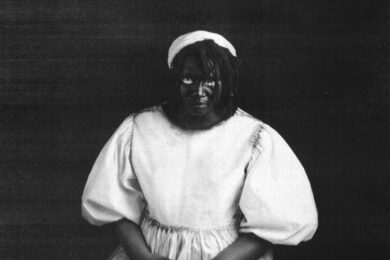

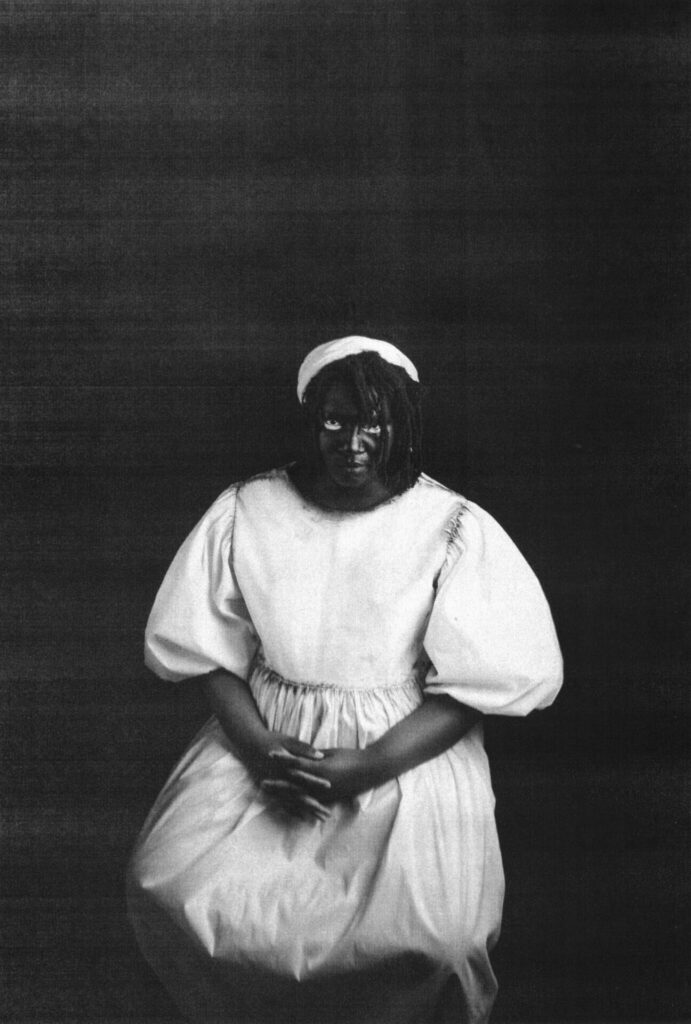
Backxwash’s musical identity has been reborn on her newest record Only Dust Remains. Under the moniker, Ashanti Mutinta had broken out with a trilogy of metal-infused industrial hip hop albums, each one more ear-bleeding than the other. Snagging the Canadian Polaris Prize for the first instalment, 2020’s God Has Nothing To Do With This Leave Him Out Of It, its follow-up, 2021’s I Lie Here Buried With My Rings And Dresses was longlisted for the prize once again. By the time she rounded off with the trilogy’s finale, His Happiness Shall Come First Even Though We Are Suffering, Mutinta had firmly established herself as a singular talent, blending the catharsis of metal with the sensibilities of experimental rap. But when she returned after three years with the follow-up Only Dust Remains, released earlier this year, that sonic identity had completely transformed.
On opener ‘Black Lazarus’, one chilling vocal sample expands into a haunting gospel choir soundtracking the narrator’s rebirth into a hopeless future: “Devils wave their hands / Angels make their dance / I just feel like it’s fucked!”. The rest of the record follows cue; draped in plush synths, silken string sections and post rock gauze, it’s completely unlike her previous work.
“During I Lie Here, I was really into my metal influences and everything that came with it,” she tells me from her home in Canada over Zoom. “But at the end of the day, I’m still a rapper, a hip hop artist; people tend to forget that sometimes. This album was inevitable.” She says it’s “possible” she could return to metal, “I wouldn’t cut it out forever, but dedicate a full project to it? I don’t really think so.”
Mutinta has noticed some fans mourning her older music with the release of Only Dust Remains. However though her new record does sound radically different from her trilogy, she argues it still carries the same force. “I think there’s something to the way ‘Black Lazarus’ starts with nothing but just a sample and vulnerability [before] exploding into this composition. There’s also power in that – instead of a slasher, this one is more like a weird A24 movie.”

For someone whose music is replete with references to death and alienation, there’s a lightness to Mutinta’s presence – like when she jokes that her writing process is “not me with a hood over my head, tears in my eyes while I’m playing the piano”. But this album was an exercise in craftsmanship and patience compared to her trilogy, where Mutinta had instead written almost impulsively to preserve the raw emotion she felt in the moment. When she looked back at the beats she made and the verses she wrote in the past, she found herself saying: “Huh. Do you really feel this way?” She likens it to the power of therapy, where they “sometimes get you to write stuff on paper so you can read it to yourself. I think music is very, very strong in doing that, because you get to sit with the feelings.”
So, Mutinta took a different approach for this album. She took a year off, simply to gather inspiration, and when she did return she only wrote four bars a day. Then, she would go away, come back, and labouriously write another four. “That gave me a chance to really sit with it,” she explains. “I would think, ‘How do I feel about this?’, and that’s an interesting spot to be in because sometimes you write bars, but you don’t get the chance to be like, ‘How do I really feel about these four bars?’”
The beats helped too. Mutinta created the instrumentals first, noticing how “existential” they sounded – especially on tracks like ‘Undesirable’. “The textures are very dreamy, if that makes sense,” she explains. “It felt like something’s in the air. To me, that was a perfect platform to talk about existentialism – that part in the album especially is where I start accepting that death is a concept that exists, and instead of me being scared or angry about it, I just have to live with it.”
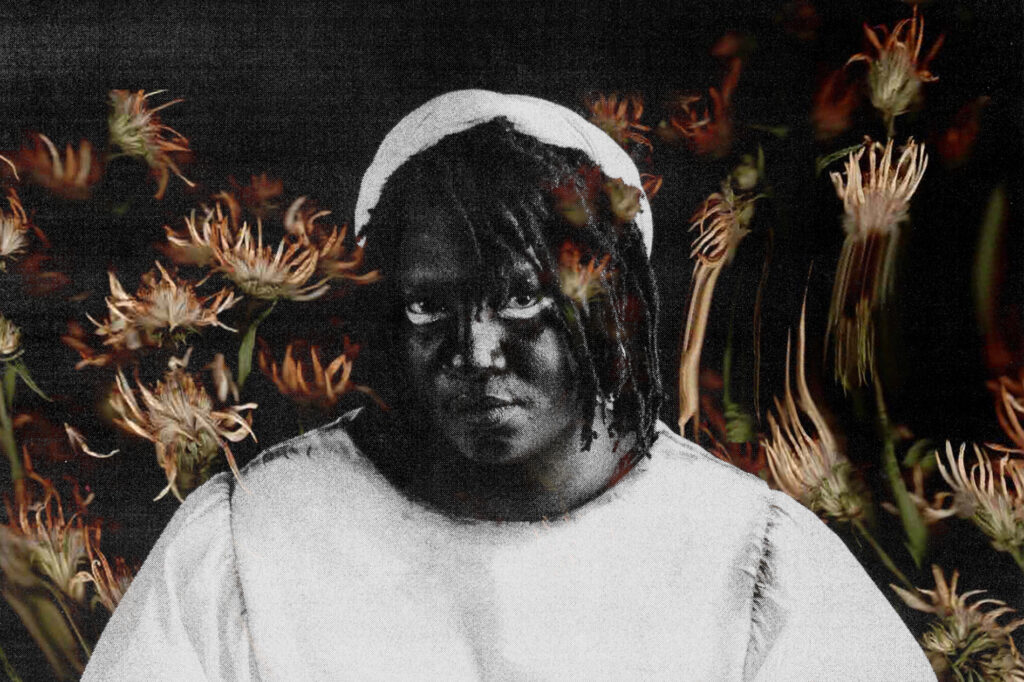
Acknowledging death is something Mutinta has never shied away from, partially given her own relationship to it. She’s been open throughout the years on her experiences with suicide, and an attempt she planned towards the end of 2012. At that point, Mutinta was three years into living in Canada. Having come out as a trans woman, she had lost contact with many of her family in Zambia, was heavily abusing drugs, and experiencing suicidal thoughts.
She is still candid talking about it today. She recalls researching online how to plan to end her life, but being constantly interrupted by Google’s prompts to contact a helpline. “One day I actually did call them, and the guy was so uninterested. I was like, wait… you’re supposed to give me words of affirmation! It felt like he was making a sandwich at the same time. At that time I was like, ‘Please, give me a sign to not do this’, and I was just kind of like, ‘Damn… I guess you want me to go that way!’ So yeah, it being, like, a topic within my life, this is a way to deal with it.”
On ‘MUKAZI’, the closer to her last album His Happiness, Backxwash penned a letter to her younger self, a glorious send off and proclamation that she’s alive after all the suffering she’s been through. On ‘Undesirable’, however, there’s a note of anger that runs through instead: “You ever think about how lonely you are? / Now it’s ironic, but I’ll hit you with a sobering thought / I wonder if you ever think about the homies you lost / ‘Cause every bar is just a symptom of how phony you are”.
The more considered approach on Only Dust Remains had encouraged Mutinta to think more macroscopically. Her record touches on ego death, too, something she says is “really important and puts you in a place that is so introspective.” ‘Undesirable’, she adds, is where this comes into force the strongest: “In order for me to see myself from a full perspective and to get past the topic throughout the album, those conversations have to happen.”
Though parts of the record do parallel events in her past, most of the reflections on the record really revolve around “the relationship with death in itself,” she says. “An aspect of suicide people don’t really get is the effect it has around the people around you. When I was going into my time, the energy around me was suffocating. I know people say ‘check on your friends’, but I think it takes a lot for people around you to be able to help you.
“It feels shameful sometimes, when you’re going through the whole process,” she continues. “You have to get out of that shame to be like, ‘I’m sorry you had to be around to take care of my ass when I was passed out in front of the door. You had to pick me up from a random party 60 kilometres away with some stranger.’ You know, shit like that. I’m not going to ignore it, say that it doesn’t exist anymore – it’s just going to be something that I have to live with.”
Mutinta is in a much better place now. She says that “staying alive really helped me”, sharing that her plans in 2012 were interrupted by her brother arriving in Canada to live with her. “In my mind, I was like, ‘Maybe I’ll delay this till the end of the year – I just gotta make sure my brother’s integrated well when university starts’”, she reasons. “Then the end of the year comes by, and I was like, ‘Well, he just started first term…’” By the end of fourth term, Mutinta had almost forgotten.
It’s been over a decade since, and Mutinta says she and her brother have never had a direct conversation about just how much he saved her life. “I put it in songs because at the end of the day, it’s not shameful, but you do feel some shame,” she explains.
And ultimately, this is what makes Mutinta’s music so compelling. Yes, the Satanic growls and punishing drums help, but really it’s her use of music as a channel to speak the unspeakable, and, in doing so, discover new vocabulary for living. “If I didn’t go through those experiences, I wouldn’t be here right now,” she says. “As cliché as it is, going through these experiences helped me put a lot of things into perspective.”
Backxwash performs at Supersonic Festival in Digbeth this summer, which takes place from 29 to 31 August. You can find the full line-up and tickets here.
In the UK, Samaritans can be contacted for free on 116 123, emailed at jo@samaritans.org, or you can visit samaritans.org to find your nearest branch. Other suicide helplines around the world can be found here.