

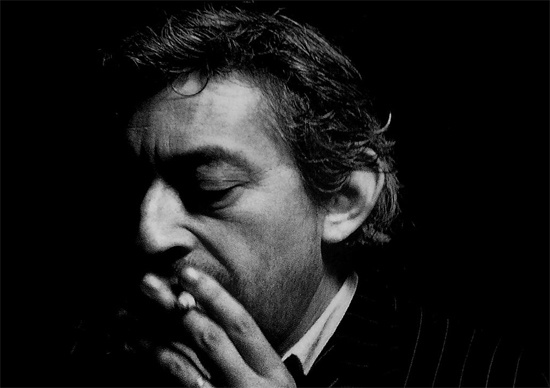
Serge Gainsbourg would have been 90 yesterday (April 2). To most people in Britain he was the lascivious Frenchman who duetted with Jane Birkin on ‘Je t’aime… moi non plus’, a song that scandalised Europe and went to no.1 in the UK charts in 1969, the first foreign language song to do so. He was indeed that Frenchman, but there was so much more.
In celebration of his birthday, and because I’m crowdfunding a biography titled Bad News From The Stars: The Life and Music of Serge Gainsbourg, I’ve compiled twenty videos in a career encompassing – though by no means complete – playlist with ‘Je t’aime…’ nowhere in sight. Gainsbourg made 18 studio albums that gave us variety, virtuosity and a vision that was often so ahead of its time that the records weren’t given the recognition they deserved on release.
Dig in and if your interest is piqued then perhaps consider backing the book at publisher Unbound. Bon anniversaire, monsieur Gainsbourg…
‘Le poinçonneur des Lilas’ (1958)
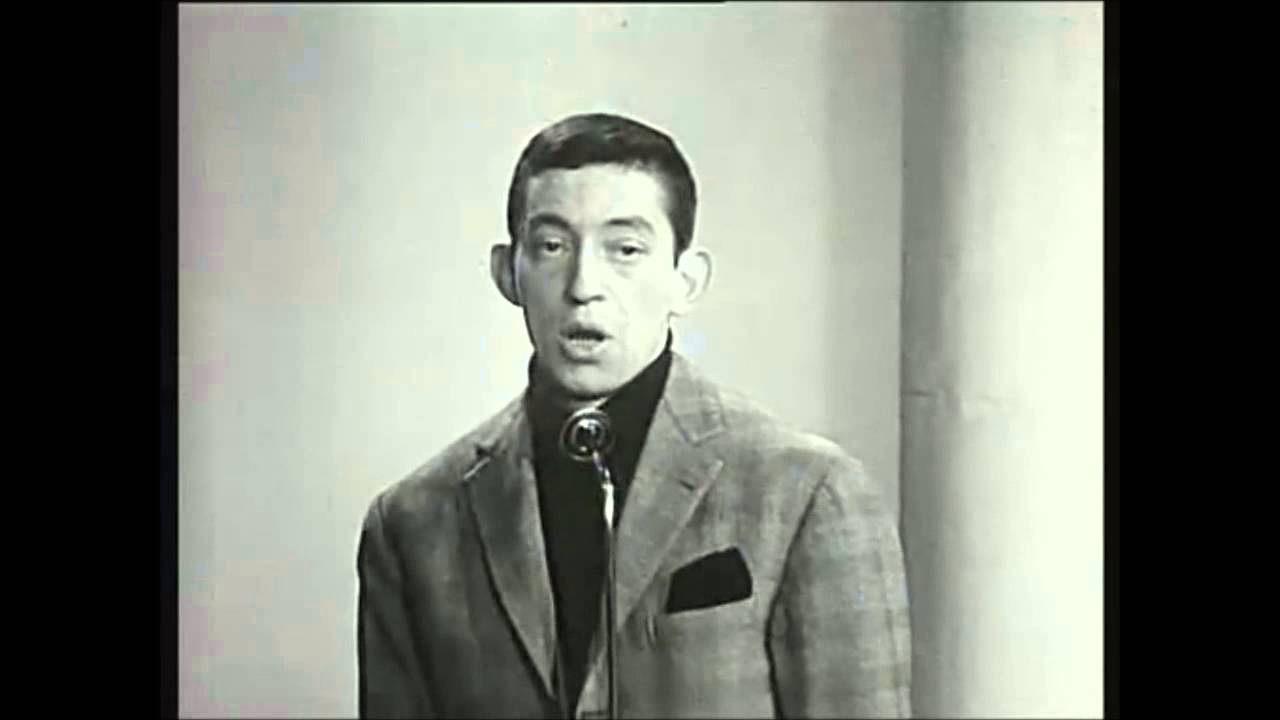
Arriving like a singing Sartre (or maybe more like a chanting Camus) with his first chanson ‘Le poinçonneur des Lilas’ in 1958, Gainsbourg explored the Sisyphean misery of working for the man – in this case as a train conductor punching holes in tickets all day. The metro billets were known as lilacs at the time because of their colour, though there’s a commune outside Paris called Les Lilas too – an indication that this Gainsbourg chap might be disposed to cunning jeu de mots. The protagonist punches holes throughout the song and finally begins to fantasise about piercing a giant hole in his own head. Despite its sombre subject matter, it’s a rousing, galloping, amusing tale of ennui, and it must have marked Gainsbourg out as ‘one to watch’, even if at that point he looked distinctly uncomfortable on stage. Buoyed by his big break, he disappeared into obscurity again, only reappearing to furnish songs to those with seemingly more pizazz.
‘La Javanaise’ (1963)
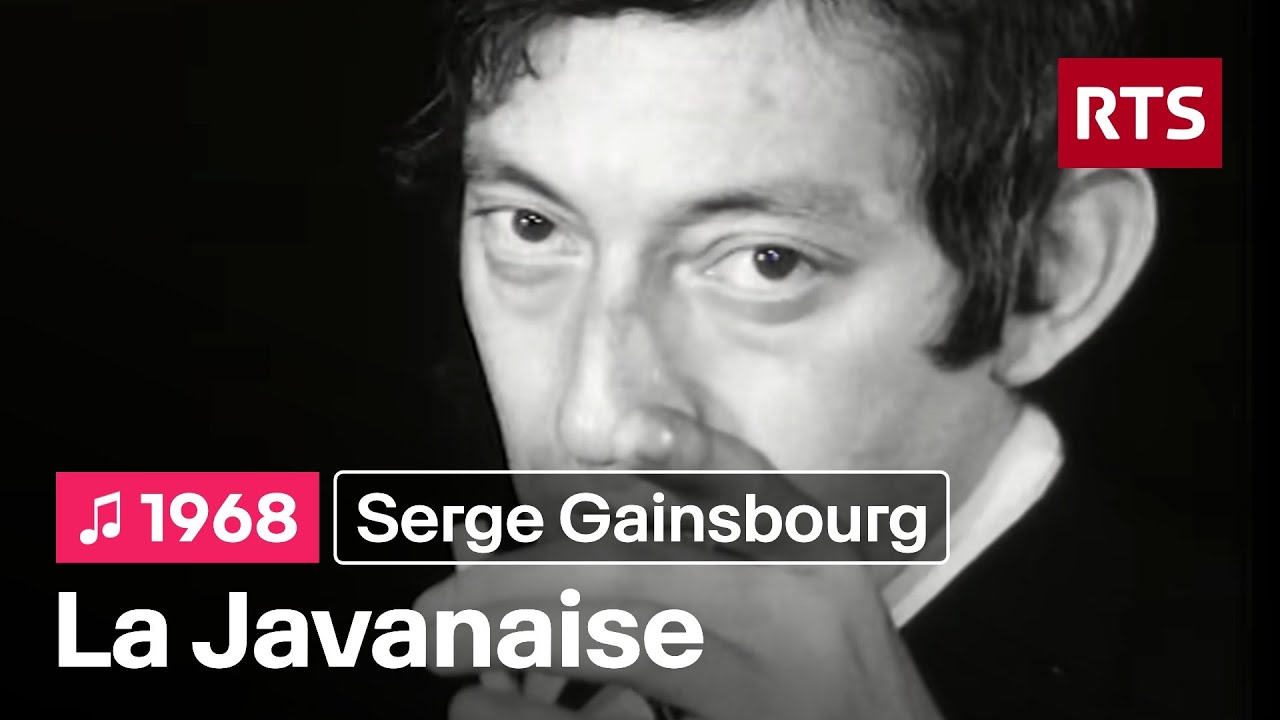
A lilting, jazzy waltz with a cunning key change, the song about a now forgotten dance craze was first written for the existentialist’s chanteuse of choice, Juliette Gréco. Serge recorded his version around the same time, though Gréco’s was more popular at the time naturellement. He’d actually written the song for Gréco after spending a night drinking champagne in her house on Rue de Verneuil in Paris’ Left Bank. If the star made a big impression on him then the house on the Rive Gauche must have impressed him more; in 1970, flushed with success after the millions of copies he’d sold of ‘Je t’aime…’, he and Jane Birkin became neighbours to Gréco and her husband, the pianist, composer and Jacques Brel’s right hand man, Gérard Jouannest.
‘New York USA’ (1964)
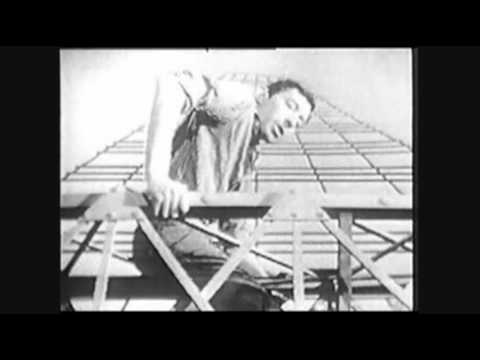
The sky was the limit and the world his oyster in 1964 when Serge wrote a tribute to the Manhattan Skyline with the rhythm section inspired by Nigerian percussionists. The drums in question were actually lifted wholesale from Babatunde Olatunji’s Drums Of Passion in what could be regarded as an innovative way to create music long before sampling became commonplace in hip hop. Given that colonial attitudes were slow to change and songwriters at the time often occluded arrangers who actually wrote lots of the music, poor Olatunji was only awarded the credits he’d been due in 1964 many years later.
France Gall – ‘Poupée de cire, poupée du son’ (1965)
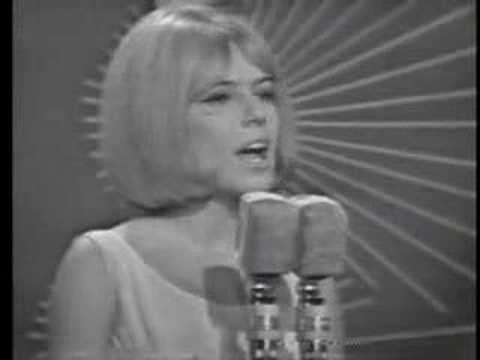
Arguably Gainsbourg’s biggest contribution to popular culture was writing a winning entry for the Eurovision Song Contest, which took place in Naples in 1965. France Gall won representing Luxembourg – a country so artistically slight that it had to sometimes reach beyond itself for help. ‘Poupée de cire, poupée du son’ was a left field barnstormer with Alain Gourager’s divine orchestral peripatetics all over it, an unholy marriage of Beethoven and yé-yé, becoming the first non-ballad to triumph on the 10th staging of the contest. Guignol-themed entries became all the rage, with Sandie Shaw’s ‘Puppet On A String’, clearly made in the image of its predecessor, prevailing two years later. Gainsbourg’s stock-in-trade as songwriter extraordinaire went through the roof.
Anna Karina – ‘Sous le Soleil Exactement’ (1967)

Although he extensively composed for film, Serge never got to soundtrack any of the nouvelle vague films, but he did write the score for what was essentially a mini-TV version, Anna, starring Danish-French new wave actress, Anna Karina. With the mise-en-scene of Paris shot in 33mm and a cinematographer who’d previously worked with Agnes Varda and Karina’s ex-husband Jean Luc Godard, this was a plum gig for Gainsbourg; he also met the mighty Michel Colombier who he’d collaborate with on further soundtracks. Karina’s version is delightful, but do check out Gainsbourg’s own louche take, which comes on like a sultry, dishevelled Sunday morning in the sack as sunlight pours through the skylight.
With Brigitte Bardot – ‘Bonnie And Clyde’ (1968)
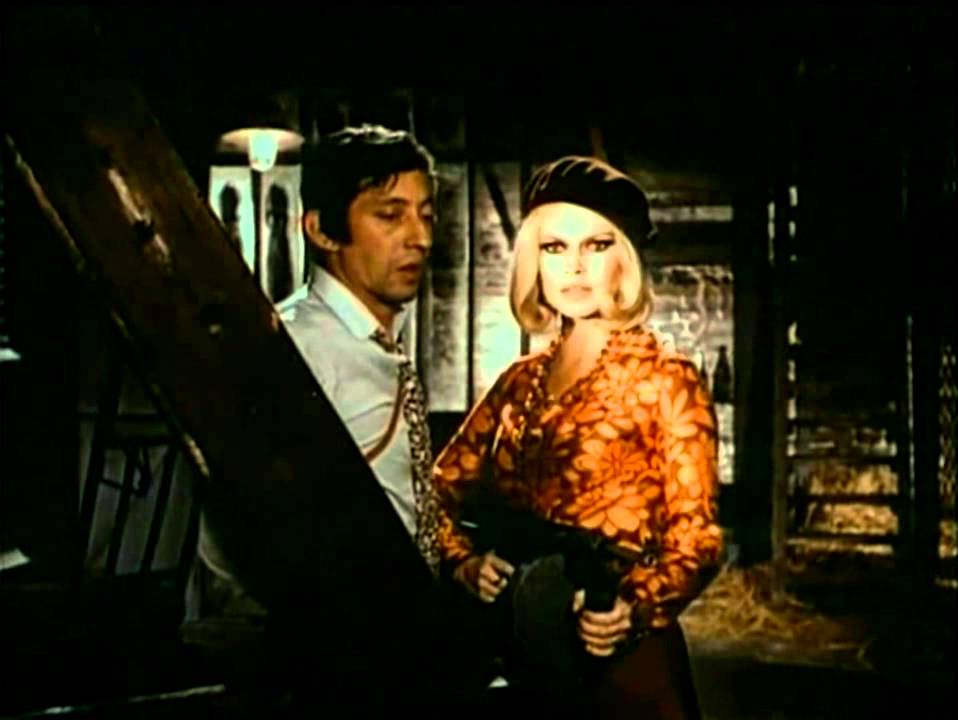
Written and shot in homage to the Arthur Penn-directed Bonnie and Clyde movie starring Faye Dunaway and Warren Beatty which was a roaring success the previous summer, Serge and Brigitte Bardot assumed the mantles of the apotheosised murderers for an all-dancing, all-singing TV special. For Serge, appearing on 1968’s The Brigitte Bardot Show was a boon: the jobbing songwriter was asked to perform several of the numbers he’d written with Bardot, meaning he was suddenly thrust upon a mainstream television audience of millions alongside France’s favourite “sex kitten”. What’s more he began an affair with Bardot, despite them both being married. ‘Bonnie And Clyde’ was apparently written the same night as ‘Je t’aime… moi non plus’, and while the latter has associations now with your parents having sex that you never, ever want to be reminded of, ‘Bonnie And Clyde’ sounds incredibly contemporary with its incessant sonic loop and the deadpan interplay between the pair.
‘Initials BB’ (1968)
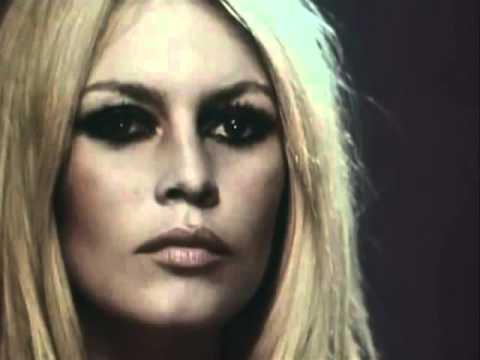
The affair was over quickly, and Bardot requested Serge didn’t release ‘Je t’aime…’ – a song inspired by her – out of respect to her husband, Gunter Sachs. It must have hurt if Gainsbourg had any inclination of how successful it would become. Still, he was in prolific mood, and he was also cheekily weaving his favourite classical music into his chansons like some proto-hip hop master. ‘Initials BB’ takes the triumphant phrase from Antonín Dvořák’s 1893 New World Symphony and passes it off as his own, and great it is too. Such audacious pilfering was practically unheard of at the time.
‘Requiem pour un con’ (1968)
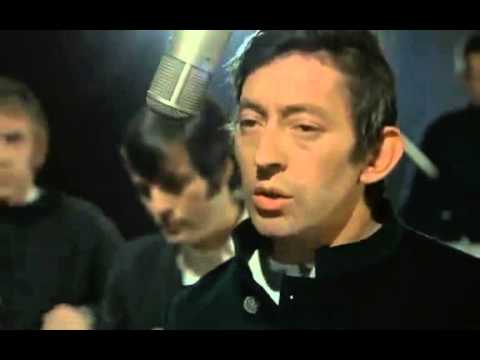
Also in 1968 – a fruitful year indeed – Serge recorded the soundtrack to La Pacha alongside Colombier, who he’d met on the set of Anna. ‘Requiem pour un con’, or requiem pour un c… on the single sleeve (a ‘con’ roughly translates as ‘dick’), featured Gainsbourg dropping his soon to be familiar sprechtsegang all over a dislocated beat. Again, talking over a groove was way ahead of the curve.
Jane Birkin – ‘Jane B’ (1969)
More pilfering, this time using his favourite composer Frédéric Chopin’s Prelude, Op. 28, n°4, laid over a shuffling groove, some sumptuous bass and Jane Birkin’s haunted falsetto on top. ‘Lemon Incest’, a song recorded with a 13-year-old Charlotte Gainsbourg about an illicit love affair between a father and daughter (that naturally caused huge controversy when it was released in 1984 on its way to no.2 in the French charts) swiped Chopin’s Étude Op. 10, n°3 wholesale. And the lesser known ‘Dépression au-dessus du jardin’, performed variously by Fanny Ardant, Catherine Deneuve and Birkin, is lifted from Etude Op.10, n°9. It’s an eternal mystery as to whether the Polish composer reposing away in the Cimetière du Père Lachaise would feel flattered or violated.
‘L’hôtel particulier’ (1971)
Gainsbourg’s mini opus L’histoire de Melody Nelson is undoubtedly regarded as his finest LP in this country, but in France it took a long time to shift any copies and was dismissed for many years as indulgent before being rediscovered as something altogether more alluring and momentous. In fact it was word of mouth advocacy by artists such as Jarvis Cocker and Thurston Moore and its obvious influence on the Bristol scene and electronic musicians like David Holmes that really brought it to cult prominence in the UK. Choosing a standout track on that album is impossible, though ‘L’hôtel particulier’ with its unrushed funk groove and Jean-Claude Vannier’s striking arabesque string arrangements, on a song apparently inspired by his and Gainsbourg’s visit to a brothel, is a great place to get acquainted with the masterpiece if you’ve not yet had the pleasure.
‘Je suis venu te dire que je m’en vais’ (1973)
Gainsbourg suffered his first heart attack at the age of just 45 in May of 1973. That didn’t stop him from getting the album Vu de l’exterieur out in November of the same year, or more bizarrely from calling a press conference at the American Hospital promising to up his intake of cigarettes and alcohol as a way of warding off a second cardiac arrest. He was certainly an attention seeker, and he could be incredibly vain too, refusing to wear the blanket offered by paramedics as he was wheeled out of 5 bis Rue de Verneuil on a stretcher. “Before leaving the house,” wrote Francine Gorman in the Guardian, “Gainsbourg insisted he be covered with his highly fashionable, extremely valuable Hermès blanket as the hospital’s ‘own brand’ ones were too ugly.” Bleak laughs aside, his concerns about mortality surfaced poetically in gorgeous ballads like ‘Je suis venu te dire que je m’en vais’, surely the year’s finest exemplar of la chanson française.
‘Nazi Rock’ (1975)
Here’s one I made earlier, from tQ’s Anti-Fascist Anthems, published in 2016:
“The occupation of Paris during World War II would have commenced not long after Serge Gainsbourg’s 12th birthday, and as a Jew born to Russian immigrant parents, he was forced to report to Nazi officers each day and wear a yellow star as identification. He said later that he literally wore it as a badge of honour, and would pretend he was a “sheriff or marshall or big chief”. That lyric comes from the song ‘Yellow Star’ from his 1975 concept album – Rock Around The Bunker – drawn from his experiences of the 1940s, a kind of French musical Adolf Hitler: My Part In His Downfall. Like the Milligan book, Gainsbourg delights in the darkly comic and wallows in the absurd, with few songs as darkly comic or absurd as ‘Nazi Rock’. Set over a high-kicking, vaudevillian bop, it recreates the final hours of the Sturmabteilung, a Babylonian orgy of sex, drugs, Weimarian rock & roll and crossdressing. The fun never ends, until it does of course, though La Nuit Des Longs Couteaux never occurs in the actual song, so we’re suspended forever in a moment, like those amazing black and white photographs you see now and again of Studio 54. It would have been uncharacteristic of Gainsbourg to have written an explicitly anti-fascist song, though – as he proved over many years – he was eminently qualified in the art of pisstaking.”
‘Premiers symptômes’ (1976)
Charlotte Gainsbourg chose her father’s most arcane and anomalous album L’homme à tête de chou (the man with a cabbage head) for her upcoming Baker’s Dozen, a last minute choice instead of L’histoire de Melody Nelson. “The story of Marilou is on that record, and it’s also the voice of my father which I treasure,” she said. “This is a real portrait of him; Melody Nelson is a portrait of both of them.”
There’s little footage of L’homme à tête de chou on YouTube – and no video for the very proggy standout title track, but ‘Premiers symptômes’ is a short, experimental gem, more spoken plot device than song, transposed over an Ozark harp and a beat with voodoo qualities that makes it sound like latter day Tom Waits. Lyrically the antihero of the piece is being laughed at by children as his ears turn cauliflowers and his face takes on the semblance of a boxer. Soon his whole head will transmogrify and he’ll beat Marilou to death in a hotel with a fire extinguisher.
‘Sea, Sex And Sun’ (1978)
Gainsbourg released a surprising amount of terrible one-off singles during the 1970s that are seldom discussed, mainly because they weren’t attached to albums and have therefore slipped through the net when his career is viewed retrospectively. ‘My Lady Héroïne’ is pedestrian, ‘La Décadanse’ with Jane Birkin drags and is at times painful to listen to, but nothing quite prepares you for how awful his West Indian-influenced novelty hit ‘L’ami Caouette’ is – take a look for yourself if you dare, though be warned, even Serge himself dismissed it as “monumental bullshit”. His three albums during the decade up to that point including Melody Nelson had tanked commercially, and he was scratching around down the back of the sofa looking for a hit. He managed to get into the top 20 in France with ‘Sea, Sex And Sun’ in 1978, another song that had specifically been written with the aim of landing in the charts. It’s a holiday disco number: simplistic, shiny, written on the back of a scrap of paper sat at the corner of a table in ten minutes flat; he was almost as dismissive about it as he was about ‘L’ami Caouette’. It’s actually pretty good fun though if you can cope with a hirsute 50-year-old Frenchmen perving on about “little bosoms of Bakélite” (one can only assume he’s addressing a vintage Barbie).
‘Aux armes et cætera’ (1979)
Serge was trying without much success to write a concept album set in the back of a London taxi when he got the call from producer pal Philippe Lerichomme suggesting the pair should get a flight to Jamaica and make a reggae album. Gainsbourg and Lerichomme pitched up, smoked a lot of weed, hung out in the studio for a week with Robbie Shakespeare and Sly Dunbar and proceeded to make the Frenchman’s most successful album ever. It sold more than a million copies in France and suddenly made him very famous indeed. On the title track ‘Aux armes et cætera’, Serge set the words from La Marseillaise over a sleepy dub groove, which caused perhaps his greatest stink in the country – especially with the racists – and nearly saw him lynched by paramilitaries. There’s no space to tell that story here but Sylvie Simmons recounts it eloquently here.
‘Ecce Homo’ (1981)
Gainsbarre, the pugnacious brut of alter ego who undoubtedly did his creator’s relationship with Birkin irreparable damage, was one of the malcontents who made his first appearance on his 15th studio album and second reggae album Mauvais Nouvelles des Étoiles, appearing in the song ‘Ecce Homo’. Gainsbarre usually came out at night, often showing up for chat show appearances in place of his master, and he was the foil Gainsbourg needed, a scapegoat he could blame all his misdemeanors on: Gainsbourg was the erudite songwriter, the sensitive soul, the genius; the character Gainsbarre, on the other hand, was bad news. And Evguénie Sokolov, the flatulent eponymous character from his 1980 novella made a reappearance on Mauvais Nouvelles des Étoiles (meaning “bad news from the stars”), giving his name to a two-and-half minute instrumental featuring languorous dub and the sound of breaking wind throughout.
Isabelle Adjani – ‘Pull Marine’ (1983)
Serge was one of the key svengalis of the yé-yé movement, writing for Françoise Hardy, France Gall, Anna Karina et al, and he kept writing songs, usually for young women, throughout his life. He wrote for his partners (Birkin and Bambou), he wrote for his daughter (Charlotte), the dancer Zizi Jeanmaire and the film star Isabelle Adjani, who enjoyed a short lived pop career in the early 80s. ‘Beau oui comme Bowie’ – with the type of titular, tortured franglais pun he was so fond of, is perhaps the best track on Pull Marine, though the title track features a stunning video shot by Luc Besson that captures the textures, technology and teased hair extremities of 1983 better than any museum could.
‘Love On The Beat’ (1984)
Gainsbourg’s American funk phase, which would turn out to be his final phase bar collaborations, began with ‘Love On The Beat’, a sleek composition he hawked around TV studios, usually with his wife Bambou dancing in various states of undress. (“Beat’, for the uninitiated, is French slang for penis). The song and album embrace the full phantasmagorica of 80’s electro sound, very different from his jazz roots or the orchestral rock of Melody Nelson, but no less adventuresome. Young generation Xers regarded Gainsbourg as cool again where his own generation and the baby boomers had perhaps grown weary of him during the 70s. His music was more au courant than it had ever been, even if the cruelly maligned and ignored albums of the previous decade are now regarded as his major classics.
‘Aux enfants de la chance’ (1987)
During the 80s it was de rigueur for platinum selling artists to make their own prescriptive anti-drugs song, which was often a case of ‘do as I say, don’t do as I do’. Serge didn’t “shoot shit” himself, but given the fact he was an alcoholic and was never pictured without a lit cigarette in his hand, it might seem a touch hypocritical. His concerns were no doubt genuine enough though: his son Lulu was a year old and his wife Bambou had a major drug problem it would transpire. The song certainly struck a chord with the French public, playing ubiquitously in tabacs and supermarches all across France. It’s a big, avuncular, mawkish ballad by an artist you probably wouldn’t want as an uncle.
Vanessa Paradis – ‘Tandem’ (1990)
Written with Franck Langolff, Renaud’s musical arranger and the guy behind ‘Joe Le Taxi’, Serge provided a multilayered masterclass in lyrical innuendo for the then 17-year-old Vanessa Paradis. It was a blockbuster maxi 45 that didn’t exactly set the French charts alight though the album that Serge also penned all the words for – Variations sur le même t’aime – helped establish Paradis as a serious artist back home. The drippingly expensive video shot by celebrated fashion photographer Jean-Baptiste Mondino certainly garnered attention, and is probably most memorable for featuring Swedish supermodel Emma Sjöberg wearing only a guitar and a fairly useless smattering of see-through chainmail. It was a promising start to the nineties from a songwriting perspective but Gainsbourg’s decade would finish abruptly when he suffered a fatal heart attack a month shy of his 63rd birthday.
Bad News From The Stars: The Life and Music of Serge Gainsbourg is a comprehensive biography examining the éminence grise of French pop’s extraordinary story and his genius