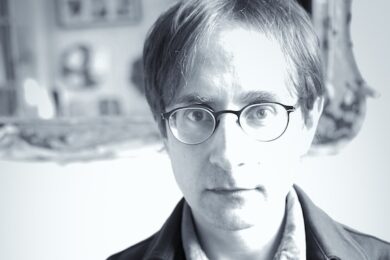


“I know there are some people that are still interested in those [Ultra Vivid Scene] records”, Kurt Ralske reflects, “but mostly I’m just focused on the present and the future. I don’t spend a lot of time thinking about them.” It’s ten in the morning in New York City, two in the morning in Victoria, Australia, and I’m speaking with Ralske about his long and storied career. While the conversation is predicated on the three glorious pop albums he made as Ultra Vivid Scene, released on 4AD during the late 80s and early 90s, there’s a lot more to it: this is also the story of a Long Island boy discovering art school noise-pop and conceptual art practice in downtown NYC; the struggles, successes and failures of a pop music career; and finally, reinvention as a visual artist working with experimental film, installation art, and Borgesian invented worlds.
Our conversation takes place over a few months, dropping and picking up threads when the demands of real life allow: at the time of the interviews, Ralske was teaching at several institutions in New York, with his main focus the Rhode Island School Of Design, though he has since received an associate professor post at the School of the Museum of Fine Arts, in Boston. He has also been working on a number of installation, publishing and film projects. But despite his quite conscious ‘jettisoning of the past’, Ralske is, by turns, humorous, melancholic, and painfully honest about his experiences inside the music machine. “My attitude towards my time as a musician,” he continues, “is [that] I really wanted to completely reinvent myself and not be one of these people who, twenty, thirty years later, is trying to recreate something that happened. I’m glad that Neil Young still makes records, but I don’t know that everybody needs to be frozen in time forever. I think it’s good that pop music is ephemeral.”
But earlier this year, history took another one of its interesting turns, with Ralske suddenly and unexpectedly reminded of his time playing scratchy, No Wave guitar noise in the Dissipated Face trio, back in the mid-‘80s…
It must have been quite a strange thing for you to be reminded of Dissipated Face, out of the blue.
Kurt Ralske: It always seems this stuff comes in waves. I’ll go six months or a year with Ultra Vivid Scene not even crossing my mind, and all of a sudden, it’s everywhere! So I get this email from the drummer of Dissipated Face, who’s been off my radar for over twenty years, and then the same week, two or three other things happen: I have this conversation with you, and then one of the touring guitarists from Ultra Vivid Scene, who I’m friendly with on Facebook, got in touch with me because he discovered
this funny interview somebody posted on YouTube. It was really shocking to be reminded I was once that person. [laughs]
What do you remember of Dissipated Face?
KR: I started playing guitar when I was 15, and shortly after, I met two other high school outcasts who wanted to start a punk band. I didn’t really know what that was. I knew quite a lot about music, because my original instrument was the trumpet, and I had worked hard to figure out how to play jazz on the trumpet, so I knew quite a lot about harmony and theory. And I liked prog rock, so when I first picked up the guitar, I was trying to figure out how to [play] King Crimson. It wasn’t like, Okay, I want to be in The Ramones, it was, I want to be Robert Fripp. But my band members had a very strong interest in what was going on in New York, as I did too, but I was more interested in the avant-garde side.
The whole thing was a little bit hardcore, a little bit avant-garde, a little bit punk funk. I wasn’t able to imitate the way most punk rock players played guitar, because I didn’t know the basics, I only knew this weird advanced stuff. So it led to this odd mash-up of styles.
So how did it feel listening back to that recording [Dissipated Face With Daniel Carter, Live At CBGB 1986 (2013)]?
KR: Well, that recording is quite nice, because Daniel Carter is a pretty great musician! He wasn’t a regular member of the group, but he did play with us several times. I don’t think we ever rehearsed with him, he would just figure out what to do. When I heard the first track on the record recently, I was impressed, partly because I thought, Wow, there is a dialogue going on between the guitar and the saxophone: I wasn’t just this dumb kid making noise, I was listening a little bit too. So that was a pleasant surprise. I had completely forgotten that I ever played in that style.
I have always been interested in what happened for you before Ultra Vivid Scene, in bands like Crash and Nothing But Happiness. Because Mark Dumais (from Crash) is a very fascinating character, and people like Bill Carey… His name came up recently when I read an interview with Kevin Shields, where he claimed to have discovered his new sound because Bill told him he had to borrow his new equipment.
KR: Wow. I wasn’t aware of that. (laughs) This is funny, because Bill is the one who recommended that I get either a Jaguar or a Jazzmaster, which were the two guitars that I wound up using for the Ultra Vivid Scene recordings.
That man should be on a stipend from Fender. I’m interested in all this music: I love the Crash records, and the Nothing But Happiness record, too. And that to me is a really mysterious time – I can find out next to nothing about it.
KR: When I was in high school I started spending a lot of time in New York City because it was much more interesting than the suburbs. I fell in with this older crowd who were involved with music. There was one point where I was playing in three or four different bands at the same time: one of them was Crash, one of them was Nothing But Happiness, [and] there was another group called King Of Culture, which was also with Bill Carey.
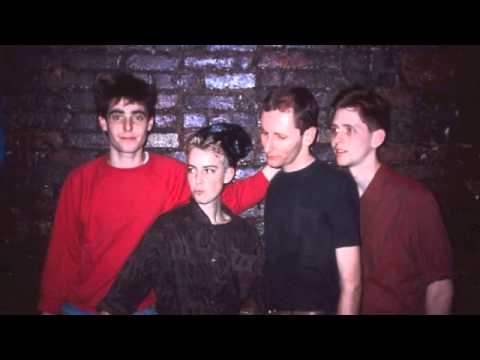
There was a really fascinating, exciting, very vital scene in the East Village in New York City at that time. The band that we were friendly with that was part of our circle that got the most attention was 3 Teens Kill 4. Their real claim to fame was that one of the original members of this group was David Wojnarowicz, who became a very, very famous artist. You could say these bands were all coming out of an art school mentality. Every band was kind of a radical art statement.
Crash was mainly the project of Mark Dumais, right?
KR: Yeah. He was really influential in this scene, just because he was brilliant, and he was somebody who had a very clear vision and wasn’t going to let anything get him away from achieving what he wanted to achieve. Mark was a really dear friend. One of the first places I lived when I left home was as Mark’s roommate. He was a really, really wonderful person.
At the same time, you were a member of Nothing But Happiness. Can you tell me about that group?
KR: That was pretty much exclusively a recording project. I have vague memories of maybe one performance, but it was really David Bowman’s project. Again, he also had a very clear picture of what he was doing. I played on the recording but it almost seemed like he could have done it himself.
On the cover of that album [Detour, 1986] there are quotes from Jean Rhys, Greil Marcus, and Nawal El Sa’adawi. It’s interesting that you mention that whole conceptual bent, because that cover art was the first flag to me that this came out of an art school context.
KR: I’ve lost touch with Dave over the years, but he was somebody who was extremely well read – well, he worked at a bookstore [laughs] – and he was very up on French theory, for example, which at the time was new in America. He played me that Scritti Politti record, Cupid & Psyche ’85, and initially I didn’t like it: "This is so lightweight." Dave pointed out to me, "If you look at the lyrics, he’s thinking hard about these same ideas. This is not what it seems. This is pop music about pop music. Everything has quotation marks around it." For me, that was a really fascinating idea, that things can have quotation marks around them: things can be ironic, and yet not be cynical.
This was how I interpreted the first Jesus & Mary Chain record [Psychocandy, 1985]. It was a very odd combination of simple pop songs wrapped in what to me seemed rather extreme noise treatment. The noise was a way of putting this very simple pop statement in quotation marks, giving the statement a gravity it wouldn’t have by itself. By twisting it, or inverting it, or turning it back on itself, it suddenly became much more interesting than a sincere pop song by The Ronettes or The Ramones.
So, you moved to London with Crash in ’86?
KR: Yeah. We did a series of shows around England, a few shows in London, and then into Bristol, Nottingham, I can’t remember where else. After we completed the tour, we decided, Let’s see if we can stay here, because there was interest in the group, the record came out… So we stayed in London and continued to do gigs in London for a few months. I can’t recall exactly what happened, but that line-up of Crash did disintegrate. I think partly it was Mark’s decision to go in a new direction, and partly just the strain of trying to keep a group going that wasn’t generating much income, especially being foreigners and not being able to work legally. Bill Carey committed to stay in London, and I committed to stay in London too. I wound up staying for nearly two years, at which point I focused on becoming Ultra Vivid Scene.
What were the set of coordinates that led to what you wanted to do with Ultra Vivid Scene? What ideas were feeding into the project?
KR: Certainly, the experience of being in Crash was really influential. But also, as you can clearly tell from the first record, the example of the Jesus & Mary Chain was very important for me. It pointed [toward] a way of doing things that were both simple and very complex at the same time. I was keen on this idea that things could have a simple form but actually be complex and subtle in their meaning. It’s very difficult for me to retrace the mindset that led up to that, because it was a pivotal point in my life, and it was also a long time ago. But possibly I was thinking that communicating using the vocabulary we all share was going to have a better and more powerful effect than communicating using some sort of elitist vocabulary.
Do you feel like you achieved all of your aims on that first record [Ultra Vivid Scene, 1988]?
KR: Ah, no. [laughs] The question of what I achieved with Ultra Vivid Scene is a very complex and unresolved question for me. If I had to explain the history of Ultra Vivid Scene, it’s a story of my own naivety. Ultra Vivid Scene was an experience of learning about the world. Some people who make music are instantly very savvy about how they can get their music to communicate in a larger way. For me, the music was always first, and I put a lot of time and effort and thought into making the recordings. But everything else around it, all the things that were necessary to have a career in pop music, I was completely ill equipped to handle.
So, really, the practical side of the Ultra Vivid Scene career went extremely badly. It was one disaster after another, and the blame is almost entirely mine. I was young and I didn’t understand enough about what professionalism was, or even what basic social discourse was. So, there were a lot of problems. An obvious problem was getting stuff done. Another problem was management: there was no manager for a very long time, and then there was a series of very bad managers. And then the other really serious problem was how to translate these records into a live experience. And to be blunt, I made a mess of it.
There were a few shows in North America around the first record, which were quite extremely poor. In fact, somebody from 4AD had flown to New York and saw one, and recommended that maybe I shouldn’t play live. But for some reason I thought that I had to, or that I should, or that I wanted to.
Around when the second record [Joy 1967-1990, 1990] was released, there was quite a lot of press in England. So with great fanfare, there were four nights of performances at a smallish club in the centre of London called the Borderline. In the audience were all the press and everybody important in the music industry. And basically we went out there and completely sucked: we had a very inadequate performance. I have spoken to other people who told me that, that was the point at which the fate of Ultra Vivid Scene was sealed. The performances were so bad that 4AD apparently begged people not to write about it. [laughs] Nobody wanted to think or talk about this group at all, ever again.
For the third record [Rev, 1992] live musicians would be part of the recording, and I wrote the songs and began rehearsing with the musicians early on. So this core trio really worked up a way of playing that made sense for me, and that informed the song writing. The recording was done with these musicians, and then the touring was done with these musicians. And these shows I was completely happy with, and everybody agreed were equal to, or even superior to the recordings. But by this point, there was no longer interest in, or support within the label, or in the general world, for what a live Ultra Vivid Scene might be. So there was one tour of the US that was musically successful, but that was it – then it was over. I’m glad that I did finally achieve a live experience that was what it should have been, but it was too late.
Talking more about Rev, one thing I love about that record is that it offers this world to enter, as opposed to a lot of records, which force a world upon you.
KR: That’s great, that’s nice. It’s more of a rock record than the other two, and maybe the audience for the first two records preferred a lighter sound, so it didn’t speak to the former audience. I was listening to things like Can, I was interested in extended duration. Some of the songs were informed by early Pink Floyd, Jimi Hendrix, Led Zeppelin, T Rex, The Velvet Underground, Love’s Forever Changes…
I also wanted to ask what you were exploring lyrically on those records.
KR: I always felt no one paid enough attention to what was going on with the lyrics. It’s difficult for me to appreciate, or relate to the mindset that went into those lyrics, because a lot of my ideals are very different now. At that age it’s very easy for people to [have] very romantic ideas about love and decadence… and having read a lot of naughty literature [laughs], this [informed] this fascination with extremes of decadence, sexual and drug practices. To me, a lot of it seems adolescent.
For me, they manage this interesting double-play of a kind of voluptuousness of language – ‘Thief’s Love Song’, for example, is incredibly beautiful linguistically – but there’s something very hard, and stripped-back, and clear about them as well.
KR: I’m so glad you brought that up, because, I’m not a poet, but I think that one does stand up as a piece of poetry. If you had to say, what were the themes of these lyrics, a lot of them are doing this stuff where it’s both erotic and religious at the same time. Which is not unusual in pop music, there’s any number of people who’ve worked that angle. And then also, a lot of the songs are about some sort of romantic perspective on either drug use and/or some sort of mystical perspective.
The other thing I thought we should talk about is the passing of Mark Dumais from an AIDS-related illness in May 1992.
KR: Crash disbanded in 87 I think, or 88. There wasn’t any sort of anger, but it was pretty clear that he’d decided he’d moved on. We were both living in London, but I don’t remember seeing him much after I was no longer the guitarist in Crash. I don’t know much about his last years. And then at the very end, he moved home to Baltimore.
Friends told me that he was ill, but I didn’t really know how ill, and I really regret that I didn’t see him before he passed. As I mentioned earlier, he was truly a wonderful person. We had been roommates for six months to a year, living on 17th Street in New York, and it was really great just being able to listen to records together, and share different sorts of music with each other. There was a lot of music that I didn’t understand that, when I saw how Mark related to it, it totally made sense to me. And the way he was relating to things was not just, "Oh hey, I like this and this is cool", there was a lot of sophistication in the way he was appreciating this stuff.
I gather that you covered his song “Don’t Look Now” in tribute.
KR: I did do a re-recording of that song as an Ultra Vivid Scene b-side [on the ‘Blood & Thunder’ single, 1992]. The original is superior, that’s such a brilliant song. I believe at that point that I knew Ultra Vivid Scene was history, and I thought, this may be the last Ultra Vivid Scene record released, so why not get a Mark song on there, to help out his legacy. The song has such an incredible atmosphere. It’s hard not to think of it as having a predictive quality of Mark’s own life.
So, next was the period where you turned to electronic music, with the Amor .0+01. record [2001], and the Cathars project, and also you played with people like Keith Fullerton Whitman. And at the same time, you were doing studio work with people like Charles Douglas, Richard Davies…
KR: I was producing and engineering records basically to make a living, but at the same time, I was working on experimental electronic music. The Cathars record [Amorpheous, 1999] is probably the one that I worked the hardest on, and I feel is the best statement. [It’s me] focusing on all of my most experimental impulses, rather than trying to communicate in some common language. At the time, I felt I couldn’t make music by simply jumping into familiar musical structures and not questioning that: I had to start from the question, start from music degree zero, what is it? What is sound?
Maybe it was a selfish thing, I wasn’t trying to communicate; I was just trying to work out these problems for myself. So, you know, the records had very limited interest, and I was okay with that. But again, I decided I didn’t want to continue in that direction, and since about 2001 I’ve focused pretty exclusively on visual art.
Was this a natural thing, to leave music behind? Or was there a very conscious decision to not do it anymore?
KR: It was very conscious. I felt like it’s impossible to do many things well at the same time, so if I wanted to head in this new direction, I needed to focus on it exclusively. The thing that interested me was, well, for most all musicians, the essential premise behind the act of making music is this belief, this conviction that direct expression is possible. It’s what makes great music possible. I’m very grateful that John Coltrane could get up there and believe that the music he could play would transmit his personal vision. It’s very beautiful that people can have that belief.
However, on the other hand, in the world of visual art, particularly in contemporary art since the 1960s or so, this idea is not a part of what’s going on. Expression is never considered a given, and it is in fact maybe not what’s most interesting about making art. Making art, since 1960 or something, is many things: it’s a way of doing philosophy, it’s a way of opening a dialogue, it’s a way of putting a fact or a question out into the world, or a way of drawing people into new relationships, or a way of interrogating history. It’s all these other sorts of strategies or techniques or processes that are really interesting and really valuable. I’m not saying that they’re better than direct expression, but they are different. I’m not saying that direct expression can’t be or shouldn’t be part of visual art, but it’s only one strategy among many.
One thing that really intrigues me about what you do now is that it does away with narrative and deals with phenomena. This ties in with questions around temporality and duration: you compress other films, or expand parts of them, or you invent new histories…
KR: Maybe it comes from music. Some music attempts to be narrative, or lyrics can have a narrative quality, but music is a durational experience. Music without words is a durational experience that has dynamic contrasts, but it doesn’t have a narrative. If music tells a story, the story is grafted onto the music. It’s not in the music.
While doing research on the history of cinema, I became interested in German expressionist cinema, and I was also interested in experimental film as it exists in the ‘20s, and also Italian Futurism, and its influence across Europe. I developed this theory that maybe Futurism does explain what was going on in some of these films.
So I came up with this idea for this genre of cinema, German Futurist Cinema, but in fact this genre doesn’t exist. You could make a case that things like Berlin: Symphony Of The Cities is a Futurist cinema piece, or that parts of Fritz Lang’s Metropolis are clearly futurist, but the genre itself doesn’t exist. So, because I wanted it to exist so badly, I forged it. I created it out of my sheer desire for it to exist. [laughs] The form that it takes has been, so far, a book called Rediscovering German Futurist Cinema, a gallery exhibition, and a performance which takes the form of a lecture about this genre of cinema which starts to fall apart when it becomes clear that there’s some hoax going on.
1927 “Metropolis” Experimental Outtakes — Eugen Schüfftan from Retnull on Vimeo.
I also very much enjoyed the installation loop, Enraged Algorithm.
KR: [With that] I took software that did facial detection, and I wrapped it up in my own software that was going through this movie [The Battle Of Algiers] and detecting faces and pulling them out. I was just trying to draw a parallel between what the US government was doing in its manic hatred for Islam, which just popped up… After 9/11, everyone who entered the country had to have their picture taken, which was put into a database where this facial detection is done. So I turned the facial detection algorithm on this movie, which is full of, well, Arabs committing terrorist acts against colonizing Westerners.
I was also curious as to what it would look like: it’s visually interesting because the algorithm has trouble detecting these faces that are in fast motion, so it’s very fast and you can feel the algorithm struggling to do its job. I like the idea of the algorithm struggling to maintain, the detection software struggling at certain points in time, which seems nicely metaphoric…
KR: Yeah. And it’s failing, failing constantly, it’s struggling and failing.
I was interested to know whether you saw any kind of thread connecting your entire practice.
KR: It’s a little bit hard, partly because I jettisoned the past in some ways. Also it’s a little bit hard to pull yourself up by your own bootstraps, or get a perspective on what it is about the way you’re thinking, so I don’t know if I can answer that question so well for you. If I had to say something, there’s a quote that I read when I was quite young, and it always stuck with me. I read a book about the artist Bridget Riley, the optical artist, and there’s a quote from [American curator and art historian] Henry Geldzahler: "Bridget Riley’s work is a good example of the intellect destroying its own modes of functioning." I read this when I was quite young, maybe a teenager, and it always stuck with me. I’m not sure why, but maybe that’s part of what I do. In general, it’s just the way I’m built: I tend to work from the intellect first. In the records, there may be things that are not expressions of intellect, maybe they are a more direct expression of emotions, or physicality, or whatever else people can express that isn’t intellect. But it seems that for me it has to happen by starting from the intellect and then derailing it somehow, or by going so far with it that it ends up in some other spot, a spot that potentially addresses all aspects of our being.
Kim Deal – Are You Mine? [Official Video] from Retnull on Vimeo.
Kim Deal’s Are You Mine? video directed by Kurt Ralske