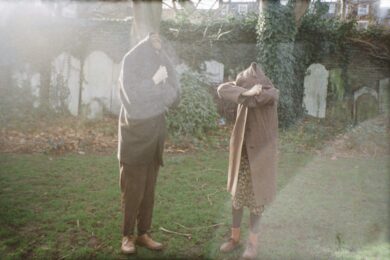

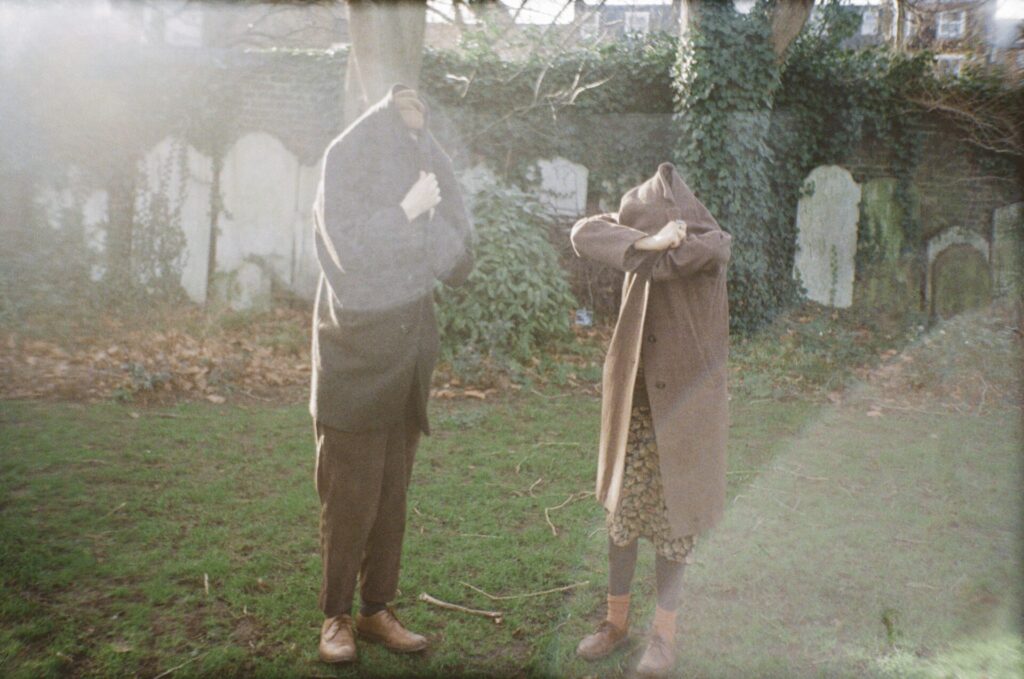
My response to first hearing London folk duo Milkweed, two and a half years or so ago, wasn’t recorded or precisely remembered, but it was something like, “why have these people made an album based on myths and legends of Wales despite having no apparent connection to the country?” The answer has become more apparent with each of the three albums Milkweed have released since, including latest Remscéla (Broadside Hacks), their first on vinyl: it’s what they do.
Remscéla could in fact be considered a case of the wilfully nameless pair circling back to that 2022 debut album, in that its ten songs are based on the opening segment of the Táin Bó Cúailnge, the great canonical work of medieval Irish literature. Milkweed aren’t Irish, or at least don’t sound it when they speak. If your relationship with music requires you to view the performers’ interior emotions through their words, Milkweed – who said, in a tQ interview last year, that they don’t really think of themselves as songwriters – are going to dissatisfy you until further notice.
Personally, I think theirs is a fine gambit, and the music they pair it with increasingly interesting and distinct. It’s recognisably folk music of the type you might hear played at a folk club, but dragged through all sorts of post-production mangles so the vocalist’s Appalachian-sounding lilt – tackling lyrics which don’t really use meters as such, leading to occurrences of extreme syllable crammage – and her bandmate’s acoustic accompaniment is forced to reckon with wow, flutter, flotsam and jetsam. On ‘Imbas Foresnai, The Light Of Foresight’, it sounds like it’s been recorded onto a cassette subsequently ran over by a lorry: given that one does not arrive at a fidelity like this by accident in 2025, you could consider the results slumming of a sort, but on the basest level this schtick satisfies this listener greatly.
Both Arianne Churchman & Benedict Drew have creditable CVs as solo musicians and visual artists, but work as a duo as often as not, and certainly seem to ‘get’ each other’s headspace when they do. The Tree Of The Left Hand, a new LP on Folklore Tapes, matches Churchman’s Britfolk revival-styled vocals to a buzzing, droning blanket of psychedelic feedback to stirring, heady effect. Musically speaking, it’s not clear who is playing what, or where they did it, but as I say, the synergy between the two renders this a fairly moot point.
The Tree…’s two sides have their songs segued together, so are in effect two 20 to 21-minute compositions, bolstering the sense of twiggy, wiggy abandon. There weren’t, to the best of my knowledge, any folk records released before the 1970s which actually sounded like this, even if the sustained sound of the harmonium has been fairly endemic to the genre over the decades, and there are moments of more crystalline, fuzz-free prettiness, notably two and a half minutes of unaccompanied zither plucking featured early on the B-side. If you check for American heads like Fursaxa and Pelt but also have a ‘buy British’ policy (in a non-reactionary way) when it comes to this sort of stuff, you’d do well to hop aboard.
One of Pound To Stone, Christian Mirande, in fact lives in Philadelphia but was visiting the UK when he, Anna Peaker and Kieron Piercy – who complete the trio and I think both live in Leeds – recorded this self-titled cassette. Regional Bears, who’ve released it, write evocatively of field recordings made in the Chiltern Hills, a land of “Pimms-fuelled madness and bunting”, before being finished in a cottage, and the results are again folk-adjacent thanks to moments of acoustic dolour, but overall deal in a type of loosely rustic homespun sound art you might find quite addictive even if also puzzling.
This is another album where you will have to guess who is doing what on these recordings, but the performers would probably prefer you didn’t try. I will settle for imagining the Zenlike tolerance levels of whoever is playing a loner folk guitar instrumental on opening track ‘Too Shallow To Dig’, blithely pressing on as one or both of the others attempts to drown it out with some Posset-esque Dictaphonic pocket racket. ‘Onslow’ is eight minutes of a commotion you don’t understand inside a factory you haven’t visited before; ‘Sneaker Pimms’ and ‘Evensong Rehearsal’ two consecutive whacks of heavy organ drone that briefly threatens to turn circusy. ‘Cow Dust Time’, which closes Pound To Stone, gives a dub treatment to an array of quasi-percussive dropped-cutlery ghost rattles, and again I find virtue in my bafflement as to how it was made.
Some intriguing questions of authorship rear their head on Hebden Bridge-based Sullivan Johns’ second album. Pitched Variations (Moving Furniture) is so titled because it’s comprised of single, sustained notes performed by two bassoonists and a violinist – none of whom are Johns, nor is it clear if the three musicians were working together. Either way, Johns has then taken the notes and edited them into seven pieces, with altered pitch one of the significant elements of his practise. The rear sleeve of Pitched Variations credits him as composer, though I fancy plenty of more traditional composers would query the definition based on the info available.
Returning to an apparent theme of this month’s column, you can of course listen without context should you choose, and Pitched Variations quickly reveals itself as a fine suite of classical minimalism, austere but in an elegant way. ‘Overlapping System’ constitutes a peak of intensity, the tone of Sanya Smileska’s violin as needling as it’s ecstatic and somewhat Theatre Of Eternal Music-redolent, and while the bassoon is not an instrument renowned for its delicacy, the textures that Agustín Agen and/or Javier Cereceda add to the likes of ‘Violin Fore’ are just so.
With over three decades of music-making under his belt before he moved from Ukraine to London in 2022, one wouldn’t want to be too gung-ho in slapping a fresh national identity on Andrey Kiritchenko. But with latest album Ultra Marshes (Flaming Pines) this innovative electronica bod uses his new locale as a major sound source, and not only is the outlook posi, the resulting music is some high quality ever-evolving electroacoustic techno jamming – densely layered but light on its feet, sometimes making me think of a modernised Plastikman.
The Marshes of the title are Hackney, which – Kiritchenko came to realise – serves as an escape from the city to a point, while still being very much a feature of it. So the field recordings that came to be soundbeds for this 36-minute release include avian and insectoid calls, but also chopper blades and coppers’ sirens. This is, though, biographical colour rather than a critique, because you can’t really hear any of those things in Kiritchenko’s “ultra-processed” (in his label’s words) sound design. Which isn’t to imply any sort of deception on the composer’s part, only to note that if the sausage-making process was more demonstrable, Ultra Marshes might sound rather different.
Good to have a new solo release by Bristol-located Rhondda gentleman Jake Healy to mull, three years after I used this column to express much fondness for his Eggs In Purgatory album with trumpeter Alfie Grieve. This time, Healy is debuting his Grand Times alias and releasing the Grand Times Fly cassette through the Totality label. In the main, it shows a different side to him than the ambient jazz skulking of Eggs… or the abstract, inert dub techno of the live sets I’ve seen, but its bitesized modulations and transformations of 80s pop maintain a pitched-down, lunched-out and woozily degraded sound quality.
Bookending the release with tracks named ‘Time Flies’ and ‘Time Never Ends’ could have you thinking, wait, isn’t it an infinite loop as well. The first of those is a half-minute aperitif but the latter, crawl-paced body music with roots reggae leanings, is an uncharacteristically cold-blooded end to an oftentimes goodtime release. It’s kind of a beat tape, if not necessarily by design, with tracks often based around one drum or vocal sample on top of which a few other things happen. The poppiest, glossiest moments really emphasise those qualities even when scuffing them up a bunch.
England’s grassy spaces are once again claimed as inspiration this month, with Leo Bell’s third 12-inch EP as Dyslecta carrying the spiritual stamp of Yorkshire’s rolling chalk hills even while the producer plies his trade in the smoke-choked capital. Fulcrum, also Bell’s first release as founder of the Tenuous Links label, is springheeled techno built from robust, severe bass and electro’ed up drum programming jabbed in at sharp and curious angles. I would be lying if I said it struck me as rural, beyond potentially sounding good to dance to in an unlicenced field, but – once again! – we can embrace the author’s intent or go off on our own interpretative tangent.
‘Fulcrum’ the track (and EP opener) bolts some proper deep bass belch to dark metallic clank Sandwell District stans might get a kick out of, especially the exhilarating passage that kicks in around the four-minute mark. Speaking of kicks, Dyslecta really puts them upfront, with ‘Int’Toil’ perhaps his best example of this – or maybe ‘Shale’, with its migrainic thud and haunted-jungle background detail. The junglisms are then pushed to the front by the unpredictable breakbeats powering ‘Ragwort’, which concludes a compelling release.
There are 17 songs on the debut album by Labake Sabbath, but despite this relative glut and its variable styles, it flies by with a keen balance of emotion and humour, personal and political. It’s a window into the life of Labake, who makes music at The Gate in Shepherds Bush, London – an arts centre catering to the learning disabled community – where she’s been attending for about a decade and a half, and recorded Metal Madness over the last couple of years.
There is little if any metal madness to be heard on it, but instead Labake and her band/production team triangulate synthpop, post punk and folk rock with a taste for trippy effects that sometimes blur these modes into one another. ‘It’s Not Easy’ and ‘Life Stinks’, two distinct flavours of private press-style synth heater, are perhaps this listener’s highlights, but don’t sleep on ‘Life And Struggle’ (proto-rap, no wavey funk bassline), ‘Rights’ (a demand for increased accessibility in public spaces set to a Messthetics-esque punk stroll) and ‘Sitting On The Dock Of The Gate’, one of two quasi-covers on here and which gives this soul staple a Young Marble Giants type do-over. Hearty recommendation!
Zoned (Cruel Nature), the first album by east Midlands/Staffordshire duo Machine Mafia, is lengthy too, 13 songs in an hour this time – which is a lot of industrial anarcho sludge to slurp up in one sitting. It is though effectively three EPs (two self-released last year) and one compilation track, and if unlike me you’re a ‘playlist person’ you might benefit from being jolted into vigorousness by the sudden onset of Adam Stone’s yobbo drawl and Jase Kester’s grotty electronic overload.
Both members also play in Pound Land, Kester being a more recent inductee, and with Stone on vocal/lyrical duty there too the cosmetic difference between the two acts is not chasm-sized. Machine Mafia are more in my wheelhouse, I think, though if I really did have a wheelhouse (the bit of a boat you sit in when steering) being joined by their distortion-heavy, dub-curious looped noise and queasy punk-poetry verbiage would surely impede plain sailing. So the Zoned journey takes us from punchdrunk Thatcher-sampling opener ‘Killzones’ and the spiky-bassed ‘F.O.S.’, which both feel a bit like something Crass might have included on a Bullshit Detector compilation, to cut-up styled mid-album baffler ‘Lecture 0.3B’, to ‘Outside My House’, almost nine minutes of ranting about termites and camera equipment in the character of a paranoid shut-in.
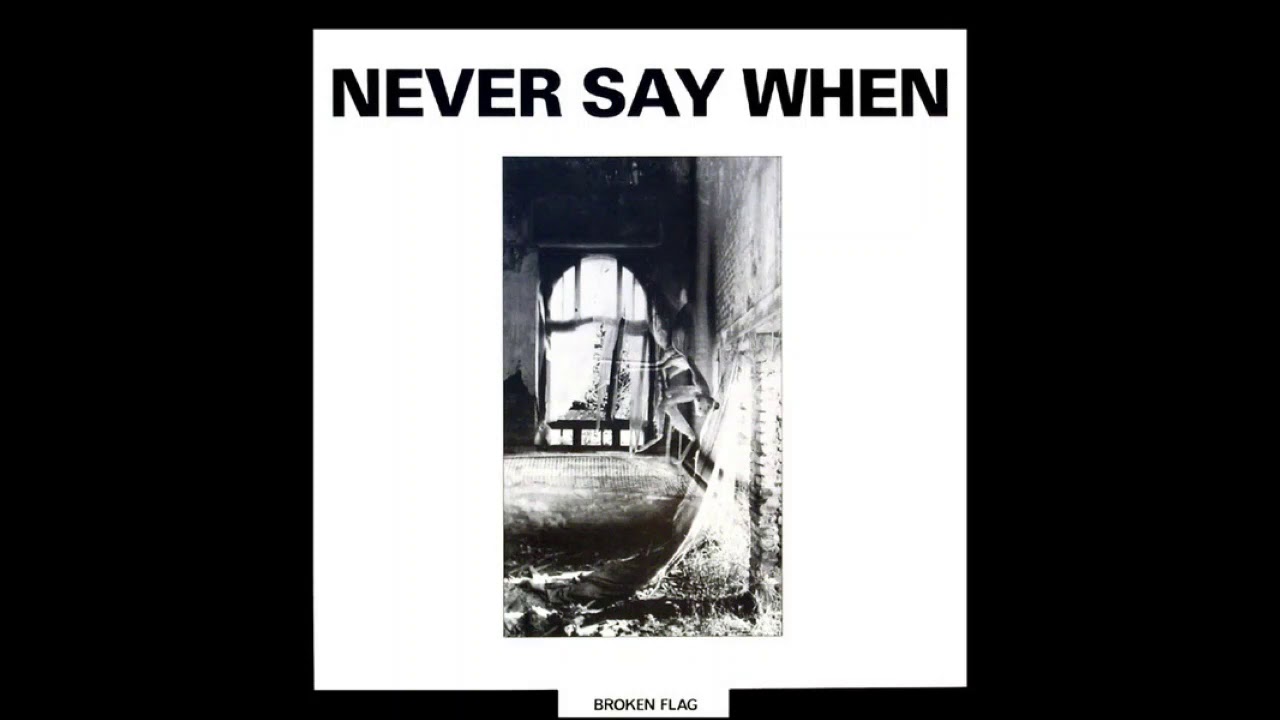
Industrial noise as it was 37 years ago to finish, with a re-release of 10 act compilation Never Say When. Described as “a state-of-label address” by Gary Mundy, whose band at the time Ramleh are granted the opening track, this issue – the album’s first time on CD and first time in print since its release – is handled by Fourth Dimension in cohorts with Broken Flag, Mundy’s label. Founded five years earlier, in 1982, by this time Broken Flag had established itself as a global node for extreme music while also growing out of its early, tendentious fixations on fascism, serial killers and other such taboos. Never Say When is half UK-derived, half rest-of-world (those being Cranioclast, Controlled Bleeding, Jonathan Briley, Giancarlo Toniutti and Mauro Teho Teardo), and gives the impression of a scene spooling off in a few interesting directions.
Ramleh’s ‘Bite The Bolster’, for one, is a different beast to the strafing electronic punishment Mundy started the project to do, with fuzzy guitar and ambient, almost gentle organ. Uncommunity, whose founder member Tim Gane would name his next band McCarthy after a Ramleh tape, proffer an eerie junky jam that foregoes structure. Andrew Chalk disavowed this early part of his recording career before his present-day mode of keyboard minimalism, as is obviously his right, but in ‘Thack’ I hear the origins of that, only with melodies sabotaged by bizarre metallic tumult. The Grey Wolves’ three minutes of windtunnel feedback and serious-voiced TV dialogue feels fairly representative of their embryonic schtick, and Total, afforded the longest runtime by some distance, are a seedling of the noise/psychedelia collision.