

In the Absolutely Fabulous episode ‘Jealous’, Naomi Campbell plays herself in an episode revolving around an award show. A recurring joke throughout the episode sees Campbell asked if she is okay for water? Did she like the flowers sent to her? Does she need anything? Whenever she says she is fine, thanks, the characters respond with a stage whisper, “She’s very difficult you know!”, even though it is abundantly clear she isn’t.
The 90s were a strange time, it must be said, and Absolutely Fabulous, Naomi Campbell and Radiohead all have cultural recognition today from their early years in the way that The Brittas Empire, Menswe@r and Amber Valetta perhaps don’t.
For Radiohead, they were mostly going steady until their 1997 album OK Computer. You may have heard of it. Amongst a number of slightly more grounded accolades, it was heralded by the readers of Q Magazine as the best album of all time, less than a year after it was released.
OF.
ALL.
TIME.
Rumours of people “difficult to work with” (like Campbell) often result from backstage gossip and hardened professional support staff, not so much the public perception. In Radiohead’s case, however, we don’t have to imagine it – we can see it for ourselves.
Released a year and a half after OK Computer, the film Meeting People Is Easy captures the band on tour promoting that album. Whilst the band don’t appear difficult, they do seem to be quite jaded and tired from all the touring. Caught in the endless promo machine, you witness them in repetitive tranches of activity, all designed to further… their art? The album? Their air miles? It seems to have got confused, somewhere, along the various lines, what all of it is for.
They keep tubbing things up they’re reading out for award shows. They get a bit snipey with each other, very briefly. They’re playing Berlin but haven’t seen any of the city.
However it’s not all doom and gloom: quite often they’re having actual fun, seeming to enjoy themselves playing songs that sound and look great, or Colin Greenwood is speaking French to interviewers whilst other band members look on, impressed and amused.
Perhaps the most telling scene in the documentary is where Yorke deconstructs their work in some kind of generic corporate backstage laminated chair area:
“Well, Jonny, last year we were the most hyped band, we were number 1 in all the polls… and it’s bollocks, man, its bollocks…”
“It’s a headfuck… it’s a complete headfuck.”
“…running too long on bravado, believe how wonderful everyone tells us we are…”
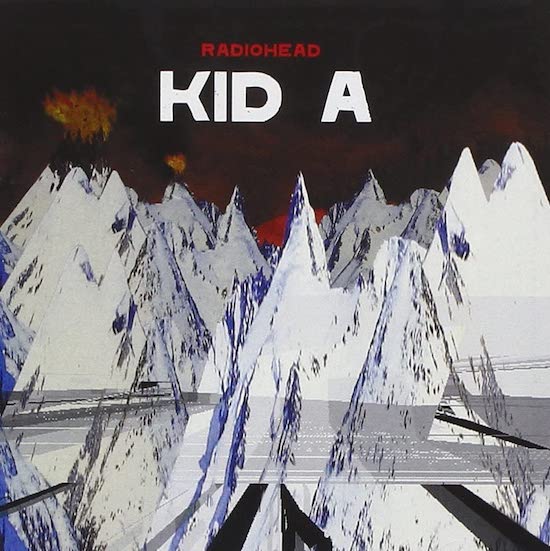
In order to unheadfuck themselves after the tour would probably require continuing this kind of soul searching. Pressure, real and imagined, from fans, label and media probably didn’t help: how, exactly, could the album after OK Computer ever follow this touchstone “correctly”? Rather than sonically bunker down (with an eponymous titled album perhaps) they opened things up. Around the time the successor, Kid A, came out the band made reference to the electronic music, krautrock, jazz and modern classical they had been listening to in the few interviews they gave around this time. Not that this was new to the band – they had played Messiaen before OK Computer-era concerts, and Yorke bought second copies of the WARP Records catalogue to add to his well-worn originals.
Indeed, the modern WARP Records label of this time seems to be a good signpost to the album. For all the moments on Kid A, that reference LFO, Autechre and Aphex Twin there is an equal amount that references the label’s “post-electronica” years, meaning bands such as Broadcast: I can picture the much-missed Trish Keenan singing the “I’m lost at sea, don’t follow me” line from ‘In Limbo’ perfectly.
Kid A, starts with ‘Everything In It’s Right Place’, warm organ tones being added to with vocal cut ups, reverses and gentle use of effects. Yorke’s vocal proper kicks in around the 35 second mark, coalescing around the phrase, “Yesterday I woke up sucking a lemon” (which I’d like to think is a cheeky advance riposte to the kind of reaction the album might get, but probably isn’t). Later on Yorke is singing with his own vocal in the backing, creating a dense Yorke vocal choir in the established Enya house style.
The track gives way to the title track, a more minimal, melancholy and electronic affair. There are vocals here, but they are unintelligible, distorted – but also retaining some melody. If you wanted OK Computer 2, this is the first indication you’re not going to get it.
The rest of the tracks veer between electronics-heavy and more familiar guitar-grounded tracks. Indeed, ‘The National Anthem’ and ‘Optimistic’ sound like the guitar hits you might expect from guitar hits outfit Radiohead. ‘The National Anthem’ starts with a discreet scree of electronic radar noise but goes straight into heavy riffing, bright yet murky percussion, with Yorke’s slightly saturated vocals coming in before an all-out horn-out.
‘Optimistic’ you could imagine on The Bends, or OK Computer, but the atmospheres and ambiences of the recording confirm it is not an outtake given a new home. The same applies to ‘In Limbo’ perhaps the most conventional sounding of the tracks on here.
These tracks are contrasted utterly by ‘Idioteque’. Even twenty years after I first heard it, it still doesn’t sound like anything else I’ve ever heard. The sound of the lads from the WDR lab popping down to Berghain for some lager lager lager? Well, perhaps, but ‘Idioteque’ certainly features sounds from the electroacoustic studio. Based on a sample of electronic pioneer Paul Lansky, the track adds Max MSP-style digital shards, Apollo programme-kick drum and the most urgent vocal on this record. The band, as you knew them, don’t appear to play on this. No guitar. No bass. No rock. No roll. If I was to identify one track that alienated some of the band’s existing audience, it would be this.
It’s not all unpalatable electronic weirdness, however. ‘How To Disappear Completely’ and ‘Motion Picture Soundtrack’ seem to be cut from the same piece of more traditional cloth. Indeed, ‘Motion Picture Soundtrack’ directly links back, in title at least, to ‘Exit Music (For A Film)’ from OK Computer. I’d suggest the two tracks here are more subtle, lacking that track’s doom synth, field recording chatter and propulsive percussive ending. ‘How To Disappear Completely’ starts with acoustic guitar and ends with strings, whilst ‘Motion Picture Soundtrack’ starts with the drone and pedal noise of a harmonium, and ends with choir and harp. Then, after a minute of silence, 60 seconds of chirpy Main-style tones before it falls into silence for good.
‘Treefingers’ is a track that features no vocals at all, just overlapping washes of ambient tones, rising and falling for almost four minutes, and wouldn’t sit badly on one of Eno’s Ambient series or Rafael Toral’s early albums. ‘Morning Bell’ is a post-rock track, light on the electronics but still recognisably different from anything 93-97.
All in, then, ten tracks clocking in at just under 50 minutes.
Hardly Morton Feldman’s six hour String Quartet No. 2.
And yet…
The reaction to the album was… mixed, frankly. A young website called Pitchfork awarded it the hallowed 10.0 rating. Simon Reynolds in Uncut called the album “a shining example and stinging reproach to the rest of the Britrock pack”. Less favourable was Mark Beaumont at NME who said Radiohead were "simply ploughing furrows dug by DJ Shadow and Brian Eno before them” (which to this writer is a much more interesting prospect than all the hundreds of derivative Beatles and Kinks furrow ploughers to be usually found in NME). Jim Irvin in Mojo declared it, among other things, “just awful”, which made me howl with laughter when researching this article. Various views at and between these two extremes were dispatched, filed and aired.
For me, ultimately all the criticism comes back to one question: are you listening to the music, or are you listening to the music and comparing it to OK Computer?
To put it another way: why ask an opera critic to attend and review a rave?
There are, of course, some opera critics who might well be up for it, but an opera critic ultimately having a tantrum that, ‘This isn’t opera!’ is of limited value. It demonstrates a lack of engagement with the material to bitterly tithing about how it’s “indulgent”. (And how many times could that be said about rock music, guitar solos and general rock star wankerdom?)
Part of the mixed reaction to Kid A also touches on something less about the band and the record, and more about rockism: the desire to venerate rock music as highest in the pecking order, with “lesser” genres such as electronic and dance being added to the metaphorical Disco Sucks bonfire.
The fusing of electronics into existing forms, or even – clutches pearls – on it’s own, seem to have to aroused a certain rowdy ire, in the UK. The work of Stockhausen, for example, was trod in by Sir Thomas Beecham, rather than heard. LFO, with their seminal ‘LFO’ single, were famously taken off the air halfway through, and described by Radio 1 DJ Steve Wright as “the worst record ever” (high praise indeed from a person who made prank calling a career). Marc Almond, during his Soft Cell years, was cruelly lampooned on Not The Nine O’Clock News as only speaking via a pre-recorded vocal track (and if you’ve seen Almond sing as many times as I have, you know he doesn’t need any help). For Radiohead to do more than dabble in electronics was perhaps always destined for choppy waters, no matter how earnest the rationale behind it.
I’d suggest Kid A, as a whole, is familiar as Radiohead. For all the manipulated vocals and electronics, there are acoustic and electric guitars, and “proper” vocals. The album continues their path of consolidation of what they were known for, adding new sonic flavours with each album. The Bends took the guitars from Pablo Honey and added different moods and paces, most notably in ‘Street Spirit’ and ‘Fake Plastic Trees’. OK Computer started with sleigh bells, no less, alongside the guitar riffing. It featured other sonic curios such as the seven minute three act ‘Paranoid Android’, the analogue collapse at the conclusion of ‘Karma Police’, the field recording and ripe synth of ‘Exit Music (For A Film)’ and the robot doom chanson of ‘Fitter Happier’. It was perhaps ‘Climbing Up The Walls’ – featuring Sonic Youth-style feedback, sub-aqua drumming and outright screaming – that gave a clue of where the band were going to go with Kid A, even before they’ve realised it themselves. This is rock music, but not rock music that is going to end up on a Mondeo ad.
The trajectory Radiohead hurtled along has previous form: Talking Heads did something similar, particularly with their album Remain In Light, itself frequently a nominee for Best Album Ever. That the band could have worked on their own deconstruction of their perky guitar sound was evident – just listen to ‘Drugs’ from Fear Of Music – but they needed an external catalyst to propel them further. In the case of Remain In Light, this was African polyrythyms, funk and electronics.
We can compare and contrast this with Radiohead. OK Computer, whilst coming from a different place and time, can perhaps be compared to Remain In Light, a guitar album with various textures and timbres of guitar. If we compare OK Computer, to Kid A, I’ll be saucy and vulgar and say it feels like Remain In Light, goes bleep techno. Of course, it isn’t solely electronic, but in terms of the “universe” of sounds, the stance and attitude feels different. It feels bleepy not riffy. Kid A, reimagines what a rock band can be, pushing the perimeter of that outline with a combination of force and gentle persuasion. For contemporaries such as Björk and DJ Shadow, to name two examples, electronic music production techniques and attitudes were “permitted” – even respected, praised. For a rock band such as Radiohead, rockist tradition would not allow them to do so without the obligatory rock critic carping.
Where does the album sit now, this side of Brexit, coronavirus and Mumford and Sons?
In <a href="https://www.youtube.com/watch?v=DfkPmbg1ymM" target+"out">Reggie Watt’s funny yet affectionate impersonation of Radiohead, you can hear the Kid A-era sections as they crop up. That they fit into the overall continuity of the band, rather than jutting awkwardly out, demonstrates that with time, Kid A can be reconciled as part of the band’s chronology, and not as some Metal Machine Music exception.
The legacy of Kid A has, if anything, improved over time. From a wobbly start it has since been heralded an album of that decade by publications such as Rolling Stone and The Times, a move which even Mark Beaumont later acknowledged he was in the minority holding his contemporary view, recognising that other people loved it, even if he didn’t.
Any number of average indie bands in their wake have cited the album as they have upped and moved sticks to Berlin, in order to “find” Steve Reich, Basic Channel and themselves. However, few of the acts I’m thinking of did it with the depth of Radiohead – the acts just added interesting colours to ultimately average music.
Twenty years after the fact and Kid A now sounds warm, cosy, maybe even a bit traditional. It challenged what rock music could be, and now seems to happily exist as one of those albums, like Neu! 75, ”Heroes” and Tilt, that are touchstones for rock music; records that have popped expectation and become something new, something other. It’s certainly an album I continue to enjoy listening to, even all these years later, but perhaps that’s because I had open, rather than closed, ears when I listened to it the first time.
Even so, regardless of your own personal circumstances, it’s not impossible to try it again, even if it left you cold in 2000. When bananas were first imported into Britain, so the legend goes, kids would eat them with the skin on. They weren’t to know otherwise. If you approach Kid A as a new exotic banana, rather than expecting it to taste like an OK Computer apple, it’s not impossible you’ll love it, if you know how to deal with the skin.