

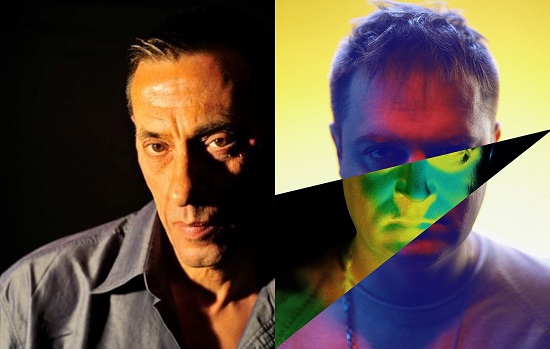
Last year James Chapman, better known as Maps, released his superb fifth album Colours. Reflect. Time. Loss., an ambitious and expansive record that saw the producer broaden his horizons into lush, sprawling and moving orchestral pop
Traditionally, Chapman says, he was an introspective and solitary producer, nervous to even hand a demo cassette over to his friends when he first started producing with a four-track recorder ‘borrowed’ from school, but Colours. Reflect. Time. Loss. was a record marked by collaboration, most notably with acclaimed Belgian classical ensemble Echo Collective.
That spirit – also present on his 2016 collaboration with Polly Scattergood as On Dead Waves – is one that has extended to his latest project, a series of four remix EPs under the name Colours. Remixed. Time. Loss., in which he’s enlisted some of his favourite musicians, among them A Certain Ratio, whose dramatic, groove-driven new version of ‘The Plans We Made’ is premiering exclusively with tQ below.
ACR’s frontman and bassist Jez Kerr, who joins tQ and Chapman in a conversation via Zoom, prefers the term ‘rework’ to ‘remix’, which better represents the amount of work the band put in. Rather than simply slap a beat on ‘The Plans We Made’, the group stripped it of everything but vocals and created something completely new inspired by their love of afrobeat and Tony Allen.
It’s indicative of the creative spirit that’s flowing from the band right now. With a brand new single ‘Friends Around Us’ out as a limited 7" on June 20 for the Love Record Stores initiative and their first new album in 12 years due later this year, in conversation Kerr is brimming with excitement, and simmering with eagerness to get back to playing live. Though he only became aware of Maps’ music when asked to remix it, it’s obvious that in our conversation the admiration and passion flows in every direction.
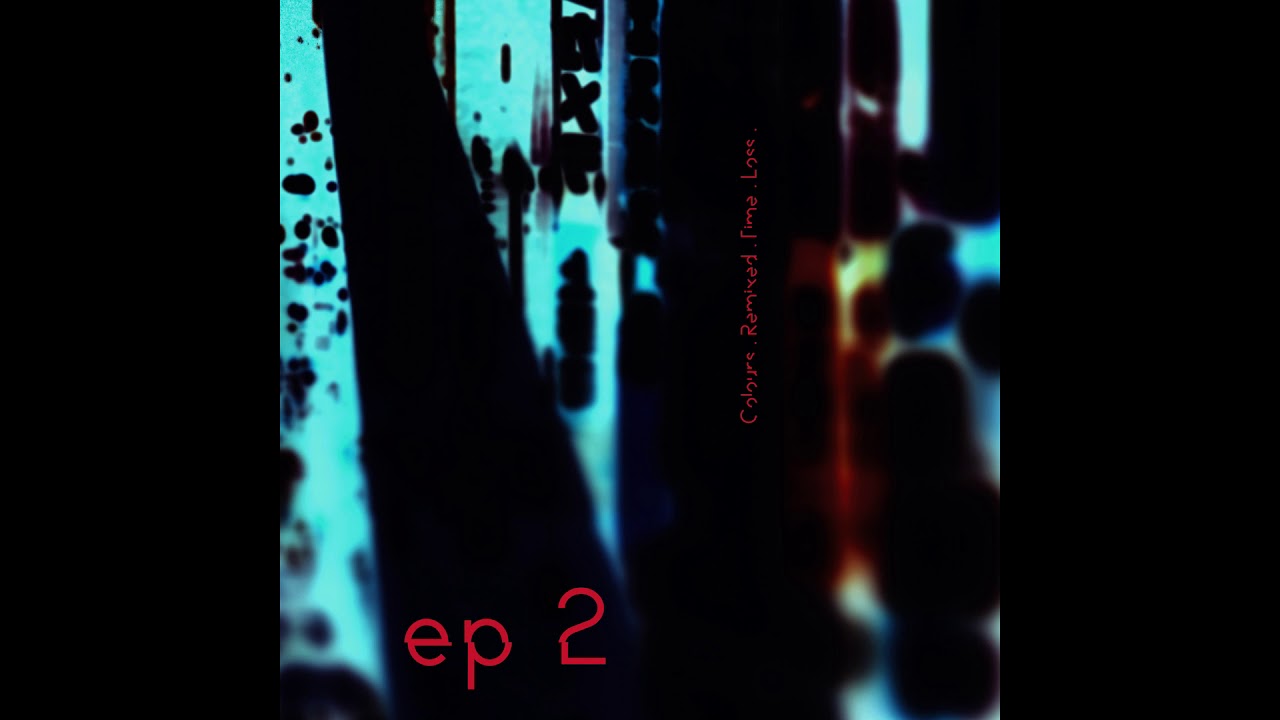
EP2 of Colours. Remixed. Time. Loss is out on June 19 via Mute. You can pre-order it here. Read on for our conversation with Maps’ James Chapman and ACR’s Jez Kerr.
James Chapman, Maps: I wanted to talk about the remix. I just really liked the way you approached it and the way you all did it together as a band. That was something I hadn’t really seen much before. Usually it’s one guy using software or whatever and you made it as a full-on band playing the live instruments and creating a whole new song.
Jez Kerr, A Certain Ratio: That’s the only way we could do it. What we do best is when the three of us play together and jam, you come up with things you don’t come up with on your own. Martin [Moscropp, ACR guitarist] told me last night, ‘Make sure you tell them about the way we approached it’.
tQ: Who picked that track, ‘The Plans We Made’?
Chapman: I sent a few over and I think it was Martin who gravitated to The Plans We Made.
Kerr: We chose that one because I really like the vocal, and in your tune there’s lots of chord changes. We don’t really get chord changes in our band, so we just stripped it down to the vocal, took all the music away and got a drumbeat. We decided an afrobeat might work because we’re all really into Tony Allen, and we decided on that as a rhythm. It had this woodblock all the way through, a very Brazilian sort of thing, that gave it the vibe, and then it was a question of finding the bassline. We decided on a dub bassline for the verse, and then out of the blue there’s that chord change. A real disco sort of vibe
Chapman: My songs are generally pretty dense, so remixing for me was kind of nice to see what all the layers are doing. It felt like you guys took it really seriously. Not that people don’t take remixing seriously, but you carved out a certain amount of time.
Kerr: For me it’s about working quickly. For me, our best album is Sextet when we were given a month to record an album and we weren’t using Martin Hannett; it was the first time we produced ourselves, pressure was on. We only had like three tunes when we went in, but for me that’s the best album we’ve ever done because we wrote it in the studio, in the moment, fresh. We’ve got an album coming out later in the year that we finished two weeks before time, and we’ve now recorded five tunes for the next album and five tunes with a basis that we’ll go back to in a couple of months’ time and finish.
Chapman: I’ve always thought limitations are a good thing. In the early days for me I didn’t have a choice because I didn’t have any equipment, but you’ve got to know that equipment inside out. You didn’t have the choice to stare at a screen musing about reverb
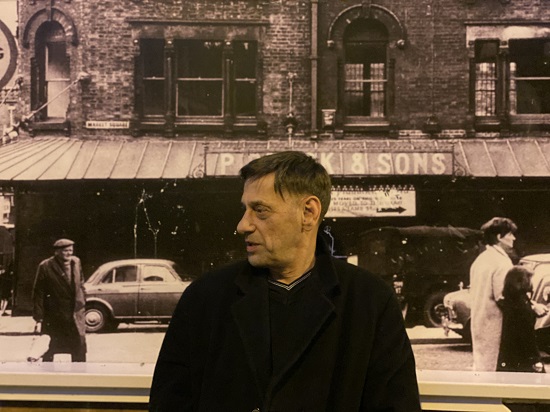
Photo: Martin Moscrop
It’s interesting you mention the idea of taking remixes seriously. I often find that as a journalist I get remixes thrown at me that feel a bit like trying to squeeze every bit of juice out of something. Whereas with your new project James, it feels so substantial as a body of work…
Chapman: I think it comes down to who you ask, because sometimes remixes can kind of just take the original and stick a disco beat and make it into a club anthem, which can work, but it’s nice to get people to take a bit of time and listen to the track and actually do their own thing rather than just regurgitate it.
Do you think you’ve got lucky with the strength of the stuff people have turned in for the remix project?
Chapman: I wouldn’t say lucky because the people that we asked, you included Jez, I knew we’d get some interesting and fresh takes on the songs, you know? And at the same time it’s nice to work with people whose music you love as well. It’s all worked out swimmingly, I think!
Jez, did you know Maps’ music before you met?
Kerr: I wasn’t aware of James before we did the rework, but once he asked us and we checked his stuff out, I really liked it. It’s like ACR, there’s so many different things there.
Chapman: Thanks man!
Kerr: The way the market is, you get known for one thing and then that’s you. Luckily ACR don’t have that pressure.
Chapman: Do you think that comes from the kind of people you were working with giving you that kind of freedom?
Kerr: I think we’ve been really fortunate. Like most people we just wanted to be in a punk band and it became an outlet we never realised we had, and it has been for 40 years. I think we were fortunate to be at a time where Band On The Wall allowed bands to play there for free. If we didn’t have that I don’t think we would have developed as a band. Factory would have happened, but I don’t know if we’d have been around for it.
Chapman. I kind of feel the same. Mute always let me do my own thing. We’ve had different journeys and stuff, but I never dreamt that I’d be doing music as a career, I was just a kid in his bedroom making tunes. I was sending out CDs and one minute I’m nobody and the next Daniel Miller’s come to my village and he’s sitting in my bedroom. It was never a career plan, I was very fortunate to have that support and the opportunity to do what I love, and do music as a proper job
Kerr: That’s where all the problems start, when it becomes a proper job
Chapman: Everyone tells you at the time, ‘you need a backup plan,’ so I’ve still got that gratitude that I’m able to still do it
Kerr: I had a backup plan, I worked for the post for about 11 years. I think most people who do anything that’s creative have done something else for regular money. But yeah, labels like Mute and like Factory, you’ll find such better variety of style because they’re always trying to produce something original and unique, that’s the basic criteria.
Chapman: That’s the mistake I think major labels make, to think ‘that’s successful, we want something that sounds like that.’ It’s got to be the other way around.
Kerr: It’s a reflection of where we are today as a society, I mean look at the fucking state of us. The attitude towards the arts in this country, it’s the last thing that’s regarded with any respect. It’s always just seen as a pastime.
tQ: Have you seen the arts become even less valued now than when you started out?
Kerr: Completely. The emphasis is on making money and being successful and having two kids and a cat. It’s completely conformist the way things are set up for you. And I think the reason people wanting to do original music is because of a reaction to that from the people who are marginalised. I think that’s what we were like when we started out, we felt like our own energy could drive it, not just the energy of the corporate system which is still driving it today in an even bigger way.
James, what’s your relationship with A Certain Ratio’s music?
Chapman: I think it was 24 Hour Party People when I first thought ‘who are these guys?’ I kind of worked backwards through the catalogue. I was a bit like it with Depeche Mode too, which is probably a bit blasphemous to say when you’re on Mute.
Kerr: You were probably busy doing your own stuff!
Chapman: When your stuff was out I was probably listening to MC Hammer! I was just a bit behind in my musical education! But later on in life it’s like a goldmine to go back and discover. And that listening party on Twitter the other night was great!
How was the Tim’s Twitter Listening Party experience, Jez? You looked back at Force…
Kerr: You know what? I hate that album. I love the music; I just can’t listen to my voice. The lyrics are like sixth former’s lyrics, they’re just shit. Actually, when I did listen to it it did sound pretty good, not as bad as I thought it would be
Chapman: It’s really good! I can’t believe you hadn’t listened to it in 35 years!
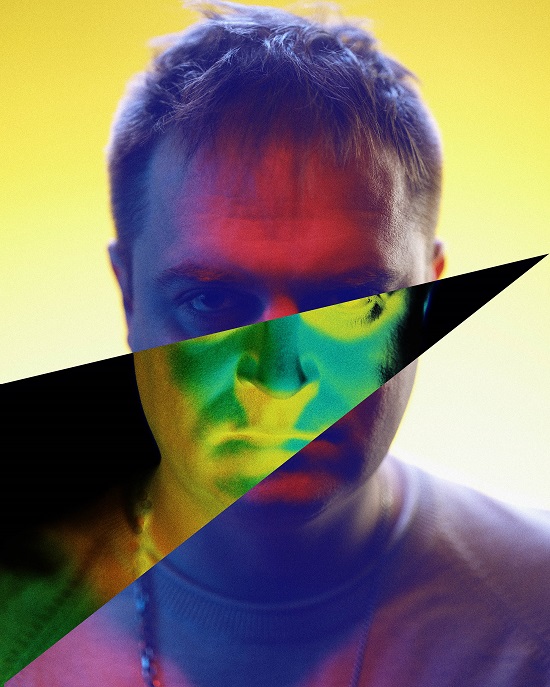
Photo: Phil Sharp
James, Colours. Reflect. Time. Loss seems like your most collaborative work to date. Do you think there’s a philosophy to it that has carried over to the remix project?
Chapman: For years I was a one man band. I think it was partly that I was bit of a control freak so I never really let people into that world, but working with The Echo Collective and other people on that album has really opened my head up to doing it more often. I think it’s all about who you work with. If you’re asking bands that you love about their music, you’ve got better odds that it’s going to work out. So it has. Also the album I did with Polly Scattergood, the On Dead Waves project that was just a 50/50 collaboration, that was the first time that I’d let someone in my room, really. Sometimes you might think you’ve got it all in your head and your brain is a one-man orchestra, but you’ve got to let other people in.
Kerr: When we started out great music neededother people, but everyone’s got a massive ego, everyone’s turning up their amps on stage to be louder than each other, which has taken 40 years to go away. I’ve only just recently got over that. We’ve all got strong egos in ACR so it creates a lot of tension, but that tension is where the music comes from. The last year in the studio, making this album, has been the best time we’ve ever had, we know what we’re working towards. All those niggles and tensions you’re having personally, we’re stronger than ever as a band now. Last year’s gigs, every one of them was a stormer.
Chapman: It’s a rare thing to still be doing what you’re doing and enjoying it as well…
Kerr: Having fun is the most important thing about a gig. What’s the fucking point if you’re having an argument with the sound guy?
You must both be missing gigs at the moment?
Chapman: I was never a natural performer, I was a bedroom based musician. I had a four track recorder I borrowed from school and never gave back and started making demos, but it was only to give to my friends. I would shake with nerves just giving them the tape. Then obviously Mute wanted me to start playing live, and you get such a buzz from doing it. It’s just the build up to gigs that I get really nervous about.
Kerr: There’s nothing like it, is there? It’s the culmination of your work. It’s the point where the fans who like your music can be right in the moment with you. I don’t think that will ever go away, as long as we can keep the venues open! Covid has knackered so many people in the industry, the smaller industry, not the mainstream, it’s fucking killing it man. I know so many people who are now just looking for a job to do anything.
Chapman: I take it you had plans to play live this year?
Kerr: We had an 18-date tour set for the end of October to promote the new album, which luckily we didn’t announce, and now we’re not doing. All these bands are doing live performances now and having them filmed. I think that’s what we’ll do so people can see the album before next year.
Chapman: I think technology’s definitely helped through all this. Did you see that thing about the company in America that’s invented these suits you can wear to a gig? It looks like Blade Runner, they’ve even got a hole for vaping!
Kerr: That’s a great idea!
Chapman: They look very expensive though…
Kerr: That’s true, it does need to be a couple of quid, doesn’t it.
Chapman: Or you could just put a kagoule on and hope for the best.
tQ: Have you seen the phenomenon of drive-in gigs taking place across Europe?
Kerr: That’s exactly what you don’t want, man. That’s so corporate.
Chapman: I mean… there’s lots of alternative solutions but that’s not really the real thing is it?
Kerr: The kagoule idea’s the way to go, but it’s got to be two quid!
tQ:How have your creative processes been during lockdown? I wonder what the siilarities and differences are between your methods…
Chapman: Actually, one of the questions I wanted to ask you, Jez, was what your most creative part of the day was, because mine has changed over the years. It was always the evening but recently I’ve found that right before I go to bed I have these amazing ideas and I’m scared to go to sleep.
Kerr: It can come at any moment. I think I’ve always got a couple of tunes on my computer that I’m working on. I never try to plan it but it always happens just before you’re going to bed. Then seven hours later it’s six in the morning. For me it’s obsessive like that once you get an idea. I used to just be at my computer all the time, but now I just live my life normally, have a cup of tea and watch the TV and if I have an idea or I get psyched up about something then I’ll get it started, but before I’d have carried on for hours and hours.
Chapman: In the very early days I had to keep playing it because I had to remember it because I had nothing to record on. Now it’s so much easier to record a little bit of it and leave it
Kerr: Setting yourself limitations is important and realising ‘I’ve got to have that done by that time and if I haven’t then that’s how it is’. I’ve been working with a young band in Hebden Bridge and they’re very perfectionist about everything, but what I tell them is ‘Sorry, the computer’s knackered, you’ve got one take to do it and that’s it.’ What I’ve loved about this new album with ACR is that all the lyrics were written as we were doing the tunes. Someone’s working on drums or something and I was sat outside the control room with all my books of lyrics and within half an hour you’ve got the lyrics to the tune.
EP2 of Colours. Remixed. Time. Loss is out on June 19 via Mute. You can pre-order it here.