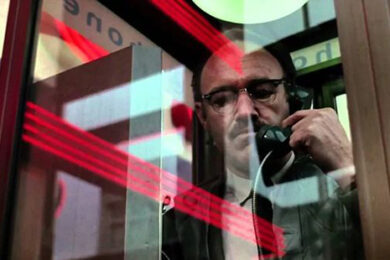
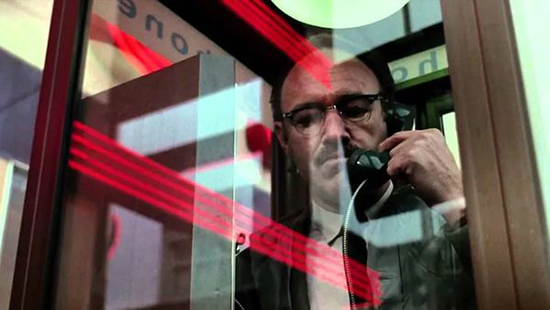
The first thing usually said about The Conversation – and it’s not wrong – is that it was released just a few months before The Godfather Part II, and was therefore swiftly overshadowed even within the filmography of director Francis Ford Coppola all too shortly after its initial, mildly successful, release. Anyone familiar with the film’s understated psychological remoteness will know that’s exactly as it should have been. Even still, The Conversation, in its bleak telling of Harry Caul’s social isolation and the broader future of privacy (or lack thereof), ages just a little too well. For that reason, Coppola’s film works as something of a counterintuitive antidote to the distance we’re all currently living – and it’s also one of the best movies of the 1970s.
The conceit, and the characters, are simple – or so we’re told. Harry Caul is a repressed, lonesome technocrat with a little too much interest in unidirectional microphones and only a vague concern for the clients whose interests he is serving. Still haunted (although he won’t show it) by the bloody fallout of a dodgy Teamsters dealing exposed by his wondrous methods, Caul is perfectly aware of the dubious alliances his work so often requires. To deal with it, he waits around, shows little care for the people he eavesdrops, and like Eddie Mannix in Hail, Caesar!, visits the local confessional and tells less than the whole truth.
Then there’s Caul’s not-so-trusty right-hand Stan (John Cazale), his obnoxious competitor Bernie Moran (Allan Garfield), and most importantly the suave, shady client’s representative, Martin Stett (a baby-faced Harrison Ford). Cindy Williams and Frederic Forrest are Ann and Mark, the clandestine couple whose titular conversation proves Harry’s greatest listening trick – and his greatest folly.
In that outline alone, the influence of early-70s Hollywood’s new amorality and sordidness is hard to miss. One of a small handful of films made through Paramount’s short-lived blank check factory The Directors Company, which allowed hotshots Coppola, William Friedkin and Peter Bogdanovich unprecedented control over small-scale projects, The Conversation is among the artistic heights of that fruitful era for New Hollywood’s swashbuckling auteurs. (Friedkin would later criticise The Conversation as a rip-off of Antonioni’s seminal Blow Up, which isn’t miles off, but also acknowledged by Coppola. Also, it wasn’t until the 1980s that a Friedkin film turned a profit again. So: short-lived.)
Shades of Alan Pakula’s Klute are easier to find in Coppola’s experimental technical choices, in particular Walter Murch’s chilling sound design. Following the lead of Pakula’s sound engineer Chris Newman, whose work on The French Connection, The Godfather and The Exorcist quickly made him Hollywood royalty, Murch attempted similarly to contrast The Conversation’s soundtrack with Coppola’s visual decision-making, underlining the themes of contradiction, mistrust and misdirection. Much like Klute gave one impression of Jane Fonda’s multifaceted sex worker Bree Daniels in her initial, confident voiceover (“I think the only way that any of us can ever be happy is to let it all hang out, you know”) only to undermine it in a tetchy, nervous visual first impression, The Conversation uses the ambiguity of that crucial exchange of dialogue to allow Caul – and the viewer – to pore over its content until the meaning is entirely unclear, almost fluid. In the same way that Bree Daniels is immediately shown to be a woman containing hidden multitudes, our understanding of the story of The Conversation is repeatedly thrown into question. And if we can’t trust a recording, what should we make of those trying to get their hands on it?
In a 1974 Filmmakers Newsletter interview with fellow “movie brat” Brian De Palma, Coppola described those concentric circles of deception that propel the film’s plot. “I got the idea of using repetition, of exposing new levels of information not through exposition but by repetition. And not like Rashomon where you present it in different ways each time … [But] the audience goes with it because you are constantly giving them the same lines they’ve already heard.”
That’s without mention of David Shire’s daringly eerie score, a stirring illustration of the ethical uncertainties that characterise The Conversation, as well as an elliptical motif for Caul’s own descent into madness. It’s little surprise Shire went on to write music for Pakula’s Paranoia Trilogy closer All the President’s Men and, much later, Zodiac. With a jazzy strain that makes Caul’s methodical sax playing a neat accompaniment, Shire’s music subverted the typical, woodwind-heavy noir sound for something much more refined and melancholic. How apt, in a film that strives – and dare I say, succeeds – to do quite the same thing. If Hackman’s jarringly passive characterisation, Coppola’s lean visual style, and a plot to rival the genre’s very best aren’t enough to place The Conversation firmly within Coppola’s own top three and among the best dramas of the decade, Shire’s music surely elevates it beyond the now-famous standards of early-1970s Paramount, where Chinatown, Serpico and Catch-22 were only mild successes.
None of Coppola’s rivals on the Paramount directors’ roster of the era – Sidney Lumet, Roman Polanski, Mike Nichols and Robert Altman included – made a film that has aged quite like The Conversation. Yet there’s surely some tragedy in the fact that the claustrophobic bleakness of Coppola’s small-scale marvel has become the order of the day, its prediction of private information as valuable currency strikingly accurate. We should look forward to a time when the story of Harry Caul is, far from a cautionary tale on the extremes of solitude and seclusion, pure fantasy. That might require some waiting around.
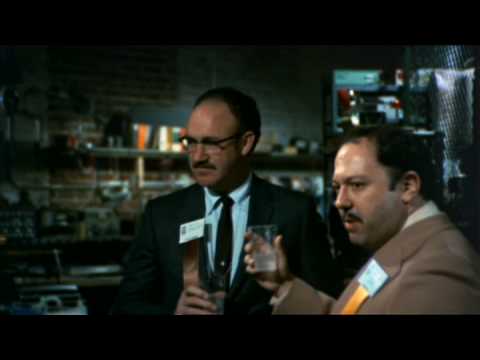
The Conversation airs on BBC Two at 11PM on Saturday 18 April