
John Lydon has a long memory. On October 6 1980, he was thrown into a cell at Mountjoy prison after an altercation with the Garda at the Horse & Tram pub. It kept him off Irish stages for over 20 years and directly influenced the Public Image Limited album that followed it, Flowers of Romance.
To the son of Irish immigrants, the incident felt like rejection by his homeland. He recounted the events again bitterly in an Irish Times interview earlier this year: “I went to a pub and the barman wouldn’t serve me. Words were exchanged and the police were called. I was arrested for attacking a policeman’s fist with my face and thrown in Mountjoy for the night. Some homecoming. The police and the screws made a big deal out of me, they tried to shatter my morale – well, good luck on that one.”
Lydon channelled his rage and the uneasy atmosphere in PiL following the departure of Jah Wobble into Flowers of Romance. He told the Culture Show: “I didn’t even wait for the band to get into the studio. I had to get this anger out of me.” Lydon’s rage and paranoia is suffused in every note of the record and his imprisonment in Mountjoy is explicitly referenced on ‘Francis Massacre’. On the clattering, almost-Vaudevillian track, Lydon wails that “he will not plead guilty” but “go down for life”. No one could suggest he lacks a flair for drama.
But the effect of the 1980 incident was real enough and kept Lydon from returning to Ireland until The Sex Pistols played Electric Picnic in 2008 as part of the Combine Harvester Tour, a cash-generating jaunt around the European festival circuit (a Dublin date on the 1996 Filthy Lucre tour was cancelled).
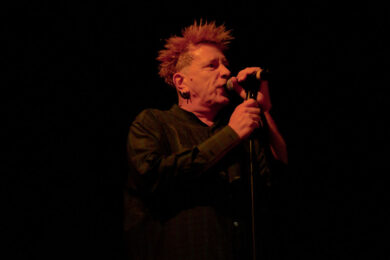
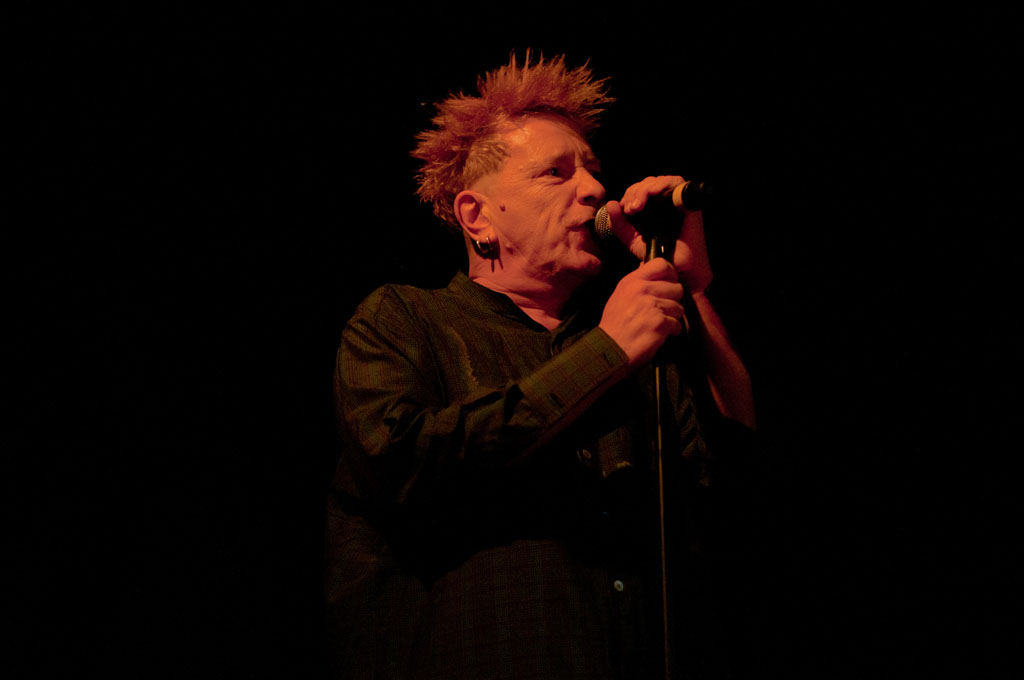
This year’s performance at the same festival with PiL was an entirely different beast, more than a money making endeavour – Lydon claims the tour might lose him money and is being bankrolled by his Country Life butter ad cash – it felt like something more personal. While The Sex Pistols picked at the scab of English culture and identity, Lydon’s lyrics with PiL often plunge deep into the wounds of Irish history and his own difficult relationship with his homeland.
Near the end of PiL’s Electric Picnic set, Lydon acknowledged the difference between reprising his faux-villainous Richard III role as Johnny Rotten in The Sex Pistols and playing the more personal Public Image material: “You’ve made me feel very welcome. I don’t with the Pistols but I do with PiL.”
But as comfortable as he seemed by the end of the set, there was no question that PiL’s Irish excursion was both a homecoming and a settling of scores. In his <a href="http://www.irishtimes.com/newspaper/features/2010/0831/1224277904024.html” target=“out”>Irish Times interview, he complained: “I didn’t ask to move out of Ireland. I’m an Irish citizen. I travel on an Irish passport. Don’t look down your fuckin’ nose at me for having an English accent.”
Lydon’s sense of identity has always had a bi-polarity to it – the Englishness of his London upbringing clashing with his Irish heritage. In recent years, he’s indulged in a brash sort of British patriotism, sporting Union Jack socks during interviews, striding onstage at Sex Pistols shows to Vera Lynn’s syrupy rendition of ‘There’ll Always Be An England’ and caricaturing himself as a squire for those butter ads.
Like many people from an immigrant background, Lydon doesn’t identify himself wholly with either England or Ireland. In an interview with The Quietus earlier this year he explained: “In Ireland they view me as English and in England they view me as Irish. And I’m not bothered by either because I don’t pretend to be something I am not. I come fully loaded with both cultures.” That’s before you add his LA suntan into the equation.
That refusal to easily slot into the role of Irish rocker in exile partly explains why Lydon hasn’t been adopted as an Irish icon like that other punk son of Irish immigrants, Shane MacGowan. While MacGowan drenched The Pogues’ songs with Irish nationalism, buried his schooldays in Kent and consistently played up to a Behanesque picture of an Irish rogue, Lydon’s treatment of Ireland with PiL throws the nation’s darker history back in its face.
On stage at Electric Picnic, with the murderous visions of ‘Poptones’ ringing in our ears (“The Irish countryside with a cassette in your hand…”), Lydon says: “This is like fucking come home for me.” But he brings a healthy does of home truths with him. ‘Religion’ from First Edition is a savage attack on organised religion and the Catholic Church’s complicity with abuse. For the Electric Picnic crowd, he injects even more venom, asking bluntly: “Is the Pope a Nazi? Answer: Yes, the Pope was a Nazi. Question: is the Pope a pedophile? Answer: yes, the Pope protects pedophiles.”
The extended rendition with its sternum-shaking bass is Lydon turning the sermonising of Catholic Ireland against it. It could seem glib but gains power from the rawness of his own experience with the Church. He’s frequently recounted the story of his Catholic mother dying (most successfully on ‘Death Disco’). He told The Telegraph: “My mother died from cancer, it was an excruciating death. And the priest was in no rush to come over from Ireland to give her the Last Rites in hospital. The opposite in fact. He took his time and missed the boat. My mum was dying and she was clinging to any straw… he never arrived.”
He also articulates a sense of disgust that the Church should judge him while concealing the crimes of priests. He told the Irish Times: “When my younger brother Martin was being confirmed, he wanted me as his sponsor. The church refused outright. They couldn’t have the anti-Christ Johnny Rotten walk down the aisle. How dare they make a moral judgment on me.” But the Church wasn’t alone. The Irish establishment long viewed Lydon with suspicion. Government documents released in 2008 revealed that The Sex Pistols were investigated by the Garda as “a threat to Irish morals”.
During PiL’s set, it feels as if Lydon is restating his pride in his Irishness. During ‘Warrior’, he puts new emphasis on the lyrics (“I am a warrior and this is MY land…”) and throws himself into a rousing rendition of ‘Rise’ which provides the set’s only true singalong moment. By the end he’s smiling and applauding the crowd, the curmudgeonly mask slipping slightly.
In his autobiography, the appropriately named Rotten: No Blacks, No Irish, No Dogs, Lydon says: “It’s no accident that the Irish invented stream-of-consciousness literature. It was of absolute necessity. Poverty and deprivation of their own language made this very important. Hence long-term memory, which is a Celtic thing.” After this performance, he can replace the memory of a Mountjoy prison cell with a better one: PiL onstage in Stradbally.