
The four days of Le Guess Who? in Utrecht have become a vital gathering, a fruitful connection point for the wider alternative music community in times of fragmentation, confusion, and restriction. Perhaps this blend of practical – and, ultimately, spiritual – engagement reflects the MO of Utrecht’s eighth century bishop, the Northumbrian pilgrim, Willibrord.
Days play out in the manner of Courbet’s painting, The Meeting, where musicians from around the globe hook up, swap stories and make plans. No one really knows where money will come from, or whether a visa can be granted, but the will is very much there. A city walk with musician, artist and festival curator Lonnie Holley offers a canny insight for those who seek comfort in fractious times: make something from what you find on the streets and its creation will lead you somewhere new.
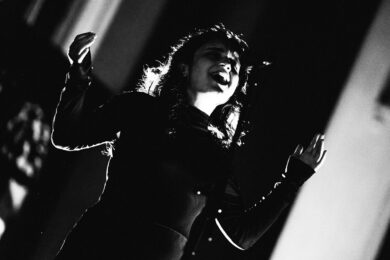
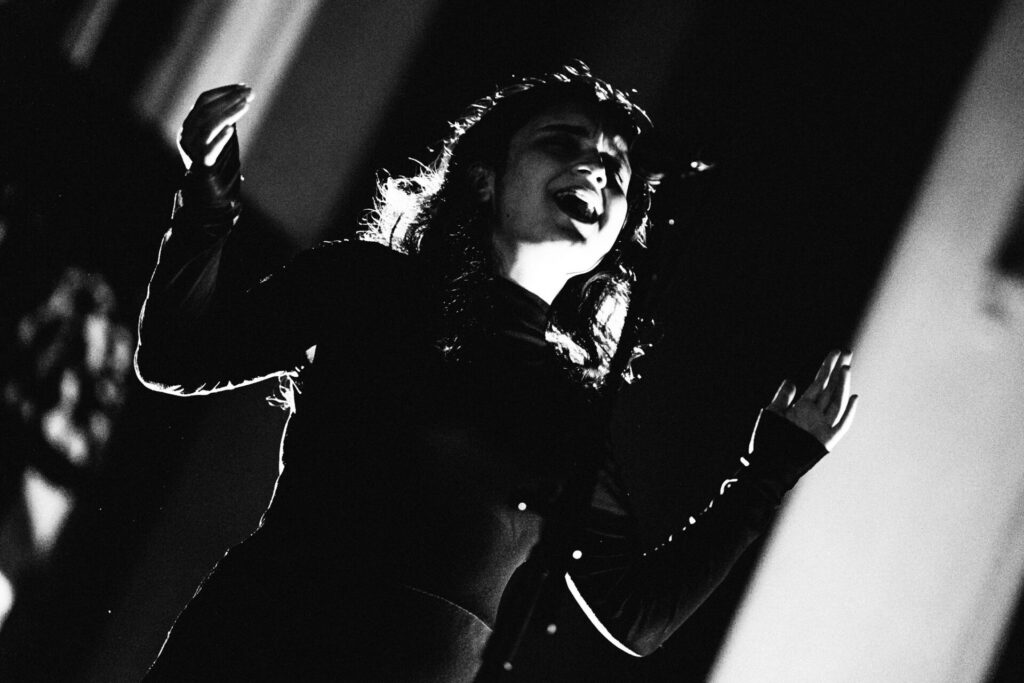
One of Holley’s curatorial picks (alongside co-curators Terraforma and the TIMES organisation) certainly does that to those present in the austere Jacobikerk on the Friday. Merope and Shahzad Ismaily transport us to a “Lithuania of the mind” courtesy of a kaleidoscopic musical journey that draws on everything from Popol Vuh to Clannad – the bewitching sound of the kanklės acting as a jack o’ lantern. The gargantuan build towards the end sucks the air out of the place and lasers a third eye onto all present. A day later, another show from the same curation team brings a level of spirituality to Utrecht that’s in danger of raising Willibrord’s bones. Гільдеґарда, a Ukrainian reworking of Hildegard von Bingen’s music by Heinali and Andriana-Yaroslava Saienko is heart-stopping. Saienko’s voice crashes around the church arches, its emotive power given further resonance by the vast tonal hinterlands built up by Oleh Shpudeiko’s modular synths.
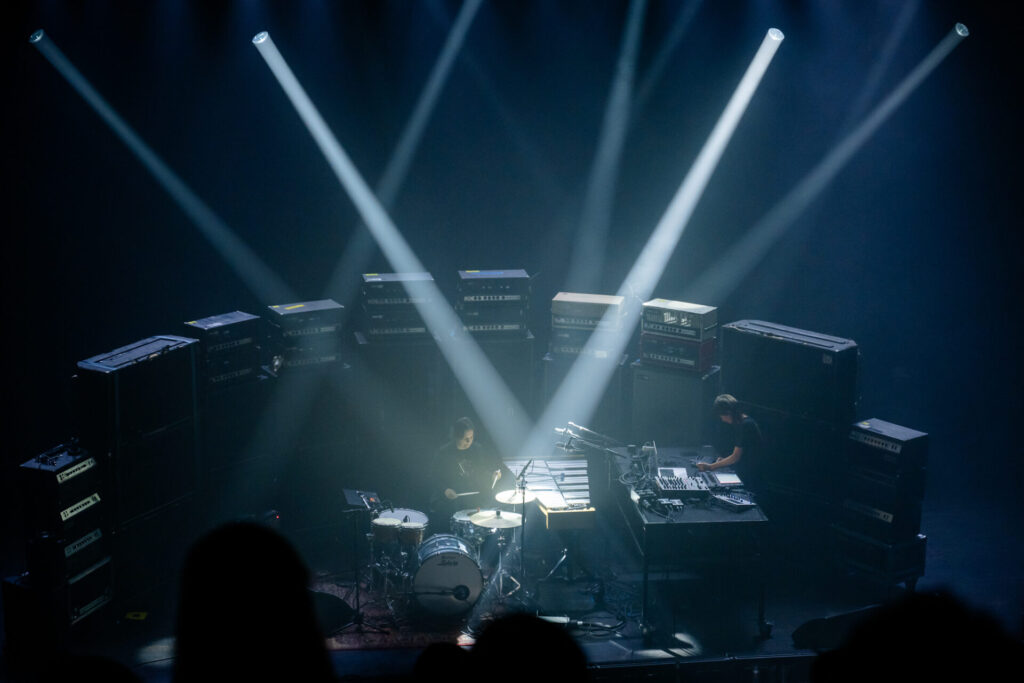
Another curator, Valentina Magaletti, serves up a wonderful show with upsammy on the opening night in Tivoli’s cavernous Ronda stage. This is a masterful display of intuition and interpretation: at times the pair sound like they’re reworking Balinese gamelan, then a passage from a Tim Hecker album. Magaletti’s drumming dovetails so well with upsammy’s catholic use of sound that it’s impossible to pick the playing apart.
Emulating Holley and Courbet, we are often dictated by chance meetings and tip-offs. Gina Birch’s early show on the Saturday is one nearly missed but the Raincoats singer captivates the audience in the dark, utilitarian space of De Helling. Birch revels in her role as a confiding and disruptive elder who delights in taking a wrecking ball to convention. A “must-see” heard in many conversations is Ajay Saggar, aka Bhajan Bhoy, who plays specially commissioned tracks and cuts from his latest album Summer In St. Mary’s on the organ in the Speelklok Museum. This is a very affecting set. The drone of the huge, 35-pipe strong behemoth, coupled with the clear, simple patterns invoked by Saggar, finds further accord with a tangible sense of quiet determination to create, whatever the cost. Saggar’s set isn’t the only gift. A conversation outside the museum beforehand means we stick around after Gina Birch to watch Jabu, the young Bristol act whose sound, equal parts obtuse and soulful, reminds us of a dubby take on Victorialand. They are fascinating.
Word comes, too, of Iranian tanbur player Mohammad Mostafa Heydarian, who plays an astonishing show on Tivoli’s rather formal Hertz stage. Heydarian’s dexterity seems otherworldly: passage after passage of mesmerising playing drifting through the hall and up the rows of seats, some pieces so finely woven their intricate patterns are a challenge to unpick. Other sections seem to shift in the air before us, like a murmuration of birds. This bewitching gauze of noise is sometimes lent a further dimension by a duff drum player who is content most of the time to sit and appreciatively listen and add a rhythm where necessary, his beat sometimes scurrying across the soundscape like a fast-moving cloud.
The mind and soul need nourishment, but sometimes you need to put the spiritual on hold and wig out. We find release in EarthBall’s curious and very spacey set, and bask in a brilliantly played Destroyer show that gives everyone a chance to hang that little bit loose on a Sunday afternoon. Índio da Cuíca lays down the law in the main hall on Saturday, the infectious samba generated by a killer band revitalising all who see it. Perhaps the best goggle-eyed moment is served up by legendary Dutch selector, DJ Marcelle, whose mind blowing set in Pandora late on the Saturday has various people in a state of gibbering undress by its end. Records are pulled imperiously out of the crate in true Marcelle style, each signalling a brutal cut in mood and abrupt changes of direction in rhythm. Diverse noises and samples – this time the bleating of goats – act as spirit guides throughout. Driven by the goats and Marcelle’s relentless pace of selection, and feeling her determination to cut the crap, people begin to melt into the show, to smell, to touch each other, to spill liquids and other substances. All this mucky gaiety and giddiness evokes a Netherlands of old, of before 2010’s squat laws.
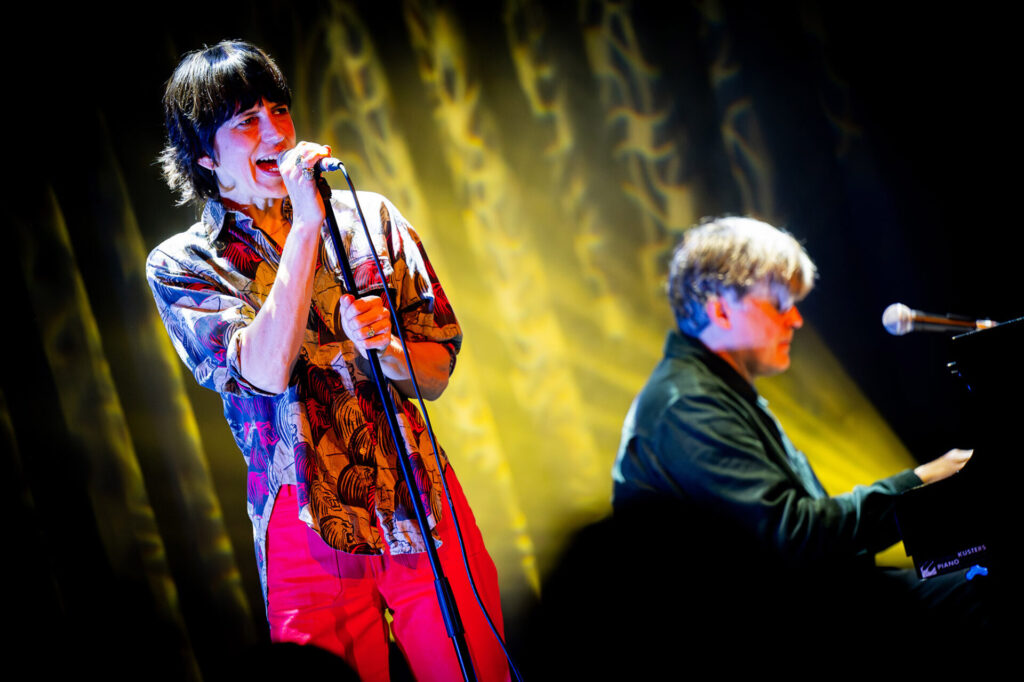
Other murmurings from past times come in the form of The Fiery Furnaces’ gig in De Helling. The Fiery Furnaces have made some of the greatest avant-garde pop music this past 20 years yet still seem to retain their mystery. Here, with just a piano and two microphones for support, it feels like the Friedberger siblings are giving us a run through on the bare bones of their craft. We get a reworking of 2004 album Blueberry Boat: a dizzying record chock full of mystifying, Beefheartean syncopation: a peg top trousered Beefheart, moreover, who would sometimes take cocktails with F Scott Fitzgerald and write sheet music for Tin Pan Alley. Eleanor Friedberger’s cool, clear delivery of these mystifying songs dovetails exquisitely with her brother’s fragile voice and wonderful piano playing. As ever, a fabulous experience but impossible to fully describe: maybe like a long drink of the best water you can find.