
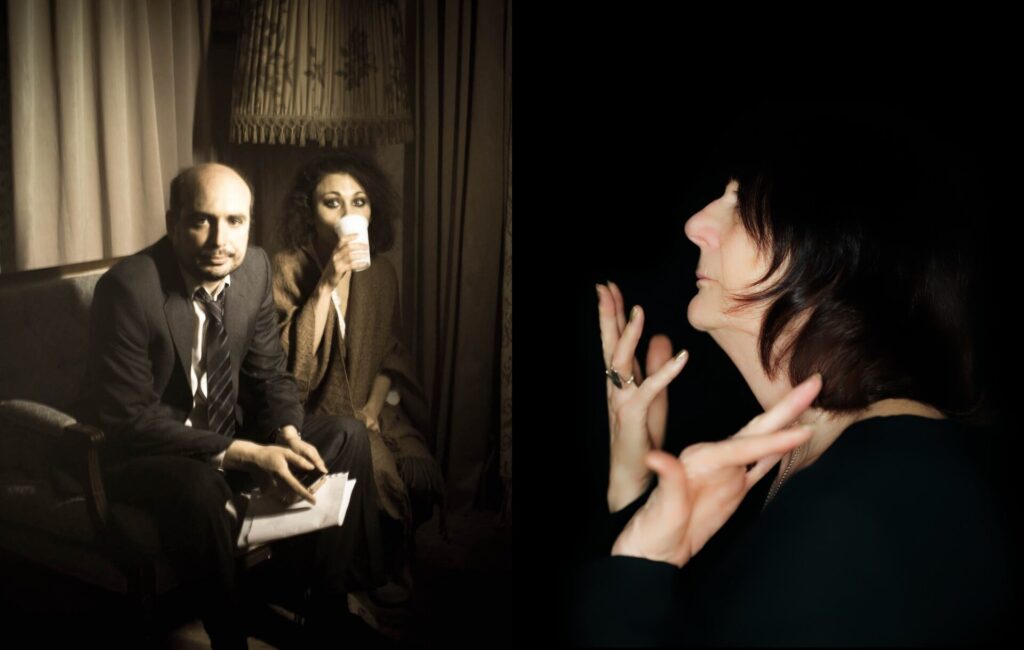
Music writers. Who needs ’em? We recently had the opportunity to get artist, author and industrial music pioneer Cosey Fanni Tutti together with visionary film maker Peter Strickland, so we left them to interview one another with no interference from us.
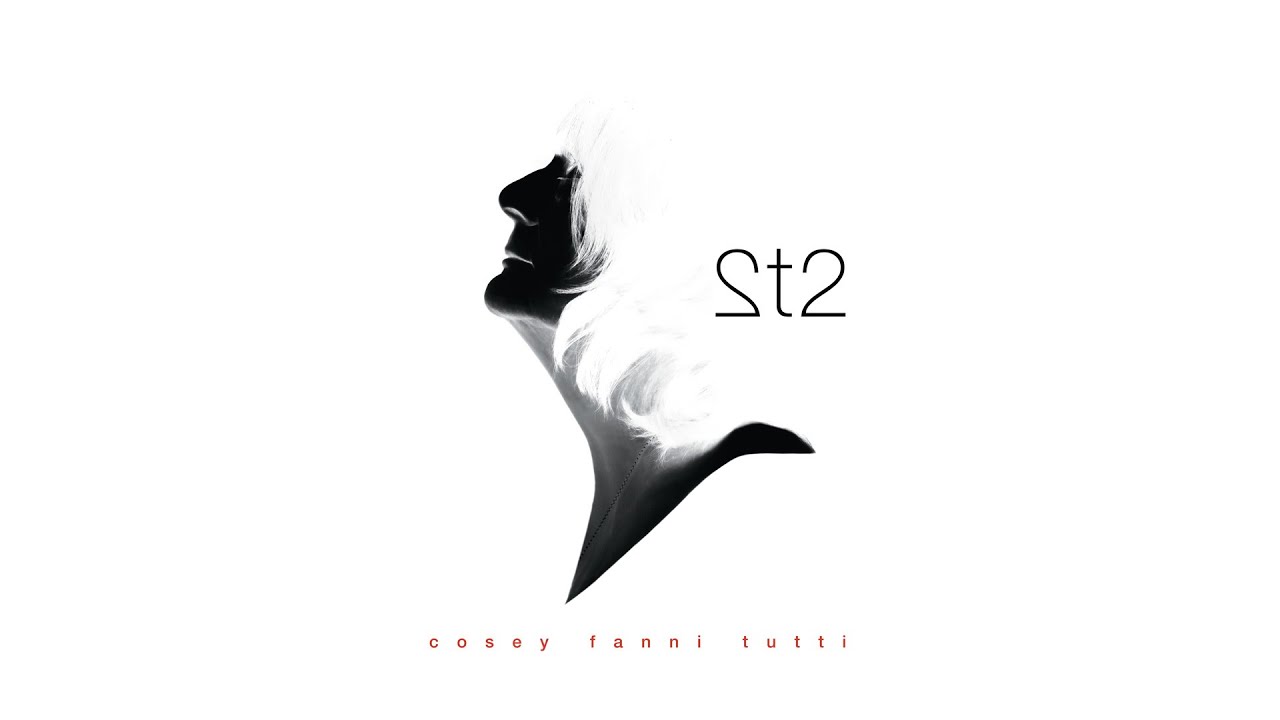
Cosey Fanni Tutti, artist, musician and writer, has cut a unique path through the musical landscape since the initial termination of the Throbbing Gristle/TG mission in the early 1980s. Often working with life partner Chris Carter as one half of Chris and Cosey and Carter Tutti, she has also been a member of the revived TG (and then X-TG) plus the astounding Carter Tutti Void in more recent years. However her latest fantastic album 2t2 is a strictly solo affair, following on from the recent OST Delia Derbyshire: The Myths And The Legendary Tapes and 2019’s Tutti.
Peter Strickland’s 2009 debut feature, Katalin Varga, is often mentioned by tQ’s editors as one of the best films to be released during the lifespan of this magazine, and the follow up, Berberian Sound Studio from 2012, cemented his place as one of our favourite directors. His most recent feature, the black comedy Flux Gourmet, sparked off a long overdue reacquaintance with the work of his unique musical project, the Sonic Catering Band.
Peter Strickland interviews Cosey Fanni Tutti
Peter Strickland: I first discovered your music via your role in Throbbing Gristle on the soundtrack to Derek Jarman’s In The Shadow of the Sun and it still sounds amazing. Could you talk a bit about the process for that film?
Cosey Fanni Tutti: The original soundtrack was something special. We decided to make the process an adventure and record some of it outside of our Martello Street studio. The film demanded that we connect with it in an entirely different environment so we went to a recording studio in a disused mortuary. We only took a small 14” B/W monitor – which now seems crazy when you think of the colours in the film – fed by a VHS video machine. Me and Sleazy made vocal choral sounds which had a ghostly feeling that seemed to fit with the eerie atmosphere created by this place of death. Chris fed our voices through an Eventide Harmoniser and we responded in turn to how our voices had been mutated. The air felt like it was building up a charge. That was when we all decided it was time to leave.
PS: It looks like you’re returning to soundtrack work with music for Delia Derbyshire: The Myths And Legendary Tapes, by Caroline Catz. Could you talk more about the process with that film, as it’s more than creating a soundtrack since you’re doing it through the medium (in every sense of the word) of Derbyshire herself yet still pursuing something original.
CFT: I never thought about returning to making soundtrack music but Caroline’s film was the first one that really appealed, probably because it was so me. I really felt that I was working for Delia and that made the process intimate. It might seem like an odd description, but it did seem to flow as if being steered by Delia’s presence. I’m sure Caroline felt that too, as we were both so focussed on her work while going through her archive. Between the three of us it worked perfectly. It all seemed so fluid. It wasn’t at all stressful, it was symbiotic, a lot of fun too, especially learning Delia’s methods so I could combine them with my own. The seeming ease with which we created Delia’s sound world lightened the weight of responsibility we felt about ensuring we represented her well and with respect. I think that was the bottom line all the way through. To embrace her personality as well as her work – which is how I think of them: as one.

PS: Was there any crossover, either musically, ethically or socially, with punk during the Throbbing Gristle days?
CFT: The only thing that can be regarded as a crossover is that both TG and punk were unapologetically disruptive. But we went about things in very different ways. Musically we were poles apart. We weren’t rock & roll. We didn’t have a drummer. We weren’t interested in recreating what had gone before, or the punk notion of learning three chords and then forming a band. We weren’t a ‘band’ for one thing. We remained independent whereas most punk bands we knew of were seeking a record contract, a career, success, and money. We had punk friends, like Mark Perry and Alex Fergusson of Alternative TV for example, and we were involved with auditioning the punk band LSD who became Chelsea and then eventually Generation X. Sleazy had worked for Malcolm McLaren taking the first promo photos of the The Sex Pistols. So, we had connections but didn’t ‘connect’ as such.
PS: Though there are huge financial advantages to working from a home studio, is there anything you miss from going to a studio for hire? I used to work from an office when I lived in Hungary and it was more conducive to being productive and often the walks home yielded many ideas that I could work on the next day. I can’t afford an office in Britain and working from home has its disadvantages.
CFT: Because I lived in places where I occupied one room as my main living and sleeping space, due to availability and affordability, I always had my art materials close at hand. I’m used to being able to go straight to my ‘creative place’ without leaving my ‘head zone’ or needing to travel. I can understand what you mean about a separate space, as far as discipline goes though. When I was younger I had jobs in factories and offices and would get the same thing: ideas occurring to me in the most mundane of circumstances. We used studios for hire a few times in the TG days for mixing and production. The main problem was having to use them on ‘dead time’, very late at night, as well as the fixed ideas the engineers had about what their equipment was or could be used for. They would typically say, ‘You can’t use it for that’, which eventually meant we hired in equipment instead. When me and Chris recorded Heartbeat we used Southern Music publishing studio in Denmark Street. We got it for free so that was such a help as everything after the TG split was chaotic as far as who owned what gear. Me and Chris had to basically start again from scratch as far as equipment was concerned.
PS: Any chance of your Studio Secrets being published?
CFT: Ha! Definitely not. We’re still adding to it. As they say, you’ll have to pry my cold dead fingers off it. That’s years of experimentation and accumulated knowledge of what sounds best and how to manipulate sounds in our special way. All those techniques and tips are the best thing about discovering and working them out yourself, as they are personalised to your own overall sound. It doesn’t help getting something for no effort. Or as Chris says when asked, “Read the fucking manual.”
PS: Your Re-Sisters book highlights examples of your work being plundered in various ways. This will probably be an intuitive response, but at what point does sampling cross the line from something inventive to something creatively redundant and/or exploitative?
CFT: Well there are instances where my work has been outright stolen from me, not just sampled without my consent. I do think there is a point after which using existing music as source material to make something ‘new’ crosses the line. When a track has something that’s instantly recognisable as your own work then it’s not inventive, it’s exploiting your work to create a piece of music that obviously has appeal or the person sampling it wouldn’t want it. It’s creatively redundant, lazy, and theft. Take inspiration from what came before rather than blatantly copying ideas and noises. Make your own. It’s disrespectful to those innovators who put in the time and energy to find new ways forward. I hope others would want to take things further instead of taking a backwards step by just lifting what’s already there. That’s how things stagnate. And don’t get me onto AI.
PS: Re-Sisters sheds light on the injustice faced by women socially and creatively. I had never heard of Maddalena Fagandini until reading about her in your book, and her lack of credit for Time Beat feels wrong, but I wanted to ask about collective authorship both in terms of The Radiophonic Workshop compared to Throbbing Gristle. Re-Sisters recounts the TG reunion and elaborates on how one person in the band shouldn’t be more equal than others in terms of creative credit, but the Radiophonic Workshop credit feels inconsistent with the collective rule, which I think is what you’re highlighting, especially when it comes to gender.
CFT: Yes, I have a problem with how the Radiophonic Workshop handled credits. Misogyny was endemic. There seems to be have been a double standard at times when credit was given to individuals not the collective, and those instances favoured male composers. As in the case of Maddalena Fagandini and Delia’s work on the Doctor Who theme tune. When I think about what Delia had to put up with and that I can relate to it directly even today, it makes me angry that misogyny is still so pervasive and not only in the music industry.
PS: One of the remarkable and unique things about Throbbing Gristle was that unlike punk, you couldn’t trace its roots. What were your musical influences or did you want to start from zero?
CFT: For me there was no specific objective other than exploration in whatever direction happened to suggest itself at any given time. I definitely didn’t want to emulate what had gone before. It was, and continues to be, all about sound, and its power to tweak emotions, psyche and your physical being. It’s incredibly exciting and soul affirming when you discover something that has that effect. My taste in music at the time was diverse. I suppose some styles that had an influence on TG would have been things like Martin Denny’s exotic lounge music, we actually bought a vibraphone to use on 20 Jazz Funk Greats to get ‘that’ sound. Also we adopted some disco techniques for ‘Hot On The Heels Of Love’ and ‘Distant Dreams’.
PS: Your Art Sex Music book painfully recounts your need to leave home. I know that some artists such as John Cooper Clarke claimed that an unsupportive father was a motivation to prove him wrong whereas some people I know have a lifelong confidence deficit due to their fathers’ lack of care.
CFT: I can understand both of those responses to a difficult father. My father was very supportive but, unfortunately, in the wrong way. He only supported me while I was doing things his way and the minute I showed resistance I was punished to be brought back in line. I never wanted to prove him wrong because I had no idea what the fuck would constitute ‘right’ for him. Well, nothing that I felt would be right for me. It was always only about his view of who I should be. That constant battle of circumventing his interference (that’s how I saw his ‘care’) was what gave me confidence to carry on doing what I felt was right but went against everything he had planned for me, strangely enough. I felt that my life was my territory, to make my own decisions when I wanted or needed.
PS: London is the place to move to if you want to do well in music or film, or so we’re led to believe. Could you talk about the pros and cons of living in London during the Throbbing Gristle days? I lived in London for two years thinking it’d help my career and it had the opposite effect. A mixture of doing day jobs to pay the rent and having too much temptation in the evenings in terms of film and music meant I didn’t get any writing done. I had a great time, but I needed to move somewhere cheaper and where I didn’t know anyone in order to start again with the writing.
CFT: London is nothing like it was when I lived there. Things have changed so much, the vibe I loved has gone, and a lot of the old run down places are gone too. I get a huge rush when I enter old abandoned buildings. I try and imagine what went on there, the people, their activities, the reason for these places being left to ruin. So London back in the 70s was a massive source of that kind of inspiration, along with the availability the kind of empty places people could squat to live in or work in for very little money. I wasn’t looking for a career in music so I never had that expectation of London delivering. All London has to offer can be a distraction and in the end and, like you, I had to move out, but not for totally the same reasons. It didn’t affect my work in the same way. I had a circle of friends and good resources that gave me a great base to work with. It was, as you say, the expense becoming too much. Earning enough to pay the bills meant less time spent in the studio. Also me and Chris didn’t want to raise our son in London. Where we lived in Tottenham wasn’t the best place. Helicopters would fly overhead every dole money day keeping an eye out for people of interest. So it felt edgy a lot of the time, a powder keg. We lived close to The Broadwater Farm estate. The riots there happened within a year after we moved to Norfolk.
PS: How did the Sylvester video come about and was there any contact with Patrick Cowley? ‘Hot On The Heels Of Love’ wasn’t a million miles away from some of Cowley’s work – both with Sylvester and on his own.
CFT: Aaah Patrick Cowley… a master of electronic disco music. Every day and night when I was stripping I was hearing, if not dancing to, those songs. That did have an influence on the TG tracks like ‘Hot On The Heels Of Love‘, but not this particular Sylvester song, as it was too fast to strip to. Unfortunately I had no contact with Patrick Cowley. The job for the promo video came through my stripping agency. I was sent to The Embassy Club in Old Bond Street, London’s West End where the video was shot and spent all day there. It was exhausting getting things just right and Sylvester being happy with his choice of costume. I’d never have stepped foot in The Embassy Club, not my thing at all. Its decadent reputation was appealing but it was frequented by celebrities who considered it as a kind of Studio 54. But the guy who founded The Embassy club also went on to start up Heaven at Charing Cross, which was great and where I’ve played numerous times as TG and Carter Tutti. Derek Jarman filmed the 1980 TG Xmas gig, Psychic Rally In Heaven there.
Cosey Fanni Tutti interviews Peter Strickland
CFT: You’re one of my very favourite film makers, so I get excited about seeing what you’ve made. Your work is extraordinary for many reasons. It’s beautifully shot, with such attention to detail and a rare sensitivity in terms of the response you evoke in the viewer. I find the pace and intimacy of your films immersive and mesmerising. Is that your intention? To make the viewer focus on the minutiae of your creative vision relative to the narrative?
PS: Thank you very much! I’ve never been a big fan of narrative and maybe that’s partly due to a mixture of things: falling asleep too easily when the lights in the cinema go down or my mother often being late when she was taking me out to see a film. Luke Skywalker and his gang [were already on their way to destroy] the Death Star by the time we entered the cinema to see Star Wars in 1977, which meant I was mostly focusing on spectacle. I worked part-time as a cinema cashier between 1991 and 1999, which meant that I missed the first fifteen or twenty minutes of a huge number of films throughout that decade. One film I arrived on time for was Eraserhead in 1990 and its foregrounding of radiator hiss completely blew my mind. It was one of those great epiphanies when someone else prises out a predilection you never knew you had in you. It wasn’t just about the beauty of the noise around us but also using that as a way of conveying a state of mind. Ever since then I’ve been trying to do to audiences what Lynch did to me while trying not to copy what he did.
CFT: You’ve mentioned that the sources of the subjects of your films are personal. Bearing in mind the range and combinations of fetishistic aspects in your work, are there some things that are sacred, so out of bounds as far as your films are concerned?
PS: There are many things that are so sacred as to be out of bounds, but they tend to be very ‘normal’ aspects of life that many of us experience. It’s a fine line – to make something personal yet not specific to one’s life. I think the conundrums, dilemmas and emotions in a film can be more intense when they’re personal, but the window dressing around all that works better for me when it’s more exotic or glamorous than real life.
CFT: I can relate directly to your films, Flux Gourmet in particular with its art actions, music collaborations and the petty infighting. Did you draw directly on your own experiences of the absurd dynamics of communal groups?
PS: I feel slightly bad for admitting that I’m drawn to stories about infighting bands. I don’t get any pleasure in reading disturbing accounts, but the lighter stuff (assuming you’re not on the receiving end of it) can be both gloriously petty and universal at the same time. A personal favourite has to be the Bernard Sumner and Peter Hook writing about New Order. Amidst the tens of thousands of words they’ve both written, the Sumner version can be whittled down to “the bass guitar should be quieter” and the Hook version can be whittled down to “the bass guitar should be louder.” If my memory serves me right, in Hook’s Substance memoir on New Order, he mentions persuading an engineer to secretly disable the bass track’s fader on the mixing desk, so that Sumner’s attempts to turn it down would be thwarted. That kind of thing very much fed in to Flux Gourmet. After writing the script for Flux Gourmet, I showed it to the other core members of the Sonic Catering Band (Tim Kirby and Colin Fletcher), as none of us come out of the film looking good, but they had no objections and contributed a lot of sound, as did floating member, Dan (Sculpture) Hayhurst. The film started off as a bit of a joke – in the midst of Queen and Elton John biopics it seemed like a good time to make a biopic about a band very few people have heard of – but I guess that when you sit down and write it, you get a little bored of it being about yourself; and start coming up with other ideas such as the theft of a patron’s jewellery.
CFT: Having worked solo and collaboratively myself I wondered if you found one more satisfying or rewarding than the other. I’ve always seen your film work as very much your own regarding vision and the sounds you select. Do you find it easy to collaborate or is it difficult to let go of an idea in favour of the shared nature of the project?
PS: I do prefer working on my own in terms of writing, but directing is by its nature very collaborative. I’m communicating what is in my head to the team and their interpretation of that is followed by a lot of back and forth until we find the right thing – which often ends up better than what I originally imagined. That said, a concert film I did for Björk in 2014 was the complete opposite of what I was used to. I was not only making a film for Björk, but also co-directing with Nick Fenton (with a lot of help and technical guidance during the shoot from Test Dept’s Brett Turnbull on camera duties), which made me very apprehensive at first, but it turned out to be a very pleasant process. I think that you tend to let go in that situation and your job is to service someone else’s vision. The buck stops with Björk and it very much should do. I really enjoyed the process and it was great to hibernate my ego for once in order to focus on what Björk needed. I’d also add that she was also open to listening to our ideas while also knowing exactly what she wants. I would do it again if I thought another collaboration would be like that.
CFT: I find it almost impossible to answer questions about how works come about, the initial idea. Are you able to answer that or, like me, is it something that seems to just develop in its own time? Artistically speaking, what’s your approach from the initial idea for a film and the creative process to bring it to fruition?
PS: As with you, I find it’s very hard to pinpoint how an idea germinates. I’ve occasionally been flippant and jokingly made stuff up in interviews regarding how ideas came to me, but in hindsight, it would’ve been better to just shrug my shoulders and acknowledge that I don’t know. Ideas usually take around a year to percolate once the initial spark occurs, but then the writing can be quick. I used to wait until I had around seventy scenes, listed randomly as bullet points, and then I’d write the script based on those. These days I don’t bother with listing anything. I just write chronologically and the script finds itself as you live through the various scenarios, but to do that you have to have a feel for the characters and know what makes them tick. Not so much backstory, but their temperament, which very much guides you in how they’re going to act in a situation and once you instinctively know how they react to things, the script tends to write itself.



CFT: How do you deal with those frustrating times when you can’t get something to work how you want, to get the look you have in mind especially when time is running out because of budget constraints.
PS: I’ve had those moments and what I usually realise is that I have spread things out too thinly. The lesson learnt is to not attempt too many locations on a low budget, especially if you want a heightened look. Most people would know that even if they’ve never made a film, but optimism blinkers me.
CFT: I find the underlying humour in your work so refreshing, yet at the same time there’s a seriousness about what you’re portraying. Is it maybe from finding yourself in similar situations and then some time later being able to laugh about it when at the time it was disruptive and difficult to deal with. Is that intentional, to show as many sides of those kind of situations?
PS: The humour is and isn’t intentional. I don’t go in to a script with any great plans, but as you’re writing a scenario you’re living through that situation and things end up surprising you during that process. When I wrote a staple boot polishing sub/dom scenario for The Duke Of Burgundy, both the expectation of the sub and the boredom of the dom who is only doing it to please her lover came alive in that moment resulting in one character not quite getting the punishment she was hoping for. Human flaws or quirks ruining someone’s nicely planned kink hour is what makes it funny while offering more of a window into each character, hopefully without judging or laughing at them. It’s tricky, as I feel my job as a writer is to be a bit of a bastard to my characters, but at the same time I don’t want to laugh at them. Humour can sometimes enhance seriousness, though not always. There are some subjects that I would never want to treat with humour, but putting the worst tragedies to one side, I’m probably more fearful of coming across as earnest than I am of being seen as silly, which might explain why I often find it hard to commit to full throttle seriousness. At the same time I wouldn’t want the humour to undermine things too much.
CFT: To me your films are perfect but in retrospect is there anything you would change about any of the films you’ve made? How do you deal with expectation and / or criticism?
PS: There are many things I would change about my films, absolutely. But what’s done is done and you can’t keep going back and correcting things. I know that people do and I completely understand the temptation, but I’d personally let it all go unless I had been forced during the making of the film to do or not do things against my will. Curzon put together a box set of my films last year and some of the early short films from the 90s have some terrible moments, but I kept them in there. We scanned the film stock to make it look as good as it should look, but the rule I set myself was to not change any of the decisions, which in hindsight were rotten decisions. I have many regrets regarding anything from technical stuff to dialogue. There are things that I’m proud of too, so it’s not all a big cringe ache, but I don’t really watch the films once they’re out in the world. Opening screenings can be interesting and they can give you a gauge on how an audience reacts, but that can also be unhealthy in terms of making you second-guess what they might like for a forthcoming project based on how they react to the film in front of them. The best thing is to go with your gut and ignore the world beyond the film, though that’s not what I say to financiers when I’m trying to get their money. Regarding criticism; it’s rarely what you want to read or hear, but most of us have had bad reviews and I also think it’s God punishing you for dopamine hunting. On the flipside, I’ve heard of some filmmakers becoming insufferable pricks when they get too much praise, so a few stinker reviews might be for the better good. There was a big discussion in Hungary recently about bad reviews after a very depressing incident in which a filmmaker who received the dreaded ‘not good’ verdict ran into the critic and pushed him to the ground calling him a geci (stale smegma in English). The thing is, would you really want a good review for your next film just because a critic is scared of a repeat of that incident?
CFT: Do you find you have as much time to make music as you’d like either solo or as The Sonic Catering Band? Do you have a set up you can easily access when the mood takes you?
PS: I only dabbled in music and even then it was mostly via the Sonic Catering Band. I was a huge Zoviet France fan in the 90s and just wanted to make something like them only through the process of cooking with a lot of technical help from bandmates. We’re all preoccupied with other things, but if the timing is right and more importantly, if we have it in us to put something out that isn’t just what will soon become landfill, then maybe, yes. I was never technically talented, but what I learnt over many years in studios was how to listen and also what to ask for in order to achieve certain sounds in the same way one would know what type of lens works best for a certain shot. I’ve always been lucky with sound teams and had a great time in post-production. It’s also far less stressful than being on a shoot.
2t2 is released tomorrow via Conspiracy International. Peter Strickland’s Curzon Collection is available now