1929, New York City. six months before the crash. Edward Bernays, inspired by the work of his double uncle Sigmund Freud, paid women to smoke cigarettes whilst marching in the Easter Sunday Parade. He called them ‘Torches of Freedom’, as if every puff were a hammer blow to the shackles of patriarchal oppression.The idea was to both break a social taboo and to increase the number of female smokers with a casual flick of a lighter’s flint. Following this stunt, the percentage of cigarette sales made to women increased by 7%.
Part Art Deco, part Fritz Lang’s Metropolis, adorning the aureate front cover of Imperial Triumphant’s Goldstar is a gilded female automaton looming out of a towering cityscape. Designed by regular collaborator Zbigniew M. Bielak, the artwork is intended to replicate classic cigarette packaging, something that comes up later in the album’s run time with the appearance of a Fall Out-esque jingle for the fictional Goldstar Cigarettes brand.
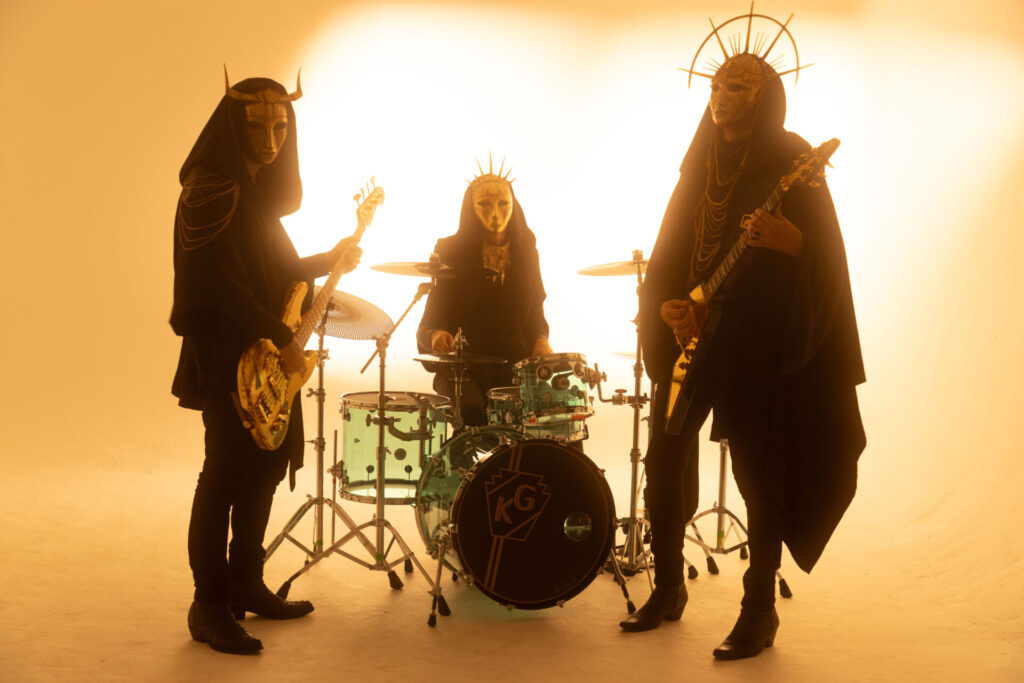
Imperial Triumphant are a dexterous death metal power trio rarely found without their long, flowing black robes and trusty golden masks that make them look like Egyptian gods gate-crashing a sordid sex ritual reserved for Amex Black Card holders. In addition to their fast and frenetic fretboard work, the three New Yorkers also throw off-kilter jazz elements into their squall, punctuating blast beats and palm-muted runs with walking basslines and shoulder-popping drum excursions.
Over the course of fifteen years and six full length albums, they have carefully refined their sound and honed their chops. At the tail end of ’23 they released their covers collection, which saw the band tussling with work by Radiohead, Metallica, Rush, Dizzie Gillespie, and Wayne Shorter. Only then did they get a taste for shorter, more succinct song forms. They’ve evidently developed this further as, unusually for them, on Goldstar, with the exception of album closer ‘Industry of Misery’, the tracks all comfortably creep in below the six-minute mark.
Fortunately, this tack towards brevity hasn’t stifled the band’s creativity one iota. ‘Hotel Sphinx’, named after Rem Koolhaas’s Manhattan architectural blueprint with a Sphinx head capable of being raised 270 metres into the New York skyline, judders like an erratic rabbit outrunning rabid hounds before it breaks out into a Clockwork Orange-esque electronic harpsichord performance of Handel’s ‘Sarabande in D Minor’. In comparison, opener ‘Eye of Mars’ is formed half of brass blasts from John Williams’s ‘Imperial March’ (itself a casual repurposing of Holst and Chopin) and half of Mayhem’s, well, mayhem.
Throughout the course of the album, colossal columns of sound rapidly manoeuvre between sections, rarely allowing space or time for listeners to get their hooks in. The result of this is a rewarding repeated listening experience, catching fresh licks and pummelling fills with each dip back in. Just when you think you’ve got it sussed, the ptwaang of the bass guitar heralds the arrival of jazz’s blue smoke. ‘Gomorrah Nouveaux’, for example, is constantly seeking new angles and new approaches as it bounds forward amidst riffs that grind with their heads down, popping up only to dish out sharp jabs. And the violent guitar of ‘Rot Moderne’ squeals into your ears in a manner reminiscent of ‘When Good Dogs Do Bad Things’ by The Dillinger Escape Plan and Mike Patton. It’s all howl and thunder.
Speaking of both features and howls, it’s worth mentioning that the ear-lacerating forty-seven second grindcore eruption of ‘NEWYORKCITY’ includes the ravaged lungs of Bloody Panda’s Yoshiko Ohara. The guest spots don’t stop there, either. Dave Lombardo of Slayer fame adds Brazilian Maracatu rhythms to ‘Pleasure Dome’ alongside Tomas Haake’s ominous intonations and, through the tide-like ebb and flow of sirens on ‘Lexington Delirium’, the chief sticksman in Meshuggah breaks further from his day job to memorably bellow, “The gold which crowns this tower pays its respects only to the black.” The opulence from which this album blooms casts a long shadow.
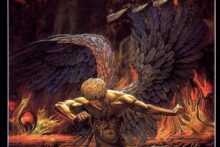


Smokey bass. Tinkled piano keys. A little bit of Bohren & Der Club of Gore. The last track on the record comes across like Mr Bungle at their misdirecting and guitar-slicing best. Considering Imperial Triumphant’s predilection for jazz timings and hollering, it’s no surprise that Goldstar contains so many nods to the Roaring Twenties. The well-worked and dutifully earned finale provides the reckoning. The inevitable end of decadence where, lost in a confusing cycle of repetition with everything rapidly racing off the rails and wheels coming loose, it all combusts in a burst of dazzling, flame-licked light.
This coda raises the album far above gold-tinged nostalgia for the champagne-chugging era. The glitz of the 20s preceded a global financial collapse and the rise of the Nazis. Nearing on a hundred years later, rocketing inequality and a steady march of fascism appears to mirror that time. These swirling, wildly juxtaposing musical efforts also reflect the joyous diversity of New York, a place where the world eagerly collides with itself. This incendiary ending lights a fire within us to protect that. It makes you want to march on the city. To carry some freedom torches of our own to the gold-clad towers of billionaires. It’s as if Imperial Triumphant are suggesting we engage in a little reverse alchemy and turn that which is gold, back into shit. After all, there’s no smoke without fire.