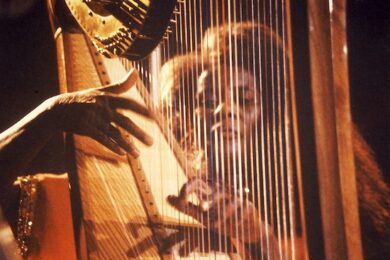

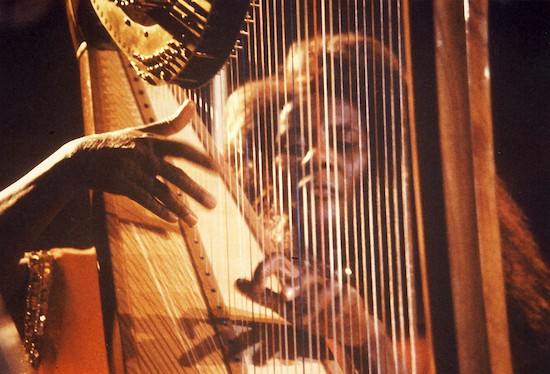
Alice Coltrane is one of the greatest artists of the 20th century, with a sublime musical vision that encompasses jazz, blues, gospel, Indian classical, North African music, and European modernism. Although her achievement is now being recognised, for many years Coltrane was misunderstood and dismissed by many of jazz’s gatekeepers. Some viewed her in the way many view Yoko Ono: responsible for the break-up of her husband John Coltrane’s classic quintet; a sexist and demonstrably untrue claim.
Others simply didn’t get what her music was about, dismissing it as so much hippy twaddle. As the normally on-point Richard Cook writes in his Jazz Encyclopedia, "Her albums of her own music often come across as soft-headed and incoherent rambling… one wonders if she would have enjoyed any attention at all if she had remained plain Alice McCleod."
Such wrong-headed attitudes are thankfully on the wane. Coltrane was hugely respected by the heavyweight musicians she worked with, who were clearly less hung up on genre boundaries than many critics. Her music has always attracted open-minded music fans – Journey In Satchidananda is one of the cult albums – but in recent years it has enjoyed a new lease of life, with Radiohead, Four Tet and Sunn 0))) among the acts paying homage.
The Los Angeles beats & jazz community centred around her nephew Stephen Ellison, aka Flying Lotus, has played a key role in raising her profile, and there’s undoubtedly a heady whiff of Alice in Kamasi Washington’s symphonic jazz arrangements. She’s also a major influence on contemporary jazz innovators like Joshua Abrams and Amirtha Kidambi, who clearly respond to her unorthodox approach.
Born in Detroit in 1937, the young Alice McLeod was a musical prodigy, learning piano from an early age, and playing organ in Mount Olive Baptist Church by the age of nine. Gospel remained a great love and its influence can be heard throughout her work. In her teens, she discovered bebop through her older half-brother, the bassist Ernie Farrow, and was entranced. Before she was twenty, she had gigged with saxophonists Cannonball Adderley and Sonny Stitt. She later moved to Paris where she studied piano with the great Bud Powell. She returned to the US after her first marriage ended, where she played with vibist Terry Gibbs (she appears on his 1963 album Plays Jewish Melodies In Jazztime) who introduced her to John Coltrane in 1963.
He was her soulmate and collaborator, and together they had four children before John’s untimely death from liver cancer in 1967. Her music and spirituality helped her overcome the trauma of losing her husband at 30, and in 1968 she released the first of her twenty solo albums, the beautiful A Monastic Trio.
In the 1970s, she became a disciple of Swami Satchidananda (the guru who opened Woodstock) and took on the name Turiyasangitananda. She soon became a spiritual leader herself, opening the Vedantic Centre in 1975, and the Sai Anantam Ashram eight years later. As a result, she drifted away from the music business, although she continued to record devotional music for her community. Those recordings enjoy their first commercial release with the new compilation on Luaka Bop, The Ecstatic Music Of Alice Coltrane Turiyasangitananda; a real cause for celebration. Before her death in 2007, she returned to the studio for one final album proper, the wonderful Translinear Light. Read on, as we unpack her legacy.
Something About John Coltrane
Alice Coltrane joined her husband’s band in 1966, recording a number of studio sessions including the final album released during his lifetime, Expression, and the posthumously released Stellar Regions. She also appeared on several live recordings, including Offering: Live At Temple University, a phenomenal set recorded in Philadelphia in 1966, but only released in 2015. Alice’s piano playing on these albums is less flashily virtuosic than McCoy Tyner’s, but it’s highly distinctive nonetheless, with the extended harmonies, rippling modal lines and driving bass she would develop further on her own albums. She hooks up beautifully with bassist Jimmy Garrison and drummer Rashied Ali, riding the latter’s multi-directional flow, while providing rhythmic and harmonic anchors when necessary. She more than proves herself of being willing and able to follow her husband on his ecstatic journeys to the outer reaches.
Following John’s death in 1967, Alice founded the independent Coltrane Records to release the jointly credited Cosmic Music, featuring two 1966 tracks by the John Coltrane Quintet, and two new pieces she had recorded with her first quartet (with Pharoah Sanders, Jimmy Garrison and Ben Riley) at her Long Island home studio in 1968. Highlights include John’s ‘Reverend King’, where a light, folkish melody erupts into a wild collective improvisation, and Alice’s ‘The Sun’, a modal piano piece that opens with a spoken word invocation recorded by her husband and Sanders in 1966. By pairing her own music with her husband’s, Alice announced her intention to continue on the visionary path they had mapped out together. That approach met with some controversy, not least in 1972, when Alice added string, organ and bass overdubs to two 1966 tracks to create half of the John Coltrane album Infinity. Jazz purists cried blasphemy, but as Alice repeatedly pointed out, the project was a realisation of her and John’s original vision. As she told The Wire magazine in 2002, "We had a conversation about every detail; [John] was showing me how the piece could include other sounds, blends, tonalities and resonances such as strings. He talked about cosmic sounds, higher dimensions, astral levels and other worlds, and realms of music and sound that I could feel." The results are fascinating and rather gorgeous, offering a glimpse where John might have gone next had he lived.
The Harp
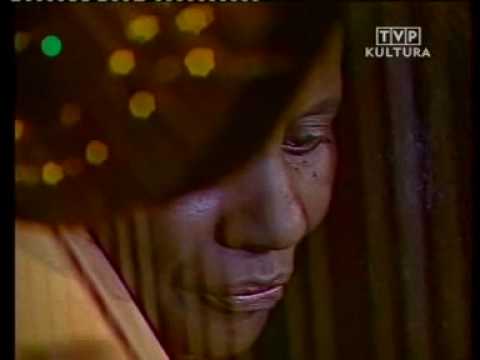
Towards the end of his life, John Coltrane decided to buy a harp, hoping that the instrument would help him rethink his approach to harmony and texture. The harp took months to build and wasn’t delivered to the family home until after his death. Alice would later recall how, if the windows were open, a strong breeze would make the harp’s strings hum, as if it was being played by some invisible force. She soon mastered the instrument, developing the dreamy rippling style that can be heard on ensemble recordings and beautiful solo pieces like ‘Wisdom Eye’ from 1976’s Eternity. This sublime live clip captures her solo harp playing in all its glory; if your eyes are still dry by the end of it, there is no hope for you.
New Beginnings
Alice Coltrane’s solo debut Monastic Trio (1968) is one of her finest, confidently establishing her compositional voice with a series of tunes that combine Easter modes with blues and gospel tonalities. As the sole lead instrumentalist, Coltrane plays the shit out of the piano, particularly on ‘Ohnedaruth’ and ‘Gospel Trane’, where she brings her rippling, harp-like phrasing to complex modal structures. The gracefulness of her right-hand playing is underpinned by a gutsy sense of swing that reflects her gospel and bebop roots. The harp makes its first outing on Side B, as Coltrane conjures shimmering clouds of tone over Garrison’s exploratory bass (I’ll even wager that ‘Lovely Sky Boat’ is an influence on Parliament’s simultaneously sublime and ridiculous ‘Silent Boatman’, with its ‘Skye Boat Song’ references and luscious harp).
The following year’s Huntington Ashram Monastery is an equally fine trio outing, with Rashied Ali on drums and erstwhile Miles Davis bassist Ron Carter stepping in for Garrison. 1970’s Ptah, The El Daoud offers an expanded sound, replacing Ali with Riley, and bringing in Sanders and Joe Henderson on saxophones and flute. It’s a stone-cold classic. Carter and Riley are a more in-the-pocket rhythm section than Garrison and Ali, providing a solid, funky backbone for the title track’s expansive Egyptian strut. Henderson’s warm, hip style contrasts nicely with Sander’s weirder expressions, while Coltrane dazzles with undulating piano leads and strident gospel riffs. ‘Turiya And Ramakrishna’ is a deeply soulful piano ballad, its blues inflected with Eastern modes, while ‘Blue Nile’ is a blissed-out spiritual jazz gem, with Coltrane on harp and the saxophonists doubling up on flutes.
The highest song of bliss: Journey In Satchidananda (1971)
Coltrane met her guru Swami Satchidananda in 1970, travelling to India with him, and taking on the name Turiyasangitananda. Sangit means music in Sanskrit, and Coltrane translated her adopted name as ‘the transcendental lord’s highest song of bliss’. Hinduism, she felt, could best accommodate the Universalist vision she and John had explored together, and that syncretic approach is reflected in the world music fusion of Journey In Satchidananda. The title track is Coltrane’s best known tune, and deservedly so, with harp and tamboura wrapping themselves around Cecil McBee’s mantra-like bassline. ‘Isis And Osiris’ reflects Coltrane’s interest in Egyptian cosmology, with Vishnu Wood’s oud cutting through the mystical drift. This is the album which begins Coltrane’s voyage beyond jazz, and it’s as innovative as it is accessible.
Infinite music: Universal Consciousness (1971), World Galaxy (1972), Lord Of Lords (1972).
Coltrane’s final three albums for Impulse are her most radical, weaving together European modernism, Indian classical, psychedelic rock, gospel and modal jazz to create a truly cosmic music. These albums largely eschew horns for strings and Wurlitzer organ, reflecting her fondness for flowing sounds. As she said in 1971, ‘the instruments which require breathing are more in line with what’s happening on an earthly level, but the instruments that can produce a sound that’s continuous, to me, express the eternal, the infinite.’
Universal Consciousness is arguably her masterpiece, an utterly mind-blowing album that is still hard to fathom 46 years on. The astounding title track hits with the force of a meteor, as slashing atonal strings – co-arranged with Ornette Coleman – lay waster to your speaker cones over Jack De Johnette and Rashied Ali’s twin drum barrage. The organ-led ‘Battle At Armageddon’ is one of the heaviest pieces Coltrane recorded, as she teams up with Kali, El Daoud and Jesus Christ to vanquish demonic forces. Her Wurlitzer playing is wild, as she uses the tone wheel to emulate the swoops and bends of her husband’s soprano saxophone, and embarks on freewheeling modal runs that touch on Indian classical music, gospel, and Terry Riley’s wilder flights. The breadth of her spiritual interests is reflected in titles like ‘Oh Allah’ and ‘Hare Krishna’ and ‘The Ankh Of Amen-Ra’. Truly visionary music.
Coltrane handles all the string arrangements on World Galaxy laying dense, billowing clouds of strings over stormy bass and percussion while she lets rip on organ, piano and harp. Her take on ‘My Favourite Things’ is nuts, with the strings modulating from breezy major to dramatic minor, while Coltrane opens vast black holes of organ. The fulcrum of the album is the ‘Galaxy…’ trilogy, where Coltrane elevates her music to the astral plane. ‘Galaxy Around Olodumare’ is free jazz via Stravinsky and Stockhausen, with Frank Lowe’s raw saxophone burning a hole through gaseous string abstractions, before some sudden tape edits turn the universe inside out. ‘Galaxy In Turiya’ is more consonant, with Coltrane’s harp drifting over luscious strings, while the symphonic re-imagining of ‘Galaxy In Satchidananda’ sounds like the birth of a new planet.
Lord Of Lords has Coltrane’s trio going head to head with a full orchestra, with some intriguing versions of Stravinsky and Dvorak themes. The albums Coltrane subsequently recorded for Warners, most notably Eternity (1976) and the awesome live set Transfiguration (1978), push her sound in a more accessible, but no less rewarding, direction, with inventive big band arrangements and flourishes of Latin percussion alongside the strings, piano, harp and organ.
Guest Spots And Collaborations
In addition to her own projects, Coltrane guested on a number of albums by jazz heavyweights, including McCoy Tyner’s splendid Extensions (recorded 1970, released 1974) and Charlie Haden’s very fine 1976 duets album Closeness. She also worked outside of jazz, contributing harp to Laura Nyro’s 1970 album Christmas And The Beads Of Sweat. Check out the incredible ‘Map To The Treasure’, where Coltrane’s harp ripples gorgeously behind Nyro’s vocal and piano.
Her most sustained collaborative projects, however, are the 1974 albums she made with saxophonist Joe Henderson and Carlos Santana, respectively. Henderson’s The Elements is a concept album exploring the classical model of the cosmos. ‘Earth’ is the highlight, with Coltrane laying a tamboura drone over a deliciously slow and deliberate groove, as Henderson plays superbly off Michael White’s hip violin jabs. It’s not unlike a benign cousin to the vicious tabla-funk of Miles Davis’s ‘Black Satin’. A spacey interlude sees the drums drop out, as Kenneth Nash narrates cosmic wisdom over flute, tabla and harp, and then we’re back into the main theme, with White and Henderson raising the pressure over that indelible groove.
llluminations is less well regarded ("Carlos attempts once again to reproduce his own alpha waves on guitar and Mrs Coltrane contributes background music barely worthy of ‘Kung Fu’", sniffs the self-styled Dean of Rock Critics Robert Christgau) but it’s worth a listen if you can get with the idea of Santana noodling over lush strings. It’s not all chilled-out music to meditate to: ‘Angel Of Sunlight’ burns, as the group attempt a jazz-rock take on John Coltrane’s late music. Much of the track is taken up with Santana shredding over Jack De Johnette’s hard-driving drum barrage, but Alice shows the boys how it’s done with an irradiating Wurlitzer solo.
Devotional music
In 1975 Alice Coltrane Turiyasangitananda became founder and director of the Vedantic Centre. Her final studio albums for Warners, Radha-Krsna Nama Sankirtana and Transcendence (both 1977) reflect this new stage in her life by exploring traditional Hindu songs, while maintaining a connection to jazz through their complex harmonies and extended instrumental breaks. The growth of her spiritual community led to the establishment of the Sai Anantam Ashram in Cornell, California, in 1983, where she quietly began recording devotional music. She shared these with her followers via a series of private press cassettes, which are now collectors’ items. Selections from Turiya Sings (1982), Divine Songs (1987), Infinite Chants (1990), and Glorious Chants (1995) appear on the new compilation World Spiritual Classics Vol. 1: The Ecastatic Music of Alice Coltrane Turiyasangitananda.
The music is absolutely stunning, with its heady mix of Hindu devotional music from the Indian and Nepalese traditions, gospel, spiritual jazz and New Age music. Don’t let the New Age tag put you off. There’s nothing hippy dippy about this music: it is heavy. The arrangements are primarily for organ and synthesiser, with Coltrane joined on vocals by her students. The lightness of the melodies, combined with the density of the drone, is totally mind-bending, with organ and synth laying out huge blocks of chordal bass under the heavenly voices. Coltrane rarely solos, but occasionally adds subtle right hand variations and weird modulations. Best of all are the vast, sweeping synth glissandi she uses to ramp up the intensity of the music, an effect that recalls her orchestral arrangements of the 1970s, while elevating the listener to even higher planes of cosmic bliss. I could listen to those whooshing synths sounds on a loop, although I might never come down.
Coltrane’s alto vocals are gorgeous and deeply felt, not least on the impossibly beautiful ‘Er Ra’, where she sings at the top of her range over harp and strings. She’s joined on the joyous call-and-response kirtans by choirs and other soloists, giving these traditional Hindu hymns a gospel fervour that is matched by the grooving organ and handclaps. In addition to the traditional material, there’s a version of ‘Journey In Satchidananda’ that leaves me breathless, as a choir sings the theme over monumental suspended synth chords that seem to be played by Shiva herself. In the second half, male vocalist Sairam Iyer enters with an impassioned raga and I’m completely sent. Luaka Bop and the Coltrane family can’t be praised enough for making this incredible music more widely available.
The 21st century Alice Coltrane: Translinear Light (2004)
Alice Coltrane came out of semi-retirement in the early 2000s to work with her son, the saxophonist and producer Ravi Coltrane, on what would be her final album. As Ravi told the journalist Ashley Kahn, the aim was to make a modern day Alice Coltrane album, ‘forward thinking’ with ‘a little bit of historical influence there’. Featuring a sympathetic cast of collaborators including her old friends Haden and De Johnette, as well as Ravi and his brother Oran on reeds, Translinear Light celebrates her musical and spiritual interests: she revisits her classics ‘Blue Nile’ and ‘Sita Ram’, engages in some stunning modal interplay with Ravi on the gorgeous title track, and channels her gospel roots on a shimmering version of the traditional ‘Walk With Me’. That gospel influence is deeply felt on the Hindu devotional song ‘Satya Sai Isha’, where the Sai Anantam Ashram Singers summon the spirit over grooving organ, shakers and hand-claps. Halfway through, Coltrane doubles the tempo, and the whole thing takes off in a soaring expression of joy. She brings her synths down from the Ashram for blissed out ‘Jagadishwar’ and ‘Hymn’, while her Wurlitzer organ the drives the gospel tune ‘This Train’ down the cosmic railway. Her husband’s music is represented by ‘Cresent’, ‘Leo’, and the bonus track ‘Impressions’ (Interstellar Light), a fiery organ wig-out with De Johnette channelling the Rashied Ali of Interstellar Space. A beautiful and generous album.