
“What they don’t tell you about acid is it’s dull, it’s really dull,” grumbled Bill Bailey in his Part Troll show of 2003. The beardy comedian recounted taking LSD at the Glastonbury Festival and spending the subsequent few hours buzzily mesmerized by matters such as angles and table legs. Scolding TV writers for always using “acid” as shorthand for “wacky”, Bailey proposed that “Terry And June… on acid!” would actually consist of Terry examining the floral pattern on a plate for four days while going “that’s quite interesting, that’s quite interesting, that’s quite interesting…” It’d be rubbish, he concluded.
It is on that note that I would like to begin the inaugural edition of my brand new psych-rock column for tQ because, let’s face it, most modern psychedelic rock music is even more tedious than the pharmaceutically-aided psychedelic experience itself. It’s all a moon-decorated bucket of reverb, delay and distortion, right? The same two chords played through a luminous stomp-box. Wailing vocals embellished with supposedly otherworldly echoey effects. A perfunctory guitar solo as a temporary break from the monotony of fuzz. One variety or other of blurrily photographed flora on the album cover. Give me strength, Lord (Sutch). As for psychedelic rock writing, well frankly I’ve read the phrase “exquisite wah-wah” so many times now it’s sadly lost all meaning.
Far be it from me to offer any kind of respite from the boredom, however. If anything, I’d like to embrace it. As anyone who’s read David Foster Wallace’s The Pale King will tell you, boredom can be a beautiful and powerful thing; it can be immersive, transcendental, comforting, diverting, political, inspirational, dangerous, life-affirming and a whole list of other seemingly contradictory adjectives. Braving boredom can be heroic. Being a boring person or engaging in boring pursuits can be positively rebellious, especially since the outbreak of the Digital Revolution. Had Wallace lived long enough to complete it, I’m convinced that The Pale King would have been the most important novel of the 21st century, and even in its unfinished form it far outstrips the anti-Twitter Luddite raving of Jonathan Franzen, Dave Eggers’s satirical Orwell-ing and even Damon Albarn’s patronising mope-opus ‘Everyday Robots’. Incidentally, the earliest recorded use of the word ‘boredom’ in 1852 (in Dickens’s Bleak House) preceded, by just over a century, the coining of the term ‘psychedelic’ by Humphry Osmond in 1956 which was followed, 55 years later, by the posthumous publication of The Pale King, the non-posthumous publication of Peter Toohey’s Boredom: A Lively History, and the debut cassette release by Leeds-based neo-psychedelic anti-stars Hookworms, which is quite interesting if not particularly meaningful.
So, anyway, here’s how this trip’s going to work: “psych-rock” will be defined in the broadest possible sense. As takes my fancy, I’ll probably include bits of noise-rock and whatnot to boot. I’ll open each column with some preliminary thoughts on whatever vaguely psychedelically- and/or rock-shaped topics have struck my fragile mind over the few weeks, days, hours or minutes prior to writing, even if they’re about curtain designs or marmite sandwiches. (It is through endeavours such as these that I hope to take psych-rock writing to radical new heights of mundanity, bravely forging a fresh kind of journalism, an extra-humdrum version of gonzo. “Homzom”, if you will.) Then there’ll be a few capsule reviews of the notable psych-type releases from the current month or thereabouts. So welcome, dear reader, to Columnfortably Numb. It’s going to be like a psych-rock column… ON ACID!
Herbcraft – Wot Oz
(Woodsist)
This is quite interesting. This is quite interesting. This is quite interesting. Wot Oz is Matt Lajoie’s fourth Herbcraft LP since the dissolution of his previous free-folk outfit Cursillistas and the first to feature brand new backing members Joe Lindsey and Aaron Neveu. Ostensibly a tour rehearsal that was captured on tape, Lajoie deemed the bottled results to be aurally fragrant enough to justify their official release. He wasn’t wrong and Wot Oz’s lo-fi production only helps it to sound like it was recorded in some sun-drenched South American cabin in the early ‘70s. The LP’s opening rumble of astral-dub recalls Heavy Deeds-era Sun Araw, an intro which gives way to ‘Fit Ur-Head’, a brazen lead & pedals wig-out with vague Indian vibes, tropical drum shapes and shamanistic mutant shrieking. There are a couple of shorter intermissions, one ambient, one funkier, and two twelve-minute closing jams. The penultimate one is slower, more abstract and globular; a heavy-legged trek across a dust planet with background laser noises, space wind and Martian cutlery percussion. ‘Bread Don’t Rise’ takes things back up a notch with its wired hippy party vibes. Sadly, this vibrant final piece cuts off abruptly and is followed by ten seconds of ugly silence. I’m assured this is intentional (apparently the tape fell off the reel) but it’s a brutal way to jar the listener back into the cruel realm of reality and as irritating as that postmodern novel you read back in the 1990s that ended midsentence. Ever heard of a fade out, guys?
Destruction Unit – Negative Feedback Resistor
(Sacred Bones)
“Finally, the punk rockers are taking acid,” The Flaming Lips proclaimed when reissuing their first three albums in one handy CD boxset. However, The Lips always sounded more in the Pink Floyd camp than Minor Threat’s, while in the sleeve notes to that particular comp Wayne Coyne confessed to hating LSD. Destruction Unit, on the other hand, are the real psych-punk deal and were even tripping their beshaded nuts off when interviewed by Spin Magazine the other week. Imagine Lemmy had never been kicked out of Hawkwind. Imagine Lemmy and his bandmates had managed to reconcile their differences. Imagine Hawkwind had allowed Lemmy to indulge in his Motörhead speed-freak tendencies while Lemmy in turn learnt to tolerate their own hippy-trippy spaced-out traits. Imagine they all signed to SST together and toured with Discharge, Poison Idea and their mohawked brethren. That’s what Destruction Unit are like. Their bugged-out leader Ryan Rousseau roars about decay and salvation and other spiritual and psychological neuroses under a veritable sandstorm of sprawling helicopter hubbub. It’s easily their densest and most claustrophobic effort to date and yet, quite the opposite of most punk rock groups, Destruction Unit’s longest numbers are their best and all of their songs actually get better with each time you listen, no matter how malevolent they initially appear. A compellingly twisted racket.
Workin’ Man Noise Unit – Play Loud
(Riot Season)

Riot Season is quickly becoming one of my favourite UK labels, not least because many of its signings seem to be snatching stoner rock back from the flagging clutches of the United States and infusing its Orange-amped phatness with more eccentrically British lyrical qualities. Earlier this year, the songs on Henry Blacker’s second LP jumped from one subject (i.e. seamen stranded on the ocean) to another (such as a “shit magus” who “stinks of cum and cooking sherry”) like a diverse collection of short stories or a succession of Monty Python sketches. Whereas their glamorously tanned Californian forbearers such as Fu Manchu sang about joy rides on sand dunes in boogie vans, Workin’ Man Noise Unit focus instead on Reading’s Inner Distribution Road. In their press release, the band describe the IDR as “a concrete blanket that snakes around the centre of the town, holding Reading in a sort of permanent stranglehold.” The runaway American dream of Highway 9, this ain’t. Born to run, we aren’t. Born to be asphyxiated by oppressive dual carriageways, are we. When not shouting at roads or confessing to an obsession with the atomic bomb, WMNU assert that “we’ve got nothing to say… but we will say it anyway” and amen to that. Sonically, Play Loud is packed with no-nonsense meat-feast riffs accompanied by a swirling background breeze. ‘Yeah, I Was Hypnotized’ hints towards a potential knack for Torche-esque poppiness before it audaciously decelerates to a sludgier wallow. Similarly, ‘Black Lights’ might have been categorized as a proper rock ballad if WMNU hadn’t buried its vocals in potato mash and black gravy and dubbed on a guitar track that resembles a distressed chimpanzee trying to screech its way out of its shit-covered cage. Another highlight, ‘Smoke Like Hell’, is basically Jane’s Addiction rewriting Oasis’s ‘Cigarettes & Alcohol’ in Clutch’s rehearsal space. It’s on this tune and the following couple of closing numbers (and particularly the bleakly political ‘Hate It’) that the band’s rowdy dual vocals start to remind you of Fugazi, which only sweetens the whole damn deal.
Early Mammal – Take A Lover
(Riot Season)
A little fuzzier, both in sound and mind, than WMNU are their label-mates Early Mammal. They’re a talented and versatile bunch, albeit an overly loose one who lack the more solid, graspable identity of Workin’ Man Noise Unit, Henry Blacker or Bad Guys. In Mark Yarm’s oral history of grunge (Everybody Loves Our Town, 2011), Jeff Smith from Mr. Epp and the Calculations observed how the first Stone Temple Pilots album was “almost like a best-of-Seattle”, comprised of a fake Alice In Chains song, a fake Nirvana song, a fake Pearl Jam song, etc., etc. Likewise, Early Mammal are in grave danger of being the Stone Temple Pilots of psych-rock. They sound like Endless Boogie on one track, Sleep on another, then Dead Meadow, then The Entrance Band, then Eternal Tapestry, then Kyuss, and so on. Lyrically speaking, Early Mammal fail to push themselves into the stranger (or sometimes peculiarly everyday) territory into which WMNU, HB and BD have dared to venture. If lines like “feet are cold on the reptile floor” and “tell my friends that I’m a hell of a mess, Mother, she died today” tell us anything at all, it’s that the fetid whiff of Jim Morrison’s corpse continues to float across the Channel from Père Lachaise.
Hills – Frid
(Rocket)
Like their fellow psychedelic world-music-aficionados Goat, Sweden’s Hills have one eye on the West, another looking to the East and a third one gazing into another dimension. In fact, Frid’s first track is a little like getting a postcard from your entitled gap-yearing uni pal because halfway through its running time the mega-fuzzing electric guitar (“California was baking, bruv…”) is suddenly replaced by the sound of a single sitar (“we’re now in Delhi, mate… wish you were here!”). The Eastern patterns seep into the next number, ‘National Drone’ (which nation that might be precisely is anyone’s guess), which adds indecipherably echoed vocals and some fully-immersed lead guitar noodling. The ten-minute stand-out track ‘Och Solen Sänkte Sig Röd’ has some nice heady bass, propulsive, Krautrock-ing drums and a Bong-like mad monk doing some mental mantra chanting about how you should look inside your mind or whatever. The monk’s presence continues on the concluding track ‘Death Will Find A Way’, which lies equidistant between George Harrison’s fancy mansion, Amon Düül’s communal crash-pad and a dusty Hindu temple. With certain psych releases it’s unclear whether you’re having your consciousness expanded or being given a geography lesson. Thing is, they’re the same thing, right? Some wizards wear elbow patches.
Mild High Club – Timeline
(Circle Star)
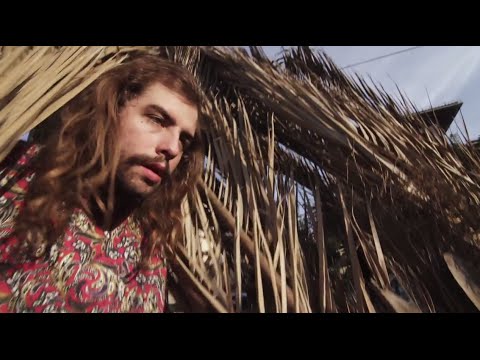
Over to LA now, where the mop-headed and vintage-moustachioed Alexander Brettin crafts woozy ballads using whatever instruments and recording gubbins he happens to have lying around his hookah-cluttered bedroom. He’s shared stages with the likes of Ariel Pink and Mac DeMarco and has just finished a stint on the road with Lizard Lizard & the Lizard Lizard (as I call them), which should give you some idea of the area we’re in. Looking back as far as the original psychedelic practitioners of the 1960s and as closely as the postmodern revivalism of the Noughties’ hypnogogic pop singers, this record may be pretty retro all right but there’s no denying that Brettin has some lovely tunes in his flower-power repertoire. Timeline’s melancholic melodies are buried in thin layers of sonic wonkiness, as if Todd Rundgren had been produced by Nick Nicely and its strongest moments recall the most tender-yet-still-brown-sounding moments of the much-missed Ween. Plus, I don’t think there’s much cynical or ironic posing going on here, mainly because Brettin and his ragtag crew of backing musicians look so authentically baked in the video for ‘Windowpane’. They float around in paddleboats, suffer sunburn, perform topless solos and peel gluey gunk off of their own faces. Toasted, nicely toasted.
500mg – To The Firmament
(Drawing Room)
As the guitarist and makeshift leader of the world’s greatest psych-rock band (Philadelphia’s Bardo Pond), Michael Gibbons is a veritable God among us mere mortals. On top of steering the Bardo boat, holding down a decent day-job, recording like-minded musicians and playing in Lord knows how many side-projects, Gibbons also records remarkable solo opuses under the name 500mg. To The Firmament is this project’s most varied record to date. Whereas previous releases mixed acoustic pluckery with dense fogs of distortion, here Gibbons embellishes his customary musical mannerisms with neo-classical samples of violins, trumpets and cellos, ambient piano plonking, frazzled spoken-word sections about faces coming out of the walls and the occasional moment of croaky singing. Towards the end, he even throws in a hazy cover of the Rolling Stones/Marianne Faithful dope ballad ‘Sister Morphine’ which sounds, somewhat impressively, like Mark Lanegan hooking up with his old drug buddy Dylan Carlson from Earth. TTF is a fascinating glimpse into the drowsily busy mind of a psych-rock genius and a breakthrough moment for this particular project.
Brian Ellis & Brian Granger – At Dusk
Brian Ellis Group – Escondido Sessions
(El Paraiso)
The El Paraiso label was founded in 2011 by Jonas Munk and Jakob Skøtt of Danish psych-rockers Causa Sui as an outlet for their own band’s produce as well as its side-projects and “projects that are related in spirit.” So even if you’re of the opinion that Brian Ellis’s output doesn’t strictly fall under the category of “psych-rock” (whatever the hell that is, don’t ask me, I’m but a mere psych-rock columnist, not Professor of Genre Terminology at Woodstock University), if Munk and Skøtt think his material possesses an affinity with the likes of Papir and Shiggajon then I’m certainly not going to question them. Just strap me into the rocketship and let me observe the nature of the planets we pass. With its pastoral post-rocky palette, At Dusk is the calmer of these two worlds. Ellis provides repetitive folk- and raga-influenced guitar motifs into which his co-Brian blends twinkling ambient synth effects. It’s almost as if that other brilliant Brian (Eno) had used his magical Moog to summon the spirit of Bert Jansch so he could watch the sun go down for one last time.
The Escondido Sessions, on the other hand, is basically jazz fusion. But don’t worry, it’s pretty darn psychedelic jazz fusion, all right? Sun Ra would dig it, okay? Miles Davis would think it was groovy, you dig? If you’re having trouble with all the lively cymbal tappery, funky organ lines and unhinged brass honks, just try to imagine that the saxophone is a Rickenbacker 335 Jetglo with a ton of big-muffed reverb on it, and you’ll be just fine. Besides, if you’re anything like me, you’ll be gagging for a course of jazz sorbet to cleanse your cochlear palette after all that blooming psych-rock above.
Next time: why Anton Chekhov was the first real psych-rock superstar