
Delphine Dora
This has been a tumultuous year in most parts of the world, but France seems to be reaching its own particular boiling point as 2020 comes to a close. This autumn, a series of dreadful incidents have shaken the country – in September, two people were injured after being attacked by a man with a cleaver outside the former offices of satirical paper Charlie Hebdo; a secondary school teacher who used the infamous Charlie Hebdo cartoons featuring the prophet Mohammad in caricature in class was beheaded (the suspect was shot dead) and a suspect was arrested for a knife attack in in Nice’s Notre Dame Basilica that resulted in three deaths and several other people being wounded.
Unfortunately, rather than taking an honest and much needed look at how and why these individuals became radicalised, seemingly in isolation, erstwhile centrist saviour Macron and his ministers have sought to ramp up and exploit Islamophobic sentiment.
Deliberately conflating Islamist extremist violence with Islam in general, Macron – contorting the country’s secular principles in grotesque fashion – asked Muslim leaders to sign up to a charter of republican values and announced measures in schools and restrictions on home schooling, in order to, in the words of interior minister Gérald Darmanin, “save our children from the clutches of Islamists”.
Following sustained criticism, the proposed law “against separatism” has undergone a shift in emphasis and is now a law “reinforcing republican values”. This confrontational approach has also seen Macron give an interview to far-right magazine Valeurs Actuelles in which he discussed Islam, headscarves worn by Muslim women, plus asylum seekers and immigrants who are “taking advantage” of France’s social welfare and healthcare systems. This can be seen as a distraction from the Government’s much-criticised response to the Covid-19 pandemic, as well as an attempt to head off a surge in the polls from Marine Le Pen, of the Rassemblement National party (formerly Le Front National), adhering to the absurd but still surprisingly popular notion that the best way to undermine your opponent is to agree with them.
But these actions can also be placed in the context of longer-term opposition to Macron and his government (in the form of the gilets jaunes movement for example) and is providing an opportunity to clamp down on legitimate protest and allow the forces of ‘order’ to operate with increasing impunity. France’s lower house approved a new security law, due to reach the upper house – or Senate – in January which would, among other things, make it illegal to “publish, by any means and in any medium, the face or any other identifying feature” of a police officer “with the aim of causing them physical or psychological harm”. Protests across France by tens of thousands of people over the weekend of 28 and 29 November have since led to the government proposing “a complete new rewrite” of this article (Article 24).
You may think that all this has nothing to do with music; you’d be wrong. Another measure included in the law would allow off-duty police officers to carry firearms even when the country is not in a state of emergency, and that includes bringing them into music venues. Supposedly, this measure – introduced by former police commander Jean-Michel Fauverge, five years on from the hugely traumatic Bataclan attack – is intended to make people feel safer; many disagree and their anxiety is not unrelated to recent and extremely disturbing footage (which can, for now, still legally be aired and shared in France) of a music producer, Michael Zecler, who for 13 long minutes is seen being physically and verbally attacked (the language includes racist abuse) by three police officers after being pushed inside his own Black Gold Studios, for no obvious reason.
Nine other musicians were also attacked as numerous reinforcements arrived, while Zecler was subsequently arrested and released 48 hours later without charge. The point is not to say that the assault on Zecler was in any way related to the fact he was a music producer – I don’t know and, given the insults hurled at him, the incident would seem to have been primarily about the colour of his skin. But it is another reminder that we can’t keep politics out of music – our music ‘scenes’ and the wider political context are inextricably, inescapably intertwined; reality can come crashing through the door whether we’re expecting it or not.
Below I give ten reasons below for a continued (and, in my case, unflagging) interest in the underground music coming out of France. At least one artist, Laylow, won’t be an underground concern for much longer. Trinity has gone gold and he’s been one of the most talked about rappers of the year, with good reason – unlike the other most-discussed rapper, Freeze Corleone, who was engulfed in an antisemitism row that was substantially but not exclusively of his own making; his debut album on a major label – which promptly dropped him despite having, one presumes, already listened to the album they were releasing – features undoubtedly antisemitic lyrics. In parallel to what occurred here with Wiley, though, the incident also revealed the hypocrisy of commentators who reserved their most intense vitriol for a black artist while staying quiet about regular racist (anti-immigrant, Islamophobic) pronouncements from politicians and established, white media personalities.
And the defensiveness on Corleone’s behalf from a number of French rap artists can be explained in part by the fact that rap – despite the enormous success over the years of acts from NTM and IAM to PNL and MHD – is in many ways still deemed illegitimate and un-French, “viewed by its detractors as a threat to the cultural landscape of a country marked by bitter racial divides” as a superb Guardian piece put it back in April. The article by Michael Oliver goes on to state that “after three decades of attempts to delegitimise it, many artists have come to ambivalently accept the persistent discrimination”. The more-or-less nuanced responses to the Corleone controversy suggest that there is a lot of resentment bubbling just under the surface of that apparent acceptance.
Finally, earlier in the year I brought your attention to the CONFINUUM series of new tracks being pulled together by label and live agency Murailles Music. It’s worth checking back in because the contributions have kept on coming. At 63 songs long it has evolved into a real who’s who of the French underground, with more recent additions from jazz/improv performer Eve Risser, producer Danse Musique Rhône-Alpes, folk artist and associate of the La Nòvia collective Perrine Bourrel and even France-based Third Eye Foundation (aka Matt Elliott). It’s just one of many creative and salutary responses to the Covid-19 crisis this year, some of which I rounded up in the June column.
Delphine Dora – L’Inattingible
(three:four/Meakusma)
Dora has been operating in the indeterminate spaces at the margins of chanson, poetry, sound art and improvisation since around 2005 with frequently enchanting results. L’Inattingible appears to open a new chapter – in terms of composition (more writing and editing than before), the throng of international collaborators and her singing entirely in French for the first time. It’s also utterly enchanting, a genuinely dreamlike environment where birdsong, rippling piano, chimes, strings, organ and wavering voices mingle and coalesce into beautiful, fleeting forms.
Laylow – Trinity
(Digital Mundo)
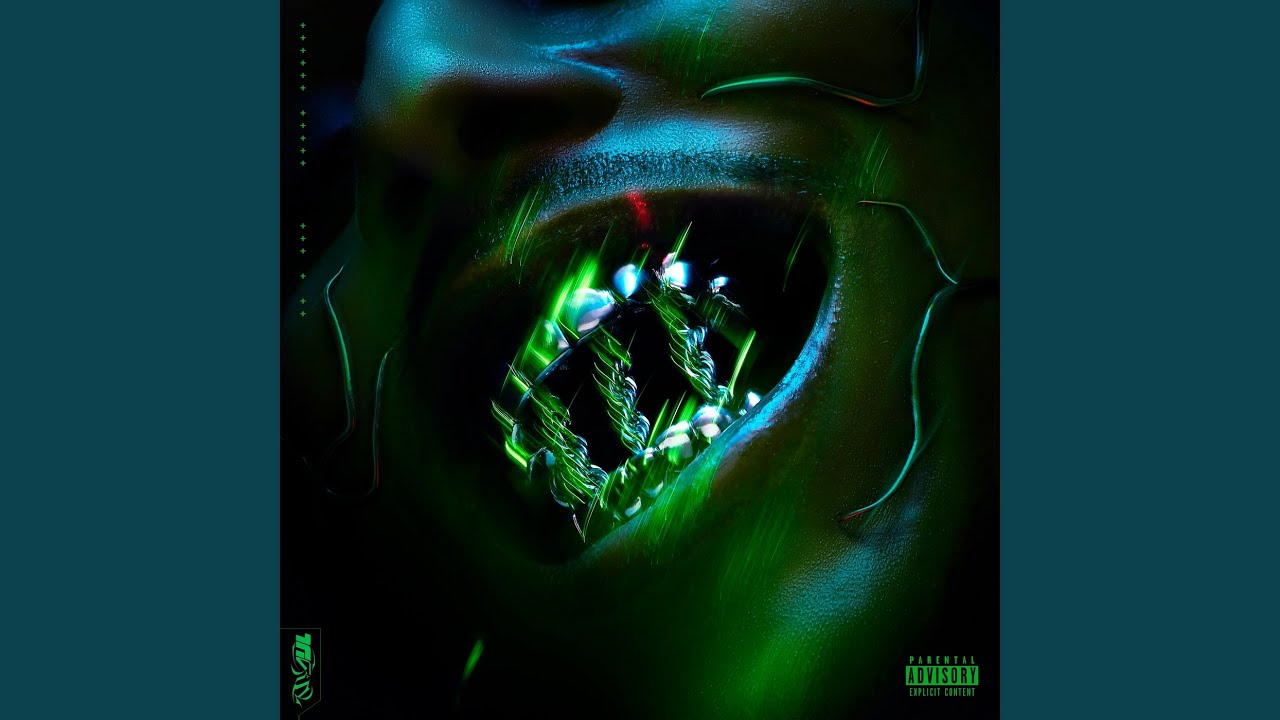
As mentioned above, Laylow is one of the French rappers of the year, turning out a high concept digital rap masterpiece, exchanging feature appearances with the likes of Montpellier rapper Wit. (whose taut No Future mixtape is another of this year’s highlights) and even nailing a seemingly unlikely collaboration with French disco king Cerrone. Trinity itself is a cautionary tale of a love affair with an emotion-simulating app told through everything from ‘Black Skinhead’ style stomping to CGI tear-stained robo-ballads.
Satan – Toutes Ces Horreurs
(Throatruiner Records)
Bookended by passages of a kind of spooked, ritualistic jazz-folk (and a little spoken word), Toutes Ces Horreurs, from a decade-old Grenoble four-piece, is just over half an hour of furious, churning riffage, a blur of blast beats and the more hardcore punk-derived likes of ‘Le Sang Des Bêtes’. Frequently, as on ‘Le Sang Du Poete’ and ‘Faux-Amis’, it’s like being propelled at breakneck speed through setting tarmac. Exhilarating.
Odessey & Oracle – Crocorama (Dur Et Doux/Another Record/Outré)
The most instantly charming, sparkling collection of songs I’ve heard this year comes from this Lyon four-piece centred around the duo of Fanny l’Héritier (who appeared in last year’s list with her Bess of Bedlam project) and Guillaume Médioni. Their touchstones are baroque pop and the more whimsical side of prog but it’s all delivered with the lightness and deceptive simplicity of a perfect soufflé.
Marion Cousin & Kaumwald – Tu Rabo Par’Abanico
(Les Disques Du Festival Permanent/Le Saule/Big Wax)
One of an occasional series of recordings in which Cousin takes a tour of folk songs from the Iberian peninsula, Tu Rabo Par’Abanico is a highly unusual and engaging follow-up to her collaboration with cello player Gasper Claus, working with duo Kaumwald (Ernest Bergez aka Sourdure and Clément Vercelletto), a riot of splattery electronics and jittery percussion that sit in contrast to Cousin’s coolly understated vocals.
No Tongues – Les Voies De L’Oyapock
(Ormo)
The second album from this Nantes four-piece is a sort of travelogue, a musical diary of encounters and collaborations that occured along Oyapoque river that borders Brazil and French Guyana, specifically with the Teko and Wayãpi people of two Amerindian villages, Camopi and Trois-Sauts. The band (who play trumpet, sax and clarinet, double bass and ‘objects’) dialogue with people, motor engines, wildlife and water, and the results are robustly lyrical and frequently thrilling.
Mocke – Parle Grand Canard
(Objet Disque)
Mocke, who also plies his trade in Midget! and Arlt along with many other projects, is the most discreet and most ambitious guitarist in France, and Parle Grand Canard is his most unassumingly grandiose solo project to date. Working with arranger Nicolas Worms who has arranged the album’s seven tracks for an octet, and yet Parle Grand Canard feels more delicate then ever, an ever-shifting moodscape in which Mocke’s playing channels a kaleidoscope of influences, from Jimmy Giuffre-like folk-jazz and American primitive to contemporary classical and 60s/70s French film soundtracks.
Organizatsiya – LibraÀ L’Ombre Des Roches
(Knekelhuis)
One great thing about this column is that while it’s impossible to be across literally every interesting French release myself, readers (and Twitter mutuals) help me fill in the gaps. This is one I might have missed entirely and I’m glad I didn’t; released on Dutch label Knekelhuis, it’s more evidence of the vitality of Lyon’s music scene with its beguiling blend of spoken word, Fourth World funk and spacious, ear-teasing electronics.
Sabrina Bellaoul – Libra
(InFiné)
Reviewing Bellaouel’s We Don’t Need To Be Enemies EP in October, I opined that “we’re still just scratching the surface of Bellaouel’s talent”. I didn’t realise then that the proof would arrive so quickly; its successor, Libra, is an even stronger collection on which Bellaouel’s vocals return to the fore along with the R&B influences, although she concludes with scintillating house cut ‘She Don’t Care’. Libra is superbly balanced, sensuous and intellectually stimulating in equal measure.
Bonnie Banane – Sexy Planet
(Peché Minion)
A long time coming after years of feature appearances, collaborations, singles, EPs and mixtapes, Bonnie Banane’s proper full-length debut is chock-full of idiosyncratic but instantly appealing, candy-striped pop and R&B. BB is bold as brass on the title track but Sexy Planet but also addresses mourning (‘Deuil’) on the album’s dreamy centrepiece, before jumping on a tidy 2-step rhythm for ‘Bluff’.