
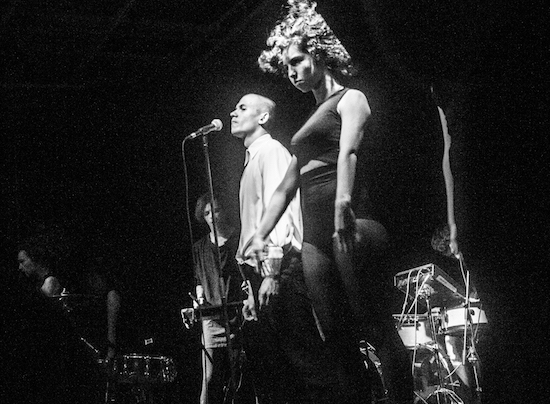
Shortparis by Masha Kunina
“Say yes to a new era.”
(Perfect Aesthetics label, Moscow)
“Russia is bigger.” That remark, made by an experienced Dutch-Russian booker friend may sound like the most obvious thing ever said about the country with the largest landmass in the world. But its core truth hits you when you try to write about the seemingly protean “new wave” of alternative and underground music currently being made in the Russian Federation.
There may be an awful lot going on, but recent rise in profile of this “new Russian wave” has been incremental, due to practical visa or distance-driven considerations of getting someone from a Russian ‘A’ to a Western ‘B’. Regardless, early cheerleaders – notably Membranes mainstay John Robb in Louder Than War – championed the élan and fizz of Moscow-based acts like Lucidvox, Fanny Kaplan and Spasibo when they first appeared at “gateway” festivals like Tallinn Music Week, or the Netherlands’ much-missed Incubate. Initial impressions were of driven, hedonistic acts whose music and onstage demeanour hinted at an inner worldview or a social code known only to initiates.
Was this discoverer’s thrill a new take on the old Russo-Western cultural foxtrot, or just that of watching young bands revelling in playing an “alien” alternative circuit? It’s still difficult to say. Regardless, a close watch over the following three years steadily revealed a wave of mind-blowing outfits that shared equally intense, gnomic outlooks; including (to name but a few), the likes of Shortparis, Интурист, Antoha MC, Crimson Butterfly, Ninja Glam, Electroforez, IC3Peak, Rosemary Loves a Blackberry, Spasibo, Interchain, РыцарныеРыцари (KnightKnights), BROM, Usssy, Mirrored Lips and ГШ / Glintshake. Not to mention the countless labels, alternative festivals and already established figures on a wider international circuit such as Kirill Richter, Dmitry Evgrafov and Kate NV. The dam was breached. Even contemplating writing about Russia’s electro and alt-classical scenes gives me the fear, in full-on, Marwood-strength doses.
This introductory piece and the series that follows are drawn from correspondence with as many of my Russian friends and contacts as possible, snatched chances to see bands at “Eastern” showcase festivals such as Moscow Music Week and MENT, and months of intermittent online chats and trawls through Bandcamp, Vkontakte (VK) and YouTube. It is certainly not meant as a history of Russian alternative pop and rock, and those readers who are after tales of Kuryokhin et al – or even the noughties – will have to seek elsewhere. It, and the all-too-brief samplers of music below, can’t hope to give more than a personal, empirical and minuscule impression of what’s going on.
Sampler #1: Удар (Udar) – ‘Удар’
This track has a real “feel” of alternative Moscow for me: dark, committed omnivorous electronica that both hints at Western pop’s Gothic/Industrial legacy yet sounds like it comes from further East. Удар (Udar) describe themselves as an “anarchist hip-hop band”. They’re an offshoot of Moscow’s prolific and inspiring electro duo, Ninja Glam.
Sampler #2: СОЛЬВЫЧЕГОДСК (Solvychegodsk) – ‘Дербент +7 (87240) 4-02-14’
“Dark Jazz” is a catch-all phrase, but the Russian take on the “genre” is even more impressionistic and encompasses a range of acts practising electro-glitch, jazz rock and free jazz, and all mutations thereof. Acts like BROM, MOSHCHEE and (even) uSSSy lead the charge. A good example of the energy and wit of this tight-knit, often interchangeable scene can be heard with this one minute absurdist blurt from Solvychegodsk, featuring BROM’s mighty saxophonist, Anton Ponomarev.
The Power Of The Press: Afisha, VK And “The Pain Generation”
When talking about “New Weird Russia” you cannot avoid VK (Vkontakte). This seemingly omnipresent social media platform (they are known in the Federation as “publics” (паблики)), crops up in every conversation. In fact, it’s hard not to see the rise in profile (and concomitant styles and aesthetics) of the current crop of Russian alternative acts as being linked with dramatic shifts in how fans can read about and share pop music; shifts that eventually lead to the forming of VK. Initially the platform was an underground phenomenon, an ultra-libertarian social network cloned from Facebook, hosting music and video of all kinds. And through widespread sharing of (often pirated) music, it also became the go-to platform for independent music blogging; challenging what many saw as a sedate and institutionalised Russian music press.
VK may owe its some of its success to the initiatives of another (now established, increasingly mainstream) “public” called Afisha. This platform became closely identified with what passed for Russia’s urban hipster scene at the end of the 2000s. Previous to this time, Russian versions of magazines such as Rolling Stone were prevalent; mirroring an alternative scene that often aped a number of standard Western rock tropes, such as singing in English*. Around 2013, Afisha, alongside other media outlets, gradually began to champion the idea of native acts using Russian lyrics. It’s impossible to determine whether this was driven by a wider impatience with tired old Western rockism, a growing interest in Russian alternative pop history, an amorphous, low-level form of cultural nationalism or the simple economic expediency of reaching a wider readership.
Regardless, this became a trend, (even though many of the styles still hark to classic rock tropes such as post punk) and one that was given further shape by Moscow’s Боль (“Pain”) festival, which has been closely linked in with brilliant guitar-based Russian-language acts such as Spasibo and ГШ / Glintshake. Moscow Music Week’s Stepan Kazarayan sees the name Боль as an ironic one that reflects the current generation’s dilemma; resolutely hedonistic and fully part of a “C21st lifestyle” indistinguishable from that of their Western peers, but somehow unable to shrug off a kind of weltschmerz that also reflects a sentimental – if knowing – view of Russia’s recent history. Another shaper of the current trend is Alexandr Ionoff’s Ionoteka club in St Petersburg, an early and often formative champion of do-it-yourself, predominantly Russian-language acts. Ionoteka’s devil-may-care, “Pechorinesque” image quickly gained currency through VK, releasing a flood of edgy, sarcastic and wildly hedonistic teenagers; embracing postmodernism, post-irony and lo-fi post-punk in equal measure.
In mitigation, it’s worth remembering that twenty-thirty something Russians grew up experiencing wave upon wave of terror acts, economic uncertainties, the effects of sanctions and growing socio-political pressures. So the hedonism and nostalgia is not wholly voyeuristic. Rather they seem to form an emotional crutch. When asking about some of the lyrics I am told that “almost every single band has at least a couple of nostalgic songs about being a kid/teenager.”
Sampler #3: РыцарныеРыцари (KnightKnights) – ТАЙГЕР ФОРС / ‘Tiger Force’
A slacker racket from a Moscow young duo who mess about with pedals and effects as if their lives depended on it. Their very inclusive world embraces all manner of things: from Gong-Wyatt whimsy (which I’ve highlighted here) to full on NoMeansNo-style blurt outs. The drummer is a veritable rock nutcase.
Back To VK…
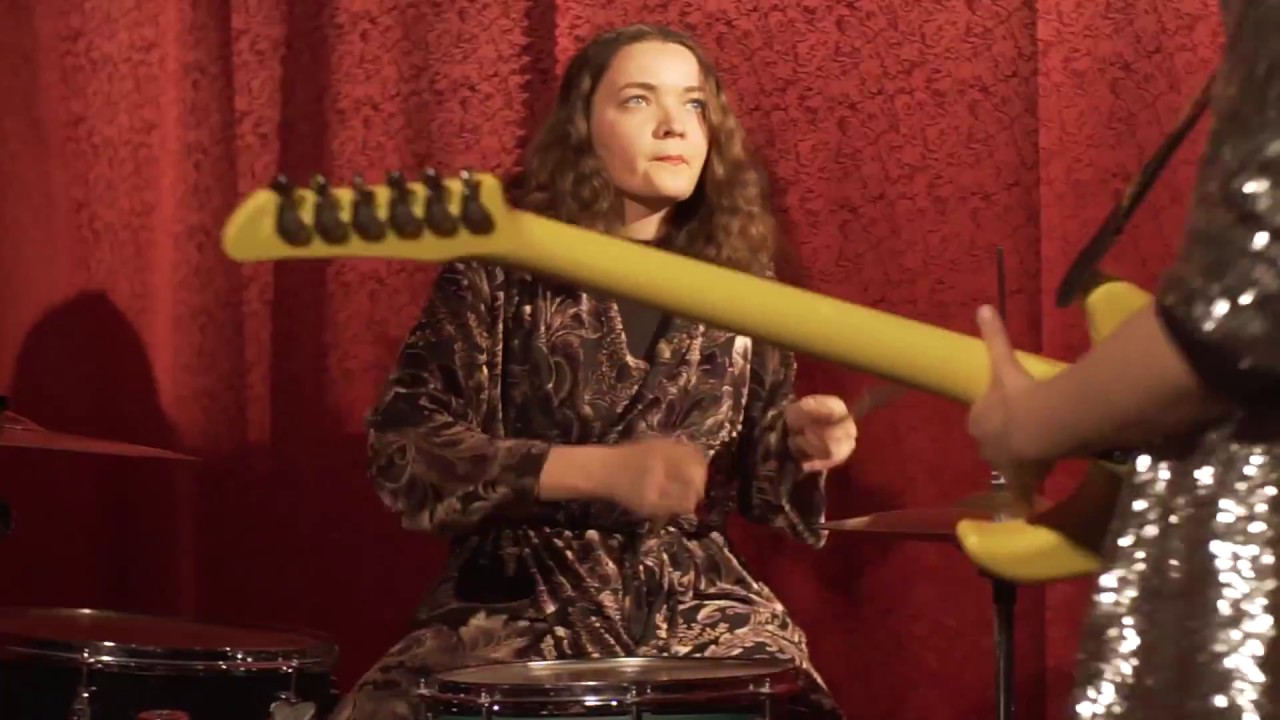
Despite the authorities and related bodies curbing some of its more libertarian tendencies in recent years (there is a constant watch out for any form of “extremism”), VK’s music and video streaming services (now fully legal and open for monetization) are connected to very active and intense forums; with users continually swapping files and tracks and hawking their bands in the hope of landing a gig. Bookers and talent spotters often admit that a trawl through VK is the best way to discover what is going on at ground level, and still the most detailed archive and news source for Russian acts in their native language. Spending some time scrolling down alternative electro/Darkwave Moscow label, Perfect Aesthetics for example, gives a good feel for what’s going on. As one friend said: “We live in VK.”
Sampler #4: Семь Ножей (Seven Knives) – ‘Lost Images’
A typically “doomy” track from St Petersburg: from a newish act, Семь Ножей (Seven Knives). There is an unspoken Moscow – St Petersburg “rivalry” (let’s call it that for now) that seems to ape classic tropes round the Liverpool – Manchester cultural divide played out over 30 years earlier. Aesthetics, behaviour, tastes in socio-cultural recreation (ahem), favourite books and clothes, colours even, are all quietly contrasted against each other. “St Pet” seems to see itself as more stylish and reserved in a “rock” manner whereas Moscow goes all the way; not caring about stylistic absurdities.
Sampler #5: Crimson Butterfly – ‘Mycelium’
Nizhniy Novgorod – a city five hours east of Moscow – has an active scene that crosses many disciplinary boundaries and is in part driven by avant-electro, “gender non-binary couple” Ellen and Serge Crimson, aka Crimson Butterfly. From this writer’s standpoint, Russian acts like the Crimsons seem to love dabbling in the ravier and more abstract, or even whackier aspects of electro.
Making The Message
Now for the unavoidable and sometimes depressing bit…These articles are meant primarily as a music guide and as such, are as apolitical as possible. However there is no denying certain political, economic and socio-cultural factors give a peculiar context to Russia’s alternative scene. And pop music – through the medium’s inbuilt expressiveness and abiding potential for individual expression and thought – often treads a cultural or political faultline in the Russian Federation. Recent events, include the house arrest of Leto director Kirill Serebrennikov, the jailing of rapper Husky and the fractious run ins with the rap duo, IC3Peak.
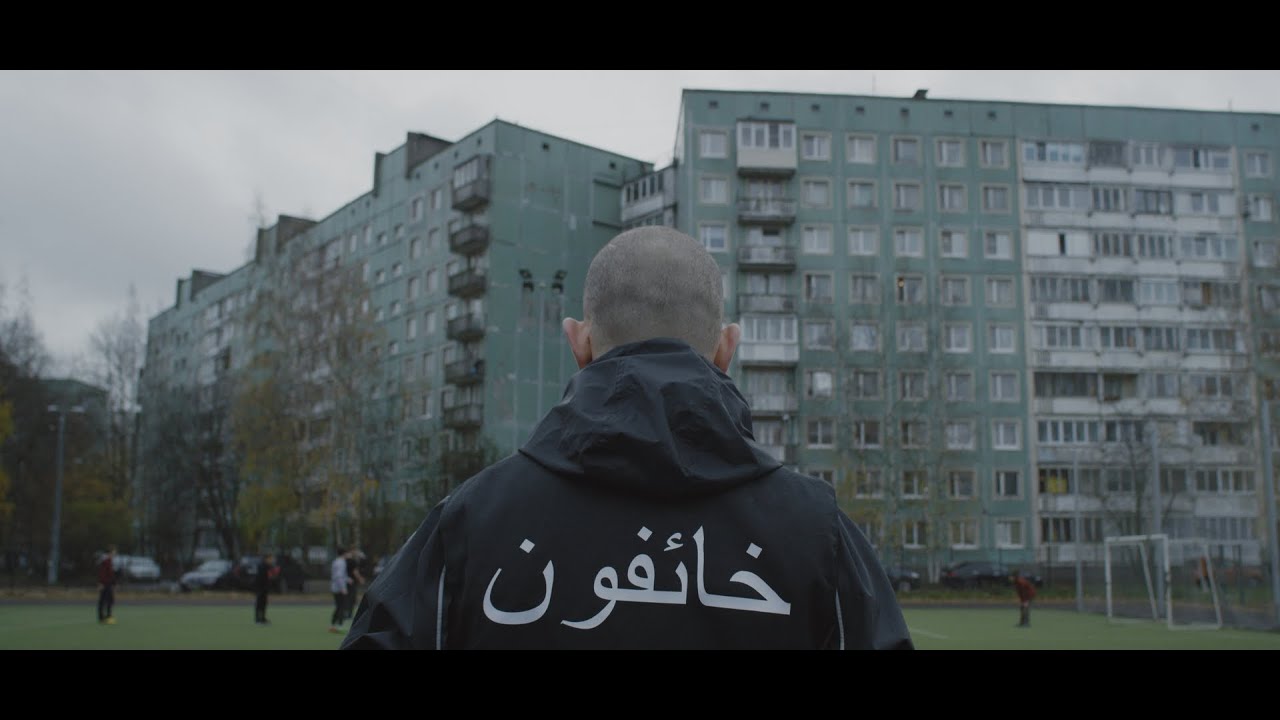
It’s my opinion that – as well as just getting on and making the music they like – many acts (as well as being sentimental for a previous time) also employ oblique but hyper-intelligent observations that are predominantly art-based, or deal with the mundanities and irrelevancies of everyday life and social mores. We can point to Spasibo’s super-positive odes to friendship and good times, Electroforez’s ironic takes on 90’s Russo-adventure capitalism, or ГШ / Glintshake’s brilliant wordplays around such subjects as gentrification or bad provincial design. Others move abroad and plug into the Russian diaspora to better express themselves, specifically in cities like Berlin. Then there is playing with metaphor and mystery to create a musical theatre of the absurd. Current masters of this are St. Petersburg’s Shortparis, who were reviewed recently on tQ (replete with stories of psychedelicized Lenin and their use of “White”, “Red” and “Black” information) and hark back to 80s trickster, Sergey Kuryokhin. Although their most recent video, ‘Страшно’ shows a darker, more satirical edge.
That’s not to say there isn’t freedom to get down. The 2018 edition of Moscow Music Week revealed a burning and effervescent scene; full of brilliant and intelligent people looking primarily to have a good time. And, what’s more, a scene with no discernable cock rock nonsense in sight. In fact, a long article is waiting to be written on the primary aspect of Russian women in alternative music; at club owner, booker, artist and promotional levels.
Sampler #6 Интурист (Inturist) – Много недовольных / ‘Lots of Annoyances’
Scratchy funk from the uncrowned king of the Pain Generation: the brilliantly witty solo project of ГШ / Glintshake and Interchain’s Jenya Gorbunov’s draws on Aksak Maboul, Russia’s formidable literary canon and modern glitch in equal measure.
Constructing An Alternative Internationale?
When it comes to knowing what’s going on, one cannot escape or deny the incredibly switched-on, omnivorous and inquisitive nature of Russia’s underground. People like to know what’s going on with their peers here. And a very notable dialogue has sprung up over the last decade; with an increasingly mobile youth scene, the industry in the “West” and what constitutes the artsier end of the current Russian diaspora. In fact those based outside Russia play a vital connecting and sometimes critical role. Many acts and organisations (simultaneously having feet in West and East) project, play with, or promote ideas of Russia to other places; such as Philipp Gorbachev, who has recently released the bruising release, Centrifuge One: New Dance Sound Of Moscow. Others lead by example and hard work. Kazan-born, Moscow-based Kate Shilonosova – aka Kate NV – is rapidly becoming the international figurehead for Russia’s creative scene through her multiple international projects. Then there are acts like Berlin-based Sado Opera; who combine overt sexuality and poppy theatrics. Many underground acts are slowly beginning to create their own networks; Moscow’s strident Mirrored Lips are a band who have strong links with the UK’s punk community and acts such as Crimson Butterfly and audio-visual artist Rosemary Loves A Blackberry, also plug into wider European underground music and avant-garde arts circuits.
rosemary loves a blackberry — electronic music is the new folk music from rosemary loves a blackberry on Vimeo.
The next article will deal with Moscow and investigate more tales of the Pain Generation, appropriating creative space and house-hunting, non-stop partying and what Dark Jazz actually is here… With thanks to Dmitriy, Lena, Dmitry, Tanya, Boris, Katya, Natasja, Serge, Stepan, Masha, Jenya, Anastasia, Michael, Ingrid, Alexei, Max, Diana, Alexander, Anton, Ekaterina and a host of others. Photos courtesy of Masha Kunina.
*Some great – if pretty obvious – music was made in this period. One example is the band Pucina – described to me as a Volgograd take on Happy Mondays. The track ‘My Imagination’, gloriously ends up sounding like a pumped up Screamadelica-style take on Enya’s ‘Orinoco Flow’…