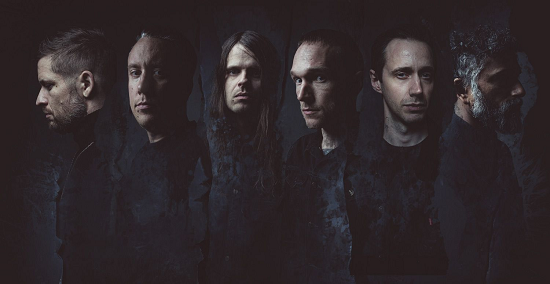
Cult Of Luna, photo by Chad Michael Ward
After the traditional January release drought, the floodgates have burst wide open this month for one of the most stacked Columnus Metallicus entries in some time. The big news this month, though, is that everyone’s favourite contemporary death metal band Blood Incantation have dipped their toes into ambient territory, with their new EP Timewave Zero embracing a sprawling, psychedelic direction that feels like a very organic and natural progression for the band. It’s not too surprising given the astral, space-faring tendencies of their previous records (not to mention the numerous ambient projects that guitarist Paul Riedl has delivered in the past), and extreme metal’s relationship with ambient music as a whole.
Whilst the two genres may at first seem diametrically opposed, they have more in common than you might think. They’re both styles of music fascinated by the physical force of sound itself, even if they explore this in very different ways. Not that there isn’t crossover, of course; think of drone metal acts like Earth and Sunn O)))’s potent form of power-ambient, a meditative yet abrasive style of music that shares Brian Eno’s ethos of accommodating “many levels of listening attention without enforcing one in particular” but is much, much more likely to give you tinnitus in the process.
The thought of metal musicians trying their hand at ambient music may conjure images of increasingly irrelevant old racist Varg Vikernes knocking out another hour of RPG mood music in his lunchbreak, but there are plenty of other examples. Hell, even Fenriz beat him to the punch. The Darkthrone drummer’s Neptune Towers project having released two excellent purely ambient, Tangerine Dream-inspired full-lengths – 1994’s Caravans To Empire Algol and 1995’s Transmissions From Empire Algol) – before Burzum’s Filosofem had flirted with more rudimentary ambient structures. Mortiis started even earlier still, leaving Emperor to pursue a more minimal, medieval style and quietly inventing dungeon synth back in 1993.
Ambient and black metal don’t seem like particularly strange bedfellows after all, with the lo-fi productions of the latter often taking on the more hypnotic qualities of the former anyway. Plenty of black metal acts have tried their hand at entirely ambient records, with Urfaust, Wolves In The Throne Room and Paysage d’Hiver being notable examples. Paysage d’Hiver’s Wintherr goes even further with his other band Darkspace, creating a seamless fusion of black metal and dark ambient that really highlights how well the genres can work in unison.
And it’s not just black metal that’s prone to it either; both of Nile mainman Karl Sanders’ solo albums (2004’s Saurian Meditations and 2009’s Saurian Exorcisms) find the death metal guitarist exploring Arabic folk music in a surprisingly tranquil ambient setting, and are well worth hunting down. ISIS frontman and post metal hero Aaron Turner’s band House Of Low Culture are a convincingly ominous dark ambient act too, with their 2003 opus Edward’s Lament being a particular highlight.
But back to the matter at hand; how does Timewave Zero measure up in all of this? Well, truthfully, it’s not the revelation that either of Blood Incantation’s previous albums were – this EP certainly isn’t going to have the same profound impact on ambient music that Starspawn and Hidden History Of The Human Race have had on death metal – but it’s by no means a failed effort. Much like Wolves In The Throne Room’s Celestite, it’s remarkable how strongly the band’s distinctive song-writing style still shines through when stripped down to this minimal, guitar-free state, and both the lengthy pieces here are satisfyingly structured, building to hypnotic climaxes delivered with Blood Incantation’s uniquely heady melodic phrasing.
‘Io’s foundations are sparse, fluctuating rumbles which unfold into a truly glorious, expansive drone. There’s a real warmth and vitality to the distant, spacey sounds here, which transition nicely into ‘Ea’s undulating, kosmische synth riffs, as they gradually open out, backed by serene, lucid swells of ambience into a blissful sonic freefall that sounds like whales communicating in deep space. Eventually the piece concludes with a gentle yet powerful riff played on absolutely gorgeous, celestial keys – it’s easy to imagine it played at full-bore in the band’s trademark style during a slow, doomy climax, but there’s an intimacy and understated beauty to it in its current form, proving there’s much more to Blood Incantation than simply top-tier death metal.
Immolation – Acts Of God
(Nuclear Blast)
This isn’t Columnus Ambienticus, however, so fear not, we’ve got some top-tier death metal for you this month too – and you don’t get much more top-tier than Immolation. It feels wrong to call their last album, 2017’s triumphant Atonement, a return to form, as the New Yorkers have been incredibly consistent for the last 30 years, but there was a vitality to that record that really helped it stand out against their last few. Evidently none of that album’s energy has worn off yet, as Acts Of God is just as vicious and immediate – although there’s an added darkness this time round, an unnerving and macabre vibe similar to records like 2005’s moody Harnessing Ruin. It’s interesting to note that whilst their peers Incantation and Suffocation both have numerous clone bands in this day and age, there’s still nobody who quite sounds like Immolation. Robert Vigna is still one of the most unique and inventive guitarists in death metal, and his warped, idiosyncratic riffing style is all over this album – just check out those twisted, ominous grooves and piercing, tortured solos on ‘An Act Of God’.
At just under an hour with thirteen songs and two interludes. Acts Of God feels much denser and more complex than Atonement whilst managing to avoid feeling bloated. A lot of that is down to the band’s uniquely weird melodic sensibility and subtly shifting rhythmic patterns. These aren’t exactly songs you can hum in the shower, but there’s a genuinely unnerving quality to the slimy, pitch black majesty of ‘Shed The Light’ that will bury it’s way deeply under your skin. Immolation make every second count here, and when they slow down the pace on sinister tracks like ‘Noose Of Thorns’, the effect is just as powerful and heart-stopping as it was when you first heard that lurching stagger on Here In After’s title track all those years ago. All told, this is just a great Immolation record, and should be just as invigorating for long-time fans as it is to newcomers. If you’re looking for death metal that’s as cerebral as it is dark, you simply can’t go wrong here.
Cult Of Luna – The Long Road North
(Metal Blade)
It feels like just the other day I was raving about how great A Dawn To Fear was, and that album really seems to have sparked a second wind creatively for this Swedish post-metal powerhouse. Arriving almost exactly a year after the stunning The Raging River EP, The Long Road North has a similarly weathered and intense feel, harnessing the crushing weight of their earlier work with the more emotional resonance of their softer mid-period material. Tracks like ‘The Silver Arc’ feel like classic Cult Of Luna, all driving, windswept riffs, throaty howls and overpowering density, but with even more nuance and texture amidst the mighty roar of guitars. ‘An Offering To The Wild’ kicks off with one of the band’s trademark lengthy build-ups, but there’s an even more organic feel to it here – not to mention how expressive and immediate the song’s lead guitars are, providing bona fide hooks rather than just interesting texture. The downtrodden ‘Into The Night’ is something of a departure, with frontman Johannes Persson adopting a reserved, Steve Von Till-esque drawl instead of his usual full-bodied bellow.
In the same spirit as The Raging River’s Mark Lanegan-featuring ‘Inside Of A Dream’, The Long Road North features two collaborative tracks that, similarly, feel like perfect matches for the band whilst also being tantalisingly short. Swedish song-writer Mariam Wallentin’s wounded, bluesy voice drifts delicately between gloomy drones and noir-esque piano on the Bohren & Der Club Of Gore aping ‘Beyond I’, whilst avant-jazz saxophonist Colin Stetson lends some particularly enveloping sax drones to ‘Beyond II’. Whilst pretty much all of the pioneering post-metal bands softened with age, Cult Of Luna have now found a sweet spot between the compelling physical force of their formative years and a much darker, more mature and subtle atmosphere. This was apparent on A Dawn To Fear too, but whilst that record balanced a lot more light with its darkness, The Long Road North is an even starker and bleaker affair. There’s still plenty of colour in the band’s expansive, cinematic sound, but this definitely feels like music for late nights, with a rain-flecked, hauntingly nocturnal atmosphere throughout.
The Body & OAA – Barren Of Joy
(Thrill Jockey)
Mere months after exploring an unexpectedly warm, folky sound on their collaboration with Big Brave, The Body have teamed up with LA techno producer OAA to dive straight back into bleaker, more abrasive territory. Although you can definitely feel OAA’s touch in the subtle electronic flourishes and pounding rhythmic workouts (check out ‘Hired Regard’ which manages to mutate The Body’s grizzled depth charge into a no-nonsense four-on-the-floor banger for almost a full minute before collapsing in on itself), Barren Of Joy certainly feels like a return to the more explosive, volatile sound of The Body at their best. Whilst last year’s standalone album I Have Seen All I Needed To See took their sound to some interesting new places, it felt a lot more muted and restrained than usual – Barren Of Joy, by contrast, is a far more visceral, direct and focussed record that feels like an even harsher, uglier cousin of their 2014 collaboration with The Haxan Cloak, I Shall Die Here. Both records transplant the pair’s harrowing sludge metal into a more electronic context, but Barren Of Joy feels even more upfront and aggressive, opting against the sparse, deeper textures of I Shall Die Here in favour of a much more rugged, aggressive and boisterous sound.
Perhaps it’s a struggle to call spiralling, nightmarish soundscapes like the excellently titled ‘Conspiracy Privilege’ dance-floor ready, but there’s a certain propulsive-ness that OAA brings to the table throughout this record that really helps it pack an extra wallop. The martial thud of ‘Miserable Freedom’ binds leaden distorted riffs to a rigid, infectious beat, whilst ‘Fortified Tower’ achieves similar results with skeletal, frail chords and an even more skittish rhythm – and the way OAA stretches Chip King’s inimitable high-pitched shriek into a vast, delay drenched pad during opener ‘Devalued’ has to be heard to be believed. I feel like I end up hurling superlatives at this band every other month in this column, but this is genuinely yet another fantastic step-forward for them, continuing to blur the lines between doom metal, noise and the harshest forms of electronica.
Author & Punisher – Krüller
(Relapse)
Whilst The Body continue to push their electronic side even further into the abyss, Tristan Shone’s Author & Punisher seems to have embraced a more melodic, human feel on his ninth full-length (and second for Relapse). That tension between man and machine has always been a focal point of Shone’s work (especially his extraordinary live show, as he literally grapples with his own homemade machinery to produce all manner of gut-quaking industrial noise), but Krüller feels much more accessible and emotive than previous records, eschewing much of that cold, mechanical dissonance in favour of a warmer, more organic atmosphere. Oddly beautiful opener ‘Drones Carrying Dread’ is a great example, with the luscious guitar drones and Shone’s sullen, vulnerable croon recalling the shoegaze-inflected doom of bands like Low Flying Hawks more than anything else in the industrial metal canon. The dream-like ‘Maiden Star’ leans even further into this direction, with shimmering, ethereal textures bolstered by those distinctive bass swells that could only come from Shone’s bizarre apparatus.
There’s still plenty of the project’s abrasive metallic clank in tracks like the grinding ‘Incinerator’ which is like spinning a Ministry record at half speed, or the frantic Venetian Snares-esque bleep-fest that is ‘Blacksmith’, but even here that melodic sensibility manages to shine through. It helps that Shone’s clean vocals have really improved, especially on the ambitious, sincerely haunting cover of Portishead’s ‘Glorybox’, which successfully transforms the song into a darkly bombastic Tool style alt-metal epic. Speaking of Tool, in fact, their rhythm section even make an appearance elsewhere, albeit not at the same time; Justin Chancellor’s pulsating bass lines add a lot to the squirming, dramatic ‘Centurion’, whilst Danny Carey’s intricate, stuttering beats fit in perfectly next to ‘Misery’s martial stomp and churning, overdriven guitars.
Venom Prison – Erebos
(Century Media)
Venom Prison’s decision to re-record their first two EPs for 2020’s Primeval may have come out of left-field at the time, but in hindsight it makes perfect sense that they’d want to round off and draw a line under their first chapter, as third album proper Erebos signals the start of a whole new era for the band. The hardcore indebted death metal sound of their early work hasn’t disappeared, but has matured into a more streamlined, melodic beast, with vocalist Larissa Stupar utilising cleanly sung vocals in addition to her usual caustic roar. This could have gone horribly wrong – the old ‘good cop/bad cop’ dynamic is beyond played out in contemporary metalcore, with the predictable harsh verse/clean chorus routine having been a cliché for years at this point – but she uses her voice more imaginatively and effectively than many of her peers. Songs like ‘Judges Of The Underworld’ and ‘Castigated In Steel And Concrete’ use clean vocals sparingly, in a similar manner to newer Napalm Death tracks like ‘The Wolf I Feed’ – but ‘Pain Of Oizys’ is easily the most striking example, with Stupar’s husky singing voice soaring atop gloomy, gothic chords before building to a driving, metallic chug. Just as the song reaches boiling point and feels like it’s going to burst into the one of the band’s trademark breakdowns, the rug is thoroughly yanked from under your feet as it cuts to a sparse, cold ambience, beautifully punctuated by bright, twinkling piano flourishes. It’s an entirely unexpected direction for the band, but one that completely suits them.
Elsewhere, Erebos still delivers enough of the feral mosh fodder that the band made their name on – just check out those blistering blasts and gleefully I.Q. dropping breakdowns in ‘Golden Apples Of The Hesperides’. The taut bounce of tracks like ‘Nemesis’ is very reminiscent of that early 2000s wave of metalcore bands like Shadows Fall, Darkest Hour and God Forbid, but with a slightly harder edge that belies Venom Prison’s UK hardcore upbringings. There’s more than a hint of Heartwork era Carcass in the pristine, soaring guitar harmonies, sizzling solos and melodic crunch of songs like ‘Comfort Of Complicity’ and ‘Gorgon Sisters’ too, really demonstrating how much guitarists Ash Gray and Ben Thomas have upped their game. Much like Heartwork, Erebos is probably going to be divisive – but whilst some will certainly miss the rougher, more straight-forward death metal of their early days, this new approach is so compelling and well-realised here that it’s hard to argue with it. Venom Prison have already gracefully made the transition from dingy DIY venues to festival main stages, but this album is likely to bring them to an even bigger audience still – and given the amount of fresh ideas here, it’ll be entirely deserved.
Zeal & Ardor – Zeal & Ardor
(MKVA)
Speaking of fresh ideas, watching Manuel Gagneux’s Zeal & Ardor grow from a 4chan dare into a fully-fledged touring band has been a joy – although given how innovative and revelatory his fusion of black metal and African American spirituals was on 2016’s extraordinary break-through Devil Is Fine, it’s slightly disappointing that the band have gradually settled into a more straight-forward direction more akin to modern blues rock than that EP’s boundary pushing blend of disparate genres. This self-titled effort follows in the footsteps of 2018’s Stranger Fruit, with the black metal influence drifting even further away – not that that’s intrinsically a bad thing, of course. Gagneux’s song-writing is as sharp and catchy as ever, the likes of ‘Golden Liar’, ‘Bow’ and the driving ‘Church Burns’ are beautiful, heart-felt slices of gritty urban blues, and there’s no reason Zeal & Ardor should be confined by its original mission statement – especially when some of the more metallic tracks here (like ‘Feed The Machine’ which awkwardly snaps between juddering riffing and a chorus that sounds uncannily like Flo Rida’s ‘Low’) aren’t as compelling as older cuts like, say, ‘Blood In The River’. But there’s such a primal thrill to tracks like the soaring ‘Emersion’, which juxtaposes moments of searing, blast-powered tremolo with sun-kissed trip-hop, or the jazzy noise rock of ‘J-M-B’ that it feels like there’s so much more the band could be exploring within its distinctive sound.
Despite the self-titled moniker implying this is the most well-realised Zeal & Ardor record yet, it feels like the band is spinning its wheels slightly here. Many of these tracks still feel like rough ideas or sketches that have yet to be fully fleshed out; and sure, you could say the same for Devil Is Fine, but that’s literally what they were in that case. That said, when Zeal And Ardor are firing on all cylinders, there’s still nothing else that sounds quite like this. Gagneux’s vocals are as commanding, powerful and thrilling as ever, and there are some fantastic moments here that really show the potential of where Zeal & Ardor’s sound could go in the future – but for the first time, this album seems to find Gagneux struggling to know which direction to pull the band in, lacking either the dazzling originality of Devil Is Fine or the intense focus and visceral passion of 2020’s powerful Wake Of A Nation EP. It’s still fascinating hearing him figure this all out in real time and Zeal & Ardor is still a enthralling record, but it’s not quite the grandiose, polished mission statement it perhaps could have been.
Shape Of Despair – Return To The Void
(Season Of Mist)
After releasing a trilogy of great albums in the early 2000s, Shape Of Despair’s 2015 comeback album Monotony Fields was not only a huge leap forward for the band, but a landmark release for funeral doom itself, representing one of the genre’s most powerful and affecting records of the 2010s. Seven years later, the Finnish sextet is finally ready to unveil its follow-up, and it does not disappoint in the slightest. The band’s keen sense of melody feels stronger than ever here and each of these six songs is distinct and memorable in its own right, whilst contributing to a greater whole that makes for an absolutely devastating listen. Natalie Koskinen’s haunting vocals feel even more intrinsically woven into these songs too, with her ethereal, wounded voice contrasting brilliantly with Henri Koivula’s guttural roar, especially on tracks like ‘Dissolution’ and ‘Reflection In Slow Time’ as her forlorn tones fall gracefully atop elegant lead guitar lines and planet-quakingly heavy bass. Her voice is the perfect fit for the atmosphere here, providing a more vulnerable and emotive hook than the traditional death growl without being too flashy or overwrought enough to detract from the genre’s stoic, barren vibe. Hearing her in harmony with Henri’s clean chants on ‘Solitary Downfall’ is just heart-breaking, the song’s glacial pace and booming, seismic snare echoes really emphasising the palpable sadness in their voices.
Monotony Fields was always going to be a hard album to top, but Return To The Void is an admirable follow-up, managing to be more accessible and immediate without sacrificing any of that album’s grandiose, depressive power. Despite the title, there’s a curious warmth and faint, fleeting feeling of optimism hidden beneath this album’s luxurious churn that arguably make it a more nuanced and complex experience than its predecessor. Shape Of Despair perhaps realised they’d have a hard time outdoing Monotony Fields in terms of sheer overwhelming bleakness, and there’s a more sentimental, aching longing at the heart of this one that not only distinguishes it from that album, but marks it out as one of the most compelling funeral doom records of recent years. Draw your curtains, light your candles and grab your tissues; they’ve done it again!
Human Cull – To Weep For Unconquered Worlds
(7 Degrees Records)
If you’re looking for something less soul-crushingly slow, however, then here’s the fastest record you’ll hear this month. Bristol grindcore trio Human Cull have reliably dropped a new album every four years since releasing their debut Stillborn Nation in 2014, but To Weep For Unconquered Worlds feels like a big step forward from the more straight-forward Nasum worship of that record. Not that there’s anything wrong with Nasum worship, of course, especially when it’s done that well, but there’s a healthy dose of skronky Gorguts-esque death metal here that really elevates this album’s intensity. The opening title track makes this abundantly clear, with its frantic, spiralling riffs, intense blastbeats and that huge, juicy groove that bursts out of nowhere in the middle of the song, punctuated by discordant, jangly guitar sweeps. The 55 second long ‘The Horror’, meanwhile, feels almost like a dissonant, sinister Portal epic condensed right down into a supremely effective bite-sized assault.
There’s even a hint of Steve Tucker era Morbid Angel in the pulverising grandeur of tracks like ‘Unmaker’ and ‘Pyredancer’, with guitarist Edd Robinson’s deep, resonant vocals sounding more guttural and commanding than ever. The deathlier riffing style never comes at the expense of the band’s economic grindcore approach however; ‘Pyredancer’s is the longest track here and still doesn’t even break the two minute barrier. There’s still plenty of no-nonsense grinding on this record (that deliriously crusty stomp that opens ‘Time Of Ending’ is the kind of riff that’d get an Obscene Extreme circle pit going before anyone had even cracked open their first beer of the day), but the added intricacy and atmosphere that Human Cull manage to bring to the table here make this their tightest, strongest and most vicious release yet.