

Talking with James Murphy in 2007, the LCD frontman spoke about how he disliked what he called “the Mystery of Rock” – meaning, the kind of obtuse lyrics that sound good but don’t necessarily mean anything; a cheap way to hint at Bigger Things. Murphy liked specificity and precision. I asked him why he thought ‘All My Friends’ had resonated so strongly with people that year. He said, with a shrug, “It’s sad-ish, and people are old,” and we laughed.
Ten years later, all of us, Murphy included, are older. Are we sadder, too? The stakes, certainly, get higher. The knowledge that loss has to co-exist with love becomes apparent, not least because you start losing things, and people. The trouble with dismissing the mystery of rock is that love and death – the two inevitable parts of being human – are mysterious.
By 2016, it seemed like the great rock stars were dying in their droves. What might this have meant to Murphy? He was newly married with a baby, doing what he described as “fun, dumb stuff” (opening a winebar, creating a signature coffee), having retired LCD Soundsystem, and working for the first time with David Bowie – whom we can only guess is the inspiration behind the line “You fell between a friend and a father” on this new record.
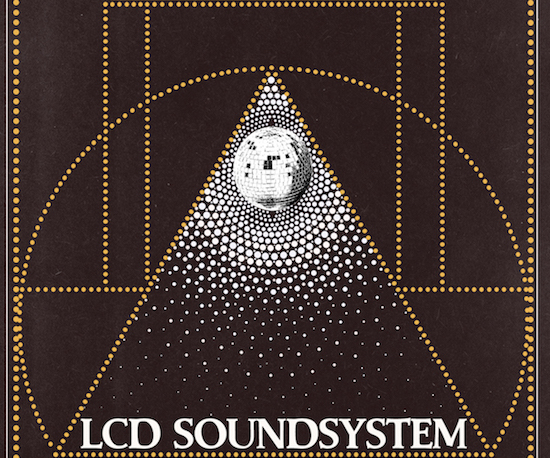
American Dream, at times, feels like a portal into Murphy’s world. It is profound, affecting, weird, elegant and awkward. It is sad, euphoric and, in places, mysterious. What’s so appealing about this fourth LCD album is that it feels unconcerned with who it is or isn’t appealing to. Murphy recently wrote on his blog of feeling the need to make a record that’s “better than anything we’ve done before” as a way of making things up to fans who feel cheated by the band’s resurrection. But ‘better’ here feels more like honest, rather than crowd-pleasing.
This is Murphy’s most overtly post-punk record to date. There’s tons to dance to – the beats are still crisper than a coozy-cold beer on a very hot day, the basslines creep, shimmy and strut – but there’s a sparseness and a cavernous-ness that suggest such bleak outings as The Cure’s Faith, Pere Ubu’s Dub Housing and even the industrial new-wave attack of Kanye’s Yeezus.
‘How Do You Sleep?’ is the album’s moody centrepiece, backing Murphy’s echoing, recriminatory shouts with barebones beats until a massive, synth bass kicks in and the track soars into a goosebump-inducing climax. It’s already been supposed that the song is addressed to former DFA BFF Tim Goldsworthy, and while the lyrics are angry, they’re also amusing in places: “Standing on the shore getting old,” howls Murphy, “You left me here with the vape clowns.”
American Dream is a funny album but it doesn’t feel snooty or self-satisfied. Clever and self-deprecating, yes, but there’s a warmth here, too. ‘Tonite’ is the album’s obvious hit, a delicious and tightly focussed disco outing that serves as a kind of LCD pop manifesto. Murphy’s complaints are legit: “Everybody’s singing the same song,” he supposes, “It’s ruling the airwaves – or what remains of the airwaves”. But ‘Tonite’ is playful, too; when Murphy grumbles of the “bullying children of the fabulous raffling off limited-edition shoes”, there’s a whimsy in his voice that makes you laugh, and by the end of the track he supposes wearily, “I sound like my mom.”
Actually, on songs like ‘I Used To’, Murphy sounds more like NYC misanthrope Stephin Merritt, rattling off such piquant, crisp couplets as “I used to dance alone of my own volition / I used to wait all night for the rock transmission.” The careening, bassy ‘Call The Police’ combines Eno/’St Elmo’s Fire’-guitars with a pleasing rock ferocity that recalls Secret Machines’ ‘Nowhere Again’ (down to the line “This is nowhere”), but maybe that’s just what happens when everyone in NYC is listening to Eno and Bowie.
It is Bowie who gets the last word on American Dream. Murphy worked with his idol on Blackstar, but has spoken of his discomfort and anxiety at being in the studio. Accordingly, the last song on this album bows its head humbly and without sententiousness. A pulsing tone – like a computer’s sleep light – opens ‘Black Screen’, gently followed by a quiet, ricocheting beat and a wobbly synth melody. On the album as a whole, Murphy’s voice sounds more open and less affected than ever before. Here, he is quiet and robotic. “Couldn’t make our wedding day,” he sings, “Too sick to travel.” The song is beautiful because it is imprecise, a sorting-through of feelings and wonderings: “I owe you dinner, man,” he starts, then, “I owe you something.” It is dreadfully tender. Murphy sings of sifting through old emails, and of one in correspondence in particular: with a crumpling realness, he sings, “Your quick reply / Made me high.” It is deeply understated, fading to an exploratory, simple piano coda, offering infinite spaciousness.
If death gets the last word, though, love gets the first. On album opener ‘Oh Baby’, tiny metallic sounds – like delicate miniature jackhammers – give way to electronic arpeggios; then that big, thick LCD bass sound and echoing, Ultravox-style drums; finally, Murphy’s voice, the softest it’s ever been. Lights-out intimate, this is a straight-up love song, with gleaming synths offering moments of luminosity in the dreaming dark. “Oh baby, have you been having bad dreams here in my arms?” Love sets the tone.
American Dream is shot through with fear and uncertainty, yet in many ways it’s Murphy’s most full-blooded, vital statement to date. Strident, clever and brilliant is one thing, but it takes real, hard-won confidence to be this vulnerable.