

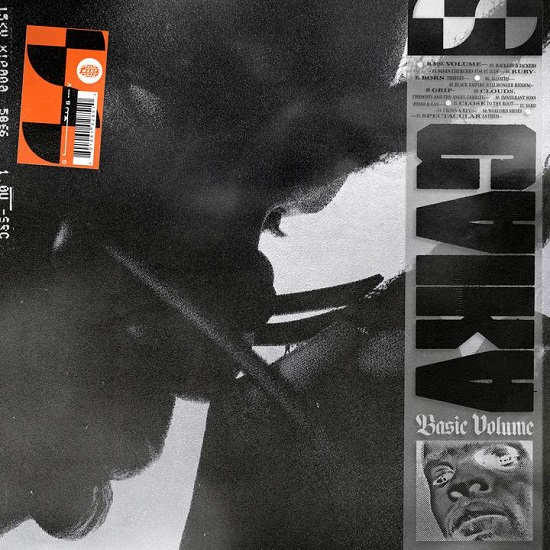

Displacement. It’s an uneasy word that carries a lot of meanings: scientific, geographic, political, personal. And while the far-right rises, while Brexit judders out amidst our strange crisis of post-colonial British identity, while places like Yarl’s Wood exist and the hangovers from the Windrush scandal and Grenfell inconveniently linger, it’s so easy to look around at the changing furniture and wonder: is this still my home? Was it ever?
That insidious moving of our societal and political staples is only part of displacement, of course: for those who are marginalized or minorities; for immigrants or those who are somehow “othered”, things have always felt displaced. It’s an everyday reality, and we try to get a sense of comfort in reaching to the familiar when craving that absent – perhaps impossible – concept of a welcoming home. The food from our home countries, an incense that makes you feel a certain way, that song your mum always played when you were a kid.
That’s universally true in our personal lives too, though; when something shifts, unexpectedly – the aching end of a relationship, the jarring loss of a family member – it’s innately human to reach into our pasts for the comfort blanket of nostalgia, or the familiar rituals and belief systems we were raised with that so many coping mechanisms are rooted in.
And so we come to the debut album from South Londoner Gaika Tavares, aka Gaika. Displacement is a word that – in all its guises – runs crucially through the searing Basic Volume. Gaika is of Jamaican and Grenadian descent, and that narrative of being from an immigrant family, and of being a young black man in a place that simultaneously fears him while telling him he should be grateful to be there, shapes the album. “She said we’re born thieves and savages,” he relates at one point.
In a way, it’s an album about “taking back control” – but rather than being about sovereignty, this is taking back control for us. Indeed, lyrically it teems with references to seizing hold of the narrative, calling the marginalised to arms – “every ghetto youth must take back him crown / just ride if you’re down, this fight is right now”, and, “I wanna see you in rebellion”.
Of course, it’s something that all of Gaika’s work has dealt with in some shape or form – be it his harrowing essays as political editor-at-large for Dazed that teem with the raw dystopian reality of contemporary UK life; his Armour In Heaven fashion collaboration with MA Menikmati that saw garms intended for a fictional biker gang after the fall of civilization; and, obviously, his previous mixtapes and EP (the lines “this is my city and these are my streets” from ‘3D’ felt particularly powerful at a point when anti-immigrant narrative has been so strong).
But while his album undoubtedly builds on that angry contemporary dystopia narrative, with politically-charged rap blazing commandingly over his trademark infusions of dark, sex-fuelled dancehall, smoky R&B and so-industrial-you-can-hear-the-cogs-whirring electronics, Basic Volume feels more personal than before. Its title comes from the former name of his late father’s material sciences company, and – quietly – this is an album that deals with the displacing nature of grief, too.
It’s in the way there are choral chants and a piercing biblical sermon on ‘Seven Churches For St. Jude’, or the way he refrains “I’ll see you in the next life” over the skittering beat of ‘Ruby’. There’s an almost magic realism to tracks like ‘Clouds Chemists And The Angel Gabriel’, the dubby swirl of ‘36 Oaths’, and the glimmering ‘Spectacular Anthem’, but it’s the way that the album as a whole references belief systems – memories of religion and science – and the way that these inherently ritualistic things serve as a kind of remedy to that jarring loss.
As much as those rituals, though, there’s the nostalgia of black music and the ritualistic nature of the club that’s so apparent throughout. Gaika channels dancehall and distorted rap in a way that nods to his heritage, sure, but also as a means of giving a sense of comforting familiarity in this unwelcoming place – you can hear personal histories of teen years grinding to throbbing bashment on tracks like ‘Black Empire (Killmonger Riddim)’.
Suffice it to say, there’s a lot to unpack here, and Basic Volume is an album that counters the assumption that music that bangs and swelters intoxicatingly can’t have meaning. It also counters pop culture’s somewhat cynical current obsession with marketable #wokeness by very rawly, very sincerely having something necessary to say. And it’s all the better for doing this over exquisite, propulsive production (pretty much any record that lists SOPHIE and Jam City among its producers is obviously going to be breathtaking in this regard).
Gaika might open the album by describing being “naked and black in a white man’s world”, but by the end of Basic Volume it’s hard not to feel galvanised. This is a vital debut that captures a dark, uncertain time, but counters displacement – in all its forms – with grace, nerve, and a spine-tingling call to arms, and perhaps just as importantly, a call to dance.