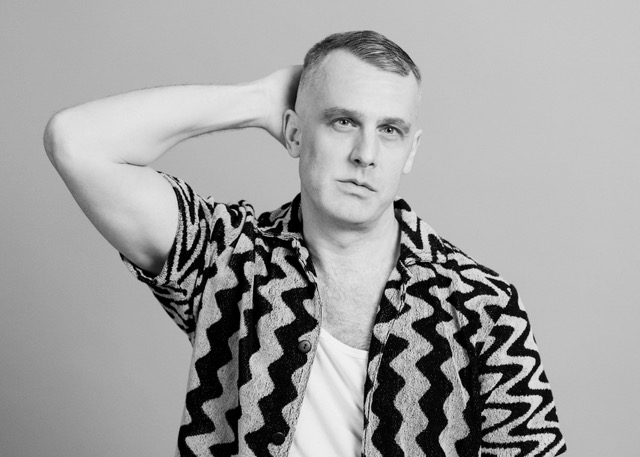
The best description of The Hidden Cameras might just be from a leather jacketed fan, vox popped after one of their shows in 2002. You see him in Music Is My Boyfriend, the 2023 documentary about the early days of the beloved Toronto music collective. “Oh they’re great!”, he gushes, eyes widening. “They’re like Peter, Paul and Mary . . . and Mary . . . and Mary and Mary and Mary and Mary and Mary!”
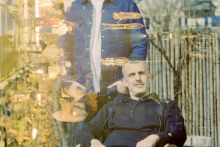
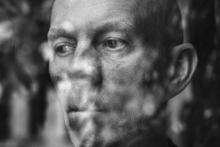
The ‘gay church folk’ project began back in 2001 when Canadian singer-songwriter Joel Gibb wrote Ecce Homo, The Hidden Cameras’ first album. He gathered up a group of musicians, singers and go go dancers to perform his lush queer pop live. Sometimes two dozen bodies – wearing only tight white pants and balaclavas or gold sequin bikinis, playing harps, plinking xylophones, strumming guitars – would sway and writhe around Gibb. Backed by a choir, soaked in soft string music, the Hidden Cameras became legendary for their eccentric, transcendent shows in churches, parks, art galleries, porn cinemas. Members of the audience – their congregation – would be wrapped in ribbons, invited into the loosey-goosey, loved-up throng. The fluid troupe of musicians has ebbed and flowed in the almost quarter-century since, but Gibb is always the centre of gravity.
What made Gibb’s original concoction especially beguiling was his mix of the sacred and the profane, singing about the Bible and thirsty, fumbling bodies, blurring church organ and tambourine with warm, jangly songs about hard ons and the garden of Eden, calling his listeners to ‘Ban Marriage’ or ‘Steal All You Can Motherfucker’. There was wit and wisdom in his marrying together of the holy and homoerotic.
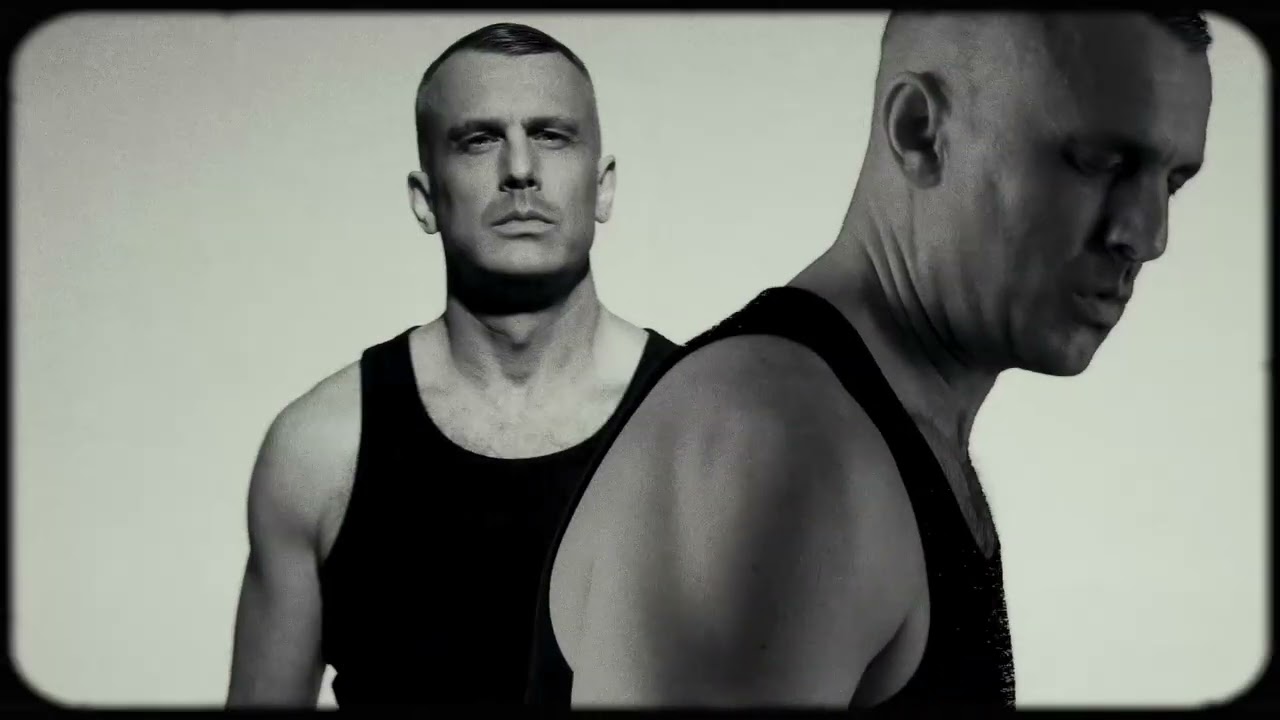
The church was and still is a huge influence on The Hidden Cameras sound – containing something choral, comforting, community building and sheltering. Gibb’s parents were Christian Baptist missionaries, he attended Sunday school every week, and this music project he began travelling with in his early twenties was always his own type of joyful, subversive evangelism.
Where better place for the latest album to find itself then, than in a nightclub, another place of refuge, of belonging, somewhere to reach for higher ground – and a well-known heartland of the gay resistance. BRONTO continues Gibb’s exploration of gay love, this time pumping in dry ice and throbbing beats, shifting his focus to Berlin, his adopted home for more than fifteen years.
It’s glorious; the already heavenly, soft vocal of Gibb – falling somewhere between Michael Stipe, Elliott Smith and ANOHNI – gets beefed up with production help from electronic pop royalty, Pet Shop Boys and Vince Clarke. This is an album full of poignant disco bangers, very different from the early stuff, yet a throughline can easily be found. Gibb is a veteran tugger of heartstrings (amongst other things, he might add) and finds new ways to hit bittersweet spots while shifting the action onto the dancefloor. Album opener ‘How Do You Love?’ is a pained lament with no-nonsense beats for handkerchief-coded arses to shake to. A yearning, unrequited love song with silky violin from original Hidden Cameras violin player Owen Pallett (another very influential Canadian), it pines, “Why do you do that? When you say you don’t want me. Confused by that. You’re gone but you don’t leave. How can you say that you’re over me?”
It’s a lovesick plea, wrapped in an invitation to liberate desire and unsuppress emotions, tied up with strings. “When will you agree to take a chance with me? How will you be free if you don’t release? … How will you know if you don’t lose control?”
‘Undertow’ blends harmonious, near-celestial vocals with tough 80s synthpop drums and quietly crushing lines like, “So you’re going back to him, and just like that you’re a different man.” Crisp choirboy voices soar above delicious machine beats, and shrill, far off screeches (seagull samples, it turns out) collide with what sounds like the swoosh of a laser.
Things go darker and bassier for ‘Quantify’, a thumping house anthem with insistent pianos, then the BPM lowers for ‘I Want You’, heavy breathing giving way to pleasurable gasps as Gibb sings about feeling powerless and freeing the body from the mind.
Camp as a string of fairy lights and brimming with euphoria on its chorus, ‘You Can Call’ is described on the promo blurb as Gibb’s unofficial application to the Eurovision Song Contest, and I for one, am giving it douze points. “Come on daddy, sugar baby, just give a sign,” he sings like a turned on Jesus to his lost lamb lover who is “tongue tied, terrified” after being abused and criticised. “When you’re ready, nothing crazy, same as last time. You can call me up in the middle of the night. You know that it’s gonna be alright,” he preaches, and we believe him.
‘Brontosaurus Law’ is another high point, in the vein of Hercules and Love Affair; ‘bronto’ is Greek for thunder and we hear the roar of a dinosaur as the track cranks into life, apparently Gibb’s joke about those particular giant lizards having thick phallic necks.

‘Wie Wild’ throws in some bendy spaghetti western flourishes. Out of the Morricone heat haze, over halfway through the track, a voice emerges, reminding us of the gospel according to Gibb. “And we find that we’re better when wiser. And we fly so much better when we’re wilder.”
Gibb knows how to make his gay activism easy to swallow. He knows how to write pop that aches and sweats. In Bronto, he finds ecstasy in the ongoing search for the happy clappy feelings he first witnessed as a kid, then later as a performer, in church, on stage, now in a club.