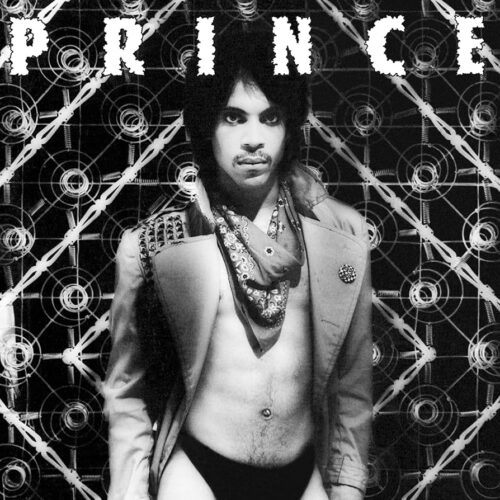

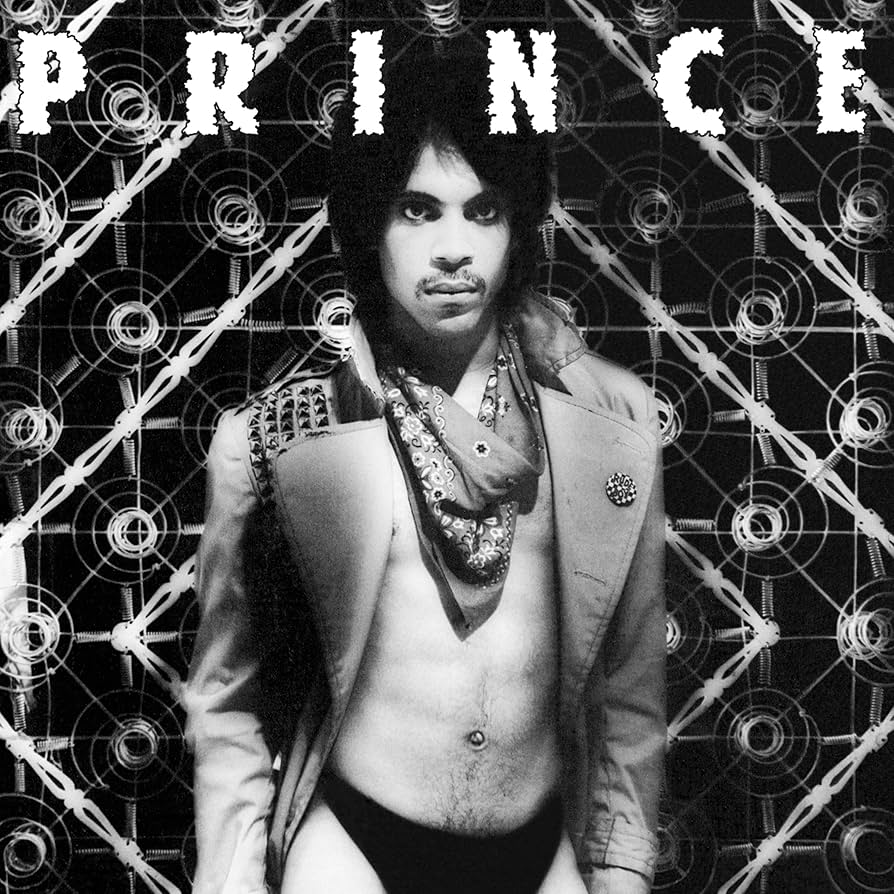
Forty-five years ago this month, Prince Rogers Nelson released his third album Dirty Mind. It was his first truly great album, and marked him out as a genre-striding, game changer. In a shade under 31 minutes, it fused rock, funk, soul and even punk. This was the sound of an artist deciding he could be everything he wanted to be – a short, sharp rocket up the arse of pre-MTV America.
Prince may be tiny, but he had huge balls back in 1980. Dirty Mind was the point at which he embraced rock music, and combined the power of image and controversy to make a huge artistic and political statement. Even now, with withering cynicism as our guide, the idea of a Black man playing punk songs about incest, dressed in nothing but stockings and his underpants would warrant a smidgeon of attention.
That Prince’s music has been beyond poor for so long makes the four decades since Dirty Mind feel like a different geological stratum. And therein lies the problem when contextualising Prince’s back catalogue. Do you cherry-pick his 80s output as a period undoubted genius? Or write him off as someone whose best work has long since fallen into the rose-tinted analysis of Anniversary articles.
To understand how magical the 1980 version of Prince was, it’s perhaps pertinent to map out his later implosion. In April 1987, Prince released his magnum opus, the double album Sign ‘O The Times to hyper-salivating fans and critics. All was good in Paisley Park. There were even rumours of another album release within months. But, at some point during the autumn of 1987, Prince had an ‘awakening’. He re-affirmed his commitment to God and renounced the evil that was the funktastic, and mysterious, Black Album. After an incredible period of creative output – including the albums 1999, Purple Rain and Parade – Prince would rebirth himself on 1988’s (good but not great) Lovesexy, before plummeting into (artistic) oblivion. Two years later he released the execrable Graffiti Bridge; two decades later he’s giving away his tat free with the Mail on Sunday. Never has someone with such a visionary talent fallen so far. Bob Dylan managed to extricate himself from his religious vacuum of the 70s. Even Madonna has knocked out a couple half-decent tunes in recent decades.
Being a huge Prince fan during my teenage years, his demise seemed like a painful act of treachery. The anniversary of Dirty Mind perhaps permits some brief relief. Like many UK-based Prince fans, I found his music in 1984 when Purple Rain ruled the planet. And like any self-respecting obsessive adolescent, the back catalogue was quickly acquired, through some expensive US imports. Dirty Mind stood out immediately. The cover in itself was a work of wonder: black and white, with Prince eyeballing the camera, dressed in tiny black briefs and a dirty mac.
Prince’s previous two albums were interesting more than anything else. His debut, For You is musically unmemorable, but gives first sight of the prodigious tag line of ‘Written, performed, arranged and produced by Prince’. A second, eponymous album would feature his first hit – ‘I Wanna Be Your Lover’ – and his original version of Chaka Khan’s global smash, ‘I Feel For You’. The album’s production was slick, and its success ensured Prince was up and running.
Dirty Mind felt different though. By now Prince had built a rudimentary recording studio in his house, and many of the final tracks are essentially demos and early recordings. The production was raw and the starkness at odds to the previous polish. The opening title track features Prince’s falsetto scream over a new wave beat; Minneapolis funk had met with post-punk.
And all notions of Prince being merely a precocious disco diva had been shattered by track two. ‘When You Were Mine’ is his first great rock song. In fact – and please pardon a moment of bombast – it is one the great, underrated, American rock songs. Over frantic guitars and Dr Fink’s squidgy keyboards, Prince flails at an unfaithful lover who “didn’t have the decency to change the sheets,” before admitting “I love you more than I did/ when you were mine.” It’s a breathtaking song; the veneer of libido is suddenly obliterated and Prince’s heart is on the line. It’s also one of his most covered songs, with everyone from Cyndi Lauper to Casiotone For The Painfully Alone bashing out versions with varying degrees of success.
However, lyrically ‘When You Were Mine’ is an outlier – it is Prince’s obsession with sex that is in the spotlight on Dirty Mind. The sleazy cover art suggests that Prince fully understood the power of shock value and the album contains two of his most infamous songs. ‘Head’ outlines the shameless seduction of a bride-to-be with the promise of oral delights, over a sweating, squelching synth hook. It’s a cracker of a track, and would become the sort of song that would almost single-handedly provoke Tipper Gore into a PMRC fury.
But ‘Head’ is a W.I. tea party compared to the quite astonishing ‘Sister’. Clocking in at 90 seconds, Prince’s most furious punk song leaves nothing to interpretation – “My sister never made love to anyone else but me/ She showed me where it’s supposed to go/ And that a blow job doesn’t mean blow/ Incest is everything it’s said to be”. Of course, it’s a huge piss-take – back then Prince was adept at not taking himself too seriously – and gained the album instant notoriety as rock critics pounced on the sheer gall of the man.
By 1984, Dirty Mind had amassed sales of 500,000 in the US; small-fry compared to the global success of Purple Rain. But Dirty Mind remains a pivotal moment in Prince’s career, which saw him pushing his music into endless territories. The seeds for the magnificent 1987 track ‘If I Was Your Girlfriend’ were sewn with the gender-bending couplet of “Oh girl, when you were mine/ I used to let you wear all my clothes” from ‘When You Were Mine’; the song’s dynamic would form the blueprint for tracks like ‘Little Red Corvette’ and ‘Paisley Park’. The feel of the minimalistic ballad ‘Gotta Broken Heart Again’ would appear throughout 1986’s Parade album, while the impact of ‘Head’ and ‘Sister’ would become standard practice as Prince’s libido went into superstar overdrive. He would follow Dirty Mind with 1981’s solid consolidation Controversy, before achieving worldwide lift-off with 1999 the year after.
I often think about a world in which Prince didn’t lose his musical mojo in 1988, and the last thirty years does contain moments of his magical foresight. Maybe he would have heard Kid A and entered a musical arms race with Radiohead, like Lennon and McCartney did with Wilson. There could have been an Appalachian folk album, or a twinkling Americana period. He could have teamed up with Jack White to rip out some raw blues or dragged hip hop into new territories. But he didn’t and he won’t.
Dirty Mind is a reminder that once upon a time, Prince saw music as a boundless, constraint-free orgy of creativity. Its final track ‘Partyup’ is a good-time freak out jam, with Prince extolling the merits of “revolutionary rock & roll”. Hold tight to the memory.