

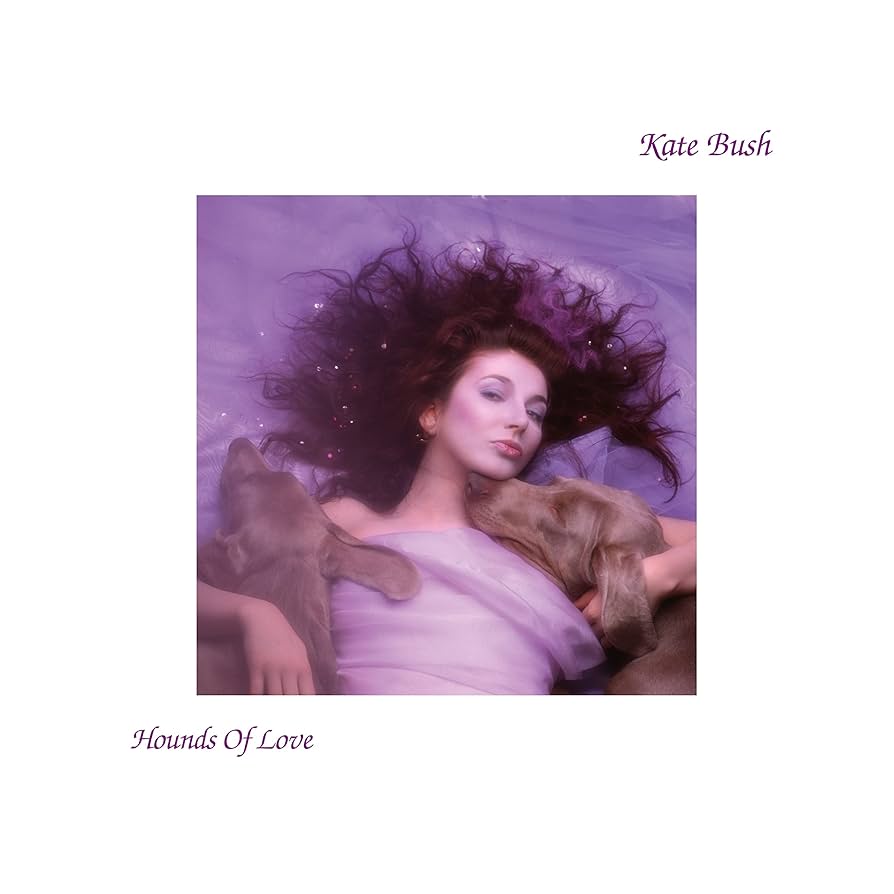
Nostalgia, changing production values and Stranger Things have made Kate Bush’s ‘Running Up That Hill’ seem like just another 80s pop track. Yet back in 1985, despite its booming Linn drums and space-sucking synthesiser, the song seemed entirely unique, unbounded and unfettered. Far from representing corporate capitulation in an era of sonic conformism, Bush’s adoption of 80s production techniques just gave her new tools in her quest to expand pop’s parameters. ‘Running Up That Hill’ pleads for openness to the other in an age of self, expresses wonder at a time of pragmatism, and invokes the uncanny in an era of realism. Towards the track’s end, a witches’ mass of backwards-surging Bushes makes that wonder visceral and the uncanny tangible. The album that followed, Hounds Of Love was literally an 80s pop album, in that it contained four chart hits (‘Running’, ‘Cloudbusting’, ‘Hounds of Love’, ‘The Big Sky’) and in knocking Madonna off the number one spot, but 80s pop reconceived in lateral, eccentric and defiantly utopian terms.
Fans had advance warning of this direction with 1982’s The Dreaming, the first time Bush took full control of her music’s production. While still primarily piano- and guitar-based, The Dreaming explored the sampling capacities of the Fairlight synthesiser (the hit, ‘Sat in Your Lap’), and the possibilities within Floydean ‘found sounds’ (the title track and ‘All The Love’). Following The Dreaming’s relatively modest success (reaching UK number three), Hounds Of Love was a concerted assault on the charts which, in also amping up the weirdness, presents the pinnacle of Bush’s ability both to capture the uncanny and to make it commercial.
There’s no greater wonder than nature, yet the pastoral was virtually excised from popular culture in the urban, materialist 80s. The acoustic guitar largely disappeared from music: even Billy Bragg played an electric, the Pogues’ Irish folk was punky and municipal, while acoustic ‘world music’ was an essentially niche interest. Key to Hounds Of Love’s peculiarity was its suffusion with the pastoral – from cover to content to instrumentation – in far from literal ways. So ‘Hounds Of Love’ itself is a lateral slice of folk horror without a guitar or fiddle in earshot, skipping away on synths chased by charging, chopping cellos and pounding, echoing drums. The opening cry of “It’s in the trees! It’s coming!” (from 1957 M.R. James adaptation Night Of The Demon) immediately asserts nature as uncanny, a force simultaneously frightening and alluring. Bush’s image of the hound-mauled fox’s heart palpitating in her hands viscerally captures this combination of ferocity and vulnerability. Of course it’s a metaphor, but you don’t have to be Wilhelm Reich to see a connection between sex and nature. So, as the narrator’s panic becomes ecstatic, the rapturous exclamation “take my shoes off and throw them in the lake” abandons the restriction of ‘civilisation’ for sensuous immersion in the wild. For her then to be “two steps on the water” expresses the power of nature to sustain as well as threaten life – along with its naturalisation of the uncanny.
‘The Big Sky’ returns to childhood, the time we’re most attuned to nature and to wonder, to which Bush has always been kinetically connected, from ‘In Search of Peter Pan’ to ‘A Coral Room’. To just sit and watch the movement of clouds, as ‘The Big Sky’ describes, is no just to be tuned in to nature but to human nature, to just being. So the song’s blissful invocation of inactivity and non-productivity was a charged anomaly in the age of the yuppie and the dole queue. The production’s bustle doesn’t make this immediately apparent, however, with its battering drums, fluttering flamenco handclaps, flying rockets and Bush’s excitable choir of “sisters”. Indeed, Bush simply screams for the song’s entire last minute. Yet for all its ebullience, ‘The Big Sky’ sounds a warning which recurs throughout the album, as a cloud, pregnant with rain, calls on a Noah to build an ark, to escape the flood the big sky will unleash. This reverses the trajectory of ‘Hounds Of Love’, nature moving from a source of wonder to a force of horror, as global warming first began to impinge upon public consciousness.
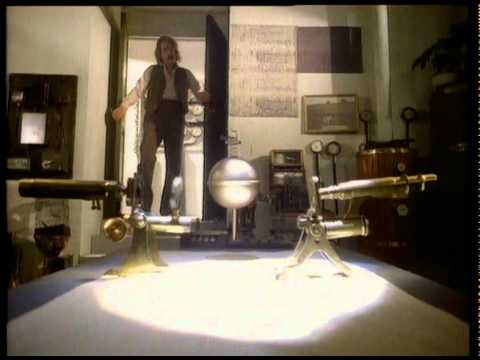
As nature’s centrifugal force, water runs through the album, and ‘Cloudbusting’ both recounts and realises the capture of its elemental energy. The opening, “I still dream of Orgonon”, is the pop equivalent of Alfred Hitchcock’s Rebecca’s “Last night I dreamed I went to Manderley again”, transporting the listener into its dream-reality, underscored by the urgent yearning of a string sextet. Another child’s-eye view, the song is inspired by The Book of Dreams, Peter Reich’s memoir of his father, psychoanalyst, Marxist and inventor, Wilhelm Reich and his rural Maine research centre, Orgonon. Reich’s theory of ‘orgone energy’ as the core of the cosmos – the human orgasm harnessing nature’s power – isn’t as eccentric as it sounds if we consider Herbert Marcuse’s concept of ‘Eros’ or the natural life force, or indeed refer to the album’s title cut, two tracks earlier. Building an actual ‘orgone accumulator’ was a step into the wild blue yonder, however, as was Reich’s ‘cloudbuster, created to counter desertification by releasing rain. All this is beautifully realised in the video, Donald Sutherland perfect as Reich, a shorn Bush personifying childhood delight as Peter. Delusions are dreams here, hence utopian, from the cloudbuster itself to Peter’s insistence, even after his father’s arrest, “I just know that something good is going to happen”. ‘Cloudbusting’ is a celebration of nature’s potency, which, culminating in a giddily celebratory chant upheld by surging, sweeping strings, itself seems to express that elemental power.
Sung from the perspective of a woman stranded in the sea, the song-suite ‘The Ninth Wave’ encapsulates how water both sustains and threatens life, with rising oceans as much a facet of global warming as rising temperatures. The suite channels folk’s facility for invoking the uncanny, with Bush redeploying the traditional Irish instrumentation of The Dreaming’s gorgeous ‘Night Of The Swallow’. Yet Bush is no literalist, and the whistles and bouzouki on ‘And Dream of Sheep’ are set against piano and tape-effects, as the sea both lulls and looms around the narrator. Departing her own body, ‘Hello Earth’ deploys uilleann pipes alongside a classical orchestra and choir to hail the planet’s wonder as if seen from space. The most literally pastoral track here, ‘Jig Of Life’ is also the most clunky – particularly John Bush’s Irish rap – but still captures that folk uncanniness as the dying woman encounters her future, older self. The international influences Bush would explore more extensively on 1989’s The Sensual World are deployed for the first time here, but again without purist ‘authenticity’, as cultures and soundworlds blend and clash with abandon. Balalaikas ring in the distance on ‘Running Up That Hill’, ‘Hello Earth’ is a choral setting of a Georgian folk song, while the narrator’s rescue and rebirth on ‘The Morning Fog’ sets the Slovakian fujara against classical guitar and synths to close the album on a chorus of awe.
For the Romantics, nature’s power could provoke a disordering of the senses, dissolving boundaries between subject and object. Their countercultural heirs went further, seeking the dissolution of distinctions between ‘self’ and ‘other’ altogether. With Bush very much in this tradition, Hounds Of Love both advocates and expresses commonality and empathy in this individualist, competitive age. “Tell me, we both matter, don’t we?” Yet what’s extraordinary about ‘Running Up That Hill’ (even uncanny) is its desire to “exchange the experience” – not just to stand in the other’s shoes but to “feel how it feels”: to be the other. In ‘Hounds Of Love’, such openness isn’t just frightening but thrilling, vulnerability as potency, as self and other, subject and object, hunter and hunted combine. That image of hunter and hunted recurs in ‘Mother Stands For Comfort’, which troubles the era’s emphasis on family as society’s moral core, as a mother’s desire to protect her child exposes other mothers’ children to his danger. You don’t need to know the narrator is a murderer to feel the threat in the sounds of breaking glass interspersing this stately piano-ballad, or find the sinuous softness of its fretless bass – that most 80s of instruments – sinister rather than soothing. The fact that the atomised, individualist 80s helped facilitate the rise of the lone-wolf killer makes the song uncannily prophetic.
While ‘The Ninth Wave’ ostensibly relays the hallucinations of a drowning woman, metaphorically it’s also an exploration of social isolation. Cast away, the narrator yearns for human contact on ‘And Dream of Sheep’ – from radios, from passing ships – before letting out a desperate cry for social recognition (“it’s me!”) on ‘Under Ice’. Over leisurely, luminous piano chords, it’s the warm voices of loved ones who urge the woman to ‘wake up’, to stay conscious and alive, not her survival instinct – or rather, the two are one here: sociality is survival. Instead, she imagines an even deeper isolation, a folk horror hallucination of being submerged in water to divine if she’s a witch. A tape-stretched Witchfinder General and the crowd baying for the witch’s blood represent not just misogyny (if she drowns, she’s innocent) but the demonisation of difference itself, where the other is always the enemy. On ‘Watching You Without Me’ the drowning woman imagines looking in on her worried, waiting family, but it also reads as a metaphor for isolation within ostensible intimacy. “Don’t ignore me,” Bush’s cinematically fractured voice implores. “Talk to me, listen to me, baby!” Finally, ‘The Morning Fog’ is an affirmation of human connection, the rescued (or liberated) woman now seeing life as sociality. “I’ll tell my loved ones how much I love them.”
The proclaimed freedom of the 80s was always contradicted – and counteracted – by the era’s authoritarianism, from the banning of the radical Greater London Council to the disciplining of working class militancy in the miners’ strike, to the attempt to reverse queer gains with Section 28. So, while Hounds of Love is an unabashed expression of utopianism, whatever Bush’s actual politics, it also recognises the reactionary, authoritarian forces that repress and oppose such impulses. When Bush challenges, “Is there so much hate for the ones who love” on ‘Running Up That Hill’ she’s pitting countercultural liberation against contemporary conservatism at the time of AIDS. In a period when traditional masculinity was troubled by women’s incursion into the workplace, ‘Waking The Witch’ pointedly invokes the historical persecution of liberated women, before capitalism contained their defiance within domesticity. For all its apparent celebration, the narrative of ‘Cloudbusting’ recounts the repression of utopianism: Wilhelm Reich would die in prison within a year of his arrest, his machines destroyed and writings burned by the US government. “You looked too small, in their big black car, to be a threat to the men in power” observes Bush as Peter Reich, that child’s-eye innocence now shading towards experience. Yet dreams and imagination, as expressions of liberation and rejections of convention, will always represent a threat to the men in power, who will repress such utopian impulses and reassert the ‘realism’ of the status quo. Bush, with her intimate connection to childhood, to nature and the uncanny, runs gleefully contrary to such constriction and contraction, and she never expressed this more joyfully, more eccentrically or more commercially than on Hounds Of Love.
Toby Manning’s Mixing Pop And Politics: A Marxist History Of Popular Music is published by Repeater.