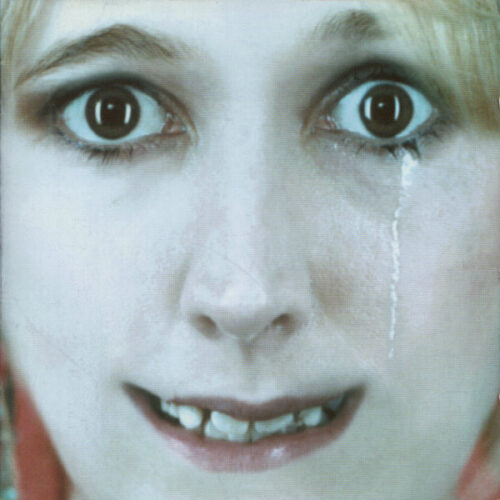

There were islands, however few and far between, in the sea of trash that was 1990s radio. An archipelago of exhilarating pirate stations beamed from tower blocks. Lotus eater atolls playing chillout mixes in the early hours to take the edge off vertigo-inducing comedowns. Some, like Peel, contained alien treasures, even if you had to kick through a lot of dreck to find it. There was one island though that felt forbidden, a place of illicit transmissions, quarantined off in the graveyard shift. Cult listening. A lazaretto of bad taste. It was visited with caution, ear pressed against the speaker under the covers. It went, irresistibly, beyond debauchery into degeneracy. It was the kind of stuff that needed to be hidden. Its name was Blue Jam.
Chris Morris was already well-known, admired and vilified by the right people. Starting in radio, he’d moved successfully into television with the superlative satirical news show The Day Today and though ‘Paedogeddon’ was some years in the future, he’d already begun to toughen up the formula and push the material into more taboo territory with Brass Eye. Though it was a collective effort, and many members of the team would go on to success elsewhere (Steve Coogan, Armando Iannucci, Rebecca Front, Stewart Lee, Patrick Marber, Doon Mackichan etc), Morris’ Paxman doppelgänger had a commanding authority at the heart of both shows that made the edgier and more surreal moments convincing. Nothing really prepared anyone for Blue Jam though.
There was a feeling at the time, for anyone with functioning senses, that, behind closed doors, basic society was profoundly sick. Morris and co. cast a derisive, though hilarious, eye over this notion, presenting it in the ridiculously overblown but authoritative format of the news of the time (salacious headlines, imbecilic talking heads, overblown title sequences etc), and dialled up the absurdity by several notches to mirror society’s actual absurdism. Blue Jam was different. It looked inwards, more psychological than political, and what it reflected were things you didn’t want exposed to light.
Turning away from external critique and plunging straight into a collective sickness of the unconscious, Blue Jam served a subversive function. Its blatant abnormality was presented as utterly normal. The actors mostly played it straight as a die; one of the show’s hallmarks was portraying the embodiment of authority figures who were traditionally deferred to in British culture and where this intersected with the class system – doctors, for instance, feature heavily. There were dodgy television programmes where you’d have to quickly switch the channels if parents came in or points in songs you knew in advance to suddenly turn down so as not to spook the horses. Blue Jam, by contrast, sounded almost normal. It had a languid quality with comforting received pronunciation accents. This is one of the reasons it took a while to acclimatise to it and to realise how deeply, existentially malignant it was. The simple juxtaposition of Blue Jam next to virtually anything made strange things happen to its neighbours, bathing them in a radium light. Some might fall prey, in weaker moments, to the faux bonhomie of the contemporaneous TFI Friday, only to face their folly listening to Blue Jam the following night. If the former was the disease, and it was, Blue Jam was the antidote. It was however a bitter medicine, a treatment that debilitated, a cure that left you post-innocent and never quite the same.
At the back of the school bus on Monday mornings, it would be poured over, lines repeated, causing convulsions of laughter, all with shared sense of mild trauma. There was a kind of status involved in bonding over twisted things, for horrible little bastard boys at least. We talked of Charles Manson, GG Allin, Faces Of Death, arson, porno mags stuffed into hedges, not quite understanding the implications of any of it. Trying to work out the adult world, and its hypocrisies, by surveying its edges. Sometimes this was daft harmless fare, recordings of Derek and Clive or the Jim Rose Circus. Sometimes it was too much, a keyhole view into Bluebeard’s chamber. You wanted to know, not realising that there was a cost to knowing. The abyss gazing back and all that jazz. Blue Jam fluctuated between the two states, with the listener never knowing if the next sketch would be wilfully dumb or disturbing, tonal shifts that Warp Records captured in their compilation record released 25 years ago (and the bravery of Warp, in those days as a colossal force in the face of cultural fuckery, should be absolutely commended). A 13-year-old review of the CD online reads, “This is not for the sensitive or caring type of person, but if you like an antidote to the hegemonic order of today’s modern constant dribble of ‘caring news’ stories, listen to this…”
The intro was a gatekeeper beckoning and asking if you are sure you want to proceed at the same time. It took the form of gonzo-edged nonsense poetry, or wordplay at least, in the tradition of Spike Milligan and The Goon Show or Stanley Unwin (of Ogden’s Nut Gone Flake renown) but much more squalid (“When roped to concrete and noose your bauble for car-powered head divorce…”) At times, it resembled nothing less than a crack-addled Edward Lear, Lewis Carroll gone Raoul Moat, “They crown you king cantaloupe and gob you up a synapse bomb. So now, you hooting bletherskate, not clocking you’ve been prammed to serenade the door of your ex-wife… where pierced on glares of ice you fold to weeping topple.” These framed both the radio version and the subsequent television adaptation Jam; both were an opportunity for the fainthearted to bail. The following passage sets the tone, “When dancing… lost in techno trance. Arms flailing, gawky Bez. Then find you smacked on frowns, and slowly dawns… you’re jazzing to the bleak tone of a life support machine, that marks the steady fading of your day-old baby daughter…” Like a comedic horseshoe effect, it was humour pushed so far that it reemerged somewhere else. Nihilism perhaps. Provocation. Discomfort certainly. A Naked Lunch moment of seeing what’s actually on the end of your fork. Goading you to laugh and then squirm and shrivel. You could find any number of justifications from nonfiction newsreel material of the 90s – say the Highway Of Death – to justify such cultural transgressions by contrast. Fiction always pales compared to real-life, and often sanitised, atrocities on the news. What seems to be happening here though is more to do with a comedian pushing the mechanics of humour to breaking point to see what happens and to force the audience, as Samuel Beckett did, to consider what lies out there, “And when midnight sirens lead to blue-flash road-mash. Stretchers, covered heads, and slippy red macadam, and find you creeping ‘neath the blankets, to snuggle close a mangle bird, hoping soon you too will be freezer drawered.” To consider who or what is laughing at the end of it all.
It was held together by woozy opiated music, used to masterful effect and the assemblage still holds up well, though some is of its time. Sketches appear and vanish like bad dreams. At moments, as with Aphex Twin’s ‘#7’, it adds to the tension. Elsewhere, it clashes dramatically with the subject matter; Eno’s ‘Deep Blue Day’ will never sound unsullied after its appearance here – and that’s after surviving Trainspotting‘s toilet odyssey. Even when the tunes slide into tasteful dinner party trip-hop or invoke the future sulphuric reek of daytime 6 Music, it still acts as a ruse. Everything is fine, suburban, bourgeois, except you begin to notice something is terribly wrong. There’s a corpse at the dinner party and no one is mentioning it. There’s a push back against taste here and there – the ‘Hobbs Sting’ is built around an acerbic impersonation of Portishead, with highly accurate Beth Gibbons phrasing. Morris has a history of laser-guided parodies (Pulp’s, or rather Blouse’s, ‘Me Oh Myra’, Pixies’ ‘Motherbanger’ etc.) with more than a hint of fondness involved. These moments are largely absent here though and the overall feel is one that soothes, as if blissfully slipping under anaesthesia, only to realise at the last moment that the surgeon isn’t a surgeon at all but a psychopath who has stolen into the hospital.
Occasional duds aside, there were few places you could hear Gainsbourg and Bardot’s ‘Bonnie and Clyde’ and David Sylvian and Holger Czukay’s ‘Mutability (A New Beginning is in the Offing)’ on a radio show then. The soundtrack shows up many of Morris’ ‘colleagues’ on the airwaves to be comparative philistines. He doesn’t leave it there though: instead of acidly coming for them with two-footed ad hominem attacks, Chris Moyles, for example, appears naked smeared in jam about to take the long drop, begging for a forgiveness that will never come. Morris seeps through Broadcasting House and its satellite buildings with few of the leading culprits left spared, “And in the distance / I could see a giant Simon Mayo crashing round / A funfair and pissing on the fleeing women’s heads.” Steve Lamacq appears “as a frail old man in a wheelchair / Trying to shake hands with an elephant.” It feels astonishing, frankly, that it was allowed to be aired. Perhaps it was assumed that no one of much importance would be listening in at that time or because each one is put through such odd treatment, some sounding like Radiohead’s ‘Fitter Happier’ or the interludes in The Who Sell Out, during which the censors just stopped listening. They left it alone because it sounded like art. As personal as the tirades are, there’s a sense of contempt not necessarily for the individual DJs, which of course there is and should be, but rather for the grim waste of the potential of radio. Morris’ work was certainly trailblazing in the form and sometimes a trail needed to be blazed through someone.
The sense of disbelief that Blue Jam was even broadcast continues with its sinister aspect. It’s comedy but as sinister as it gets. In the ‘Acupuncture’ sketch, there are laugh out loud moments (“your spleen is damp… we just have to leave them out the back”) all delivered in an impassive barbiturate drift that lurches into pure horror (“Can you move your head at all?” “Don’t want to.”) One of the strengths of Blue Jam, particularly compared to its TV equivalent Jam, is that it benefits from the unseen. The use of sound effects, atmosphere, loops and echoes, unexplained noises, the sound design generally, adds to an accumulative feeling of terror. What you can’t see becomes potentially infinite and shapeshifting in the imagination. ‘Unflustered Parents’ is as dark as it gets, funny in the sense that Michael Haneke’s Funny Games is funny, with the cutting between the parents indifferent to their child’s fate and the sounds of woodlands (crows, flies, trains) approaching the unbearable. There is something undeniably and horrifyingly skilled happening here and yet I wish I could scrub my brain clean and never have listened to it.
Levity is essential then, and Blue Jam isn’t afraid of being very silly. A man teeters on the edge of a nervous breakdown because his television is full of lizards or because his car has been shrunk to the size of Noddy’s (working class characters are often driven to the point of exasperation in Blue Jam while those supposedly higher up the hierarchy are just thoroughly ruinously depraved). This absurdism places Morris and co in the lineage not only of The Goons, Monty Python, Peter Cook but also the likes of Flann O’Brien. It can and does go astray. Blue Jam’s approach to sex (“whack my bonobo… cackle my gladys”) falls wide of the mark, a forerunner of the risible cockwomble humour that proliferates in the online chattering class. Introducing your lover to William Gladstone while in flagrante delicto may be amusing but it has the kind of Cambridge Footlights-esque benignity that made the working-class Steve Coogan bristle during his time with working in the collective. Equally, the pay-off of ‘Kids Party’ feels not a million miles from Roy Chubby Brown material. It is the display of neurosis rather than a dismantling of it.
Blue Jam works best when played completely straight. The authority of the aforementioned doctor sketches feels so incongruous compared to what actually happens in these GP practises (“synchronised cocks” and so on), whether obscene or Kafkaesque, that they are hilarious however resistant the listener is to the idea. Blue Jam is helped by a truly exceptional cast including Kevin Eldon, Julia Davis, Mark Heap, Amelia Bullmore and David Cann, all of whom achieve a very difficult balance of appearing relatable and conventional while being totally unhinged.
Referenced artists
Aphex Twin
Dread Magnificence: LSD, Selected Ambient Works II & The Psychic Death of Aphex Twin

The Who
Low Culture Podcast: Dr Martens Boots
Holger Czukay
Winter Magic: David Sylvian On Collaborating With Holger Czukay
David Sylvian
The Devil in the Flesh: David Sylvian’s ‘Red Guitar’ at 40
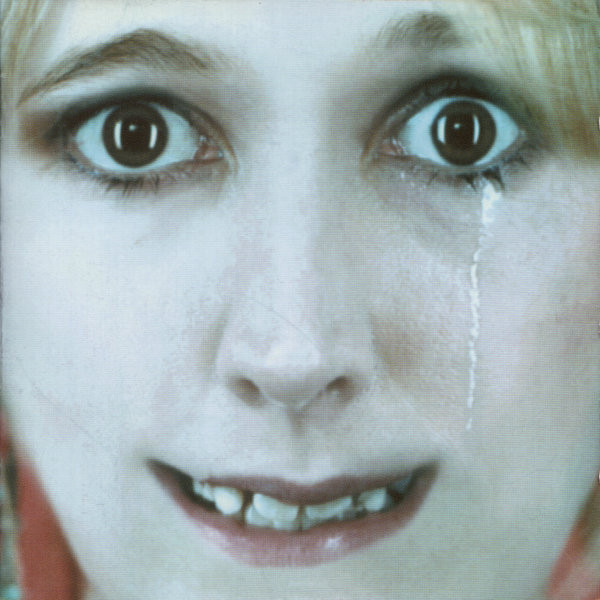
It’s worth considering how much of Blue Jam would be considered offensive in our present moment, the puerile of then running up against the puritan of now. It’s arguable that some of the content, especially on gender, would scarcely be broadcastable today. The word offensive comes originally from the Latin “to strike against” and there was and remains an awful lot to strike against. The years that have followed Blue Jam have been a real-life horrorshow, and while there are uncomfortable edges here in the relistening, so much abject cynicism has transpired to rob a great deal of the record of its power. There’s only so much press conference duper’s delight, for instance, you can see before you lose your ability to be shocked. Just as there is compassion fatigue so too is there shame fatigue. What was out there back then has been absorbed by the centre. The grotesque Aphex Twin grimace might as well now be a filter your children use on their smartphones. If The Day Today and Brass Eye diagnosed the rot in the media and body politic, Blue Jam was a much more painful look at what is wrong within us. It’s not just the world conspiring against us, we are doing it to ourselves and each other, “When shake your head at local paper story of a crime git, then look again and see that he is you, this long-lens shifty bugger in a park. When every call destroys your life, even though the phone ain’t got a bloody plug. And when waking wonder where you are and find that most of you is asking where you’ve gone.”
Morris and his co-writers pulled no punches, though, in confronting contemporary ‘culture’. His interview with Andrew Morton, author of a salacious book on Princess Diana, is eviscerating. Morris plays the fool while landing some brutal jabs towards the growing parasitism of the sleb gaze. The then-fashionable cartoon violence of Quentin Tarantino is ridiculed with the four-year-old ‘Fixit Girl’ (“Everything I cut off, you put in the bucket”). The pornification of society is anticipated with the story on the gush, a thankfully fictional phenomena that a friend added to his real-life list of genuine fears at the time, naïve as we were. For delinquent youths, this was wildly funny. Now it feels a little committee written, and you can almost hear the writers vying with each other for the most bad taste riffs (“And that is when you’d better watch that you’re not piling the pearls into Saint Peter’s dress!”), like comedians outdoing each other with takes on the Aristocrats joke or laughing over Buddy Rich’s road bus tapes. All of Blue Jam, the high and the low, was pushing at the boundaries of taste, an attempt to learn where the edges of the abyss were, to know where, when and how we might topple into it, not yet realising we dwelt within it all along, and always have.
Where do you go from the edge? Where do you go from this brilliant flawed subversive headfuck of a record that defies belief and that acknowledged, as we must now, that belief has to be defied? Morris’ subsequent work has been relatively low-key. Four Lions had its moments but was disappointingly conventional. The Day Shall Come was a noble idea, looking at how the FBI help to create terrorists, but didn’t quite work. His cameos have been slight. Part of the problem is that life overtook him, and the rest of us alike. It’s a post-satire society now. How could any of this be made more absurd than it already is? Indeed, satire is now part of the problem, humanising ghouls, supporting orthodoxies, shadow boxing while the world goes to hell in a handcart. One of the Blue Jam sketches, ‘Suicide Journalist’, anticipates where all this is going, in a cross between Martin Amis, Tom Wolfe and Nathan Barley. Not just the decline and corruption of the fourth estate and the cultural establishment but its utter disconnect from reality. It reads not like the suicide it alludes to but a prophecy. Life is pretty fucked now. Maybe it always was. Either way, the messengers are shot. The kid who laughed at the naked emperor is missing. Blue Jam was only a radio show then. Now there’s no turning it off. Something is laughing and it’s no longer us.