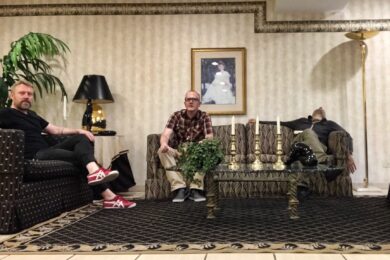

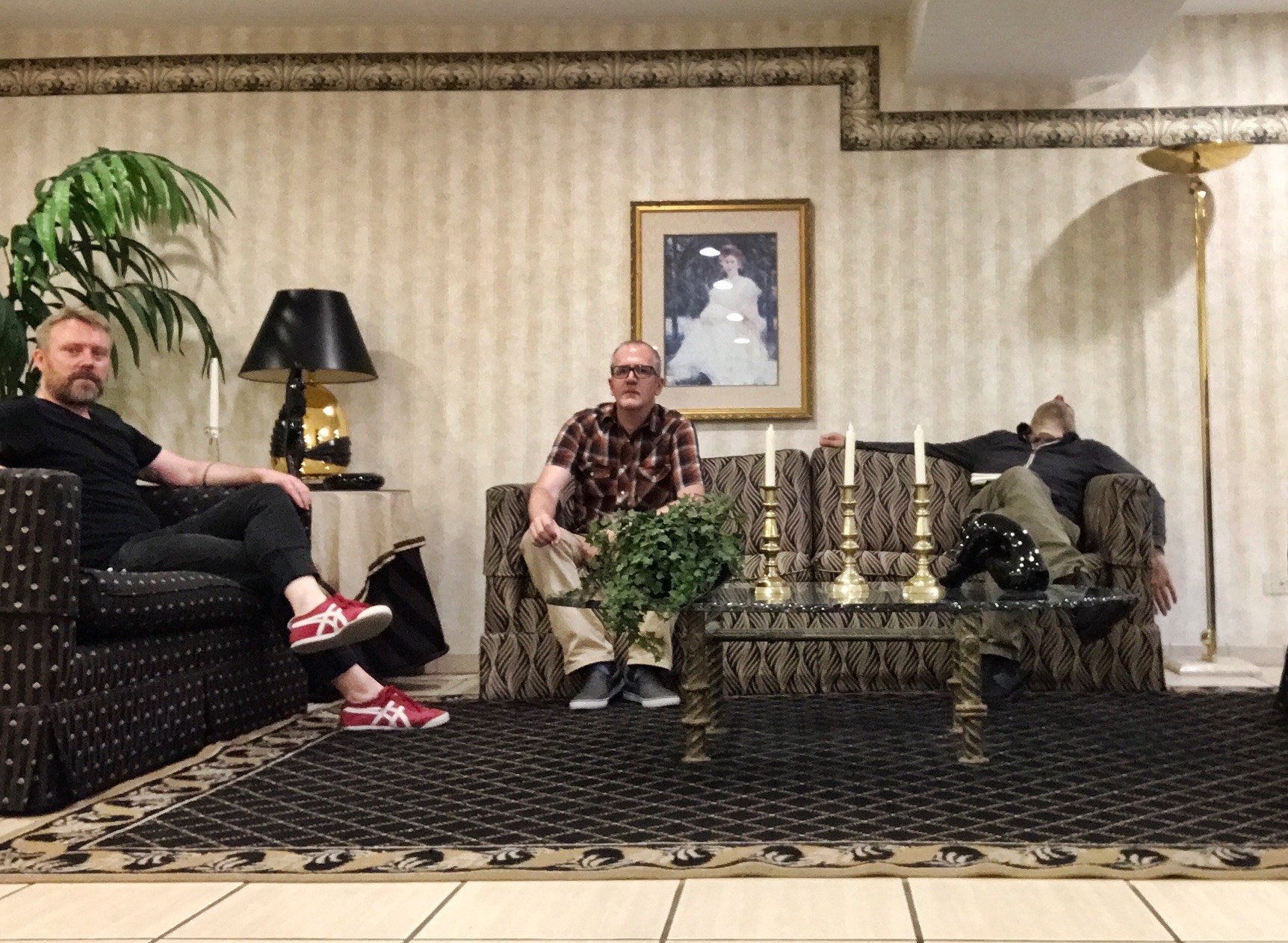
Founded in Chicago in 2005, experimentalists Haptic are preparing to play a series of five concerts in the UK to mark their 20th anniversary.
Each night, the trio will perform Late Work, a modular composition characterised as “confident and mournful”, akin to a contemporary requiem. “We wanted to set up a situation where all of the gestures made are confident decisions,” explains Adam Sonderberg of the work’s graphic score, influenced by John Cage’s late work, which serves to organise the players’ improvisations. “We’re dealing in a moment of great upheaval, and this is an opportunity for there to be something generative and assured coming out of our mourning.”
Although Sonderberg, Steven Hess and Joseph Clayton Mills have all played the UK before with other projects, this tour will be the trio’s first time playing as Haptic outside the USA. “The UK is an embarrassment of riches in terms of the breadth and depth of musicians,” says Sonderberg, who defines the tour as “among other things, a really great opportunity to work directly and synchronously with people whose work we really admire”.
Haptic have a long tradition of inviting a fourth member into the fold for the night, and the UK tour will see a string of players join the established trio to interpret the score for Late Work. Some, like Mark Wastell, joining on double bass at London’s Cafe OTO, are long-time friends – while others, like Leeds-based violinist Linda Jankowska, are new connections. It’s also a chance for the trio to spend some concentrated time together; rarer since Mills relocated from Chicago to Arizona in 2018.
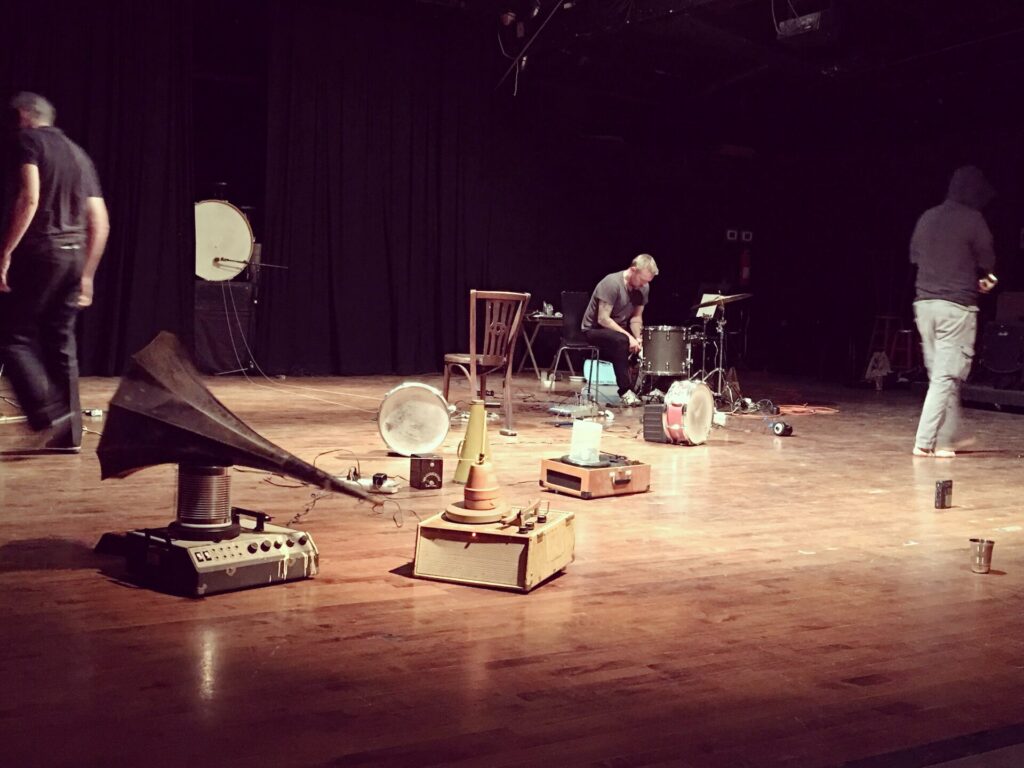
Sonderberg, who will play piano and electronics on the tour, characterises the trio as “device agnostic – we’ll use whatever we can to coax sounds out of things”. Mills takes this philosophy to an extreme, using accumulations of found objects onstage. “I have a lot of curiosity around repurposing old technology and extracting sound from everyday objects,” he explains. “I’m constantly collecting new things to use. At the moment I’m using guitar pick-ups, tiny cymbals and tuning forks, but also marbles, wooden balls, paper clips and thumb tacks. Last night, I was packing to go on this tour and I had three tin cans. I was like, well, these all sound different, but which one do I want to bring?!” He admits that going through airport security can be an issue.
According to the other two, Hess is “the real musician” of the group; a drummer and sound artist who – in classic drummer style – plays in half a dozen other bands, ranging from experimental metal (Locrian) to ambient (Cleared). He credits the range of Haptic’s input (scores, concepts) and output (performance, records) as key to their dynamism. “Sometimes it’s very loose, just scribbles or lines on a piece of paper,” he says of the modular scores they use as parameters. “Something it’s much more conceptualised, with detailed instructions. It really runs the spectrum.”
Mills remembers a concert in Chicago in 2017, shortly before his relocation to Arizona. “I basically brought everything in my apartment down to [experimental music venue] Constellation,” he says. “There were record players, metronomes, Morse code machines… then Steve was on his kit in the middle of this vast sculptural installation. It works as a metaphor for our approach as a group: there’s a solid still point, then a lot of other things can happen around it because they have that anchor.”
This run of concerts marks 20 years since Haptic formed – how do the band feel about this milestone? “Don’t tear up, Adam!” laughs Hess. Sonderberg admits that he is sentimental. “We have spent so much time playing together and most bands don’t even last three years,” he reasons. “I think a lot of that comes from existing so far outside organisational structures that could make or break bands. We don’t give a fuck. So it’s fun to think about new things.”
The trio are currently working on an album of new compositions to be released in 2026, featuring previous collaborators from the last two decades. This process of “creating a sense of ensemble through assembling” is a way of making a kind of forward-looking greatest hits retrospective. Similarly, they hope that they can keep performing Late Work, “for the next 10 or 15 years,” according to Mills, “with the material changing substantially every time we revisit it, but the skeleton that we hang everything on, remaining the same”.
Referenced artists
John Cage
Do You Have Plans For 4 Sept 2640? On Music Of Extreme Duration
“It’s fun to be curious about things, and to talk about the things that we’re excited about,” Sonderberg concludes. “That hasn’t changed and it’s not going to change for another 20 years. It’s truly about looking forward and trying some new shit. This [anniversary] feels significant and we want to mark it, even though we would just keep on making records and playing concerts forever regardless. We’re basically committed to being the Depeche Mode of arhythmic musics.”
Haptic play the UK between October 2 and 7, 2025. Find more information here.