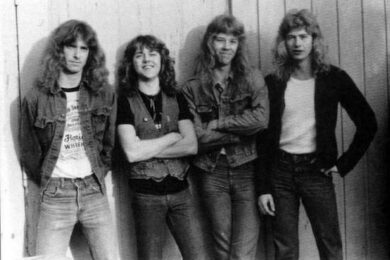

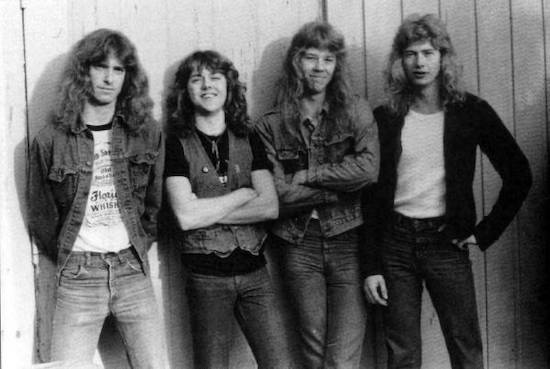
The greatest metal band in history started with the most controversial event in any metal career. Metallica had a name, they had shows, and they even had a demo (No Life ’Til Leather, taking its name from Motörhead’s No Sleep ’Til Hammersmith), but they weren’t yet the classic lineup that started changing the world on their first record. Sure, Metallica’s biggest controversy got nary a headline when it occurred in 1983, and events like Dimebag Darrell’s murder or the Norwegian black metal church burnings are more notorious. But everyone with any sense agrees the murders and church burnings were tragedies. When we’re talking controversy – something that sparks heated, endless debate and leaves us with unanswerable questions – nothing in metal history has caused more arguments than the lineup of Metallica’s first record. Even Ozzy biting the heads off small animals, for all its insanity, offends and impresses all the right people.
On the morning of April 11, 1983, Metallica wakes up their lead guitarist Dave Mustaine. They’re in New York after two city shows, weeks away from recording their first record and blowing a hole through the world’s consciousness with Kill ’Em All. Mustaine, the son of an abusive household and a part-time pot dealer, has cowritten four of the songs that will make this record. His rock star power is already undeniable, from virtuosic guitar playing to prodigious songwriting and an unforgettable stage presence. At twenty-one he’s the band’s oldest, the first one who could legally get beer for his mates, and about to be first in a long line of authority figures Metallica will overthrow. His musical brilliance and thick, bright red hair will make him one of metal’s most recognizable figures, as will the sharp tongue he’s already displayed in his Metallica stage banter (sample Dave: “Hi fuckers! How many of you have a middle finger?”). Early live reviews have singled him out as the band’s star, and he dominates their interviews. “I’d live and die for our music,” he tells one reporter. Mustaine is destined for greatness, stardom, and infamy. But not with Metallica.
Rhythm guitarist James Hetfield and drummer Lars Ulrich have been secretly planning to give Mustaine the boot. While Dave sleeps in the U-Haul, James and Lars are playing tapes of other bands, listening for lead guitarists. They’ve already bought Dave’s bus ticket for the four-day trek back to California. James has been designated to wake up Dave and tell him the news. At twenty, James has already replaced his father with himself and his family with his band. Now he has to replace his band’s star. By later accounts, Dave is too tired, stunned, and hungover to protest when his bandmates break the news and drop him off at Port Authority for the long ride home. The entire dismissal takes about forty-five minutes.
Ten days earlier, Metallica had gotten their sound engineer, Mark Whitaker, to call up the guitarist of the band he managed, Exodus, to ask if he wanted to audition for Metallica. Guitarist Kirk Hammett, an avid No Life ‘Til Leather fan, thought this was an April Fools’ joke. In Exodus, he had opened for Metallica at the Old Waldorf in San Francisco, and his first meeting with Lars included the drummer stripping naked backstage in front of him (Kirk guessed it was “a European thing”). But Kirk was interested and scraped enough money together to fly to New York. He showed up for his 6 p.m. audition to find the band passed out (“How rock ’n’ roll,” thought Kirk). But when they woke up, he nailed ‘Seek & Destroy’, complete with a solo, and James knew this band would be all right. On April 16, 1983, five days after Dave’s firing, Metallica played their first show with Kirk Hammett, at Showplace in Dover, New Jersey. It’s the last show where they’ll play ‘The Mechanix’, Dave’s signature Metallica song, which over the next few weeks they’ll work into ‘The Four Horsemen’ with Kirk’s solo, James’ bridge, and new lyrics. Within a month, they’re recording Kill ’Em All with Kirk.
There’s no way of knowing this at the time, but Mustaine is on his way to forming Megadeth, for many years Metallica’s greatest thrash metal rivals and the second highest-selling band in the classic “Big Four” (rounded out by Slayer and Anthrax). He’ll release records every metalhead should own and play to huge audiences of dedicated fans. He’ll be one of the most influential figures in metal, but he’ll never escape Metallica’s shadow. Early Megadeth records, conveniently alphabetized ahead of Metallica in record store “M” sections, came with a sticker advertising the appearance of a former Metallica guitarist. Nearly every Mustaine interview or Megadeth article brings up Metallica, even ones where he insists he doesn’t want to talk about the other M-word. Mustaine’s always entertaining, sometimes trustworthy autobiography, Mustaine: A Heavy Metal Memoir, starts with the sentence, “James Hetfield, who used to be one of my best friends, as close as a brother, once observed with some incredulity that I must have been born with a horseshoe up my ass.” For years he could seldom play Megadeth’s ‘Mechanix’ live without first calling out the band most of his fans learned that progression from. In 1999, he was still wounded enough to tell reporters he named Megadeth’s album Risk after something Lars Ulrich had said about him. (Dave: “He thinks I am talented but that I should take more risks, which I took as good advice.”) On Megadeth’s Behind the Music episode, Mustaine reveals that being kicked out of Metallica was worse for him than watching his father die. He has declared his Metallica grudge over and restarted it, cursed out and apologized to his former bandmates, loving Metallica and hating them. But he can’t get them off his mind.
Mustaine’s complaints about Metallica are the second most famous thing about him. Reading through decades of Mustaine interviews, one finds Dave insisting Metallica stole his song ideas, that Megadeth writes better music, that Metallica are only more popular because they sold out, that Metallica would have been bigger and better if they’d never fired him, that he slept with Kirk’s girlfriend, that James ripped off his stage persona, that Megadeth is faster and heavier, that James really wanted to fire Lars, and worse, to anyone who will put a microphone in front of him. “I already smashed James in the mouth one time, and Lars is scared of his own shadow. . . . Kirk is a yes-man,” Dave mouths off in an early interview, in which he also claims to have written most of Kill ’Em All. “I might as well still be in the band because they’re still using my music.” Dave’s assertions that Metallica would be screwed when they ran out of his riffs turned out to be unfounded.
Metallica made the morally dubious decision to keep some of Mustaine’s songwriting on Kill ’Em All and Ride the Lightning (and Master of Puppets, if you believe Dave, who insists the middle riff of ‘Leper Messiah’ is worked from his ‘The Hills Run Red’). But by keeping some of Dave’s riffs while ditching his lyrics and solos, Metallica showed razor focus on writing the best songs. Mustaine was an irrefutable talent, but at twenty-one he was a puerile lyricist. He’d get much better on Peace Sells . . . But Who’s Buying?, but the lyrics to ‘Mechanix’ and even the rest of Megadeth’s ripping debut Killing Is My Business . . . and Business Is Good! (seen by many fans as a response to Kill ’Em All) didn’t reach Kill ’Em All standards. ‘The Call of Ktulu’, Metallica’s last song with a Mustaine credit, was originally titled ‘When Hell Freezes Over’ before Metallica started working themselves away from metal clichés like Hell and Satan. Dave’s original ‘Jump in the Fire’ lyrics, before James’ rewrite, read like a cutup of Penthouse letters. But Dave’s influence is undeniable. James even sings like Mustaine imitating Diamond Head’s Sean Harris on early Metallica bootlegs, to the point where to this day demos of songs like ‘Jump in the Fire’ are mislabeled with Mustaine vocals. In shows leading to Kill ’Em All, James mixed out Dave’s lyrics before replacing them all on the album. Losing Dave meant James not only stepping into Dave’s role, but becoming more James in the process.
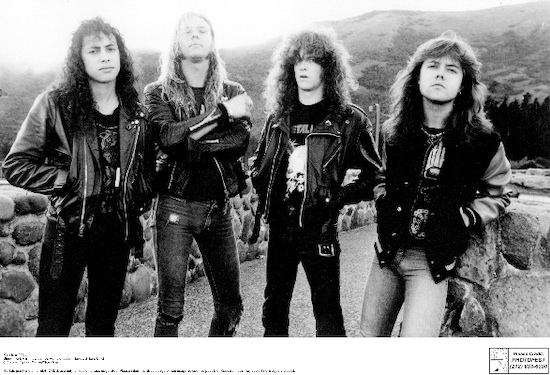
Comparing Dave’s Metallica songs to Megadeth, it’s clear Dave grew into himself by leaving, too. “I don’t really know that when Megadeth started that it was anything other than just pure revenge,” Dave told VH1. For all the shit fans give Mustaine for getting kicked out of the world’s biggest metal band (in Some Kind of Monster Dave says kids still yell “Metallica!” when they recognize him), he had the best possible response – form the second-biggest metal band. Could there be a Peace Sells if he weren’t trying to out-thrash Ride the Lightning, a Rust in Peace if he weren’t trying to outplay . . . And Justice for All (enlisting original Justice producer Mike Clink), or a Countdown to Extinction if he weren’t trying to outsell the Black Album? However, James learned leading a band onstage because he had to after Mustaine left. The default singer was now the default performer. Megadeth perfected thrash on Rust in Peace, but Metallica had already perfected metal.
People love to argue Metallica vs. Megadeth, and you can like them both, even if only one gets to be your favorite. But people also argue Metallica vs. AC/DC, or Metallica vs. Guns N’ Roses, or Metallica vs. Nirvana. Nobody compares these bands to Megadeth, or anyone else in the Big Four, because with Metallica we’re debating a metal band, but also a cultural icon. Megadeth changed metal, but never crossed over in the way Metallica has. For years, Dave has watched his Megadeth bandmates cite Metallica’s influence in interviews (guitarist Marty Friedman: “I was just blown away [by Metallica]. I was shocked, I was happy, I was a bit jealous”), and even Dave’s longtime first mate bassist Dave Ellefson sings their praises. “We owe everything to Metallica,” Ellefson said in 2020. “Those guys broke down the doors for every one of us – Anthrax, Slayer. Bands today – Lamb of God, Pantera – none of this would have happened without Metallica. . . . The stuff that they’re able to do and the size and the scope of which they were able to break those doors down, it changed all of our lives – as musicians, as fans, as everything.”
Even among the Big Four, where Megadeth was sometimes seen as Metallica’s top rival (the Rolling Stones to Metallica’s Beatles is not a bad comparison), Megadeth seems further behind Metallica with the passage of time. At the fourteen Big Four shows that ran 2010–2011, putting Metallica, Megadeth, Anthrax, and Slayer together onstage for the first time, second billing went to Slayer. Slayer was too extreme to sell as many records as nineties Megadeth, but their stature increased with Reign in Blood’s growing influence, making them Metallica’s more sinister top rival. Metallica vs. Megadeth these days is more like the Beatles vs. the Who (Slayer being the Stones and Anthrax the Kinks). The Metallica vs. Slayer as metal’s Beatles vs. Stones argument was proposed as early as queercore heroes Pansy Division’s 1996 song ‘Headbanger’, in which the narrator picks up and bones a Guitar Center metalhead (“He turned on his CD player / Did I prefer Metallica or Slayer”). Inquisitive metalheads might wonder why the song’s solo, credited to “Al Shatonia,” sounds curiously like the work of one Kirk Lee Hammett.
An entire book could be dedicated to the unanswerable questions raised by Mustaine’s firing. What would have happened if he’d stayed? Who’s telling the truth about the incidents leading up to the firing? What would Rust in Peace sound like with James singing? How would the Peace Sells riffs sound on Master of Puppets? Is that ‘Hangar 18’ arpeggio from ‘The Call of Ktulu’? Would Lars have eventually been fired instead of Dave? Would Exodus, with prodigious guitarist Kirk Hammett, have sneaked their way into the Big Four? What if the Beatles fired Pete Townshend instead of Pete Best? Is it better to reign in Megadeth than serve in Metallica?
More than rivaling Metallica, Mustaine inevitably adds to Metallica’s legacy, the same way Dave Grohl’s continued success enhances Nirvana’s. The most famous thing Mustaine has done this century is appear in Some Kind of Monster, making a heartfelt case to Lars over his dis- missal. Directors Joe Berlinger and Bruce Sinofsky filmed three hours with Dave and Lars on Dave’s fortieth birthday on September 13, 2001. Just weeks earlier, Dave had released a supportive message about James’ rehab, though it may have stung that James was given a second chance. “Am I happy being number two? No,” Dave tells Lars. “Do I wish it was 1982 all over again, and you guys woke me up and said, ‘Hey, Dave, you need to go to AA?’ Yeah. I’d give anything for that chance.” Dave asked the cameras to be turned off three times, and eventually wanted the scene removed, refusing to let the filmmakers use Megadeth’s music in the final cut.
He’s seemingly softened on Metallica since Some Kind of Monster, more at ease with his position in both Megadeth and Metallica’s stories despite the occasional lashing out (he prevented an official, expanded No Life ’Til Leather release over legal issues in 2017). But no matter what his take is this week, Dave’s year and a half in the life of Metallica follows him to even Megadeth’s biggest stages. When Megadeth won their first Grammy after twelve nominations, the Academy celebrated by playing Master of Puppets while Megadeth walked up to accept their award. (Dave responded on Twitter, “Ah, you can’t blame ’em for not being able to play Megadeth.”) When Mustaine passes, all of his obituaries will mention his time in Metallica, probably in the lede. It’s hard to see him having an equivalent presence in Metallica tributes.
NO LIFE ’TIL LEATHER
“As much as a problem as Dave was, he was still the most charismatic guy in Metallica,” remembers band friend Ron Quintana. “He was way ahead of James at that time. He was the guy who would yell out between every song and get people involved and into the show.” More important, he was a musical tornado, joining Metallica in February 1982 after one rehearsal. Metallica had formed the previous October, after seventeen-year-old Lars had placed weekly ads in The Recycler, the same LA classified that would introduce Slash to Izzy Stradlin and Eric Erlandson to Courtney Love. “Drummer looking for other metal musicians to play with. Tygers of Pan Tang, Diamond Head, and Iron Maiden.” Lars had no patience for drum lessons, and started looking for guitarists to play with before he could keep time. People use this story to mock Lars’ ability, but like many great artists he valued chemistry over proficiency. Over in Southeast LA, guitarists Hugh Tanner and James Hetfield looked for musicians every week and kept seeing the same guy.
“My ability on the drums at that time was basically zero. I think they were secretly laughing at me,” Lars said of the first rehearsal. It was no secret. Lars’ one-cymbal kit kept falling over, to the point where James and Hugh wondered if he’d ever drummed before. James remembered it resembling the kit Animal had on The Muppet Show. But Lars was taken with James and worked to get a second rehearsal. In VH1’s Metallica episode of their When __ Ruled the World series (changed just once from its usual format to When Metallica Rules the World, because Metallica still rules), James smiles remembering his earliest days with Lars. “His drumming was not amazing, but he had this drive.” Young James didn’t plan on inviting Lars back. But how many other kids were you going to find in SoCal who listened to Motörhead?
Lars learned that Brian Slagel, a twenty-year-old Sears employee and the founder of indie record label Metal Blade, had borrowed $800 from his aunt to finance a Metal Blade sampler album called Metal Massacre. Lars told Slagel he had a band for the album, and called James to tell him he could get him a spot on Metal Massacre. Lars had drastically improved by his second rehearsal with James. Metallica was the title of an obscure English reference book on metal bands, hard to find in the United States, putting Metallica in the running with the Velvet Underground for the best band to name themselves after a forgotten book. James and Lars were hardly a band, but James had a song, ‘Hit the Lights’, with his previous band Leather Charm, which he rewrote with Lars and recorded the night before the deadline for Metal Massacre. Lloyd Grant, a Jamaican lead guitarist, was found through a Recycler ad and brought in to solo. Lars borrowed $50 for the reel-to-reel transfer and handed in the tape. The resulting album, Metal Blade’s first record, was a compilation featuring Pandemonium, Malice, a then unknown Ratt, and several other long-forgotten bands that strove to stand out in the dawn of American metal’s breakthrough. As with most promo compilations, it’s a pretty boring album that could barely qualify as a freebie – until a smattering of distortion introduces the last song.
Long before they had more worldly and introspective views, Metallica wrote about what they knew best – playing faster and louder than anyone else. James promises to kick some ass tonight in the first verse, which in hindsight is one of Metallica’s biggest understatements. Metallica sounded like they might self-destruct by the end of the tape, and with Dave Mustaine they almost did.
Metal Massacre sold about 30,000 over the next few years, mainly on the strength of Metallica. James remembered a fan telling him the rhythms on ‘Hit the Lights’ didn’t sound tight, something he made sure no one could accuse him of when Metallica rerecorded it for Metal Massacre II. The release of ‘Hit the Lights’ has false starts, just like the song does, a sign that even with the best song on the first-ever Metal Blade release, Metallica isn’t satisfied. Some fans, such as future Celtic Frost growler Tom G. Warrior, bought the first two Metal Massacre records to have both versions of ‘Hit the Lights’. There was nowhere to hear anything like it.
“While the rest of us were still finding ourselves musically and creatively, you had the sense that Metallica already knew,” said Slayer’s Kerry King. Slayer had heard the first two Metal Massacre records and were inspired to write something heavier for Metal Massacre III, which ended up being album opener ‘Aggressive Perfector’, Slayer’s first great song, which, in its earliest form, took its intro from and rewrote ‘Hit the Lights’. But what really blew away Kerry was the glaring lead guitarist he saw at the Woodstock in Anaheim, shredding incredible riffs and solos without even looking at his hands.
How bad did it have to get for Metallica to kick Dave out? Metallica were a volatile band. At 2 a.m. on Monday, August 2, 1982, at the Troubadour, Metallica were cheered into their first-ever encore. Lars celebrated by playing the under-rehearsed ‘Helpless’ instead of the planned ‘Blitz- krieg’, showing off his drum intro, and James punched him in the gut. But Dave drunkenly wrecked the homes, hotel rooms, and friendships that Metallica counted on for places to crash on tour. He berated other bands from the audience. There are varying accounts of a fight with James over Dave’s pitbulls jumping on Ron McGovney’s Pontiac, but the consensus seems to be that Dave punched James in the mouth and knocked Ron to the ground. Dave was fired that day and rehired the next. “He was a very magnetic personality, very good looking, he had great hair,” Lars recalled. “He had a lot of friends, of both sexes.” Torben Ulrich, Lars’ father who famously does not suffer fools, called Dave “always friendly, very courteous and quite articulate” in a 2006 fan interview.
But weeks after getting back into Metallica, Dave ruined Ron’s bass by drunkenly pouring beer onto the pickups. Ron, whose connection to Mötley Crüe had earned Metallica an opening spot for Saxon, was already feeling used by the band for housing and transportation more than his playing. He left Metallica shortly afterward. Ron thought James would go back to his factory job and Lars would move back to Europe after Dave was fired. The other boys weren’t exactly Stryper, camped out in Mark Whitaker’s El Cerrito home, the “Metallica Mansion,” with empty bottles and metal mags on the floor, the furniture moved out onto the lawn so it wouldn’t get smashed at parties. Lars has said the three most important factors of early Metallica were music, alcohol, and girls, in that order. James and Lars shared a room with twin beds, and Dave slept on the couch. Visitors lived there for days on end, in a communal atmosphere reminiscent of Lars’ boyhood home, bringing their dogs to roam free and running off when the neighbors called the cops complaining about noise or worse. James and Exodus’ Paul Baloff were almost arrested for shattering streetlights with a rolling pin, but Paul’s bandmate Rob McKillop took the hit so James wouldn’t miss the Kill ’Em All tour. Metallica needed him.
And Dave needs Metallica. “I think that James and I are very much the same man. I think that we grabbed an angel, split him in half, and both of us are possessing that power,” he told Music Connection magazine in 1983. It’s a power Dave expresses in competition, envy, hatred, inspiration, and admiration, often sounding as focused on Metallica’s music as his own. But every word Dave’s had about Metallica may be best summed up by a quote from 2009’s Bang Your Head. “I wanted to show [Metallica] up. As hard as I tried, though, I just couldn’t do it.”
Dave found enough peace to partake in the Big Four tour, joining Metallica onstage for all-star encore covers of Diamond Head’s ‘Am I Evil?’ and the Misfits’ ‘Die, Die My Darling’. More personally, he showed up to Metallica’s thirtieth anniversary shows, closing the final of four nights at the Fillmore in San Francisco by playing five Kill ’Em All songs with his old bandmates. Dave topped a list of guests that included Jason Newsted, Lou Reed, Ozzy Osbourne, Jerry Cantrell, Bob Rock, Diamond Head, Glenn Danzig, Apocalyptica, Gary Rossington, Marianne Faithfull, and King Diamond. Kirk let Dave take the solos and they closed the four-day celebration with every living ex-Metallica member joining the band for ‘Seek & Destroy’. Dave’s chops are enhanced by sobriety, and maybe a need to compete with Kirk. Decades after he broke a string two minutes into the first song at the first Metallica gig (‘Hit the Lights’), he plays with the same spontaneity and greater professionalism, as much of a Metallica obsessive as any of the fans screaming in shock at the historic moment. He hasn’t cooled down entirely, still dropping the occasional barb in the press. With Megadeth still one of metal’s best live bands, who’d expect him to start relaxing? But his acceptance and enjoyment of a legacy in two of metal’s greatest bands seems more comfortable. “I was a violent drunk, and I was more drunk than sober,” he reflected in Louder Than Hell. “Looking back, I would have asked me to leave, too.”
For just about any other metal band, kicking out Dave Mustaine would be the most notable thing they ever did. But Metallica is not like any other metal band.
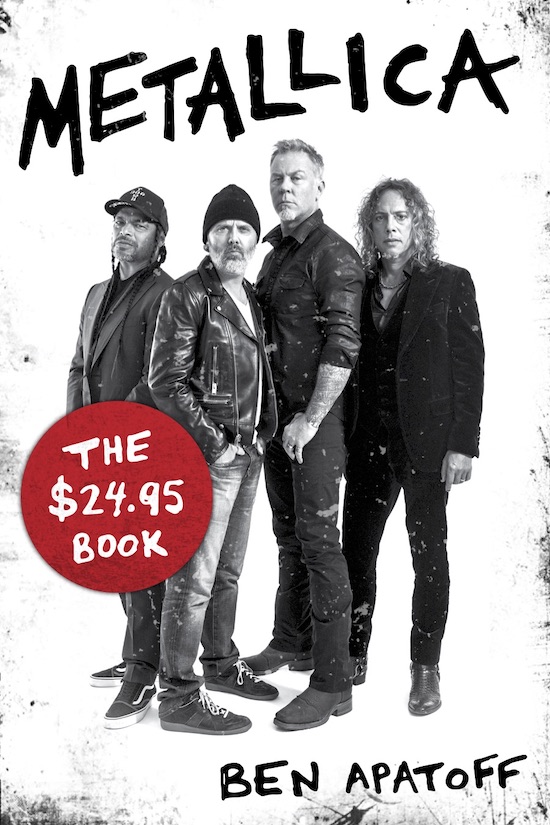
Metallica: The $24.95 Book by Ben Apatoff is published by Backbeat