
Photo by Peter Ashworth
Along with Factory, Mute, and 4AD, Some Bizzare was a vanguard of outsider art in the 1980s. The tracklist to the label’s debut release, a compilation called Some Bizzare Album, reads like a who’s who of electronic music, featuring contributions from Soft Cell, Depeche Mode, Blancmange, and The The. Over the next decade, its roster would include Marc Almond, Cabaret Voltaire, Einstürzende Neubauten, Foetus, Swans, Coil, and Psychic TV. But the music is only half of the story. Self-styled label boss Stevo Pearce’s unconventional dealings with the industry are legendary. Sometimes they were playful, other times less so. Either way he was a force to be reckoned with.
Unlike his contemporaries Tony Wilson, Daniel Miller, and Ivo Watts-Russell, Stevo had no interest in maintaining independence from the 1980s major label system – quite the opposite in fact. He felt that mainstream audiences should be exposed to all types of music, without being told what was ‘difficult’ or ‘commercial’. From there, they could make up their own minds whether they liked it, or not.
Using the success of Soft Cell’s million-selling 1981 single ‘Tainted Love’ as a calling card, Stevo would bankroll albums by Cabaret Voltaire, Einstürzende Neubauten, and Psychic TV, and then licence them to major labels, enabling his artists to retain creative control while using the clout of a large corporation. For a short period this resulted in music from traditionally independent artists (such as Test Dept’s Beating the Retreat) being distributed by mainstream entities. Even the acts who may not have seemed as outré on the surface soon had their paymasters ruing the day they’d thought Stevo was bringing them another pop smash. They soon found themselves dealing with music and visuals that pushed the boundaries, both in ambition (like Matt Johnson’s insistence on making a video for every track on The The’s Infected album) as well as taste (like Soft Cell’s ‘Sex Dwarf’ video).
However, Stevo’s idea of getting leftfield bands treated as unit-shifting pop stars with the budgets to match soon fell apart when the money spent on the records wasn’t reflected in the amount coming back. The majors grew tired of Stevo’s pranks and his idealistic approach to A&R. Out of necessity, Some Bizzare started to release music independently. Stevo still had a vested interest in Marc Almond and Matt Johnson’s major label careers, including another global smash for the former with ‘Something’s Gotten Hold of My Heart’ in 1998, and The The’s huge Mind Bomb album the following year. But for the most part the music Some Bizzare put out independently went on to define the burgeoning industrial music scene: Einstürzende Neubauten, Foetus, Swans, and Coil were all hugely influential to a generation of US bands such as Skinny Puppy, Ministry and Nine Inch Nails.
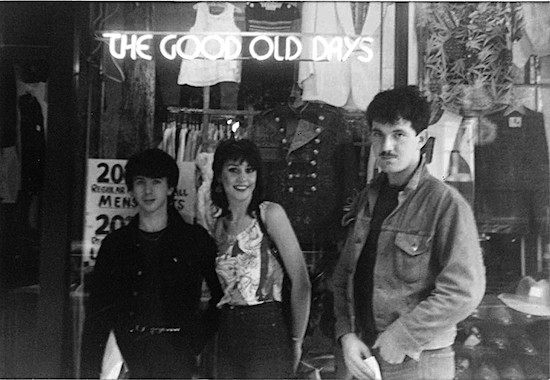
Marc, Jose, Dave. NYC 1981. Photo by Brian Moss
Unfortunately, credibility doesn’t pay the bills, especially when running an indie label as if it was a major one. Art galleries, champagne fountains, and bespoke tailoring are just some of the things that Stevo was spending money on – money that some acts believe should have been going to them. One-by-one, the Some Bizzare artists left in acrimony, and without another big-selling pop act like Soft Cell to balance out the more left-field A&R choices (as well as the books), Some Bizzare’s influence diminished along with Stevo’s ability to wrestle money from the majors.
Over 40 years on from the legendary first compilation that started it all, a new book charts this unlikely story. Through the words of the people who were there, Conform to Deform: the Weird & Wonderful World of Some Bizzare tells the picaresque tale of the teenage DJ from Dagenham who took on the music industry in its pomp and – for a while at least – beat it at its own game.
As Karl ‘Regis’ O’Connor is a huge fan of the label – when tQ asked for his Baker’s Dozen back in July 2020, eight of his choices were Some Bizzare releases – we sent him to speak to the book’s author Wesley Doyle about their relationships with the label, the music it put out into the world and why the industry still needs characters like Stevo.
Karl O’Connor: I grew up in the West Midlands in the 70s and 80s. The way we defined ourselves back then was through the music we listened to and the way we dressed. An interest in the arts was viewed with suspicion, and if you showed any sensitivity it was soon beaten out of you. You formed new friendships because of music, and through that you start to speak a different language, one that maybe your old friends don’t speak, and certainly one your parents wouldn’t understand. That doesn’t really happen now, because everybody speaks the same language, because we all we’re all living on the same platform, the flatline deadline of the internet.
Wesley Doyle: I was 25 miles outside London, but I might as well have been on the moon. Soft Cell was the gateway drug for sure, but I was soon obsessed with everything about Some Bizzare. Every time I’d come into London to go record shopping, I’d always swing by St. Ann’s Court and just look up at the windows, thinking, That’s where it’s all happening. I wanted to capture that feeling in the book.

Jane, Blixa, Alex. Photo by Bleddyn Butcher
Karl O’Connor: It certainly put me back into that particular time, and how my life was before and after that early period of Some Bizzare. That moment when you heard ‘Tainted Love’ for the first time. It’s so difficult to explain it to people because that record is so overplayed now, it’s been robbed of meaning. Soft Cell was beyond subversive, they kind of broke the DNA of rock’n’roll, and that was so fucking offensive to some people. And when I watched Top of the Pops, I thought, “There’s only two of them, so maybe I could do that as well.” I’d never really felt that way about anything else. But if you think in that short period of time, from ‘81 to the of start of ‘84, how many records Marc Almond and Dave Ball produced, together and apart, and the sheer quality of them all, it’s incredible.
Wesley Doyle: Soft Cell appearing on Switch in 1983 was a big deal for me. Bringing on Clint Ruin [AKA JG Thirlwell] and demolishing Suicide’s ‘Ghost Rider’, all on Friday teatime TV!
Karl O’Connor: I was at my grandparents’ house when that was on. We were all sitting watching it, and they did ‘Soul Inside’, which was the new single and fucking great. Then this Clint Ruin guy appeared and started screaming his head off. Halfway through my grandad said, “They’ve lost control! They’ve lost control of television!” and he just got up and left. And I was thinking, “Who’s this Clint Ruin guy and what’s this song they are playing?” And you find out about Foetus and Suicide and your world opens up. And you know there’s absolutely no fucking way a normal record company would have allowed that to happen. On that day Soft Cell did absolutely nothing to help the record company shift units, what they did instead was create history.
Wesley Doyle: That’s Stevo’s “conform to deform” mantra right there. On the back of Soft Cell having these massive hits, he convinced Phonogram to put out the first Marc and the Mambas album, Untitled in 1982, which featured Matt Johnson of The The. Then he got Warner Bros. to sign Genesis P-Orridge’s post-TG band Psychic TV. He let all the other labels know they’d lost out by sending them a brass dildo with every major label’s name on it, except Warner’s.
Karl O’Connor: Some Bizzare had all these extremely flamboyant, amazing looking people: Foetus was a comic book rock god, Genesis and Psychic TV resembled a Tibetan cult, and Soft Cell just looked amazing. But in the middle was Matt Johnson in double denim and moccasins. He really opened Some Bizzare up to another audience because he had a more traditional songwriting side. Everybody on Some Bizzare was so different, but there was something that connected them all and gave them this great momentum. And that was Stevo’s vision, his refusal to see things as high art and low art.
Wesley Doyle: He just did not see the difference. Why shouldn’t Einstürzende Neubauten have an album out on Virgin? When Stevo organised the Neubauten gig at the Kilburn National in 1987, and put Showaddywaddy as the support, the press thought it was some situationist prank to wind people up. But Stevo told me he did it for entertainment reasons, not as a piss take. At that time, everyone in the UK knew who Showaddywaddy were, and they were a great live band. So who wouldn’t want to see them play ‘Three Steps to Heaven’ and then have Neubauten come on and do their thing?
Karl O’Connor: His vision was so unique and so pure. He had his scams, sure, but for the most part I think that’s how he saw the world, because he was so young. Maybe that’s how we saw the world at that time, too? We’re talking about Some Bizzare as a record label, but I don’t think it is. What is Some Bizzare? I think it’s just a venture in goodwill. As JG Thirlwell points out in the book, Mute are a good comparison, but for me the difference is Daniel Miller led from the front, but was almost invisible. Whereas Stevo thought he was part of the band.
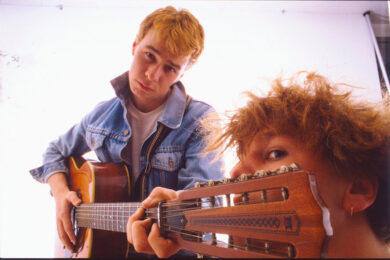
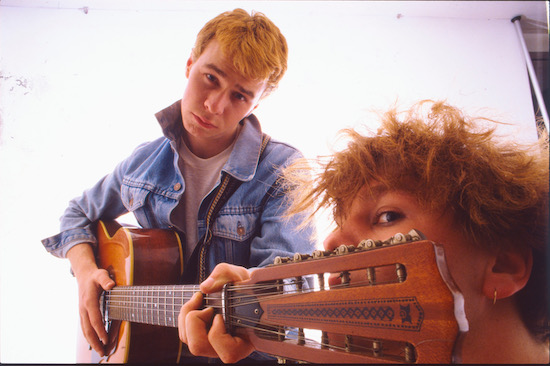
Wesley Doyle: The photographer Peter Ashworth very kindly gave me access to his archive for the book, and on quite a few sessions for Soft Cell, Matt Johnson, and Psychic TV, Stevo would more often than not appear in the photos. He may not have contributed anything musically, but he still feels an ownership on all the records that came out on Some Bizzare. He said to me once that in the three years it took Matt Johnson to follow up Soul Mining with Infected, he [Stevo] “produced” 13 albums!
Karl O’Connor: But what is producing? Did Andy Warhol actually produce the Velvets? Maybe that’s it. I think it was just his cocksure way that was so inspirational to me because I could never make a connection between getting into the music industry and normal people. But Stevo was a bit like me, or people that I knew, and he proved it could be done. And that was a real kind of eye-opener. Here was this 17-year-old, who couldn’t read or write, and had a bad speech impediment, but could still communicate his ideas. And that was alchemy. Would it be allowed now? I don’t think so. That’s why music like this doesn’t exist now because you’d be cancelled by half eleven in the morning.

Photo by Peter Ashworth
Wesley Doyle: It wasn’t just the music though, there were so many things going on alongside it. The sleeve notes, the artwork, the videos, the films, the cable TV show. MTV was still finding its feet, but videos like Soft Cell’s ‘Sex Dwarf’ and Cabaret Voltaire’s ‘Sensoria’ weren’t meant for TV, they were made for the clubs. There’s also an argument to be made that Stevo was pushing young British art with his Discretely Bizzare gallery years before the YBAs.
Karl O’Connor: It was so cool that The The’s Infected – The Movie was shown on Channel Four [on 16 December 1986]. I remember being very excited and staying up to watch it. That was a big deal, the peak of Some Bizzare really. And by that point they had Swans too, who are the real fucking deal, on every level. Some Bizzare 1981 to ‘86, had a really great run, but I can never work out where it all went wrong.
Wesley Doyle: I think not having a contingency for when bands wanted to leave was why Some Bizzare stalled and a contemporary like Mute succeeded. And I agree with JG Thirlwell that A&R decisions went out of the window, too. Maybe if Stevo had signed Yello, who he was after at one point, things may have been different. But he signed Test Dept instead… who are brilliant but weren’t going to be troubling the top 10 any time soon.
Karl O’Connor: The last thing I bought on Some Bizzare was the Unmen album (1992). I think there were fragments of what happened before in there, but Stevo was still trying to pull the same old A&R tricks and wind people up. The industry had moved on, and didn’t tolerate mavericks like him anymore. In the 80s I guess he got away with it, but in the 90s he didn’t have that roster, and eventually burnt all the bridges.
Wesley Doyle: Collaboration was key to Some Bizzare, and you’re known as a serial collaborator yourself.
Karl O’Connor: I’m quite choosy with the people I tend to work with. I prefer to have a bit of history and know that I get on well with them. But with Some Bizzare they collaborated because they had an unshakable trust in each other to say, At this moment in time, I’m going to work with this person, because we can really move things on. So that’s why Matt Johnson played with Marc Almond, Marc Almond played with JG Thirlwell, JG Thirlwell produced Coil, it just went on. A lot of collaborations nowadays have an ulterior motive. You just know some things are done for cynical or commercial reasons.
Wesley Doyle: I think there are still people doing what Stevo tried to do, although I’m sure he would disagree. DJ Food, in the book, mentions James Lavelle, which I thought was a good example. Also Wiley, too, who uses mainstream channels when they suit him, and goes underground when they don’t. Your label Downwards celebrates its 30th birthday this year, and you’ve remained true to the intentions you had when you launched it. Would you say Some Bizzare had an impact on that part of your career too?
Karl O’Connor: Completely. Stevo definitely influenced me in what I do and my approach with Downwards. It’s all about encouraging chaos and taking risks, as well as probably being a contrarian and a wind-up merchant. Not living in the shallows but in the deeper water, just out of your depth, ‘cos that’s where the great stuff happens. And I have skipped over artists begging me to put records out, records that have gone on to not only sell loads of copies, but also win some nonsense award. And I passed on those records to put out something I thought was more interesting. And I never, ever regretted those decisions. I never go for the obvious.
Wesley Doyle: Zeke Manyika talks about the Some Bizzare ethos of doing things ‘hard’, not necessarily loudly or aggressively, just with commitment and purpose.
Karl O’Connor: For me, talking about Some Bizzare, can make me sound a bit, Oh, kids can’t make music like they used to, but it’s not as basic as that. It’s the intensity that doesn’t exist anymore, and that’s hard to generate unless it’s coming from a genuine place. And that’s ultimately what Some Bizarre was about: intensity, which is why its brilliance was so short-lived.
I think people like Stevo, and people like us, we weren’t listened to, and if you’re not listened to, you have to go in hard. And that’s the thing about people who have been muzzled all their lives. Nothing to do with class or anything. It’s to do with just not being heard or understood. I loved Stevo’s quotes that he put on the record sleeves, he was almost doing Burroughsian cut-ups in his head. And that it all came from the biggest council estate in the UK makes it even better. Ultimately what I loved about Some Bizzare was the friction between this working-class nutter and some of the greatest artists of a generation. And the music that friction produced hasn’t been surpassed. And people can argue that if they want to but they’re wrong.
I think someone should invest in Stevo before it’s too late. If I had unlimited funds, I’d give it to him – just to see what would happen. He’s almost like a talisman of fun. It’s good to have people like that around, and have this little bit of chaos.
Wesley Doyle: If there’s one thing I’ve learnt from writing the book is that there’s still a lot of love for Some Bizzare out there.
Karl O’Connor: It was life-changing for so many of us. Kevin Martin [The Bug] had run-ins with local boneheads in Bournemouth for liking and dancing to those early Some Bizzare records, the much missed Peter Rehberg from Editions Mego had two copies of Swans’ Public Castration is a Good Idea – I mean, who has two copies of that? And cEvin Key from Skinny Puppy says the first Some Bizzare compilation was a key record in his development. So it wasn’t just happening in our bedrooms, it was happening in lots of bedrooms, all over the world.
I can’t give you any more compliments about the book, but when I read it, it felt like something I’d written in my head. And the opening lines just gave me the chills, because I felt at last someone has committed to paper what our early lives were about. No one fucking understood that before, no one understood us. Maybe they will now.
Conform to Deform: the Weird and Wonderful World of Some Bizzare by Wesley Doyle is published by Jawbone Press. Karl O’Connor will be DJing at a launch event being held at Rough Trade East on 28 February, which also features live sets from Some Bizzare alumni Naked Lunch and B-Movie, plus a Q&A with the author.