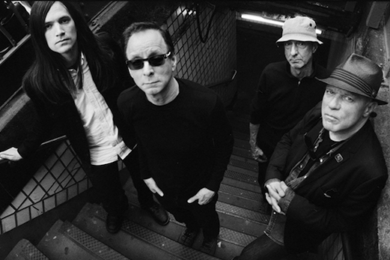


Exactly one year ago, I started making a feature length documentary about the post-punk band Wire. It’s called People In A Film, a title suggested by Wire guitarist Bruce Gilbert.
Along with my producer and long-time collaborator Malcolm Boyle, I’ve been following the group as they develop their new album, interviewing them and filming them recording at Rockfield Studio. One of the fascinating things about Wire is how the members are not friends, but rather work colleagues. However if this implies a lack of passion, the opposite is true, as their creative process is suffused with arguments and friction.
I discovered Wire late. Well, late-ish. In 1980, I belatedly bought their third album 154, which had been released the year before. I acquired it from no lesser establishment than the Preston branch of Tandy, without a clue as to what it might be. The album cover was an enigma; a few geometric blocks of colour on a white background. Like another of 1979’s post-punk masterworks – Joy Division’s Unknown Pleasures – it contained neither the band’s name, nor the album’s title, nor any mention of the musicians. It was such a bold and cocksure gesture. It gave absolutely nothing away.
When I got it back home it turned out I was right to judge it by its cover. The songs were as sleek, mysterious and daring as the sleeve artwork. This was post-punk of the highest order. Following this introduction I quickly absorbed their previous albums, the thrillingly fragmentary debut Pink Flag (1977) and the luminous Chairs Missing (1978). Unfortunately, my discovery coincided with the moment the group decided to embark on a five-year hiatus.
When Wire reactivated in 1985, songs such as ‘Kidney Bingos’ sounded like an experiment to determine what a guitar pop group might sound like in a parallel universe. But their taste for perverse humour and art pranks remained. In fact, few other groups are prepared to go as Dada as Wire. For their 1987 US tour, they hired a support act called Ex-Lion Tamers who performed Wire’s debut album Pink Flag in full. Meanwhile in 1991, Wire released The Drill – an album consisting of eight different versions of the same song.
Wire may have spent much of the 1990s on another hiatus, but that didn’t prevent them participating in various side-projects, including collaborating with electro-pop titans Erasure, and releasing solo albums which grappled with everything from techno to soundtracks to spoken word. When they reconvened at the dawn of the twenty-first century, Wire seemed to acknowledge their legacy for the very first time. However, following a series of dates that saw them cherry picking from their 70s and 80s catalogue, they wiped the slate clean and recorded Send, an album so tense, terse and serrated it made Pink Flag sound stately in comparison.
Thus began late period Wire. They followed the stark, monochromatic bulletins of Send with a run of albums of angular art-rock, summery motorik pop and distinctly non-retro psychedelia, married with lyrics that are simultaneously vivid and wildly ambiguous. 2017 marked 40 years since the release of Wire’s debut. Yet their anniversary long player Silver/Lead could not have sounded less concerned with the past. And crucially it garnered career best reviews and sales, with The Guardian referring to it as “some of the strongest tunes they’ve ever done”.
The twenty-first century has not only seen Wire producing some of their finest music, it’s also seen them executing some of their most audacious non-rock manoeuvres, including a multi-media collaboration with YBA artists Jake and Dinos Chapman. The end result; a live performance featuring films of a brightly clad exercise team doing rigorous work-outs choreographed to the music of Wire was simultaneously disconcerting and deeply daft. Other notable tangents include playing on stage inside a row of large boxes, collaborating with the Michael Clark Dance Company and performing with a 50-strong ‘guitar orchestra’. In recent years Wire have also curated their own series of international music festivals showcasing the best of emerging left field bands alongside established artists like Earth, St. Vincent and SWANS.
The only other group of Wire’s seniority who could be said to have operated with anything like the same degree of focussed forward momentum were The Fall. Whist the two groups sound radically different, they shared the same uncompromising attitude, the same privileging of new work over old, the same lack of show business gestures such as guitar solos or rolling out the hits. Yet if The Fall appeared driven by gut instinct, Wire always seemed a far more cerebral concern. As did another possible Wire analogue: Scott Walker. A defiantly modern artist, his late period work saw him undertaking an abstracted one-man safari. But whilst Walker was intent on abandoning conventional song forms altogether, and late period Fall pared their sound down to its garage band roots, late period Wire have continued to operate within their original perimeters, using sound as building blocks to create music shorn of ornamentation but rich in texture, mood and energy.
Late period Wire has in fact a legitimate claim to being best period Wire. Yet, within the world of rock classicism, the group seem destined to be forever defined by their first three albums of the 1970s. Their influence may be constantly sited by artists as diverse as Henry Rollins, My Bloody Valentine, Parquet Courts and Savages, yet Wire’s current output is accorded only a fleeting mention. Such nostalgia-based thinking is in itself antithetical to Wire’s MO and fails to engage with the vitality and essentialism of the group’s recent work.
All of which started me thinking the time had come for an overview of the group’s trajectory and an analysis of their unusual working practice. People In A Film is an attempt to capture the strange, tense and witty world of Wire. It’s also, if I may be blunt, a crowdfunded project. The response so far has been amazing. But we still have a little way to go before the campaign closes. So if Wire have changed, enhanced or disrupted your world you might want to consider helping us fund this film. It’s never too late.
To help make People In A Film a reality, please visit the crowd-funding page. Wire play this weekend’s End Of The Road festival
Graham Duff’s 13 essential late-period Wire tracks
‘In The Art Of Stopping’ (2002)
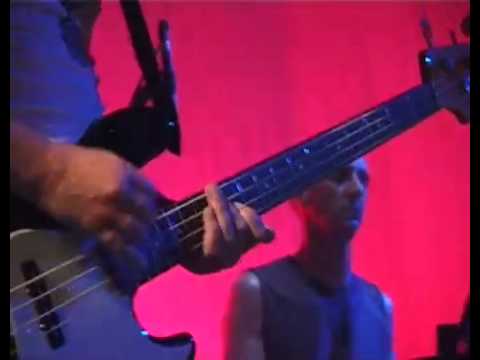
With it’s ten word lyric, this is the perfect calling card for twenty-first century Wire. Sharp, edgy and mercilessly repetitive.
’Trash/Treasure’ (2002)
A rare melodic beauty from a period when the group were generally investigating harsher terrain. Newman’s keening vocal is goose-pimple stuff.
’Being Watched’ (2003)
With a sneering lyric about self-voyeurism and a stripped down performance from Grey, ‘Being Watched’ rides out on a Gilbert guitar line alive with jagged joy.
’Hard Currency’ (2008)
Guitars constantly mesh and diverge, as the rhythm section forges an addictive groove. This is Wire as psychedelic beat group.
’Please Take’ (2010)
The chorus of “Fuck off out of my face, you take up too much space” would seem crude if it were shouted, growled or hissed. But, ever the contrarian, Lewis’ delivers this vicious couplet in a smooth croon.
‘Adapt’ (2010)
A classic example of Wire perversity, ‘Adapt’ is a pessimistic state of the world address yet it’s conveyed via a sliver of bright-eyed musical optimism.
’Adore Your Island’ (2013)
Opens up like The Who’s ‘Baba O’Riley’ in a parallel universe, before surging into a wall of precisely thrashing guitar and back out the other side.
’Re-Invent Your Second Wheel’ (2013)
A majestic composition in the manner of ‘Kidney Bingos’, with an aching vocal melody from Lewis and a lyric which manages to be both impenetrable and heart-breaking.
’Swallow’ (2015)
This is the kind of nagging ear worm that Wire have always excelled at creating. In fact, ‘Swallow’ seems to posit repetition as a form of transcendence.
’Harpooned’ (2015)
Eight minutes of slow, grinding riffage are eventually subsumed in a tempest of distortion. A reminder that Wire’s live shows are conducted at ear crushing volume.
’Forward Position’ (2016)
A gentle, luminous beatless drift, this is Wire at their most ambient, with another great vocal performance from Newman conveying a bruised sanguinity.
’Playing Harp For The Fishes’ (2017)
With its deranged widescreen grandeur, this is Wire in epic mode. The lyrics switch between the poetic and the matter of fact, whilst guitars and synths swarm with dramatic intent.
’Short Elevated Period’ (2017)
With buzzsaw riffs and “ooh-ooh” backing vocals this is new wave pop with a distinctive Wire twist. The structure of verse/verse/middle eight/verse/chorus/chorus/chorus is one few groups would even dream of.