
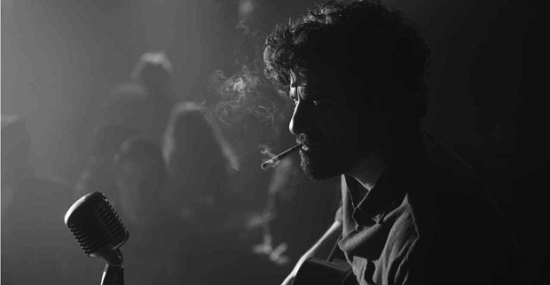
The Quietus was recently lucky enough to have Gary Green in attendance at two roundtable interviews alongside Drowned in Sound , Bring The Noise and Hey U Guys with pivotal players in the latest Coen brothers film Inside LLewyn Davis, star Oscar Isaac and musical director T-Bone Burnett. Here’s how it went down.
Take a quick look at some of Joel and Ethan Coen’s back catalogue; Fargo, The Big Lebowski and No Country For Old Men are just a handful of the classics that the two brothers have conjured up over the years, and beyond those particular cuts that spring quickest to mind, nearly all of their films have enjoyed – and are still enjoying – a long life span in film-goers’ consciousness; it’s a testament to the level of craft that helped formed them in the first place, and it’s only natural that thirty years after their debut Blood Simple, they’ve swung the camera onto the process of and devotion to art itself, and the myriad triumphs and failures that go with it.
The Coens have sculpted their unique cinematic language to a fine degree, most prevalent in their new (soon-to-be) classic Inside Llewyn Davis which takes the Coen’s much-loved idiosyncrasies – dryer-than-a-desert humour, hilarious minor characters, and an unfortunate protagonist put through the wringer – and transplants them to snowy 1961 Greenwich Village, New York City. Talking to The Quietus, Oscar Isaac, who plays the titular would-be folk musician, elicits the character he plays in many ways: talented, good-humoured, and a holder of articulate opinions on the music world, which the Coen’s film portrays with no punches pulled. Isaac does the same.
So what was it about Llewyn that made you want to play him?
Oscar Isaac: Everything. Everything, I mean – it’s like an actor’s dream. First of all, you’re in a Coen brothers movie; you’ve won already. And on top of that, there’s so much room – although it’s in a narrow bandwidth because he’s a very internalised character – but you get to just work on thoughts. It’s not about an expression of anything, it’s about really thinking and taking in what’s happening. It’s a great challenge.
On that note, how much of this character is Llewyn Davis and how much is Oscar Isaac?
OI: I’d say half of the character is what I brought to it, and the other half is what the Coens brought to it… I won’t even say that’s right. Half of the character is me, and the other half is the movie, meaning that it’s a very unusual movie. it’s not a character within a plot doing a thing. The movie is the character. It’s called Inside Llewyn Davis. So, I provide what he sounds like, what he looks like, his physicality, his reactions, and they [the Coens] provide the context, the meaning, so yeah – it’s an unusual structure in that the character and the movie are completely fused together.
Considering the fact that it is called Inside Llewyn Davis, how do you navigate the fact that on stage, when he’s performing, Llewyn is being quite charismatic – and in his life he’s clearly quite a charismatic person who people are drawn to – but in life he does behave in a pretty appalling way sometimes. How do you navigate that sort of inherent contradiction in the character?
OI: There’s a Charles Bukowski poem that actually helped a lot with that, called ‘Bluebird’, where he says: ‘There’s a bluebird in my heart that wants to get out but I’m too tough for him. And I say stay in there, I’m not going to let anybody see you.’ And that was a bit of a mantra, where he has something that he wants to share that’s quite gentle and beautiful, but life is making him shut that down. And yet he still nurtures it quietly – you know, it’s his music. That’s what his bluebird is.
You come from quite a musical background. Weren’t you in a punk band?
OI: Yeah, tons of bands.
Did that help you relate to the character of Llewyn a bit more, even though it’s quite a stark contrast?
OI: Yeah, music’s tough man. I remember I was in a hardcore band and I had written a song that I wanted to sing, though I was just the guitar player, and we had our singer – our screamer – and I was like, "I’ve got this song, it starts off real slow and then goes crazy." And they’re like, "alright" – so we started playing it and within thirty seconds they were throwing lighters at my face. Like, they didn’t want to wait for the hard part [laughs]. So yeah, you have to, like, you get used to it. Luckily in that situation you can hide behind the bass player, but when it’s this kind of music and playing guitar in front of people, it’s pretty intense.
Given your whole image and the fact you’ve got this musical background, and your singing voice, did you feel that this role was just right for you? Did you feel like this was one you really deserved?
OI: Well, yeah, I felt that I had been preparing thirty-two years of my life to do it. And everything that I had done led me to that point. And yeah, it was literally dreams coming true; I dreamt of being able to work with the Coens, and to be able to use music to the extent that I was able to. I mean, I couldn’t even have dreamed of this thing. That’s how perfect it is.
Is that something that you’ve looked for, a way to combine the acting and the music?
OI: No, it’s just come my way. I haven’t sought out parts that have music in them. This is the only one that I sought out; I heard about it, and I was like "I gotta get in on that". But the other ones have really just come my way.
What’s your favourite song from the film to perform?
OI: Erm… probably the easiest one [laughs]. It’s probably Dink’s song, ‘Farewell’ – but the one at the end, the solo one, the one in ¾. That one. But ‘Green Rocky Road’ is really fun. That one feels like surfing, it’s so syncopated and just resting on this one G, like a drone.
Did you stay away from finding out too much about (the films inspiration) Dave Van Ronk?
OI: No no no, I clung to David Van Ronk like a lifeline. I had listened, got everything that was recorded from him, I had spoke to people that knew him, I read his biography… I mean, no, I wasn’t playing Dave Van Ronk, but he’s such a window into that time – and that book, if you get a chance to read it, The Mayor of McDougal Street, it’s so great, so funny. No, I found that really helpful.
It must be really fascinating to explore that whole period of music, because every time we think about folk music in our heads we think about Dylan, etc, but this kind of predates all of that.
OI: Yeah, I wasn’t aware at all of that stuff. And people like Karen Dalton, if you haven’t heard her she’s an incredible singer and [has] a really tragic story, but really amazing. I’ve heard some of these people, and I think, how did this person not become a huge star? It’s crazy. And that’s what the movie’s about. You look at somebody, and you wonder "how did this person not make it?", y’know? This person is clearly somebody who’s very talented, and luck is such a huge part of most things.
Yeah, like somebody like Rodriguez, if you’ve watched Searching For Sugar Man and how he never made it.
OI: Yeah, exactly.
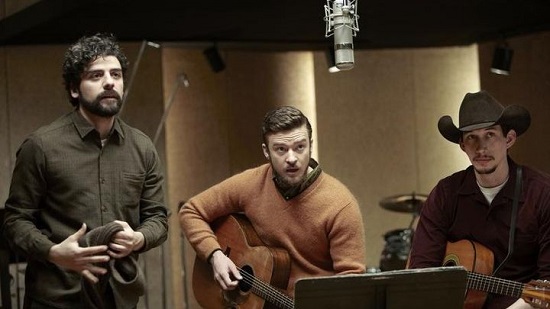
You’ve worked alongside some pretty big music names on this film, obviously T Bone Burnett and Justin Timberlake. During the entire process, did you feel competitive?
OI: Competitive with T Bone Burnett? [Laughs] Oh, was I intimidated? Yes, I was very much intimidated by T Bone, as he’s such a legend, and Justin Timberlake, and Marcus Mumford, people who just dedicate their whole life to music. But when I arrived, there was no ego – the Coens, they get people who are philosophically aligned, so there’s no assholes. And particularly Marcus was such a soulful and generous guy who put us all at ease, and we were just making this thing together.
And you played the music live as well. How was that for you, because you learned the Travis picking [technique]. Was that quite difficult, as it was something you had to just learn and then play it live?
OI: Well, what I don’t have in talent I make up for in obsessiveness. I drilled this stuff so much that when it finally came time to do it, I felt pretty confident. And also since I’d been in the studio before when they were recording something, it felt a lot more like that. Y’know, as opposed to a live performance where if you fuck up, that’s it – just like once chance. Whereas here, if you screw up you get another take.
I think the film really benefits from the fact that there were some genuinely live performances.
OI: Oh, it’s crucial. I mean, if it’s a movie where he’s talking about authenticity as a folk singer and all of a sudden I’m lip-syncing, and not really playing, that would be bullshit, y’know.
Has it inspired you at all to go back and do another record, or get back into music?
OI: Well, I’ve never let it go. I’ve always played and recorded, but, definitely this style of music has infected all of the music that I play, and particularly the community of artists that the Coens and T Bone create, these guys that have been playing now a lot, and out of that comes music. And maybe one day, we’ll share some of that.
You touched a little bit there on the whole nature of authenticity and how that’s a key part of the film. So maybe if you could talk a little bit about what his relationship with what he terms as careerism, and how that affects the plot.
OI: What he believes careerism is? You know, it’s self-promotion, everything that we’re told that we’re supposed to do nowadays, this idea that you’re using this thing that you do to get something, to get somewhere. At the same time, he’s not above hypocrisy, just like any other person – if he needs it, he’ll go record a novelty song to get some money, and he wants to go to the Gate of Horn [the fictional Chicago-based club in the film]… his initial instinct is ‘Why should I go to Chicago? I shouldn’t have to go to Chicago’ – and as things get more dire and more dire, he forces himself to take steps in that direction. But y’know, he’s a preservationist. He’s a curator. That’s what he does. He plays old folk songs. These guys in folk in the Village, Dave Van Ronk says people were coming down there to see the beat poets, and in between the sets, in the turnover, they’d get a folk singer up there to clear the room, so they could get the new people in. So you had like two songs to clear the room, and if you didn’t, they wouldn’t hire you again. So that’s how much respect folk singers [got]. That was something literally coming from a place of love, as opposed to trying to get on the charts – but at the same time, those things, they intersect at some point. You still make a record, you still want people to hear it. He wants people to hear it, he just doesn’t want to do it for the Man.
Having said that, because the Coens with several of their films have a reputation of putting their lead character through Hell. The odds are always against them. How was it to play one of these wonderful kind of failures throughout?
OI: Yeah, it was great. I did ask at one point, "Are we making The Passion of The Folk Singer?" But that’s just inherently more dramatic conflict, right? That’s just what drama’s about; it’s about conflict. They’re just particularly good at that.
I think it was Joel who said that there wasn’t a particular linear path to this film, or structure – there wasn’t a kind of narrative, [or] plot, you could say. That’s something that I found charming about the film, and I think that the atmosphere to it, the songs, created this wonderful movie – but from a production kind of view, when you first received the script, what did you make of that? What did you make of the kind of lack of direction?
OI; You know, I didn’t see that. Maybe just because I knew it’s Llewyn, so it had an arc to me, I know that it comes back around, because he’s a hamster in a wheel. But it made sense to me – it actually reminded me of a folk song. In a folk song, you have first verse, chorus, second verse, chorus, third verse, chorus, and then back to the first verse. And the first verse now means something different now that you’ve gone through the journey of the song. And the movie struck me as that. I also come from the theatre, and I guess we tend to be a lot more open-minded when it comes to theatre, not only with structure but also with the characters; for some reason we’ve been conditioned in movies where like, characters have to be ‘sympathetic’ and ‘likeable’ and all this shit, whereas when you go to the theatre… I’ve never heard anybody talk about characters in a play, and be like, "I wish he was more sympathetic." You know? That’s not the story. I don’t know why in movies we’ve been conditioned that that’s how it has to be. It’s about bigger things than that. So yeah, it never struck me as strange as it should have; but I didn’t know any better I guess.
Saying that, it’s kind of the same with musicians. We seem to know every single detail about musicians’ lives, that they have to be likeable people. Whereas, look at Dylan…
OI: Haha, yeah, he’s… he keeps everybody at quite a distance.
For Llewyn it’s kind of the same. I think that he’s incredibly charismatic on stage, but doesn’t have to be a likeable person.
OI: Yeah, I’ve thought that too, like sometimes why do we require artists to be at least as or hopefully more interesting than the art that they do? There’s that desire that they need to be more interesting, but that’s a lot of energy.
Going back to authenticity, obviously it is a big point in the movie. Have you had any similar experiences to Llewyn, where you’ve had to maybe not necessarily sell out, but get your head around what it means to play the game?
OI: Uh, yeah, you know, as any creative person that’s trying to make a living, has to come up against that. Because it’s a completely subjective… you’re at the whim of people’s opinions, really. So that is a difficult thing. And also, as you get more opportunities you have more opportunity to do bad stuff. If they’re going to pay you more for it, that’s how it goes – the worse it is, the more they want to pay you, because they know it’s bad. So that yeah, you have to manage that and figure out what’s important to you. Y’know, longevity and doing something that’s actually of interest to you, and figuring out what that is.
It’s obviously worked out for you.
OI: Yeah, well I try to stay away from that kind of other stuff, y’know.
So were you able to draw a lot on your own experiences from the beginning of your career, in terms of trying to just make yourself known and get your name out there?
OI: Yeah, but I’m on the flipside of it. I’ve always been very fortunate when I’ve got something, and even when I wasn’t trying to push myself out there, on a whim I auditioned to Juilliard and I got into there, so things have lined up in a great way. And this movie’s an acknowledgement of that to a certain extent, that luck plays such a huge role in the life of the artist; the right time, the right moment, and seizing that moment, that’s a lot of it. But the idea of being frustrated about having to express but it’s not getting out there or people aren’t interested.
So does Llewyn – obviously he’s a musician – but can this then be translated into acting?
OI: Yeah, yeah, definitely, and I don’t think it definitely has to be about the artist, y’know, it’s that idea that the struggle of getting through existence, you know. It can be really rough sometimes. And feeling like you’re on the outside looking in. Sometimes the loneliest you can feel is in a crowd.
How much of Llewyn’s nature was down to that frustration that he’s going through? Or was he just an asshole?
OI: Uh, yeah, I don’t think he was just an asshole. I wouldn’t even say he’s an asshole. I wouldn’t take Carey (Mulligan)’s – Jean’s – word for it. Y’know, I think that he thinks that everybody else is kind of acting like an asshole too. And they kind of are. When you look at it, his manager sucks, she’s [Jean] taking zero responsibility for the thing that happened, and so on. So yeah, I think that he’s a joyful, gregarious, warm person – just not this week.
That’s interesting you say that, because the film does just look at him during this one small period. What do you think he did the week before this, or the week after? Do you think this is a representation of him all the time?
OI: I think it’s probably been rough for a little while. I think ever since his partner jumped off the bridge… he’s a man in grief. That’s also a big thing that’s going through it. He’s grieving the loss of his partner, and also where he’s at in his life, and the pressures have built up, and this one week is where it really just comes to a head. I guess one could describe it as being an asshole, but if I was going through the same shit, I think I’d be far worse – or not alive. I’d probably be headed to the nearest bridge myself.
When you play roles, do you often think about where the future lies for them after the script ends, or is that ending something that’s always quite definitive for you?
OI: It’s pretty definitive. For me, the end is about what came before. There’s a finite amount of energy you have, and figuring out where he came from tends to be more indicative of present behaviour or future behaviour, but it’s fun to sometimes think about what happens after.
So in your opinion, the ending – or the beginning – of the movie is more of a happy one?
I wouldn’t describe it as ‘happy’. But I think that it’s… I think there’s hopefulness in it.
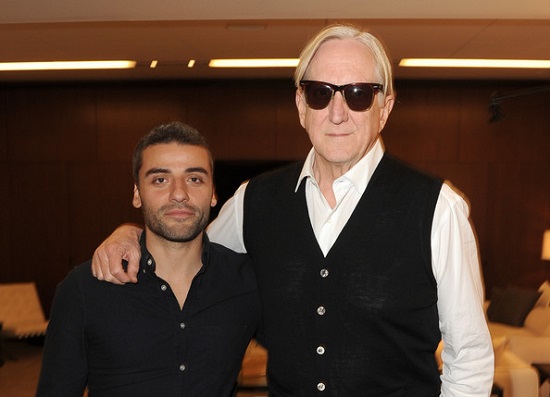
Record producer, soundtrack supervisor, songwriter and American music maverick are all titles that could accurately describe T Bone Burnett, the sixty-six year-old who’s weaved countless musical spells over the course of his illustrious career. From his early days producing records for bands such as El Roacho and touring with Bob Dylan as part of his Rolling Thunder Revue troupe of musicians, there’s been a long-occurring alchemy to nearly everything Burnett does. He’s been the Coen brothers’ most frequent musical collaborator, and with that Dylan connection already established, he made for an even more perfect fit for their latest folk-splashed celluloid endeavour, Inside Llewyn Davis.
This isn’t the first time you’ve collaborated with the Coen brothers, of course. What is it about their cinematic style and approach to filmmaking that suits your sensibilities as a songwriter and producer?
T-Bone Burnett: We all work the same way, which is that in the studio, if there is a guitar part, we don’t put the person’s name above the guitar – because I’ve never wanted people to feel they have to take possession of any piece of it. All art comes out of community and when communities can get together and not fight over who gets what piece, and instead can say "this is ours – let’s make it great", it just ends up being better. As soon as someone says "this is mine", then it all starts fragmenting and fracturing, so to get the spirit of a piece of art right, everyone has to be generous. I try to do that and I try to leave nothing in the bag when I’m working, and to set up an environment so that others can feel comfortable as well. That’s what they do. Twenty years ago there was a line I wondered which of them wrote, so I asked Joel who wrote it, and he said, "I don’t have any idea." I thought at the time – he knows who wrote that line. But after having worked with them all this time, I don’t know who wrote any of the lines, I don’t know who came up with any of the songs – that’s the beautiful thing.
They work that same way, everyone comes in and puts everything on the table, every actor knows that this movie is going to be seen for a hundred years so they’re not going to leave anything in the bag either. Everybody just wants to come in and do their absolute best work. So all three of us have the philosophy of setting up the environment of people doing their best work, giving them the foundation to do that, then get out of the way and give them the support they need if they need it. They never tell anybody anything to do. They never say, "read the line this way". They may say, "do it like you’re hungover this time", or some adjustments like that, but not even much of that. The idea of leaving freedom for intellectual thought to run wild – something like that.
That’s quite refreshing, especially considering how music in the film industry seems to have a lot to do with ego.
T-BB: And it’s pathetic. It happened when they came up with this idea of having a creative executive. To ‘create’ and to ‘execute’ are completely opposite. The notion that there’s going to be somebody creatively executing something is ridiculous on the surface. We have none of that. We have no creative executives.
Because this is arguably the most musical picture the Coens have made, which is your forte. Did you find you had more of a say?
T-BB: It always feels completely open. Working with them, I’ve always felt that they’ve wanted me to say whatever it is I want to say. That’s what they want from you. It’s not like you have to make a case or anything.
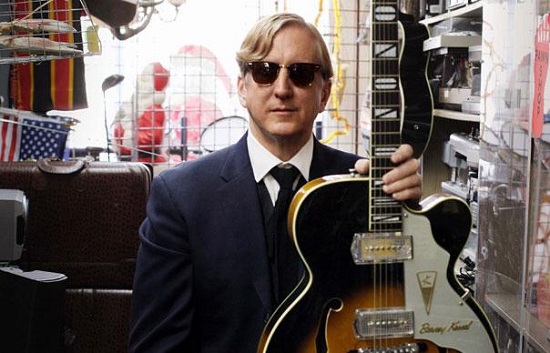
With the films you’ve worked on with the Coens, you’ve managed to highlight areas of classic American music that probably wouldn’t have really impacted on mainstream popular culture like they have in the film. Is it satisfying to know you’re able to showcase this musical lineage to such a wide audience?
T-BB: It is. First of all, it’s something of a mission for me because music to the United States is what wine is to France. It’s an important part of our national identity – it’s probably the core part of our national identity. We’ve defined ourselves through music, since it’s a country that came together through the notion ‘one out of many’. This notion that different languages, different people, came from the East, West, North and South to the United States, with many different languages and different histories and stories, and music became the common language, and our story was told through music. From the Star-Spangled Banner and the revolutionary war – and I wish they would have left out the bombs bursting in air part. Like that one decision, right there, that says a lot about the United States. We don’t have to be bursting bombs in the air all the time. What is up with us? Why don’t we let up with it? – But then the Civil War and ‘John Brown’s Body’ and the battle of the Republican and the Civil Rights Movement of the 20th Century… Starting with the reality that the poorest people in the United States were recorded – this is the greatest act of democratisation, when the American recording industry went down South to places where there was no electricity, and recorded the poorest people in our country and broadcasted their stories and their voices all around the world. That’s what the United States is supposed to be about. That’s the truth of it.
The internet is us attempting a mechanisation of that, which I think is failing horribly, I’m sad to say. It really comes from community and the actual thing we’re trying to mechanise actually needs humans. I’m worried about this [laughs]. So yeah, this is such an important part of our identity and there definitely is a counter-movement to erase it all, and erase our history. I was studying Doctor Zhivago the other day because it’s one of the greatest uses of music in a film ever, the song ‘Lara’s Theme’; they’ll play it and lead you through the story by giving you parts of the song, it becomes a critical and integral part of the storytelling. But the thing that struck me when watching it, was how closely they were talking about Russia, how much it sounded like where I’m living right now. They’ve done away with the individual… I can’t even remember it all, but it’s this totalitarian state they were describing, and I realised that I’m in a worse place than that. This is pretty bad, this is pretty wild.
When I was a kid I had a recurring nightmare from the time I was five until I was fifteen that these stormtroopers dressed all in black, looking kind of like Darth Vader really, came into our church and would start cutting each person’s right hand off and replacing it with a new hand that would be their memory and their guide and their communication system, and it was this amazing new thing. But it was a nightmare – I would wake up from it every night in a cold sweat, that they’re doing this. Then the other day, I picked up my iPhone and I realised, oh, they didn’t have to cut off our hands. They just put it in our hands, you know? This is what they’re doing – we’re living in a surveillance state. This beautiful communication system that we developed, that was supposed to destroy all of these old, archaic structures, and a lot of them needed to be destroyed to be sure. It’s funny because my empathies are so with the anarchists on one hand, but on the other hand, there is this deep history and it’s the only way we remember who we are.
I forget what the question was. But yes, it’s a privilege and it’s important to me – it’s something I take very seriously.
Talking about the creative destruction of technology, for somebody who has been in the music business for as long as you have, do you see it as having a detrimental effect?
T-BB: Oh definitely. In the area of sound quality, we use 90% of our intelligence to process visual information. All the other information enters more subliminally, more unconsciously, but that doesn’t make it any less important, and in many ways it makes it more important. Certainly in the area of sound reproduction, digital has taken us backwards. I have empirical evidence that I can show, I’ve got the whole Capitol Records catalogue and one of these days I will come over and play this stuff for you, but you can follow the generation of sound over the last sixty years to the point now, where there are no sound standards. MP3 was never intended as a standard for audio sound. The reality is, I’m working in 5G and holograms and telepresence, and everything is fast and clear and high definition and it sounds great and everything works. Then you get on the internet, and it’s all creaky and it’s a bad, 20th Century technology that needs to be discarded.
If we’re going to make it out of this century, there are two technologies that we’re going to have to upgrade immediately. One is the internal combustion engine, and one is our communication system. They’re both destroying us. They’re destroying us because we’re having slave labour all around the world make all this stuff for us. In the United States we outlawed slavery in 1860 but we’re using more slaves now than we were in 1860, to manufacture our shirts in these sweatshops. So we’re going to have to get real about who we are because we’re lying to ourselves about what we’re doing. We can’t lose our regional identity as we move into globalism, and certainly our communication system is trying to move us into globalism at warp speed, without allowing us to really make important decisions that need to be made. The World Wide Web consortium allowed anonymous comments in the most non-anonymous forum in the history of the world. It was just a flat out lie. But it was bait-and-switch, they allowed everyone to go on and state their true opinions under a synonym, but they’ve built incredible dossiers on everybody now. This is recorded, people have done all kinds of things they wouldn’t do in normal life, they’ve said all kind of things to other people they wouldn’t say in person. Not just a little bit, but they’ve got libraries and libraries full of it, they’re building huge warehouses out in Wyoming in Montana to house all of the data they’re collecting on everybody. It’s not just the government, it’s every corporation. It’s not ‘the evil government’. There has been an unethical social system put in place and it’s doing the exact opposite of what they said it was going to do. They said it would lower the play field and democratise everything, but instead it has consolidated power in fewer and fewer hands. There is a lot of work to do.
Inside Llewyn Davis is in cinemas now