

3.
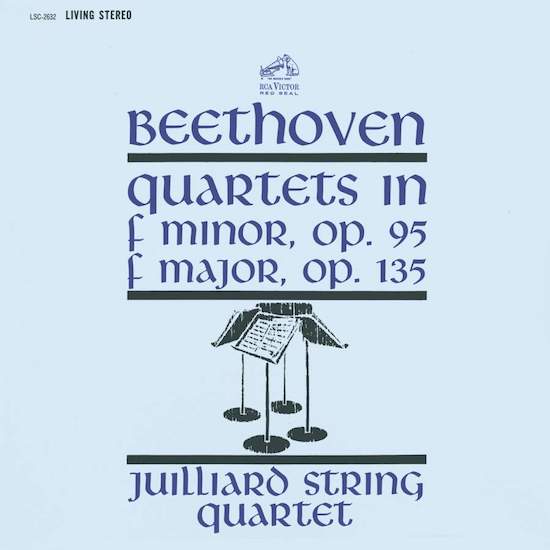
Beethoven – Quartet 16 op 135
What do you think of the theory that Beethoven’s later works forcibly changed music by creating a kind of cul-de-sac; a style of music that no-one was able to follow.
I think that applies to a lot of very original art, the idea that it doesn’t lead anywhere. But the idea that there has to be some kind of progression in art isn’t a valid one. Kafka takes you into a cul-de-sac. Joyce takes you into a cul-de-sac. I don’t think Shakespeare does because he’s so varied it takes you into all sorts of different places. But there’s something about these Quartets which is monolithic. They’re like a huge cliff face that you cannot ascend. There’s no point trying to get up it because you’ll never be able to traverse it: an infinite cliff face. I think the idea of these pieces being a cul-de-sac is pretty much correct but then there’s Schubert who took from Beethoven. He didn’t go back to pre-Beethoven particularly. With quartets up to Beethoven they were very coherent and regimented in terms of form and there’s even a kind of off the peg quality to a lot of them but then with Beethoven everything is resourced and fresh. This quartet was taken very badly at the time. People thought, ‘The man’s gone deaf and now he’s gone mad as well.’ That does not seem to me to be the case but one is looking at it from two centuries on and one has gotten used to everything that came in between but yes, when it came out, it must have seemed surprising or even shocking.