


Moğollar “Eastern Love” (1968)
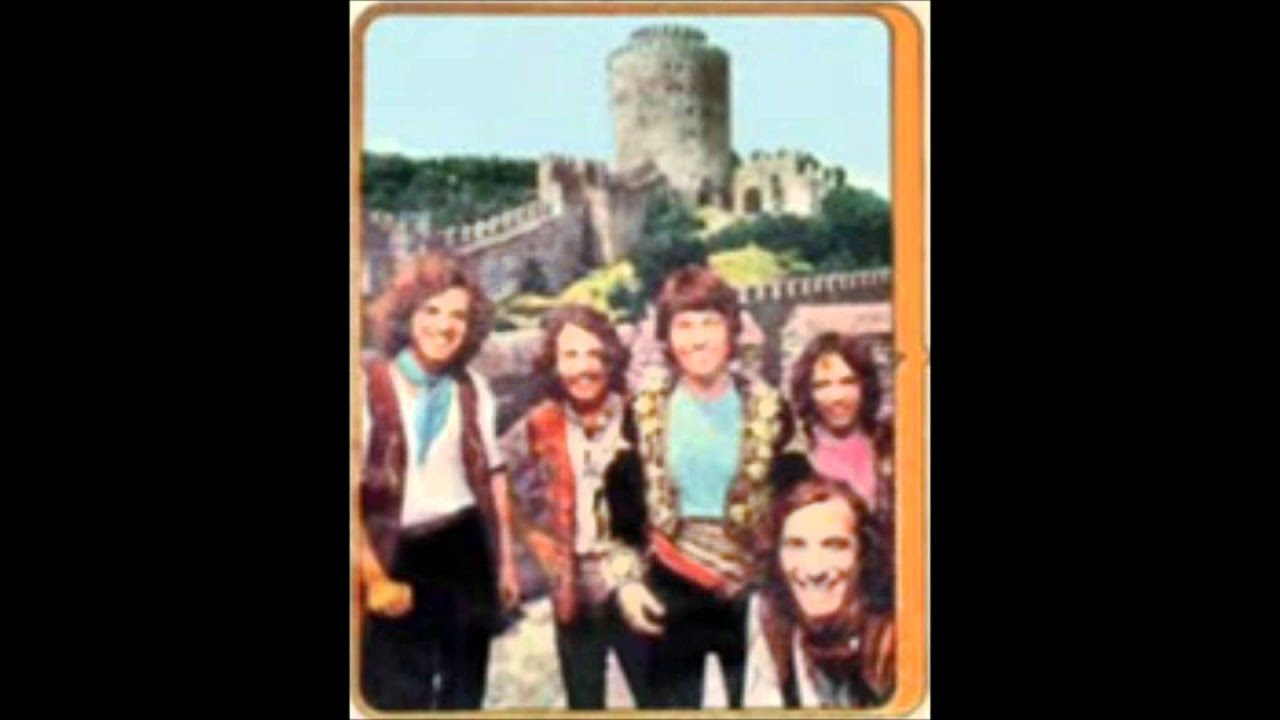
Moğollar were Anadolu Psych pioneers led by keyboard whizz Murat Ses, and among the first Turkish bands to make homegrown psych-rock sounds. With the release of their first single, in February 1968, they revealed their keen allegiance to the Western, paisley-clad hippie counterculture: “Eastern Love” is a jolly psychedelic-pop ditty with trilling organ and bubble-gum English lyrics (“Since you love me I am happy / We will live till the end of time / All this passion without thinking / Till the end of time”) that wouldn’t have sounded out of place tinkling out of the UK’s off-shore pirate broadcaster, Radio Caroline.
Moğollar “Diskogra” (1968)
It didn’t take long for elements of Turkish folk to start showing up in Moğollar’s music as they rode the waves of psychedelic rock pouring eastwards across Europe, while adding their own Anatolian twist. The excellent 1968 B-side “Diskogra ” (“Hard Work”) is driving acid rock – sung in English – sounding like the Yardbirds’ 1966 hit “Over Under Sideways Down” with Cahjt Berkay’s taut, sitar-like lines played on the saz – a traditional, long-necked lute – adding a sense of wired urgency. In concert around this time, Moğollar played rocking cover versions of material by the Crazy World of Arthur Brown and Manfred Mann.
Apaşlar “Gilgamis” (1969)
Although Apaşlar achieved fame as backing band for singer Cem Karaca, this instrumental B-side to the anthemic 1969 hit “Ayrılık Günümüz” (“Separation Today”), shows how far out they were prepared to push on their own. A pulsating electric bassline and in-the-pocket drum groove drive forward, goading Mehmet Soyarslan to unleash a coruscating electric-guitar solo that appropriates the hysterical psychedelic tremolo of Quicksilver Messenger Service’s John Cipollina, before settling into a smouldering raga-rock coda. At just three and a half minutes long, the track provides a tantalising glimpse of the kind of extremes Apaşlar’s live shows extended to at the end of the ’60s.
Cem Karaca and Kardaşlar “Dadaloğlu” (1970)
Released in late 1970, Kardaşlar’s first single, “Dadaloğlu,” was based on a folk song written by a 19th century troubadour of the same name. Essentially a protest song, it voices the discontent of a nomadic tribe forced by the Ottoman government to settle and take up agriculture – and it was a huge hit among Turkey’s left-leaning youth who identified with the poet’s rebellious struggle against authority. “Dadaloğlu” sounded like a roar of protest, too, with a dark, urgent riff played on saz, electric bass and tumbling hand drums providing a framework for leftist hero Cem Karaca’s powerful operatic vocal declamation.
Bunalım “Taş Var Köpek Yok” (1970)
As their name suggests, Bunalım – meaning Depression – were a much heavier proposition than their contemporaries. “Taş Var Köpek Yok” (“There Is a Stone, There Is a Dog”), their debut single, is rudimentary garage rock bursting with a joyful primitivism. The lyrics – a 6th-century Sanskrit poem translated into Turkish by Can Yücel – are koan-like nonsense recalling Donovan’s wide-eyed 1967 ditty “There Is a Mountain” but, through Aydın Çakuş’s barked, sneering vocals, the message is transformed into nihilistic punk sloganeering. An audacious and provocative debut, it’s perhaps understandable that the Turkish record-buying public simply weren’t ready and largely ignored it
Bunalım “Başak Saçlım” (1971)
Bunalım’s second single, released the following year, represented a major stylistic leap. Recorded by a brand new line-up, the instrumental “Başak Saçlım” (“Virgo”) is a much more polished and ambitious production that slams together flaming Edgar Broughton- style freak-blues and a gently lilting saz melody – Bunalım’s first excursion into traditional instrumentation. The B-side, “Bunalım” – another instrumental – is a spooky confection of baroque organ and melancholy melody somewhat reminiscent of Country Joe & the Fish’s psychedelic opus, “Section 43,” with a blazing, desperate guitar solo summoning the downer-fried vibe of Steppenwolf ’s “The Pusher.”
Ersen “Kozan Dağı” (1972)
Chameleonic singer, Ersen, had a huge hit with “Kozan Dağı” (“Kozan Mountain”) in 1972, backed by various prime movers handpicked from the Anadolu Psych community. This highly rhythmic track features skipping percussion, multi-instrumentalist Zafer Dilek’s sharp saz figures, Taner Öngür of Moğollar supplying pulsating bass and Seyhan Karabay of Kardaşlar adding maudlin tones on a fiddle-like traditional instrument called an iklig, slipping off into microtonal spaces like an unwelcome prophesy. There’s a daring vocal performance from Ersen, too, with his idiosyncratic use of rhythmic shushing and panting, a sexually-charged syllabic percussion, as though delivered by an insistent pickup artist.
Erkin Koray and Ter “Züleyha” (1972)
For his short-lived group Ter (meaning Sweat) Turkey’s leading axe-hero, Erkin Koray, recruited guitarist Aydin Çakuş and drummer Nur Yenal, from the recently disbanded Bunalım and set about transforming deeply un-hip, middle-of-the road Arabesque tunes into monstrous blasts from the underground. “Hor Görme Garibi” (“Don’t Underestimate The Poor Guy) begins with a pounding puke-fuzz riff before quickly lifting off into an impossibly frenzied tumble, matched in velocity perhaps only by Deep Purple’s 1971 single “Fireball,” with twin electric guitars fighting for air and Koray’s vocals floating, ghostly, above the carnage. It remains probably the single heaviest track Koray has ever recorded.
Barış Manço and Kurtalan Ekspres “Lambaya Püf De!” (1973)
Charismatic singer Barış Manço named his most influential band after a train that connected Istanbul with the ancient town of Kurtalan in southeast Anatolia. Here, with Mogollar’s Murat Ses on board, the Ekspres pushed out for startling new ground. Released in February 1973 “Lambaya Püf De!” (“Say Puff to the Lamp”) represented a huge leap into the unknown. A teasing saz figure wraps around a sinuous, slow rhythm, with Manço urging his lover to blow out the lamp, whispering a seductive come-on – “Draw the curtain, girl… / Girl, I’m burning, I’m burning for you.” Two minutes in, the clipped, funky riff tips into a double-time dervish dance that is neither rock nor folk but something utterly new.
Edip Akbayram and Dostlar “Yakar İnceden İnceden” (1973)
Diminutive but huge-voiced singer Edip Akbayram formed the band Dostlar in 1973, and released a string of inspired singles. “Yakar İnceden İnceden” (“It Burns, It Burns”), is a frankly astonishing track, beginning with a cramped, wah-wah hook that rushes headlong into a madly propulsive riff powered by seething fuzz guitar and gymnastic bass riding a complex, hiccupping rhythm in 7⁄8 – leaving room for Akbayram to pour forth cavernous vocal declarations, like a holy man shaking with rage or ecstasy, describing the towers of iniquity tumbling in cleansing flame.
Ersen and Dadaşlar “Bir Ayrılık Bir Yoksulluk Bir Ölüm” (1974)
By 1974, Ersen was famous enough to lead his own band and founded Dadaşlar, bringing guitarist Fehiman Uğurdemir of Kardaşlar with him as principle collaborator. The group’s first single, “Bir Ayrılık Bir Yoksulluk Bir Ölüm” (“Separation, Destitution or Death”) rides a jet-propelled, tightly muzzled back-beat with splashes of funky organ – and contains a beautifully realised guitar solo from Uğurdemir that illustrates just how far ahead of the game he was, full of bluesy dips and swoons and intense whammy-bar action.
3 Hürel “Sevenler Ağlarmiş” (1974)
The Hürel brothers – vocalist and saz/guitar player Feridun, percussionist Haldun and bassist Onur – had their biggest hit by far with “Sevenler Ağlarmiş” (“Lover’s Cry”) – a six-minute epic of Anadolu Psych that serves as a touchstone for the entire genre. Kicking in with a heavy riff, the first half is driving acid rock leant gutsy attitude by Feridun’s tightly coiled wah-wah axework. Halfway through, Feridun switches to swiftly strummed saz as Haldun and Onur spin off into a whirling darbuka-drum and bass rhythm, before sliding into a prowling, low-down vamp over which Feridun pours his most gnarled fuzz-guitar solo. Finally, bongos and darbuka set up a percussive barrage as Onur pumps out a seething bassline with the same jungle humidity as Santana’s 1969 track “Jingo.”
Edip Akbayram and Dostlar “İnce İnce Bir Kar Yağar” (1974)
At their height, Edip Akbayram and Dostlar made some of the most progressive sounds in Turkey. 1974’s “İnce İnce Bir Kar Yağar” (“A Wispy, Wispy Snow Falls”) begins with a scratch-wah guitar intro, echoing the first seconds of Hendrix’s “Voodoo Chile,” drops into a note-for-note reconstruction of the middle section of Yes’s 1971 track “Roundabout,” before careening into a luxuriant saz and ney riff, over which Akbayram declaims folk poet Mahsuni Şerif’s politically-loaded verse: “A wispy, wispy snow falls onto the poor / Why does destiny ignore the poor man’s simple wishes?” That’s a rich couple of minutes by anyone’s standards.
Selda “Nem Kaldi” (1974)
Backed by Kardaşlar, outspoken singer Selda’s 1974 single, “Nem Kaldi” (“Hurting Heart”), transforms a folk ballad by Mahsuni Şerif into four minutes of growling psychedelic funk with metronomic hi-hat, cramped clavinet, microtonal saz and dirty fuzz guitar. Her voice floats mournfully over a razorwire electric barricade, like a tattered revolutionary pennant fluttering in the aftermath of a savage street battle, a ragged signifier of betrayal and regret: “Those who acted like they were valiant have turned out vile / Then they turned out to be regretful for what they had done / Old friends turned out to be hostile to us / What do I have left other than a couple of dogs?”
Erkin Koray “Türkü” (1974)
Erkin Koray’s essential 1974 album Elektronik Türküler (Electronic Ballads) closes with the nine-minute “Türkü” (“Ballad”, or simply “Folk Song”), a well-known folk tune with lyrics by communist poet Nâzım Hikmet. Here, Koray’s core trio is joined by folk musicians on flute, double-reeded zurna, saz-like bağlama plus bongos. Together, they foment a thick, crawling majoun groove with somnambulant bass and drums, electric bağlama, and hypnotic snake-charmer curlicues blown on zurna. It’s a deeply transporting jam, like the Master Musicians of Jajouka sitting in with US free-folk collective Sunburned Hand of the Man, leant a further layer of dark mystery by Koray’s heavy-lidded, spoken recitation of Hikmet’s lyrics, doused in deep, cavernous echo.
3 Hürel “Gönül Sabreyle Sabreyle” (1975)
3 Hürel achieved national fame as purveyors of deceptively skewed pop. Their 1975 single “Gönül Sabreyle Sabreyle” (“Have Patience, Gönül, Have Patience”) is built around a melodramatic guitar hook, pushed up high in the mix, which, together with exaggeratedly impassioned vocals, makes an over-rich, sickly sound. Midway through, it drops down to a fat and impossibly tight bass and drum break, Feridun’s overdriven fuzz guitar bursts through, followed by a stinging saz solo. The interlude only lasts around a minute before the song returns to its cloying main theme – but it’s enough to lift the tune into a completely different order of energy
Barış Manço and Kurtalan Ekspres “Dere Boyu Kavaklar” (1975)
“Dere Boyu Kavaklar” (“Rivers Run rough the Meadows”), is one of Barış Manço’s masterpieces: a sultry, conga-driven vamp, with lazily flanged guitar and dubby organ ripples effortlessly melding in a balmy melody redolent of heavy, afternoon summer heat. The extended instrumental outro finds room for a wiggly pitch-bent synth solo and punchy horn charts, delivered, in this TV performance from 1978, by Oktay Aldoğan playing tenor and soprano sax simultaneously – a show-stopping technique undoubtedly pinched from the mid-’70s work of Van der Graaf Generator’s David Jackson.
Selda “İnce İnce” (1976)
“İnce İnce” (“Wispy, Wispy”) cuts through with a heavy guitar hook and a muscular rock rhythm track, before making room for Selda to plead desperately for economic justice: “A wispy, wispy snow falls upon the poor / Why does destiny ignore the poor man’s simple wishes? / We’re starving to death, please stop that sir, please.” The only female artist in an overwhelmingly male scene, Selda’s incendiary messages and revolutionary exhortations sounded like nothing less than a clarion call for radical social transformation, an invitation to rush headlong into a better future – and plunged Selda into decades of persecution by the authorities.
Okay Temiz “Denizaltı Ruzgarları” (1976)
A deep, cavernous twang from a Brazilian single-stringed berimbau sets the mood. A fat synth-bass squelch belches a dark groove. Chirruping percussion skips into gear. A sinuous, reed-like synth melody weaves into the fabric of the polyrhythms. A cuica barks raw and high like a hungry dog. The tune, nearly five minutes of brooding, richly layered, instrumental jungle funk, is “Denizaltı Ruzgarları” (“Underwater Winds”), heard on more than one recent compilation of ’70s Turkish sounds, sitting neatly alongside classics by the likes of Erkin Koray, Barış Manço and other usual suspects. Yet its creator, percussionist Okay Temiz, came not from a pop or rock background but was a major figure in Istanbul’s fertile jazz community.
The Turkish Psychedelic Music Explosion: Anadolu Psych (1965-1980) is published by Repeater Books