
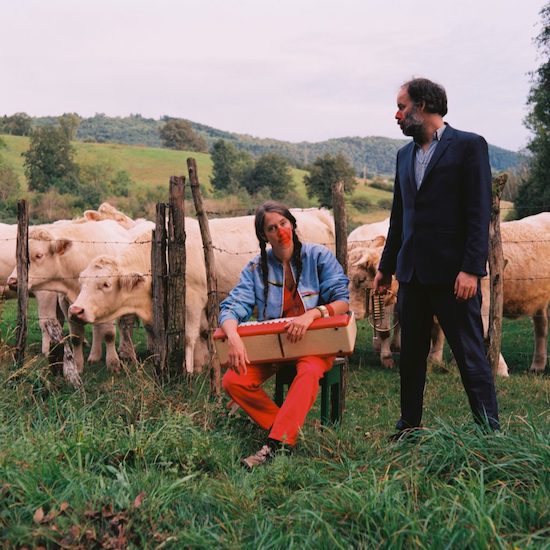
These columns are coming to you less frequently this year, for the very good reason that Rockfort has been running on tQ for over a decade – it’s only right that space be given over to likes of Jakub Knera’s excellent Inner Ear. So there’s much to cram in and much to leave out unfortunately, but great recent releases not reviewed below are featured on the weekly Rockfort half hour on Resonance FM (you can listen back to all the programmes here), as well as in the latest Rockfort mix, which includes additional music from electronic producers Sylvere, Sebastien Forrester, Jim Casanova and Hyperactive Leslie who have all put out stonking releases recently that demonstrate the strength of France’s hybrid club music, as well as gloriously uninhibited rock trio Portron Portron Lopez.
There’s been plenty of discussion recently about sprechgesang or speak-singing in pop as a largely, and peculiarly, British phenomenon but of course there’s a rich tradition of it in France; Serge Gainsbourg was a master, while chanson’s privileging of poetic text and its performance encourages all manner of actorly, more than singerly, interpretations.
Omertà’s Florence Giroud of, a visual artist-turned-vocalist, fits firmly into that lineage. On their debut album, words came courtesy of former boyfriend Raphael Defour, and he has provided some new lyrics here, as has an artist friend of Giroud’s, Julia Kremer, and some English fellow called William Blake. I’ve touched on Omertà before as part of a constellation of artists that includes France and the La Novià folk collective – their debut album featured France’s rhythm section, Mathieu Tilly on drums and Jérémie Sauvage on bass – but they’re the most atypical of the bunch.
Their second release, Collection Particulière, which still features Sauvage but with Jonathan Grandcollot stepping in on drums, is avowedly a ‘pop’ album, defined by the latter’s “streamlined” drumming style and the greater clarity of singer (and visual artist) Giroud’s cool, but not affectless, vocals.
While on the debut her voice frequently floated in a dubby murk, here it’s more forthright, sitting proudly astride the crisp, spacious backing, while on ‘Moments In Love’ she sings the beautifully languorous chorus. The band’s concept of ‘pop’ on Collection Particulière encompasses supple post rock, Stax-y R&B, psychedelic funk, dub and folk. It may not be everyone’s idea of pop music, although you can see what they mean – they’ve made every element on the album discernible and legible, without sacrificing the wee-hours dreaminess, mystery and romance of its predecessor.
Jonathan Grandcollot is also a relatively recent recruit to Lyon-based group Société Étrange, and his arrival there appears to have been equally impactful. He’s not the only point of overlap either – the chiming harmonics that Romain Hervault coaxes from his bass are also a feature of both bands. Previously, Société Étrange relied on Antoine Bellini’s programmed beats for their rhythmic framework, but now on Chance his patterns tesselate with Grandcollot’s padding toms, adding meat to the bones of the band’s furtive grooves, forlorn synths and submarine drones. A Certain Ratio, Tortoise and African Head Charge are touchstones for the band: post punk meets post rock with lashings of dub reverberation. This and the Omertà album make excellent companions.
Experimental folk artist and hurdy-gurdy player Emmanuelle Parrenin has been prolific of late, at least by her own standards. Her debut solo album, the ravishing, shimmering Maison Rose was released in 1977; its excellent successor, Maison Cube arrived 34 years later. In the intervening years she had lost her hearing in a fire and gradually, over a decade, healed herself by playing her instruments, responding initially to just the vibrations until the sounds started to return. Since 2011, though, she has been playing live again, under her own name or with Pierre Bastien as half of Motus; put out an album on on Souffle Continu, Pérélandra), featuring unreleased material written for dance performances in the late 70s and early 80s; and was back last year with new material, recorded with Detlef Weinrich aka Tolouse Low Trax, that took her music into a dubbier and more overtly electronic space. This year, with Targala, La Maison Qui N’En Est Pas Une, she has completed the ‘house’ trilogy that began with Maison Rose. Released in March, it deserves a lot more attention than it has had so far, because it is at the very least the equal of Maison Rose. Were it just to feature the billowing, raga-ish folk of ‘La Rêvelinère’ and ‘Entre Moi’, which are woven from the same flaxen thread as much of the 1977 material, it would already be a wonder. But there are also signs that the techno experiments (which also include a collaboration with Etienne Jaumet, who also appears on the album) have left their mark – there’s an increase in bass weight in places, while ‘Delyade’ is run through with a steady synth pulse – and she gives free reign to her psychedelic impulses on ‘Epinette Noire’, with its spiralling sax and backwards-sucked percussion. Prior to recording the album, Parrenin spent her first period of lockdown on the edge of the desert in Morocco, having been invited there to play a festival, and ‘Duende’ is like a mirage-inducing caravan ride through the sands.
France’s finest absurdist chansonniers, Arlt, are back and in fecund form: Turnetable includes a song addressed to a car (‘Oh Bagnole’), a “sick cow in a dying herd” (‘Vache Malade’), a flying saucer that lands on a dog (‘Vaisseau Spatial’), and the sun pictured as a gun that goes ‘pan-pa-pa-pan’ (‘pan’ is the French equivalent of ‘bang’, in case you were wondering). I’ve previously described the particular mood that Arlt conjure in terms of inebriation but as Sing Sing, one half of the duo along with Eloïse Decazes, has pointed out to me, it has as much to do with an unsentimental view of childhood and the naturally free-associating capacity of the still-developing mind. What feels new about Turnetable, though, is that the sound is starting to match the words in terms of creativity and surreally vivid picture-painting. The motor is still Sing Sing’s distinctively choppy guitar and the pair’s drowsy harmonies, but the arrangements are their most imaginative to date, aided by the likes of Ernest Bergez (Sourdure), Jérémie Sauvage (see: Omertà) and trumpet-player Gilles Poizat. ‘Pars À La Guerre’ rattles along with Swordfishtrombones-style percussion; ‘Le Renard’ amalgamates Confidentiel-era Gainsbourg, Alan Vega and trad jazz; and the intro to ‘Vache Malade’ approximates the sound of the diseased herd, with Decazes contributing ethereal lowing as the song-proper fades in. You’ll want to give Turnetable a spin.
Neue Grafik (real name Fred N’thepe) is a Frenchman based in the UK, and his first release with his variable ensemble was an outsider’s view of London and the new jazz scene. The Foulden Road Part II EP is more overtly political than its predecessor – completed during lockdown, with the impact of George Floyd’s killing reverberating beyond the US, the release is dedicated to Adama Traoré, whose death in police custody in Paris in 2016 led to protests that foreshadowed the response to Floyd’s murder a few years later. The EP is a beautifully crafted and sequenced fusion of form and message – the self-explanatory ‘For Adama’ is elegiac, low-temperature funk while ‘Queen Assa’, a reference to Adama’s sister, activist Assa Traoré, is anchored by a pacy, four-to-the-floor kick and an urgently hooky bassline that also serves as a reminder of Neue Grafik’s house-oriented earlier work. ‘Officer, Let Me Go To School’ is equally upbeat, but sits alongside the aqueous hip hop of ‘Step To It’, featuring Lord Apex, the late-night reflections of ‘Breath’ (with JJ Akinlade) and the manifesto-like opener ‘Black Bodies’, with Zimbabwe-born writer and sound artist MA. MOYO: “Black life is not yours to take.” N’thepe brings his finely-tuned producer’s ear to bear on the superb instrumental contributions from players like New Movement Ensemble’s Matt Gedrych, saxophonist Chelsea Carmichael and Steam Down drummer Benjamin ‘The Chief’ Appiah, fashioning a sound that’s both urgent and fluid – keys and brass billow on ‘Running On A Flame’, while ‘Breath’ concludes with a swirling, distant coda of strings and piano that slides into ‘For Adama’.
In the last column, reviewing abstract rapper Bleu Nuit’s Le Bruit D’Un Sentiment, I mentioned that his regular collaborators LELEEE and Eryl were worth investigating. Gratifyingly, they’ve both delivered with albums which more than justify the attention. Eryl is not the only rapper in France to favour English but he’s probably the most far out. Sense Of Peace, on which Bleu Nuit and LELEEE guest, takes in the muffled speech and eye-crusted visions of ‘Bonne Nuit IRL’ (in which “mosquitoes revolve around a chandelier”), a playful flip of Mary Jane Girls’ ‘All Night Long’, the perky vocal and sax cut-ups of ‘Dance With Tears In Your Eyes’, ‘Hikikomorii’s warped MOR and much more.
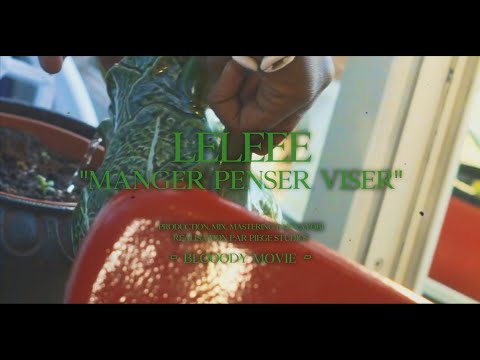
Meanwhile LELEEE’s latest release, Le Trou de Ver, is a gloriously lo-fi, high-concept work that finds him ranging and rambling over lumbering, narcotised rhythms, sounds of running water, fluttering wings, snippets of speeches that range from geopolitics to interdimensional travel – ‘Pont De Einstein Et Rosen’ references an alternative name for wormholes (‘trou de ver’ means wormhole in French) and nuggets of LELEEE’s personal philosophy, like ‘Manger, Penser, Viser’ (‘Eat, Think, Aim’) and the repeated ‘Bloody’ tag which, as I understand it, is less a call to violence and more to do with a feeling of kinship. Voices swim around the mix, the beats – as on ‘Gamma State Of Méind’ – drift in and out or slow down to a crawl. It’s a delightfully disorienting, messy mass of information and texture; the perfect showcase for LELEEE’s gravelly, free-flowing style and a genuine trip.
The seven vocal tracks (there are also two instrumentals) on rapper/R&B artist Yswanj’s EP Opéra are all very much of a piece – dramatic choral or orchestral synth pads, thunking snares and Yswanj’s near-breathless falsetto which recalls Steve Sutherland’s description in Melody Maker> of Liz Fraser’s voice sounding like “a panting orgasm, a celestial turn-on”. And like The Cocteau Twins, Yswanj seems like he’s determined to squeeze all the heavenly juice from this particular sound. The frequently x-rated lyrics revel in his particular fetishes – Gal Costa, Björk (“the point of life is to be Björk, to try to do things like Björk” he said recently) but delivered in such a way that they feel coquettish rather than bullish, binary perspectives dissolving in this angelic, ecstatic babble.
Perhaps his work with the more axe-centric Grive has had an impact, but the latest from Paul Régimbeau aka Mondkopf, called Spring Stories, stands out from his previous releases for its focus on guitar, from milky high lines to deep, Earth-y detonations. It feels like his freest and most intuitive creation in a while, an intimate epic. With six-string improv (plus effects) at its core, a track like ‘Phased Harmony I’ is almost tentative to begin with, gradually finding its shape as sparkly arpeggios are overlayed and the underlying drone begins to swell. Further embellishments come from Frederic D. Oberland (with whom Régimbeau plays in Foudre! and Oiseaux-Tempête) playing duduk and alto sax, joined by The Necks drummer Tony Back who adds washes, rumbles and clatter to searing finale ‘Continuation’.
Régimbeau’s label, In Paradisum, has been reactivated as a co-operative including, among others, Amédée de Murcia, who regularly records under the name Somaticae. Jazzoux is a joyful duo with Claire Gapenne (Terrine), and on Quand Le Jus De Rythme… they make a consistently, teasingly unpredictable electronic noise, beginning in near-abstraction on ‘Mouillé Pt I’ before a techno kick enters about seven minutes in. This sets the pattern – over eight tracks they balance itchy, ear-teasing obliqueness with thumping directness; ‘Pistachios II’, for example, has a real spring in its step, a charmingly lopsided danceability.
Quietus Mix 31
Emmanuelle Parrenin – ‘Duende’ (Johnkool Records)
Société Étrange – ‘À L’Intérieur Au Numéro 97’ (Les Disques Bongo Joe/Standard in-Fi)
LELEEE – ‘Nimbonautilus’ (Bloody Record)
Yswanj – ‘I Love You’ (9c/C T Powell)
Hyperactive Leslie – ‘Soli’ (Airfono)
Jim Casanova ft AnNie .Adaa – ‘GTI’ (Goumer Science)
Sylvere – ‘Conception’ (Monkeytown Records)
Sebastien Forrester ft Citizen Boy – ‘Squall’ (Promesses)
Jazzoux – ‘Pistachios Pt II’ (In Paradisum)
Mondkopf – ‘Phased Harmony I’ (Miasmah)
Omertà – ‘Moments In Love’ (Standard in-Fi/Zamzamrec)
Arlt – ‘Pars À La Guerre’ (Objet Disque)
Portron Portron Lopez – ‘Pensées Sans Tête’ (PL Records)
Neue Grafik Ensemble – ‘Officer, Let Me Go To School’ (Total Refreshment Centre)