Image courtesy of Sony Music
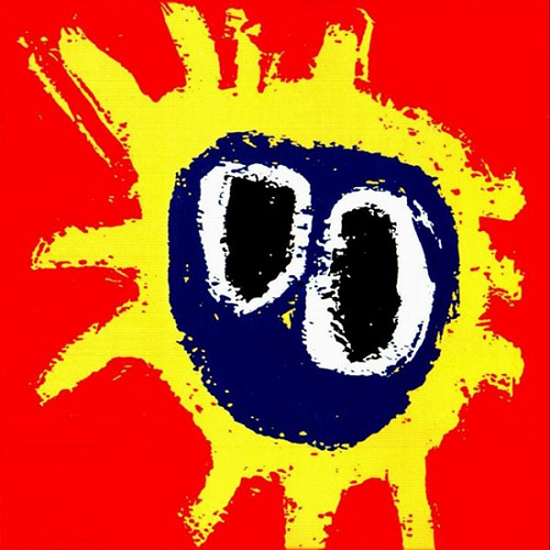
“What I’ve got in my head you can’t buy, steal or borrow,” declared Bobby Gillespie on The Orb’s mix of ‘Higher Than The Sun’, one of Screamadelica’s most elevating tracks. It’s widely assumed that the album, released 30 years ago, found the band operating from a visionary vantage that had previously been out of reach. "The sheer imagination that went into these records on everyone’s part… it was people let loose with their ideas: we’re out here in space now," recalled guitarist Andrew Innes of the sessions.
Few disagreed. This starry-eyed slingshot across the musical galaxy was even more dazzlingly framed by Simon Reynolds in his depiction of Andrew Weatherall’s version of the same track, ‘A Dub Symphony In Two Parts’. “Jah Wobble’s bass takes the song deeper in and further out, as spooky synth sounds beseech like interstellar sirens luring the starsailor to shipwreck in the asteroid belt,” he gurgled dreamily in Energy Flash.
Just two years earlier, Primal Scream had been at a crossroads. Perhaps, in Gillespie’s imagination, the same rotten, windswept Mississippi landmark where Robert Johnson had sold his soul to the devil. Like their very own Shark Sandwich, the band’s self-titled second album was met with disdain on release in September 1989. Pockets of the music press sardonically renamed them “Primal Tap”, while Alan McGee, their boss at Creation Records, later admitted the group fronted by his childhood friend “media-wise, were a fucking joke”.
According to David Cavanagh’s 2000 tome about McGee’s label, “all routes for Primal Scream appeared to lead backwards” and yet the vivid and vibrantly forward-thinking Screamadelica would follow in September 1991. How was it that the group travelled so far in a matter of months, from a lobotomised New York Dolls and MC5 retread scraped off the floor of CBGB to an album that KOed critics and went on to claim the Mercury Prize?
Writing in The Creation Records Story, Cavanagh elaborated: “What was to happen between July 1989 and February 1990 would be nothing like as seamless as the key players would later claim, but it would put Primal Scream where no one had ever imagined they could be: in the vanguard of a commercially successful synthesis of rock and dance.”
Understandably, given the acclaim Screamadelica has generated in the three decades since coming out, this period has been well documented. Two key themes are routinely described as transformative for Primal Scream: acid house and producer Andrew Weatherall. But, while both had an obvious impact, there are other factors that led to an album that was era-defining but also defined by an era where studio technologies allowed a band interminably drenched in their own influences to dive into them like a bath full of ecstasy.
As Gillespie freely admits, the group certainly lifted, if not thieved, a vast number of other people’s ideas to fully realise the fabric of his mind for Screamadelica. “Everything was up for grabs, because of the technology and the way people could sample in the way they couldn’t before. Rap and hip hop records were doing it, house, dance records,” explained Gillespie, perhaps in reference to albums like Paul’s Boutique and 3 Feet High And Rising, both released in 1989, which redrew the art of music production. “It was like the wild west. No copyright laws,” he said, making comparisons to William Burroughs’ cut-up method. “It was what everybody was doing. It was a culture,” said Gillespie. Of course, the dominant British culture in this period was acid house, a scene that his band initially felt was so acutely anathema to their leather-clad rock & roll dreadnought that guitarist Robert ‘Throb’ Young reportedly threatened to excommunicate McGee from the Scream Team after he was spotted wearing “a baggy T-shirt”.
Improbably comic parties began to shape the future narrative. “There was always the Scream at one end, and Alan championing house music and playing it to them. Then Bobby would put on Goats Head Soup and all the Scream would go mad. Then Alan would take it off and put some more house on. This was going on all the time”, Lawrence from Felt told Cavanagh. Innes has rather more unifying memories of the period, explaining: “We took to the acid house clubs like ducks to water,” he said in Jockey Slut’s tribute to Andrew Weatherall. “The girls were incredible looking, the atmosphere was brilliant, there was no violence and the music was great. Better than some indie club playing the Wedding Present.”
Gillespie had previously dismissed modernising the Primal Scream sound. Quoted in Cavanagh’s book, he insisted: “We’re not that stupid.” But the singer went along with a proposal from either Innes or Jeff Barrett, founder of Heavenly Recordings and former PR at Creation, that Weatherall should remix/“fucking destroy” ‘I’m Losing More Than I’ll Ever Have’. Weatherall, whose only previous studio experience apparently involved watching Paul Oakenfold overhaul ‘Hallelujah’ by Happy Mondays, was perhaps the only music journalist on Earth to enjoy the Primal Scream album, writing effusive reviews about its ballads for the Boy’s Own fanzine.
“The thing about Andrew was that he was a non-musician,” said Gillespie, who first met Weatherall in the summer of 1989 at a rave in a field in the Brighton countryside. “Because he wasn’t aware of the rules, he broke them. He wasn’t trying to make hit records. That never entered his mind. He just wanted to make interesting tracks that worked on the dancefloor.” Reflecting on Weatherall’s 2020 death in The Observer, Gillespie celebrated his friend’s ability to divine the “ecstatic blues”: “No one else would have thought of constructing tracks like he did, arranging our melodies and music into abstract pop songs.”
But, as Innes attested, there was more to this than the imaginative or practical skill to rethink or rework the band’s demos. There was also a fundamental intent to sample liberally from music, cinema and broader culture. "That changed everything," he said. "It was like we’d been painting in black and white and suddenly we had a full palette of colours to play with.” In fact, when you crack open Primal Scream’s third album, a catalogue of direct sources and samples emerge, alongside more oblique inspirations and influences, to create the kaleidoscopic tapestry of Screamadelica.
‘Movin’ On Up’ is the first of two recordings with Jimmy Miller, who manned the desk for The Rolling Stones during their imperial phase spanning Beggars Banquet and Goats Head Soup. Cavanagh would describe these songs “as though airlifted from side three of Exile On Main Street”. Certainly, the album opener feels like a comparatively conventional production. On BBC’s Classic Albums series, Gillespie described how a Bo Diddley beat and acoustic guitar riff inspired by The Who’s ‘Magic Bus’ propelled the demo. Within the lyrics, Screamadelica’s opening lines are rooted in Cologne not Camden, via Can’s ‘Yoo Doo Right’ – “Once I was blind but now I see. Now that you’re in love with me. You made a believer out of me” – from 1969’s Monster Movie.
Of course, the second track, ‘Slip Inside This House’, is itself a cover. But it’s at this point that the influence of acid house and Weatherall becomes more apparent. First recorded by The 13th Floor Elevators in 1967, Primal Scream reworked the song in 1990 for Where The Pyramid Meets The Eye: A Tribute To Roky Erickson, raising funds to pay for the schizophrenic singer’s medical bills. It’s also worth noting that Young, providing a remarkably plausible impersonation of Gillespie, stood in on vocals as the singer had been laid low by “the flu”.
In the midst of the song’s malevolent, voodoo psychedelia is Screamdelica’s first defining sample. The cackle of laughter captured towards the end of Sly & The Family Stone’s 1969 prog-funk odyssey ‘Sex Machine’ stalks the production, which is credited to Hypnotone and Weatherall, culminating in the closing lift: “We blew your mind!” Elsewhere, the track’s rotating percussive loop is attributed to The Winstons’ 1969 track ‘Amen, Brother’ and a six-second rhythm pattern that has become one of the most-sampled pieces of music in history: The Amen Break.
Again, ‘Don’t Fight It, Feel It’ sees Gillespie absent from the song’s central performances, with lead vocals by the late Denise Johnson. The frontman says it was “written at six in the morning, still up on an E, listening to Northern Soul”. While his voice may be absent, the lyrical leads survive. Sam Cooke’s ‘Feel It’ – “Don’t fight it. Don’t fight it, baby, feel it” – apparently inspired the title. Holland–Dozier–Holland’s ‘(I’m A) Road Runner’, recorded in 1966 by Junior Walker & The All Stars, provides one of the central lines – “I’m gonna love the life I live. I’m gonna live the life I love” – while the rather more abrasive MC5 are the source of another vocal hook – “Rama lama fa fa fa” – as originally heard on ‘Rocket Reducer No.62’.
Alongside Weatherall, engineer Hugo Nicolson’s influence on these sessions cannot be diminished. Witness their collaborative process on a second mix of ‘Don’t Fight It, Feel It’: “I gated the drums and keyed them off a cowbell which I programmed to do a rhythm I’d heard on a Jungle Brothers record. Then I grabbed a bit of bass fill from halfway through the song, turned it backwards and used that as the bass,” he told Sound On Sound. On Weatherall’s instruction, he also located a pivotal component: “I found a crappy whistle sound on the Korg M1 and played what turned out to be the main hook of the song.”
Gillespie has compared the band’s spirit and approach on Screamadelica to that of Parliament-Funkadelic. With ‘Higher Than The Sun’, The Orb’s Alex Paterson become part of this loose collective, contributing one of two titanic versions. His ‘Higher Than The Orb’ mix contains another percussive fill, from ‘Wah Wah Man’ recorded in 1971 by Young-Holt Unlimited, and a more amorphous spirit described by Gillespie as “Starsailor music”, in reference to Tim Buckley’s disorientating and light years from home 1970 album of the same name.
Meanwhile, Weatherall and Nicolson combined again to sublime effect, the latter enlisting PiL’s Wobble for the subterranean bass line that snakes in midway through. Nicholson had been under the impression that the different versions were “all remixes not intended for an album”. Famously, both made the final tracklisting. Reynolds calls ‘Higher Than The Sun’ “the band’s masterpiece”, claiming they had “brilliantly merged two different traditions of psychedelic experience, acid rock and acid house. Shades of Primal Scream’s rock-classicist past (Brian Wilson, Love’s Forever Changes) mingled and melded with influences from dub, techno, Tim Buckley and Sun Ra”.
Gillespie admits Pet Sounds is “all over” Screamadelica and this influence is keenly felt on ‘Inner Flight’. Like an enraptured take on ‘Let’s Go Away For A While’ or the 1966 album’s instrumental title track, the melodic tuning, vocal harmonies and percussive fills – respectively derived and manipulated from ‘Whoa Buck‘, an eerie field recording on 1957’s Negro Prison Songs by Alan Lomax, and ‘Gris-Gris Gumbo Ya Ya’ from Dr. John’s 1968 debut album – pay homage to The Beach Boys in a featherlight fashion blackly juxtaposed by the death rattle of Dennis Wilson’s ‘Carry Me Home’, which Primal Scream covered on the Dixie Narco EP.
Elsewhere, Weatherall’s love for Brian Eno – he selected ‘From The Same Hill’ off 1978’s Music For Films during a 6 Music Screamadelica Mix – sees ‘Inner Flight’ founded on a seething insectoid loop from Taking Tiger Mountain’s ‘The Great Pretender’. It was Nicholson who sourced the “very bad flute sample” that completed the mood of wholesale levitation.
Across multiple versions, Screamdelica’s mission statement can perhaps best be seen through the prism of ‘Come Together’. Weatherall’s mix hedonistically rebuilds the aesthetic terrain, most obviously via Jesse Jackson’s immortal speech at 1972’s Wattstax in Los Angeles, organised by Stax Records to remember the 34 people killed in race riots in the African-American community of Watts seven years earlier. Acting as “a sort of thesis statement for the entire project”, this dialogue reverberates with the concept of liberation that fuelled the acid house era.
The album version is, again, in hock to the Akai S1000 sampler. “We did everything in edit sections. There was a master tape with all their stuff they’d recorded, and then I would run all the sequencers live alongside the tape,” said Nicholson, continuing: “I found this cartoon skid sound I’d sampled and I turned that backwards and started playing with that. That’s the weird kind of ‘weee-weee’ sound that goes all the way through. There were some funny psychedelic noises which were samples that Andy had, the kind of intro ‘whoop whoop whoop’ noise.”
While the song’s chord progression is said to have been inspired by ‘The Dub Station’ by Tommy McCook & The Aggrovators, there are other notable samples here, for example on Terry Farley’s audacious ‘Extended Mix’, which brazenly stole the guitar riff from Elvis Presley’s ‘Suspicious Minds’, prefacing it with Andie MacDowell from the 1989 film Sex, Lies and Videotape, gushing: “That’s beautiful. That’s really beautiful. I like that”.
With ‘Loaded’, Weatherall captured the rebellious spirit of the day and, by extension, of Screamdelica. Using dialogue from 1966 movie The Wild Angels and Peter Fonda, seemingly doing a screentest for the not-yet-invented Easy Rider, as Hells Angel Blues, was perhaps his first masterstroke. This had been sampled before by Psychic TV, performing as The Loaded Angels on 1988’s Jack The Tab album and Mudhoney on ‘In And Out Of Grace’ from Super Fuzz Big Muff. Speaking about the sessions, Innes explained: “I was there each time he (Weatherall) attempted it as I had to take down my video player with my VHS of the film. I had the times written down for the counter on the machine for when the quotes came in the film so I could find them. I was there at 6am when it was finished and thought it was brilliant. I couldn’t believe it.”
Gillespie, again somewhat sidelined, returned to his Haynes Manual Of Rock and the words of Robert Johnson to locate a suitable response to the questioning of the film’s preacher – “Just what is it that you want to do?” – played by Frank Maxwell. The inspiration can be found on 1936’s ‘Terraplane Blues’: “I’m gon’ get deep down in this connection.” Elsewhere, a more obvious and central sample comes from ‘I Don’t Wanna Lose Your Love’ by The Emotions.
As Boy’s Own’s Cymon Eckel told Jockey Slut, the conjoined axis of ‘Loaded’ “redefined Balearic, rock’n’roll, it was the ultimate hybrid”. Members of the fanzine’s team appear in A Short Film About Chilling the landmark 1990 documentary which “at the height of the Thatcher era…promised Britain’s youth an escape”. On a wild away day in Ibiza with numerous UK-based acid house figures, there is a near cultish vision of the clubbing mecca. Weatherall can be heard proselytising about the scene, while decrying “the English lager lout”. There are also connections to the production of ‘Loaded’, which sampled the drums from an Italian bootleg mix of Edie Brickell’s ‘What I Am’ that had previously been lifted from Soul II Soul.
As Miller’s second mix, ‘Damaged’ starts to reel proceedings in, signposting a future that would lead directly to Primal Scream’s next album, Give Out But Don’t Give Up. What was the role of the producer, who would die from liver failure only a few years later? Reportedly, he “spent his time carving swastikas into the mixing desk” and “running around drunk and naked in his New York apartment building, shooting up the ceiling with a machine-gun.” Elsewhere, the post-club vibe that takes hold of Screamdelica from here is given an appropriately depleted tone by Gillespie, who reworks ‘I’m Stone In Love With You’ by The Stylistics in a repeated refrain across the song’s outro.
Screamadelica’s creeping fade out continues, rather literally, with ‘I’m Coming Down’, although a collective spirit of adventure endures. According to Weatherall, he and Gillespie had coincidentally discovered a shared love for Pharoah Sanders and songs like ‘Astral Travelling’ from 1971’s Thembi album, which prompted the saxophone break. As noted, Screamdelica was the point where Primal Scream would harness cinema culture to represent their predominant ideology more forcibly – see also Vanishing Point and XTRMNTR – and the universal language of being well strung out is captured on the closing line "Yep, I know that feelin’", a sample of Nastassja Kinski from 1984’s Wim Wenders film Paris, Texas.
Album closer ‘Shine Like Stars’ reenters the Earth’s atmosphere, lushly splashing down to the reassuring hypnosis of sampled waves. In the looped rhythmic propulsion and sci-fi FX, it has a twinkling, lullaby quality that has drawn comparisons with Suicide’s ‘Dream Baby Dream’. Gillespie has previously namedropped George McCrae’s ‘Rock Your Baby’ in reference to the song’s earliest incarnation and an entirely new Weatherall mix was recently unearthed to mark the album’s anniversary and a lavish reissue.
Debate over the creation, the recording, the evolution of Screamadelica has continued since 1991. “People go: ‘Oh, Andrew Weatherall made that record.’ Bullshit. Andrew made that record what it was, but he didn’t make that record. (Primal Scream) made the fucking record. Bottom line? Andrew Innes made that record. Andrew said what went on that record. Innes had the final say,” insisted Barrett. In qualifying this point, Cavanagh wrote: “An album that profited from so much collaboration inevitably made it hard to apportion credit.” Thirty tears on, does it matter? To paraphrase Jackson’s speech at Wattstax: “This is a beautiful day. It is a new day. We are together. We are unified and all for the cause”.