

This column marks the ten-year anniversary of Rockfort on The Quietus, a realisation which is a source of delight and no little consternation (for me, but perhaps for others too). It’s the sort of moment that leads to pained reflections on where the time has gone, and what I’ve achieved. Then I remember that over the same period Daft Punk only managed to release one paltry album before splitting up and I feel much better!
Joking aside, and in addition to their overall impact on dance music and pop, Daft Punk (and to a degree Air, Motorbass, St Germain, perhaps the soundtrack to La Haine and the belated ‘discovery’ of Serge Gainsbourg) forever changed the way French music was perceived in the British-speaking world and at home.
I’ve replayed the albums and still found plenty to cherish, particularly on the first two. Right now, though, I’m immersed in a joy-sparking compilation of pre-Homework French dance music, Dynam’hit – Europop Version Française 1990-1995, put together by Benjamin Leclerc and Nils Maisonneuve for the Born Bad label. From being underground dance cuts, these are the pop-house belters of the period, a bit like UK hits by N-Joi and K Klass but with more French women rapping, including ‘House Tube’ which was apparently the B-side of a track from an ad for deodorant.
I’ve included Thalie’s ‘C’est Pas Sorcier’ in the latest Rockfort mix, alongside selections from the albums reviewed below and new music from the lovely and very intimate lockdown album by Clémentine March, Songs of Resilience; wild musical/performance art duo PoulainJar’s Désir Ou Vide’, a splendid essay in trumpet and burbling synth from Gilles Poizat; exotica-tinged pop from Sahara!; outré synth pop from Tsirihaka Harrivel; an idiosyncratic instrumental from David Fenech & Klimperei; something new from an EP by rap auteur-producer Ikaz Boi; some delicious noise and song from Johann Mazé & Jihem Rita and the thrilling percussive assault of the INSTITUTRICE project from Jean-Baptiste Geoffroy (Pneu, Futuroscope) and Éric Bentz (Electric Electric) who have previously played together as part of the incredible, four-bands-simultaneously live act La Colonie De Vacances.
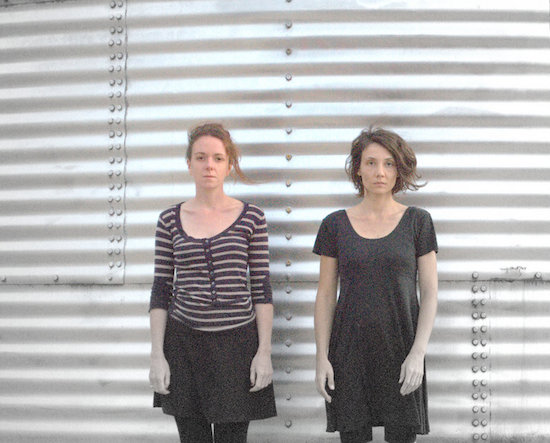
I interviewed the wonderful Emmanuelle Parrenin for the second Rockfort column in March 2011 about her album Maison Cube and ten years later here’s the follow up. Her collaboration with Detlef Weinrich aka Tolouse Low Trax continues a remarkable trajectory that saw her emerge from the folk revival scene of the late 60s and early 70s before releasing a debut solo album, the utterly spellbinding Maison Rose, in 1977. French label plugged Souffle Continu plugged the gap between the two maisons with 2017’s Pérélandra compiling unreleased music made between 78 and 82, and in more recent years she has performed as half of genuinely oneiric duo Motus with Pierre Bastien. Jours De Grève is further proof, if any were needed, that Parrenin can’t be reduced to a French Vashti Bunyan (as great as that would be). The placing of her sometimes Autotuned voice and hurdy-gurdy in the context of Weinrich’s oozing bass and thick, fuggy beats makes for a magical kind of folk-dub hybrid; just check the boom-bap rhythm, scything hurdy gurdy and whooping vocals of ‘Caltec’s Dance’, the throbbing, eastern-tinged ‘Hephaisto’s Breeze’ or the clattering loops and scintillating vocal stabs of ‘Zombie’s Passport’. Apparently there’s a new solo album on the way this year as well; truly, we are blessed.
Continuing the folk theme are San Salvador, a six-piece (three male and three female voices) from the village of Saint-Salvadour in the Corrèze department in central France. Two members, Sylvestre and Laure, are brother and sister and their parents were, rather like Emanuelle Parrenin, song collectors who arrived in the Corrèze some time in the 70s and now teach folk music workshops. The group demonstrate how slippery notions of ‘tradition’ can be – the local songs, which are in Occitan and were frequently recorded by clergymen, were generally for a single voice; what San Salvador have done, by their own admission, is combine these local songs with a tradition of polyphonic singing from further south. Having already seen the equally joyous and haunting results on stage I’m happy to report that debut album La Grande Folie is just as gloriously energising.
Then, out on the wilder fringes of French folk, we find Tanz Mein Herz. If you’ve already come across drone-folk monsters France then TMH are their slightly less monofocal cousins, with Mathieu Tilly and Jeremie Sauvage (who also runs the Standard In-Fi label) appearing in both. While France will plough a single furrow for the entirety of a release or a show (thrillingly, I should add), Tanz Mein Herz – who here also include Ernest Bergez aka Sourdure, Alexis Degrenier, Guilhem Lacroux, Pierre-Vincent Fortunier and Pierre Bujeau – have a more wide-open sound, while still keeping faith with the hypnotic power of repetition. Even by their, previously excellent, standards, Quattro is pretty monumental – the shortest track is just over seven minutes, the longest clocks in at over 26, but what’s striking isn’t so much duration as the tension between savagery (of the drones and the see-sawing fiddle) and the poise of the milky guitar arpeggios, plunking bass and rumbling drums that draws you in as the grooves intensify and trails of synth start to glow like comet tails.
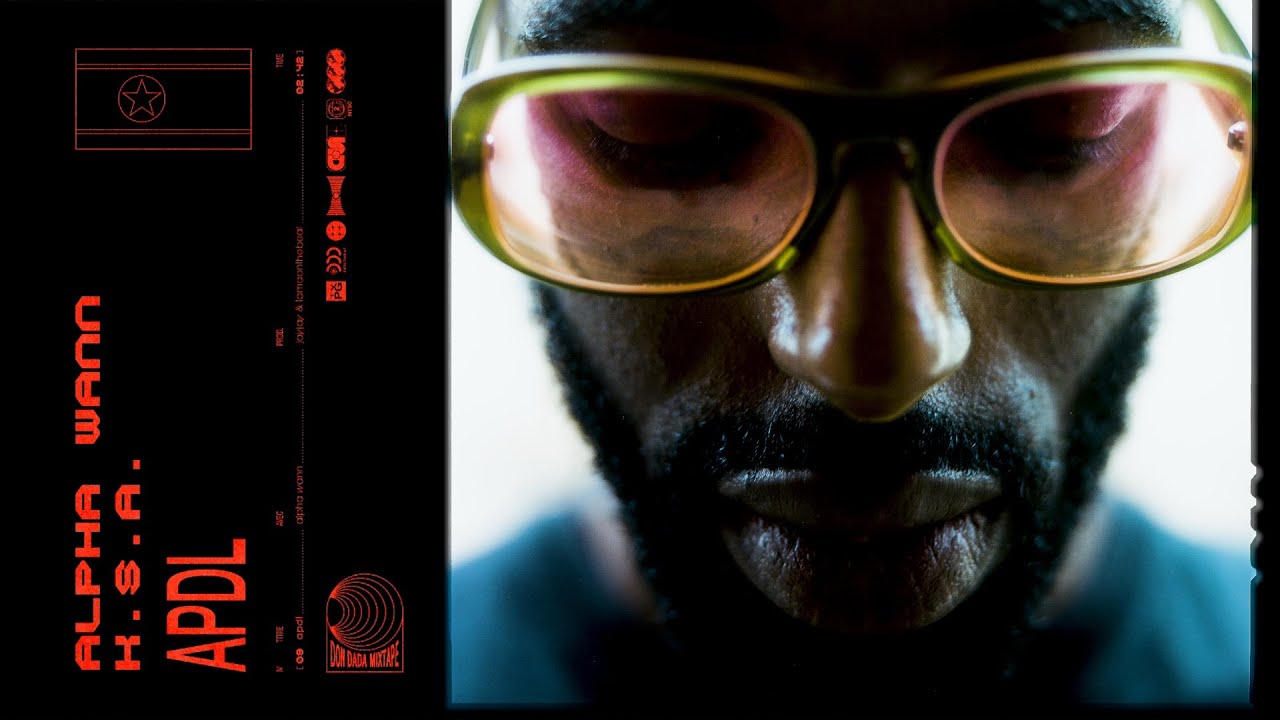
Some rap releases now, and although it came out at the tail-end of last year I have to start with a mention for Alpha Wann’s Don Dada Mixtape Vol 1. I’m almost ashamed of how slow I’ve been on the uptake with AW, realising somewhat belatedly that he’s not only one of the finest rappers operating in France but also one of the country’s stand-out artists, full stop. If you want to know why, you could start by checking out the incredible year he had in 2018, with the instant classic album Une Main Lave L’Autre and the Alph Lauren 3 EP, or work your way back from this latest mixtape. Having come up through 1995 – a group who, with their name alone, harked back to a ‘golden age’ of French rap – he has successfully straddled boom bap, trap-based beats and more, and excelled at all of it. Don Dada sees him opening up the floor to collaborators new and old, frequently trading verses but quite often letting them have the spotlight to themselves; another former 1995 member, Nekfeu (hugely successful in his own right) tackles the rainy-day beat of ‘Malevil’ alone, while Ratu$ stomps all over ‘Velux’, but Alpha Wann still gives himself plenty of space for his own technical but effortlessly engaging flow on the gleaming ‘Apdl’, the melancholy piano ripple of ‘Farenheit 451’ and the fried funk of ‘Carrelage Italien’.
Franco-Ivorian rapper Lala &ce, who will be familiar to some through her NTS shows, drapes her sung/slurred, Autotuned vocals over some delicious beats (each from a different producer) on Everything Tasteful. Aside from the more hardcore likes of ‘Dodow7ve’ and ‘Nytro’ (featuring Pucci Jr), there’s a mood of intense relaxation on the pastel-shaded trap-pop of ‘Sous Tes Lèvres’ and in the beautifully interleaved vocal layers on ‘Cyborg’, while strands of R&B, reggaeton and Afro-pop are threaded through ‘Show Me Love’ and the gorgeous, luvved-up ‘In Luv Again’.
Having taken something of a detour with their O.R.G release, written for mechanical organs, duo Puce Moment return with something that takes their previous hallmarks – layers of shoegaze-y fog, Penelope Michel’s haunted vocals and programmed rhythms – and elevates them to new heights (and lengths). ‘Hakken’ is an 11-minute epic of industrial beats, sighing waves of noise and crunching that’s like stones against a boat’s hull. ‘13th’ lifts the mood with its crisp claps and eddying hi-hats, and the deeply cavernous ‘Equal’ adds stately violin before a more meditative conclusion with ‘Vanish’.
Grive is a new collaboration between two Rockfort regulars, Agnès Gayraud of La Féline and electronic producer Paul Régimbeau aka Mondkopf. They have been within each other’s orbits for years, since Régimbeau remixed an early La Féline song (‘Three Graces’). The seeds for Grive – which means thrush (the bird) in English and is rhymes with grieve rather than drive – were sown during a Red Bull Studios session which saw them collaborating on a cover (or rather two covers) of Gérard Manset’s ‘Comme Un Guerrier’. On their self-titled debut EP, the pair meet on ground that is fresh for both of them. Most notable on Gayraud’s side is that it’s the first project on which she sings entirely in English, and the shift isn’t merely cosmetic; it sounds as though the decision has gifted her a new voice and a different, perhaps more impressionistic, approach to lyrics. The guitars are also heavier than most of what you’ll find on La Féline’s records, like the churning, bluesy riff on ‘Coal Mine’ and ‘Kingdom’s fortified wall of noise – the latter should be under consideration for trailers of any Game Of Thrones spin-offs. ‘Cold’ and ‘Burger Shack’ are looser and more warm-blooded than most of Régimbeau’s previous work although the layers of electronic noise he adds still feel as though they could give you an ice burn. And it’s all tied together by supple, purposeful drumming. You could call it shoegaze, slowcore – however you look at it, it’s a strikingly lovely debut.
Mondkopf is also back as a member of Foudre!, an improvising group of variable size which, this time round, also includes Frédéric D. Oberland (of Oiseaux-Tempête, Le Réveil des Tropiques), Grégory Buffier, who’s in Autrenoir with Régimbeau, and Saåad’s Romain Barbot. Future Sabbath is a cute title, a distillation of the monumental weight and scale that is achieved through layering thick drones, plangent keyboard melodies and eerie tapping and scraping (plus the occasional thunderous kick) rather than riffs. But there’s room for lyricism too, with silvery guitar and alto sax lighting up ‘Imaginatio Vera’, making this Foudre’s most satisfying and complete-feeling release.
Black masses are clearly also on the mind of Lyon’s Gloria on their second album Sabbat Matters, but this album isn’t so much about striking fear and awe into the heart of the listener, and more focused on sheer fun; a rave-up on the bald mountain. There’s been a bit of change in the personnel since debut album In Excelsis Stereo, with Béatrice Morel Journel opting to focus on Grand Veymont and Epépé and Swiss witch (apparently) Marie Lou being drafted in to replace her vocals but the charm is retained; on the almost Bangles-y ‘Miss Tambourine’, ‘Night Biting’ and ‘Skeletons’, with their stacked vocals and chunky, almost cartoon-y riffs, it’s like listening to a Hair-style rock musical focused on the dark arts. It’s immediate, raucous and immensely enjoyable.
Also out through Outré in the UK but released by Lyon-based label Dur Et Doux is an intriguing album by Hidden People, a duo comprising Mélissa Acchiardi and Aëla Gourvennec. Acchiardi is a vibraphone player and percussionist involved in a number of jazzier projects, while Gourvennec is a classically trained cellist who also plays in blues and bluegrass-based groups. None of this biographical information really prepares for you for the sound of Tambour Cloche – the pair claim Brigitte Fontaine as an influence, and some of the words here are drawn from Allen Ginsberg and Richard Brautigan, but the 13 songs have a kinship with the intimate, informal spaces explored by The Raincoats or Young Marble Giants. The minimalist assemblages of samples, cello, percussion (a banjo turned into a drum), synth can be sweetly poetic but also humorous and joyously abrasive; ‘You Smell’ opens with the delightful line “you’re a fucking asshole piece of shit.”
Finally Innéisme marks a very welcome return for Damien Mingus, also a member of the excellent Centenaire. As one of the mainstays of the much-missed Clapping Music label in the 00s, his output as My Jazzy Child covered breathy indie rock, folk and sound collages; if Innéisme, the eighth MJC album, feels distantly related to those collages, it also represents an invigorating new chapter in his music. Mingus’ own vocals are absent and in their place is a profusion of sampled speaking and singing voices, chopped and looped, in various languages including French, Occitan, Hindi and Pygmy. The inspiration is Chomsky’s concept of “universal grammar”. The concept of fictional/imaginary world music is well established now, and not without its problems, but Innéisme is irresistible, tumbling from the speakers as an artful jumble of samples and woody, danceable rhythms as well as, on ’15 Ans’, a brief, skewed take on spiritual jazz – My Jazzy Child living up to his name.
Quietus Mix 25
San Salvador – ‘La Fin De La Guerra’ (Pagans /La Grande Folie/ MDC/PIAS)
Emmanuelle Parrenin & Detlef Weinrich – ‘Zombie’s Passport’ (Versatile)
My Jazzy Child – ‘Les 36000’ (Akuphone)
Hidden People – ‘Tambour Cloche’ (Dur Et Doux/OULS)
Grive – ‘Cold’ (Self-Released)
Foudre – ‘Imaginatio Vera’ (Nahal)
INSTITUTRICE – ‘Procession’ (Un Je-Ne-Sais-Quoi)
Johann Mazé & Jihem Rita – ‘Au Cœur De La Molle Vie’ (Self-Released)
Ikaz Boi – ‘In The Club’ (Stellar 90)
Gilles Poizat – ‘Amont Des Chutes’ (Carton Records)
Alpha Wann ft Nekfeu – ‘AAA’ (Don Dada Records)
Lala &ce – ‘Nytro’ (&ce Recless)
Thalie – ‘C’est Pas Sorcier’ (Born Bad)
Sahara! – ‘Magie Noir’ (Le Gospel)
Gloria – ‘Night Biting’ (Outré)
Tsirihaka Harrivel – ‘Sympa’ (Teenage Menopause)
PoulainJar – ‘Mange Tes Démons’ (Gigantonium/Nunc.)
Clémentine March – ‘Electric Fog’ (Lost Map)
David Fenech & Klimperei – ‘Eno Ennio’ (Marionette)