


Nearly God’s title invokes the mid-90s critical truism that Adrian Thaws, aka Tricky, was the future of music. In so-titling his unofficial second album, Tricky was both mocking and magnifying his reputation as a one-man British Wu-Tang Clan, squaring up to his trip hop peers, not least old muckers Massive Attack. Instead, not only did Tricky piss away his potential but, in place of his pioneering, futuristic hip hop – or trip hop generally – British music would be dominated by Britpop’s retro banalities and dance-pop’s escapism, while hip hop remained, until grime, a near purely American phenomenon.
It’s worth restating, therefore, what a perfect proposition Tricky was in the mid-90s. Here, finally, was a British hip hop artist who not only displayed an utterly distinctive production-style but delivered his raps in a thick Bristolian accent. Even more uniquely, ‘Tricky’ wasn’t just one person, nor even one gender. Teenage Martina (Topley-Bird) sang his raps while Tricky’s whisper shadowed her in stalker symbiosis, the end result an ectoplasmic, asthmatic, fairground mirror of Public Enemy with Sister Souljah. While feminising hip hop vocally and visually amid of gangsta’s machismo, Tricky also removed much of the genre’s aggression. This meant he was less covering U.S. hip hop – Public Enemy’s ‘Black Steel In The Hour Of Chaos’ (on Maxinquaye); Slick Rick’s ‘Children’s Story’ here – than, with Martina turning the raps into vocal melodies, reconceiving it, which was even more heroically heretical.
The material was pouring out of him like mercury. Of Tricky’s three albums in 18 months, 1996’s Nearly God makes the implicit eclecticism of 1995’s Maxinquaye explicit, a non-tribalism that, while standard by the mid-2000s, was at the time unique (with Elvis Costello’s 1989 Spike an early outlier, Tricky would remix Costello’s ‘Distorted Angel’ later in 1996). Consequently, Nearly God encompasses post-punk (a Siouxsie & the Banshees cover), the ska revival (two Terry Hall collaborations), synth pop (an Alison Moyet collab; a Depeche Mode cover on the US version) and 90s electronica (two Bjork collabs), alongside R&B (a duet with Bristol scene godmother Neneh Cherry).
Unlike Britpop or grunge, Nearly God doesn’t just look backward with a better snare sound, it looks forward by reassembling the past into unpredictable new shapes. This makes Tricky part of last-gasp post-war futurism that, while ambivalent, wasn’t yet entirely dystopian (The Matrix came out in 1999). As such, the 90s was split between ‘fun’ and ‘dark’ iterations, between a hip flippant cynicism and a political optimism enshrined in cultural progressivism. While Tricky associated himself with the ‘dark’ 90s of grunge and East Coast gangsta, and his ‘fun 90s’ collaboration with Damon Albarn foundered, Martina’s warm vocal tones added light to Tricky’s darkness throughout. Moreover, Tricky’s dismissal of the boundaries of gender and genre made his music essentially progressive, back when the concept still contained a promise of progress.
Like RZA, Tricky’s production style foregrounded how, as a genre, hip hop had rethought music from the ground up, just as its structural oddity was being papered over by poppier iterations by Will Smith and The Fugees. Like RZA, Tricky achieved this by revealing the joins, production as exoskeleton. If Tricky’s brilliantly bloody-minded sampling technique was somewhat rationalised by Mark Saunders on Maxinquaye, it’s both foregrounded and fiendishly irrational on Nearly God. Ramming together elements from different tracks with as little inkling of each other’s future commingling as a pig and chicken in a farmyard, the results are deliberately disjointed, adding to the pervasive sense of ambivalence.
On jazz-standard ‘Black Coffee’, Tricky’s transformation of the synth blips from Costello’s ‘Pills And Soap’ into a riff renders what was mellow in Sarah Vaughan’s 1949 original, dissonant, drawing out the lyric’s anxiety. The guitar-line in Tricky’s take on Depeche Mode’s 1993 ‘Judas’ is in an entirely different key to his and Martina’s vocals, capturing the original’s contradictions. The Banshees’ proto trip hop ‘Tattoo’ has no guitar-line, with such stripping away of pop instrumentation and frequencies indicating the parallels between post punk and contemporaneous hip hop. Impudently sampling the original, Tricky slaps on a string sample that, plangent in origin, is dissonant in context, again highlighting the lyric’s uncertainty, further tweaked by Tricky’s additions like “Something fits along my spine / To scare the lovin’ from behind”.
For all this very 90s ambivalence and individualism, covers are a form of collaboration. Collaboration is itself an expression of collectivism, an idealism that’s written into ‘Tricky’ via the very presence of Martina, and into Nearly God as, essentially, an album of collaborations. Yet, this being the 90s, and Tricky being Tricky, Nearly God uses collaboration to explore the problems – and polarities – of the ‘self’s relationship to the ‘other’. Far from being negative, however, it’s a negotiation throughout, with warm and cold streams ebbing and flowing, eddying and fusing throughout the album.
Terry Hall is the perfect collaborator for such a project. Emerging from post punk, Hall’s collective The Specials soon expanded from ska into lounge and pop, before Hall stripped things back with the starkly percussive Fun Boy Three. Their first single, 1982’s ‘The Lunatics Have Taken Over The Asylum’, is again proto trip hop, a clear precursor of Tricky’s ‘Ponderosa’. Having gone sophistipop with The Colourfield, Hall lost his way somewhat with Dave Stewart venture Vegas, but Nearly God is a more sympatico setting for Hall’s ambivalent combination of the dulcet and the distant. ‘Bubbles’ is a mordant meditation on time and mortality, “life is just one bloody thing after another”. But despite sampling Maxinquaye’s ‘Feed Me’, ‘Bubbles’ pessimism is counterposed by a production-sound as seductive as soft rock, with twinkling electric piano and a parping bassline seemingly sampled from The Eagles’ ‘One of these Nights’. If this is reassuring, its repeated rattling percussion interjections resemble gunfire and enhance the lyrical disquiet.
The other Hall collaboration, ‘Poems’, explores the shift from dream to reality, regularly returning to the plaint, “You promised me poems”. Tricky’s opening verse suggest the comedown of celebrity, while Hall’s addresses a failed relationship. “I rue the day that I ever met you”, Hall laments, the melancholic becoming malicious: “I cannot wait to deeply neglect you”. As the ideal is recalled – “We were a right pair of believers / A couple of dreamers” – it increasingly suggests the promise of post-war collectivity reneged in the 80s (“I gave up on giving”), resulting in resentment (“So how come you hate me?”) and the 90s’ resigned shift from idealism to ‘realism’. As such Hall coolly regards the dream’s demise as evidence of its deceptiveness, Martina’s warm final verse focuses on the potential rather than the play-out. “Taste like a rare kiss / To heighten my awareness / With all fairness, greatness with gratitude”. With ‘Poems’ musically as mellifluous as it is melancholy, with an aching synth line, melodiously tuned percussion and rippling acoustic guitar, its impact is ultimately more hopeful than hopeless, for all its 90s’ negativity.
The Bjork collaborations put a different spin on this ambivalent back and forth between self and other. ‘Keep your Mouth Shut’ intersperses Bjork’s characteristically open-hearted ‘You’ve Been Flirting Again’ (from 1995’s Post) with a spat-out snippet from Das EFX’s cold-hearted ‘Dedicated’: “If the honeys think I’m stuck up / I tell them shut the fuck up”. This apparent disparity is resolved by Tricky’s rap, which in answering Bjork’s monologue, creates a dialogue between these former lovers. Yet this not only ensures that Bjork has no right of reply, but Tricky’s response to her apologies, professions of good faith and requests for time and space, is “better keep your mouth shut babe” and to dismiss being drawn into intimacy, “not going down that road”. This sentiment and the sense of masculine control combine with Das EFX’s un-progressive sexual politics, polarising gender roles (women seek intimacy and communication; men just want sex), the male ‘self’ antithetical to the female ‘other’. Balancing this out, ‘Yoga’ finds Bjork uncharacteristically subdued over Tricky’s repetitive track, but even a muted Bjork radiates an ecstasy that Tricky’s background grumbling and mumbling can’t repress. If only by contrast, this is another instance of optimism emerging from the cynicism on Nearly God.
‘Together Now’ is, tantalisingly, just one Neneh Cherry collaboration from a rumoured album which, frustratingly, has never fully emerged. The funkiest, liveliest, most conventional track here, ‘Together Now’ covers the sonic spectrum with beats, bass and guitars, Tricky’s croak complementing rather than contradicting Cherry’s characteristically exultant vocal, which not even distortion can dampen. Yet ‘Together Now’ also wrestles with the self / other conundrum: “Got to face your demon on your own” Cherry sings, but then asks, “Will you help me, I’m confused?” Similarly, while the chorus celebrates, “We’re together now / It’s us now, it’s us now”, the social realm then becomes threatening: “And there’s them and there’s them” but concludes, “should we start again?” Ambivalent as this is, the warmth of Cherry’s vocal and the punch of the music pull towards an un-Tricky positivity.
Referenced artists
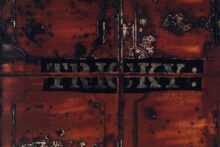
Massive Attack
30 Years On: Tricky’s Maxinquaye Revisited
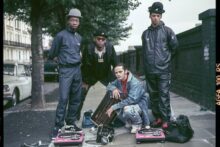
Portishead
Organic Intelligence XXXI: The Pre-Trip Hop Bristol Underground
Martina Topley Bird
25 Years On: Tricky’s Maxinquaye Revisited
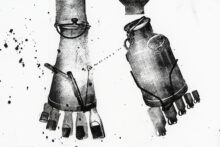
Neneh Cherry
Albums Of The Month: Music We’ve Loved This August
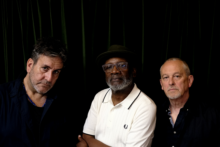
Terry Hall
Get Up, Stand Up: An Interview With The Specials
As half of Yazoo, Alison Moyet helped pioneer the hot / cold trick which Martina and Tricky perpetuate. Yet the heat of Moyet’s throaty vocals against Vince Clarke’s cool electronics, was, like Annie Lennox’s against Dave Stewart’s in the Eurythmics, derived from soul, where Martina’s stylings do not (she professed a preference for grunge, though she’s hardly Kat Bjelland). In truth, Moyet and Tricky’s ‘Make The Change’ never quite gels, though it’s a thematic success precisely because it’s a musical misfire. Moyet’s lyric urges progress and movement – “seize the chance to change” – while Tricky’s production proffers ponderousness, circularity and stasis. Moyet’s hollered optimism sounds increasingly hollow as the tune stretches out and out across empty echoing space, making her cumulative “Gonna make it last forever” less a promise than a threat.
All of these contradictions coalesce perfectly on ‘I Be The Prophet’, an apposite trailer for Nearly God, connecting to the album’s title while making explicit Tricky’s claim upon the future. Yet, with the future by the 90s uncertain, the beatless, pizzicato string-propelled ‘I Be the Prophet’ is suffused with as much anxiety as arrogance: “I can’t relax, I need to meditate” gets repeated three times. The prophet’s attempts to relate to the other (“tell me you don’t feel nothing”) fade into the fear this will reduce rather than enrich him, be a gross loss not a net profit: “would you like to drink from my vein?” Again though, there’s that 90s negotiation: “My vibe’s just a fuckin’ feeling” Tricky croaks, “I see the ceiling / And adjust to such a feeling”. This tentative empathetic impulse is emulsified by the Tricky and Martina tag-team at its most complementary. While Tricky’s solo rap opens the track, whispering and hissing, attempted communication contained by cynicism, Martina sings the exact same words but gives them not just melody, but lifeblood, warmth, even optimism. When Tricky and Martina conjoin vocally on the final verse, the strings initially strike up agitated, dissonant notes like an alarm. But as you realise that, uncharacteristically, the pair are singing in unison, an unambiguously beautiful synth-sound seeps into the foreground, hovers for a while, like a glimpse of utopia, then fades elusively away.
Unlike the Britpop and techno-informed pop music that supplanted it, trip hop has aged incredibly well and, at its best, sounds as immediate and inventive as it did 30 years ago. If Massive Attack and Portishead have become trip hop’s ‘classic’ acts, established institutions in popular music’s mainstream, Tricky’s mid-90s music still sounds as maverick and futuristic as ever. Nearly God is the crucial central entry in his three-album run of unrivalled innovation and imagination.