
A recent call by Emmanuel Macron to have French electronic music, or ‘French Touch’, added to the UNESCO cultural heritage list – as Berlin techno has been – was greeted with some perplexity and even derision in the Anglosphere, thanks to his claim that the French are “the inventors of electro.” Typical comments below a news piece on Mixmag would be, “Afrika Bambaataa and Arthur Baker would like a word” and “When you don’t know what electro is.” Macron is eminently worthy of criticism, as is his statement, but it doesn’t quite mean what these commenters took it to.
Macron definitely wasn’t referring to the minimal dance music style, sometimes referred to as electro-funk, which was pioneered in the early 80s by Bambaataa and others, and I doubt that either he or his advisers have even a passing acquaintance with the genre. In fact, électro has never been widely used in France to describe that specific form of music. Hip hop – as Vincent Piolet highlights in Regarde Ta Jeunesse Dans Les Yeux, his book about its early days in France – found its way into French culture through the medium of dance. The words of the moment, aside from hip hop, were ‘le break’ (breakdancing, of course) and ‘le smurf’ (another style where the dancer stays on their feet). It seems that le smurf, in particular, was sometimes used to refer to the entire movement, including the music associated with it; a 1984 news feature focused on Franco-Guadeloupean hip-hop pioneer Sidney, who presented the groundbreaking weekly TV rap show H.I.P. H.O.P., advises viewers that “if you want to be hip, you shouldn’t just be talking about the smurf” while Sidney points out that le smurf is just one kind of hip hop dancing among many others.
Instead, ‘l’électro’ has become a catch-all descriptor for every kind of electronic dance music. I spoke to Olivier Lamm, co-director of the culture section at French newspaper Libération, who has been fighting what he has come to feel is a losing battle against its use as a blanket term. “I keep replacing the word wherever I can in articles,” he confesses. According to Lamm, what happened is that “techno” in the 90s was “kind of radioactive” in France thanks to its association with illegal rave parties and police suppression, and ‘musique électronique’ became the acceptable, sanitised term that covered a multitude of dance music styles. “It’s kind of the opposite of British people who are obsessed with very specific sub-genres.”
At some point, musique électronique was abbreviated to électro. It’s hard to pinpoint exactly when the shift happened but Lamm feels that it occurred during the second wave of French Touch artists (e.g. Justice and the Ed Banger crew) with the advent of this music that “wasn’t really house or techno anymore.”
While électro may appear to be a neutral label, it nevertheless carries certain associations. I mention to Lamm that, for me, it evokes certain French electronic artists who focus more on melodies and sweeping, orchestral textures than the low end, and Lamm agrees “it’s the same connotation for me. Electronic music for the masses in way. Électro is music that is acceptable for big set-piece events like the Olympics closing ceremony, whereas techno is still seen as dangerous and anti-system.”
For the French President, or whoever scripted his intervention, the point was to champion l’électro rather than electro which, while maddening, is somewhat understandable within its French context. The more egregious aspect of the Macronian vision of l’électro is the narrow fixation on French Touch (a term which itself has a flattening effect on the era it refers to), brushing over decades of French electronic innovation prior to the 90s. If you’re insisting on French musique électronique’s unique contribution to world culture, then – to give just a few examples – Pierre Schaeffer’s musique concrète experiments, the pioneering efforts of the Groupe de Recherches Musicales (founded by Schaeffer), Éliane Radigue’s powerfully meditative works, Jean-Michel Jarre and disco dons like Marc Cerrone should also be part of the conversation.
In the mix accompanying this column there’s électro from rRoxymore and most of the artists reviewed below, plus some new music from the Pagans label: Aèdes and Trucs – I I had planned to review the latter but Anna Mahtani did a far better job of providing context for their music in this Organic Intelligence newsletter than I could have done; underground rap from Sadhana and Joaqm; a collaboration between Éliane Blaise (aka æfv) and Emmanuelle de Héricourt (EdH) under the name Therese; selections from a previously unreleased Brigitte Fontaine & Areski Belkacem album (Baraka 80) and Souffle Continu’s remastered collaboration between Breton harpist Kristen Noguès and British saxophonist John Surman; and an extract from Ármo, the last in a trilogy of long-form releases from Sébastien Forrester on the Superpang label.
Le DiouckGrace JokePAN / &ce Reckless
Following Lala &ce and Low Jack’s superb Baiser Mortel, this is the second album from the same Parisian rap-adjacent scene to appear on PAN (as well as on Lala &ce’s new &ce Reckless imprint). It feels both like a companion piece – Le Diouck (real name Magueye Diouck) featured on Baiser Mortel and Grace Joke has also sprung out of a performance at the Bourse De Commerce gallery and performance space in Paris – and a thrilling assertion of plurality and fluidity in its own right from the Franco-Senegalese musician, performer and graphic novelist. With Grace Joke, Diouck has set out to demonstrate his range across tracks that bounce between R&B, trap, cumbia, rock, dembow and more, aided by an array of collaborators including Yves Tumor, Lala &ce and Bonnie Banane as well as producers Modulaw, Lewis OfMan, Loubenski and Boukan Records boss Bamao Yendé. Tracks like the almost grunge-y ‘Émeraude’ and Lala &ce feature ‘Fly Anyr&ce’, with its swirling, Middle Eastern strings, really kick, but flamboyance, delicacy and tropical vibes are also in plentiful supply. Vocally, Diouck is correspondingly elastic, singing and rapping in French, English and Wolof (the most spoken language in Senegal) and making full use of a range that runs from a choked, plaintive high register down to a gravelly growl.
AutoreverseAutotunesÉditions Gravats
Experimental guitarist Nina Garcia’s second solo album, Bye Bye Bird, released earlier in the year, was justifiably lauded, and this project with turntablist Arnaud Rivière is equally impressive. On Bye Bye Bird, Garcia’s molten guitar was poised between melody and clangorous atonality, occasionally tipping into outright violence. Rivière, meanwhile, uses a prepared – or “damaged or destroyed” – turntable. The outcome of their collaboration is an intensely lively dialogue conducted in a language of squeaks, scraping, squeals and screeches, with the pair constantly teasing and testing each other (and us). ‘HI-SPEED DUB indicator’ is the most condensed expression of their approach, Garcia and Rivière thrusting and parrying and using silence to sharpen the edges of each stab. They open out more on the other two tracks, ‘HI-SPEED DUB switch’ and ‘SKIP-BLANK stack’, which shift between sonic chitter-chatter, bursts of aggression and passages of sustained fuzz and feedback; the former wrong-foots you with low-key, ringing tones before unleashing metallic bedlam.
Les Marquises, Quatuor Una CordaLive À l’Opéra UndergroundInfradisque
2023’s haunting, perception-shifting Soleils Noirs was my favourite release yet from Jean-Sébastien Nouveau’s Les Marquises, using samples, electronics and live instrumentation to craft something simultaneously intimate and epic, as capable of evoking dusty film reels and faded photographs as the movements of celestial bodies. Live À l’Opéra Underground is based on a recording of a performance at the Opéra Ae Lyon in 2024, part of its adventurous Opéra Underground programme, and featuring completely reworked versions of the pieces on Soleils Noirs. Violinist Agathe Max is still on board but is accompanied by Martin Duru on keyboards and sampler and Parisian string quartet Quatuor Una Corda. Nouveau says that this is “more than just a live recording” and constitutes a “new sonic object”; it’s even more expansive than its sister album, with the mass of strings adding greater drama and more intense peaks to Soleils Noirs’ stately evolutions, but also more grounded, since – regardless of what was done at the mixing stage – it feels as though you can still perceive the real acoustic space.
SpelteriniHyomon-Dako / MagnésieKythibong
This is the third album from Spelterini, named after Italian tightrope walker Maria Spelterini and featuring members of Papier Tigre, post-hardcore four-bands-in-one mega-supergroup La Colonie De Vacances, and Chausse Trappe. They specialise in minimalist, gradually intensifying epics; previous release, Paréidolie, was just a single 33-minute piece. ‘Hyomon-Dako’ gestures at motoric without actually employing the Dingerbeat, locking into a single chord and a hopping rhythm, veering off into a more agitated break at around its mid-point before returning to its jerky groove with renewed purpose. Its companion, ‘Magnésie’, kicks in like prime early Stereolab if they’d had more of a hardcore edge, building up ferocious momentum through frantic strumming, droning bass and precise ride-work, electric squalls bursting out like steam released from a pressure cooker, and reaching its climax with a pounding train rhythm that gradually grinds to a halt, all energy finally expended. Exhilarating.
23waAZSelf-Released
23wa’s previous album, 2023’s Rorschach, could still largely, if loosely, be considered a rap album. This new one from the Aix-En-Provence artist is something else – a trippy, thrilling, unsettling and exhausting sprawl, a massive, 83-minute blob of post-everything, internet-brain pop. Each track is a stage-managed pile-up involving elements of everything from Japanese pop, hyperpop and glitchcore to trap, juke, reggaeton, winsome indie pop and samples from Daft Punk’s ‘Around The World’. Guests include Hakushi Hasegawa, who “whispered on my mic and played percussions with my mandolin”, Shanghainese artist and producer SEBii and Théo Poyer from Japanophile French band Tapeworms. Conventional structures are shunned in favour of perpetual, stream-of-wired-consciousness evolution, momentarily unleashing fierce blasts of glitchy noise and ultra-processed beats before collapsing into puddles of rainbow-coloured melodic goo. 23wa’s wan vocal lines in the latter moments can be dreamy but they also sometimes drag; my favourite sections are the most upbeat, like SEBii collaboration ‘Giga’ which, after a few bursts of party horn, rides in on a bouncy dembow beat emphasised by elastic band twangs and cartoonish rapping; the footwork-y ‘Arise’; and the absurdly punky ‘MOMOMO’ with its uncharacteristically blunt message “la jeunesse emmerde le Front National” (‘the youth tell the National Front to get fucked’). It’s undoubtedly too much – in fact, that might even be the point – but its peaks are deliriously, riotously enjoyable.
rRoxymoreJuggling Dualities
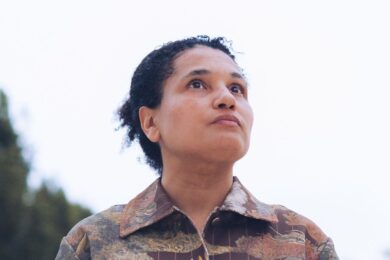
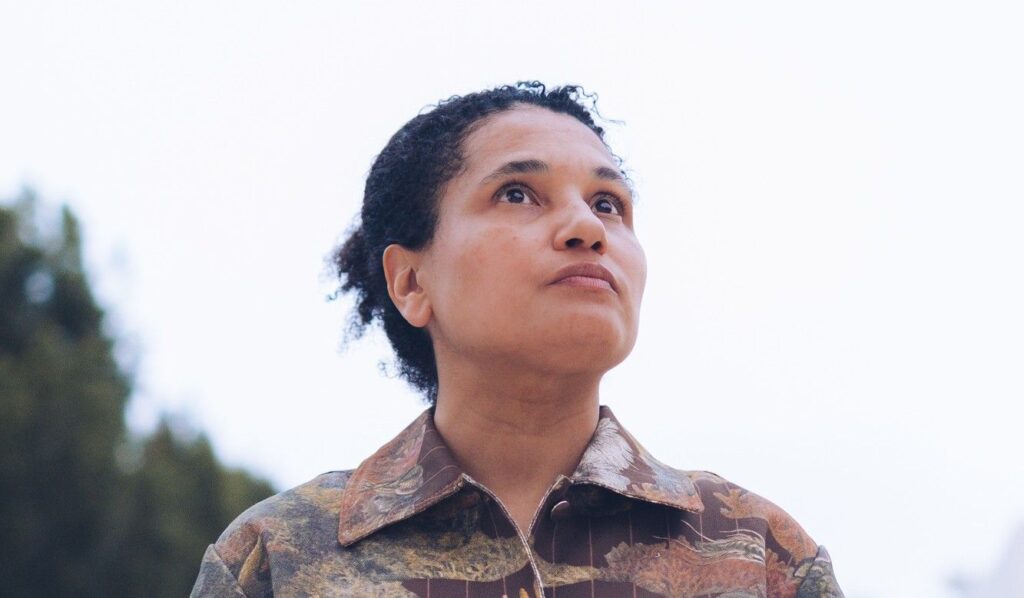
Hermione Frank’s music as rRoxymore has always tended towards warmth and suppleness. But her third album, and the first since returning to her hometown of Montpellier after a decade in Berlin, is one on which – perhaps not coincidentally – the harder edges have been almost completely smoothed away. The kicks, when they do make an appearance, as on ‘Moodified’ and the luscious ‘Nectar’, are cushioned by bubbling basslines. Apparently intended as a new age album, Juggllng Dualities also reveals kosmische influences, especially on opener ‘Am I Human?’, synthetic blobs bobbing around like the wax in a lava lamp. Elsewhere, as on ‘Upward Spiral’, Frank builds sound-worlds that teem with pulsing and fluttering sonic matter. ‘Lows And Attractions’, the last track on Juggling Dualities, begins with a recording of an unnamed person discussing Buddhism, sound being “subjective and objective” and the fact that when we hear a bird “we are not really listening to the bird… the bird is in my mind already.” One of the dualities I detect is that of the organic sense of movement within her tracks versus their hyperreal glow, as per the electronic twittering on ‘Upward Spiral’ – perhaps the sound of the virtual birds that exist inside us.
Ray BartokBeesRice Bowl Club
Ray Bartok appeared in the very first Rockfort column, back in 2011, and since then they have progressed at a leisurely pace; this, their fourth album, is the follow-up to 2017’s TVSHOTS. In any case, it’s brilliant to have the duo of JS Brosse and Philippe Sirop – here augmented by Bristolian guitarist Jesse D Vernon (of Morning Star and This Is The Kit) – back for this concise and hugely entertaining set. The pair’s outsider canon includes Moondog, The Residents, Morphine and James Chance – who they have also played with – and one can also pick up trashy traces of The Cramps, B-52s and Suicide, chewed up spat out in the shape of wired grooves and oddly perfunctory lyrics about crawling on lino (‘Creepin’), gardens full of bees (‘Bees’) and the void of space (‘Void’). ‘Bolly Swing’ interpolates a sample of legendary Bollywood singer Mohammed Rafi and backing singers augment the chugging ‘Butterfly’ – complete with staccato B-52s keyboard – and the strutting funk rock of ‘Widow’. Catch that buzz.
Rockfort Quietus Mix 41 – September 2025
23wa – ‘Arise’ (Self-released)
Le Diouck – ‘Émeraude’ (PAN/&ce Reckless)
Autoreverse – ‘HI-SPEED DUB indicator’ (Editions Gravats)
Trucs – ‘Baishada’ (Pagans)
Aèdes – ‘Rossinholet’ (Pagans)
Brigitte Fontaine & Areski Belkacem – ‘L’Éternel Retour’ (Kuroneko)
Ray Bartok – ‘Void’ (Rice Bowl Club)
Therese – ‘Lynch’s Tape’ (Off)
rRoxymore – ‘Upward Spiral’ (!K7)
Sadhana – ‘Jardin’ (Self-released)
Joaqm – ‘Réalité Chèque’ (Self-released)
Les Marquises & Quatuor Une Corda – ‘L’Ailleurs’ (Infradisque)
Sébastien Forrester – ‘Ármo, proem’ (Superpang)
Kristen Noguès & John Surman – ‘Le Scorff’ (Souffle Continu)