
In 1969, on the South Side of Chicago, a young Pan-Africanist and Black Panther called Yvette Stevens dropped out of high school and began singing in local bands under her adoptive name, Chaka. She caught the attention of a heavy-soul group called Rufus who’d risen from the ashes of The American Breed, having scored a hit in 1968 with ‘Bend Me, Shape Me’. Chaka helped mould Rufus into a formidable jazz-funk outfit whose debut LP piqued Stevie Wonder’s interest, and he sat down with the singer to write ‘Tell Me Something Good’, a louche Funkadelic-esque jam with a strange centre of gravity, bagging the band a Grammy in 1975.
Rufus were suddenly all over US radio and TV, appearing on The Midnight Special, Soul Train, Bandstand and even The Bob Hope Show. “I used to run home and see everything she was on,” claimed Prince in a 1998 interview with the Philadelphia Daily News, admitting that, in his teens, he was a “fan and fanatic” of Chaka. Testament to which, amongst his early demos there’s an acoustic cover of the Rufus track ‘Sweet Thing’ which he recorded in 1976, not long after its release.
Two years after that, Chaka was a bonafide pop star with her solo single ‘I’m Every Woman’ rocketing up the charts on both sides of the Atlantic. Prince was in Sausalito, California, working on his debut album when he heard Chaka was in town, so he called her hotel pretending to be her friend Sly Stone, and invited her to join him in the studio. “It was dark and cold as a morgue,” Chaka told DJ Vlad in a candid interview in 2020. “I said ‘hey’ to the engineer,” she continued, “and I said ‘who’s that?’ and he said ‘that’s Prince’ and I said ‘Prince? Prince of what!?’” Chaka’s first meeting with “this little short guy with a big guitar” was brief, and the perplexed singer was gone almost as soon as they’d been introduced, but Prince got hold of her phone number, and despite his initial deception, the two struck up a long distance friendship.
How Prince found time to chat while self-producing his For You LP is hard to fathom, but another young musician he befriended over the phone in 1978 was Patrice Rushen. The pianist and singer had just released her fourth album, the first for her new label Elektra, and simply titled Patrice, which Prince loved. It turned out his engineer, Tommy Vicari, knew her from various sessions, and hooked them up so they could talk shop. “We struck up a friendship,” Rushen tells tQ, “and he would periodically call me, and typically the questions would have more to do with music than anything else”. Soon they’d meet in person when the self-taught multi-instrumentalist asked his new classically trained friend to help arrange strings for his song ‘Baby’. “He already knew what he wanted,” she assures, “but at that time he didn’t know how to write it down.”
Between his debut, and self-titled follow up, Prince took a trip to NYC with his friend and mentor Pepé Willie to demo tracks for Willie’s uncle’s band The Imperials; doo-wop veterans who were being disco-fied by Tony Silvester from The Main Ingredient. During these sessions, Prince sat at a piano and presented a love song, of sorts, which he was still writing called ‘I Feel For You’. It wasn’t picked up, so he returned to Minneapolis where he laid down a demo version on acoustic guitar in his home studio.
Legend has it that Prince offered ‘I Feel For You’ to Rushen for her next LP Pizzazz in 1979, but she turned it down. Rushen was quick to dismiss this myth when I spoke to her in 2021, stating that he never once approached her with a song. In fact, the first she heard about this was when some friends showed her the liner notes in Prince’s The Hits collection from 1993 in which tour manager Alan Leeds claimed Prince was inspired by his friendship with Rushen to write both ‘I Wanna Be Your Lover’ and ‘I Feel For You’, hoping she’d record them. Whether the songs were about her or simply for her remains a mystery, even to Rushen. “If he wanted to take it further, he never…” Rushen paused thoughtfully for a moment, then laughed. “We weren’t around each other long enough at any point in time for it to go anywhere!”
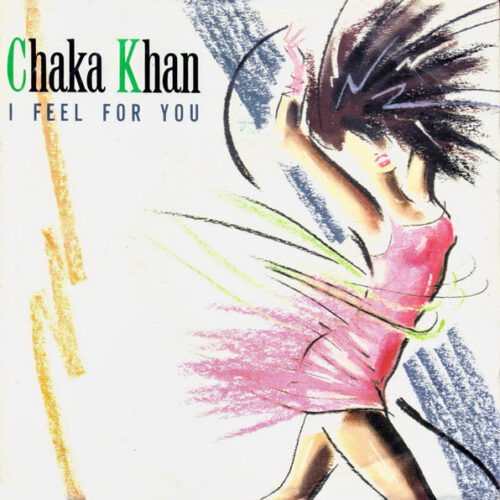
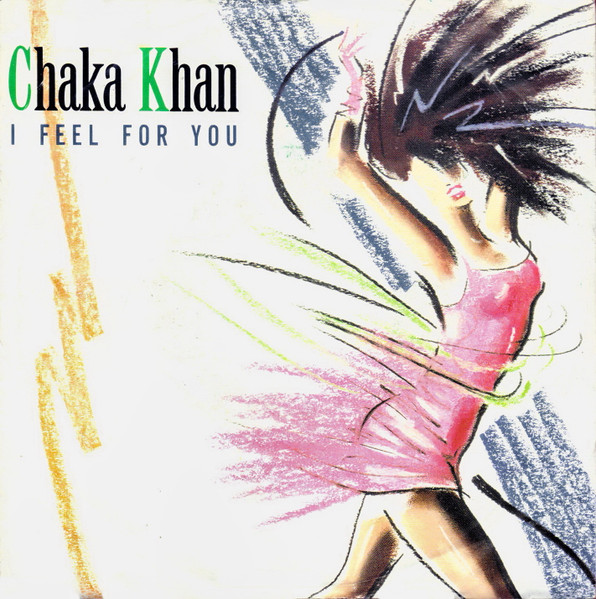
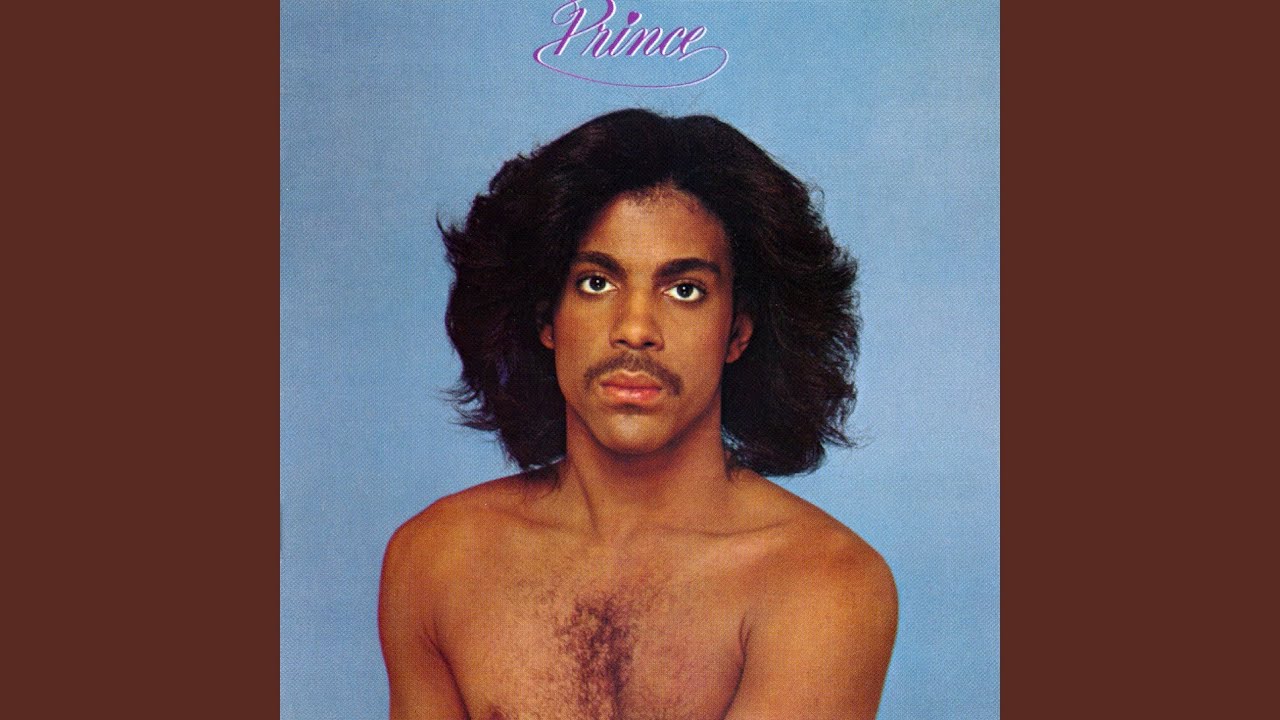
Whatever Prince’s intention, ‘I Feel For You’ wound up on his second LP in 1979, reimagined as a smooth post-disco precursor to the erotic synth-funk which would dominate his output over the next few years. Chaka, who’d been following Prince’s career since they’d met, loved the album but couldn’t believe ‘I Feel For You’ didn’t get a single release – it was hidden away as the penultimate track on the album – and vowed to do it herself.
Now let’s take a trip over to the Bronx where hip hop had just made the transition from park jams and basement parties, and into the studio when The Sugarhill Gang dropped ‘Rapper’s Delight’ in the autumn of 1979. Many were sceptical of these early expeditions, often recorded by rappers who weren’t on the scene, but The Furious Five, alongside their DJ Grandmaster Flash were already hip hop veterans when they released a handful of 12”s via local labels Brass Records and Enjoy. MC Melle Mel stood out on their second single, ‘Superappin’ which featured, arguably, the first socially conscious rap verse which opens with the iconic couplet “A child is born with no state of mind, blind to the ways of mankind…”
Mel would revisit these lyrics when he went to record ‘The Message’ for Sugar Hill Records in 1982. This downbeat electronic gamechanger gave the group an international hit, reaching number eight in the UK, but as rap went mainstream, the band began to collapse, with Grandmaster Flash leaving Mel to lead the remaining Five in an effort to capitalise on their newfound fame. The following year, Sugar Hill Records released ‘White Lines (Don’t Do It)’ under the misleading name Grandmaster & Melle Mel, but as the anti-drug anthem scaled the top 10, the label was slapped with a lawsuit for the uncredited use of Liquid Liquid’s ‘Cavern’ as the basis for its rhythm track.
At the same time things were going awry for the Sugar Hill empire, Chaka was entering the electro arena when Rufus’ keyboardist David “Hawk” Wolinski laid down an infectious beat on his Linn LM-1 and penned ‘Ain’t Nobody’. It was intended as a bonus track to accompany the group’s live album Stompin’ At The Savoy, but they realised they had a potential hit on their hands and insisted that if Warner didn’t release it as a single, they’d sell it to Quincy Jones for Michael Jackson’s Thriller LP. The label relented, and not only was it an international smash, but it was adopted as an electro anthem in the summer of ‘84 thanks to its use in Cannon Films’ danceploitation movie Breakin’.
Chaka’s shrewd producer Arif Mardin was quick to cash in too. Other than ‘Ain’t Nobody’, the singer hadn’t had a major hit since 1978, but Warner Bros had faith, splashing out half a million dollars for Mardin to produce the album. Half a decade had passed since Chaka first heard ‘I Feel For You’, and with a healthy budget and Mardin’s assistance, she was determined to make it a hit. Tapping into the electro-funk sound sweeping the charts, Mardin enlisted Sugar Hill session player Reggie Griffin to add some street credentials, and had
Prince slated to supply one of his heroic guitar solos. The promo schedule for Purple Rain put paid to that plan, so Chaka’s old friend Stevie Wonder was called in to add harmonica instead. A soundbite of a crowd cheering from the intro of “Little” Stevie Wonder’s ‘Fingertips’ underpins his solo.
Mardin knew this could be massive, but with electro-adjacent records like ‘Candy Girl’ and ‘Let’s Hear It For The Boy’ all over the dance and pop charts, it needed something extra to stand out. Rap was huge, but still a gamble, so they’d need someone bankable. Griffin suggested his Sugar Hill cohort Melle Mel who ad libbed his verse like a seasoned pro after Chaka had nailed her vocal and gone on home.
Before Mel dropped his “Chaka Khan, let me rock you” lines, the producer already had the idea of using Chaka’s name rhythmically. In 2005, Mardin told NPR that he was sitting at his piano with Chaka’s brother, fellow musician Mark Stevens, when he told him “you have two sisters. One of them is called Taka Boom, and the other sister is Chaka Khan. Why can’t we use these names as percussion?” Cut to the studio where Mardin’s engineer was about to lay down the master copy of ‘I Feel For You’ when an accident with the tape machine caused Melle Mel’s intro to stutter “Chak-Chak-Chak-Chaka Khan…” like a glitching computer reciting a Hugo Ball sound poem. “That’s interesting,” the producer mused. “Let’s keep that.”
Chaka was less impressed. As the singer returned to the studio the following day to hear how the track was progressing, she “heard this guy saying my name over and over again”. “I was devastated,” she whispered during a 2022 interview with Andy Cohen. She’d left them with her soaring vocal, and returned to be confronted with a rapper she’d never even met describing “what he’s going to do to me. He wants to rock me and all this stuff… I said ‘I’ve got to live with this!’”
Despite her misgivings, Mardin promised her it would be a hit, and by the end of 1984 ‘I Feel For You’ had reached the top 10 in 16 countries, from Belgium to Brazil. On 4 November it knocked Wham! off the number one spot in the UK, and remained there for three weeks. It was so big here, in fact, that it wound up covered on Hallmark Records’ infamous Top Of The Pops album series featuring an almost arrhythmic rap from someone with a curious transatlantic accent. Page 3 girl Samantha Fox adorned the cover. England, the country which gave this genre its name via Morgan Khan’s hallowed Electro compilations, fully embraced Chaka as the queen of the electro scene.
An initial pop-promo, in which Chaka performs ‘I Feel For You’ in a go-go bar, was pulled in favour of a breakdance-themed video, and a young director named Jane Simpson was hired to expand on a short film she’d been developing called Street Beat which she was shooting in a mockup of LA’s pioneering hip hop club Radiotron. B-boys including Shabba Doo, Boogaloo Shrimp and Pop n’ Taco were all poached from the cast of Breakin’, alongside LA electro pioneer DJ Chris “The Glove” Taylor who’s seen cutting up the single on baby-pink vinyl. Conspicuously, Melle Mel doesn’t feature.

In fact Mel didn’t meet Chaka until he was flown back from a European tour the following February to perform the song at the Grammys where she won the coveted award for Best female R&B vocal performance, and it scored Prince, as the single’s songwriter, one of his three Grammys that year. Mel wasn’t even nominated, but it was a landmark moment for a movement which was born out of nothing in a Bronx basement barely a decade prior.
Melle Mel should’ve been on the up, his next release ‘Step Off’ – in which he references his ”Chaka Khan, let me rock you” rhyme – was a hit, but the consecutive singles failed to expand on his Grammy notoriety, Not to mention Sugar Hill was in a financial mess following the ‘White Lines’ lawsuit, and within a few months they were bankrupt, taking Liquid Liquid’s label 99 Records down with them. Kids across the world were repeating Mel’s “Chak-Chak-Chak-Chaka Khan” intro, much to the chagrin of their exasperated parents. Melle Mel was a household name, and yet he had no label.
Meanwhile Chaka released a succession of lavishly produced pop albums which failed to match the success of ‘I Feel For You’ and its accompanying LP. Collaborations with Phil Collins and Green Gartside from Scritti Politti missed the charts, and even the new jack swing style ‘Sticky Wicked’ in 1988 – penned and produced by Prince, and featuring Miles Davis on trumpet – won over neither the kids nor her jazzier fans. That same year, Melle Mel reconciled with Flash, and the original Furious Five regrouped, producing their On The Strength LP for Elektra, but the fans had moved on. Electro was all but over and hip hop was evolving. In the UK, where she’d found her biggest pop audience, Chaka returned to the top 10 in 1989 with a remixed version of ‘Ain’t Nobody’ sliding into the mix amongst Soul II Soul, Neneh Cherry and the street soul movement, but even with a couple more Grammy wins, her new material couldn’t reach the pop heights of ‘I Feel For You’.
Chaka’s devotees hadn’t forgotten her, however. Especially on the hip hop scene where Guru brought her in to guest on his celebrated Jazzmatazz project, and De La Soul gave her pride of place on their infectious ‘All Good?’ single. Prince, who was slowly emerging from his own corporate hell with Warner Bros, signed Chaka to his NPG label in 1998, producing her ninth studio album Come 2 My House. It remained under the radar, but features some of her best work since ‘I Feel For You’ including its relatively experimental title track, and a surprisingly funky duet with Robert Palmer.
Prince, who for years had accepted that ‘I Feel For You’ had become Chaka’s track, reintroduced the song as a focal point of his own live repertoire, eventually performing it live with Chaka and Stevie Wonder at a BET awards show in 2006. Melle Mel appeared only as a disembodied voice in the intro, like a physical dream. He continues to perform to this day, rightfully accepted as a godfather and pioneer of hip hop, as well as rap’s first megastar.
In 2019, Chaka released Hello Happiness, her first LP in over a decade. Once again the UK welcomed her with open arms, and it reached 18 in the album charts, with Fatback sampling lead single ‘Like Sugar’ tearing up dancefloors. She continues to tour both solo and with Rufus, bringing the house down every time, though you won’t always necessarily hear ‘I Feel For You’. Like many artists with an all encompassing hit, her career goes so much deeper, and Chaka’s relationship with the song remains complex. It may seem like a chore to perform, but for many of us it’s an exemplary moment when electro, funk and soul crossed over to form 4 minutes of pop-perfection, and, as Rushen put it: “She sang the stew out of it!”